


Views: 0 Author: Site Editor Publish Time: 2026-07-01 Origin: Site


Standardizing cooling components across a facility often reduces procurement complexity. However, deploying standard cooling fans in harsh, humid, or highly corrosive environments guarantees premature mechanical failure. Electronically Commutated (EC) motors already provide superior energy efficiency over traditional AC or DC alternatives. Yet, exposing their sensitive onboard electronics to moisture necessitates specialized ingress protection to prevent catastrophic shorting. Standard models simply cannot survive aggressive washdown procedures or coastal marine conditions. This guide equips engineering and procurement teams with a clear, evidence-based evaluation framework. You will learn exactly when to specify a waterproof fan over a standard model to maximize long-term reliability. We explore structural differences, protection ratings, and critical deployment variables to ensure optimal cooling performance. By understanding these engineering trade-offs, you can confidently select the exact thermal management solution your infrastructure demands.
Defining the environmental threshold remains your first critical step. Manufacturers engineer standard fans for clean, dry, climate-controlled spaces. These environments include standard server rooms, indoor telecom closets, and basic commercial HVAC systems. In these pristine settings, a standard EC fan operates flawlessly. It delivers high volumetric airflow while minimizing energy consumption. However, pushing these standard units beyond their environmental limits introduces severe operational liabilities.
When you deploy standard cooling components in harsh environments, failure becomes inevitable rather than possible. Moisture, chemical mists, and heavy dust attack unprotected components rapidly. Engineering teams consistently observe three primary failure modes when standard fans face hostile conditions:
You must establish strict success criteria for harsh environment cooling. A successful deployment achieves continuous volumetric airflow without any mechanical degradation. It maintains strict compliance with international safety standards. Furthermore, it ensures predictable maintenance schedules. Unplanned downtime disrupts core operations and wastes valuable engineering resources.
Understanding the physical differences between fan architectures helps you make informed procurement decisions. The transition from a standard build to a highly protected unit involves significant material and structural upgrades. These modifications target the motor's most vulnerable points.
The internal motor structure dictates environmental resilience. A standard EC fan features an exposed PCB and stator windings. The external plastic or metal fan housing provides the only defense against debris. Airborne moisture easily bypasses these outer shells.
Conversely, a waterproof EC axial fan utilizes advanced vacuum epoxy potting. During manufacturing, technicians place the motor assembly inside a vacuum chamber. They inject a specialized thermal epoxy resin that completely encapsulates the motor stator and PCB. The vacuum removes all air bubbles. This creates a solid, impenetrable block against water, dust, and corrosive gases. The electronics become entirely isolated from the outside atmosphere.
Not every application requires full epoxy potting. For lower-tier waterproof ratings, manufacturers apply conformal coating to the circuit boards. This acrylic or silicone spray provides a basic moisture barrier. However, true harsh-environment fans require more robust material science.
Advanced waterproof units incorporate rust-resistant metal alloys, such as stainless steel shafts. Manufacturers use specialized, UV-resistant PBT plastics for the impellers and frames. Furthermore, they install fully sealed dual-ball bearings. These sealed bearings feature heavy-duty rubber gaskets that physically block water from reaching the internal ball bearings and grease.
Cables represent a notorious vulnerability in fluid environments. Standard stranded wire acts like a sponge. Capillary action draws moisture straight up the wire jacket and directly into the motor housing. Standard fans ignore this phenomenon because they operate in dry rooms.
Waterproof models eliminate this vulnerability entirely. They utilize specialized waterproof wiring harnesses. Manufacturers install sealed cable glands at the exact point where wires exit the motor block. These glands compress a rubber seal around the wire jacket. This tight seal prevents capillary action from drawing any external moisture into the sensitive motor core.
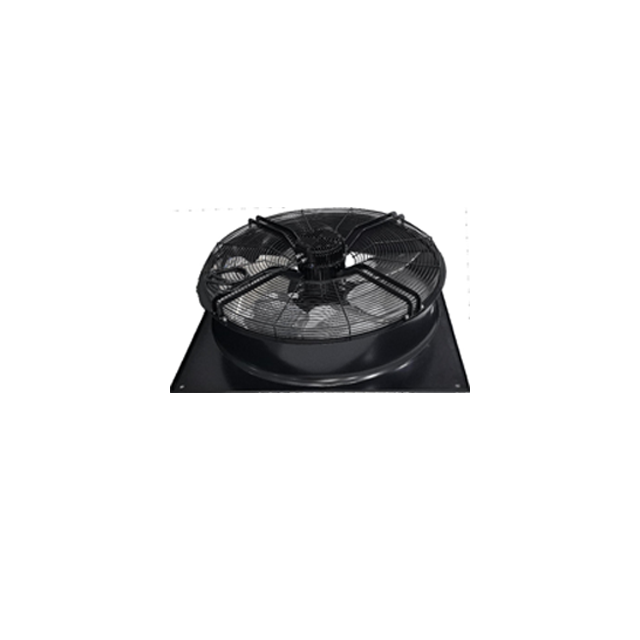
Procurement and engineering teams need standardized metrics to evaluate cooling solutions. Relying on generic marketing terms leads to system failures. You must demand empirical testing data and standardized ratings from your suppliers.
The IP rating system provides a globally recognized framework for evaluating environmental protection. The first digit represents solid particle protection, while the second indicates liquid protection.
Beyond water, you must consider chemical and salt exposure. If you deploy fans in coastal regions or chemical processing plants, request salt fog compliance data. Standard salt-spray testing, such as ASTM B117, proves the fan can resist highly corrosive saline environments over extended periods.
Facility managers must evaluate replacement frequency when selecting thermal components. Standard fans deployed in high-humidity zones degrade rapidly. You might find your maintenance team replacing a standard fan three times a year. Each failure disrupts critical cooling and puts your broader system at risk.
Installing a highly rated waterproof axial fan fundamentally changes this maintenance cadence. These robust units often operate reliably for five years or more in the exact same harsh conditions. You must factor in the extensive engineering labor hours required to access and replace failed units. Hard-to-reach commercial applications multiply these maintenance burdens. Minimizing replacement cycles directly maximizes your facility's operational uptime.
Engineers frequently ask whether waterproofing modifications negatively affect airflow (CFM) or static pressure. Generally, aerodynamic performance remains identical. Manufacturers use the same impeller designs and motor profiles. However, physical dimensions and mass will vary slightly.
Epoxy potting adds noticeable mass to the motor hub. Thicker plastic housings increase overall weight. You must account for these slight physical differences during the mechanical design phase.
| Evaluation Metric | Standard EC Fan | IP55 Rated EC Fan | IP68 Potted EC Fan |
|---|---|---|---|
| Moisture Defense | None | Conformal Coating | Full Epoxy Potting |
| Bearing Protection | Standard Shields | Light Gaskets | Heavy-Duty Sealed Gaskets |
| Continuous Submersion | Fails Immediately | Fails Quickly | Fully Operational |
| Relative Weight | Lightest | Slightly Heavier | Heaviest (Due to Resin) |
Specifying the correct IP rating solves the immediate moisture problem. However, integrating fully encapsulated motors introduces secondary engineering challenges. You must proactively manage these integration variables to ensure long-term stability.
Epoxy potting provides an excellent barrier against liquids. Unfortunately, it also acts as a thermal insulator. The solid resin block traps heat generated by the copper windings and electronic components. Standard fans dissipate this internal heat easily through open air gaps.
You must verify the application's maximum ambient operating temperature. Cross-reference your environmental heat load with the fan's derating curve. Ensure the encapsulated motor can safely shed its internal heat without triggering built-in thermal overload protections.
A cooling system remains only as resilient as its weakest link. A waterproof fan paired with standard exposed connectors creates a massive system-level vulnerability. You must ensure that all power supplies, junction boxes, and wiring harnesses upstream of the fan possess matching environmental ratings.
If you connect an IP68 fan to an unsealed terminal block, water will eventually short the connection. Use rated IP67 or IP68 locking connectors. Apply dielectric grease to mating surfaces. Route drip loops into your cabling to direct gravity-fed moisture away from electrical junctions.
Fully encapsulated motors carry significantly more mass than standard open-frame motors. The dense epoxy resin adds considerable weight to the central hub. Design engineers must account for this increased load.
You may need to upgrade structural panels or mounting brackets. A heavier fan generates different vibrational frequencies during operation. Reinforce your mounting hardware to prevent fatigue failures in sheet metal enclosures over years of continuous operation.
Navigating supplier catalogs requires a disciplined shortlisting methodology. We categorize deployment environments into three distinct profiles. Use these categories to match your facility's exact needs with the appropriate fan architecture.
These environments offer stable temperatures and strictly controlled humidity levels. Airborne debris remains minimal. Recommendation: Deploy the standard EC fan. It maximizes operational efficiency and airflow. Applying heavy waterproofing here provides absolutely no tangible engineering benefit.
These zones experience seasonal humidity spikes, morning dew, or light rain exposure. They do not face pressurized cleaning hoses. Recommendation: Specify an IP55 rated standard EC fan. Lightly conformal-coated models with upgraded bearings handle these moderate threats perfectly.
These environments actively destroy electronics. They involve daily pressurized chemical washdowns, heavy salt fog, or continuous exposure to agricultural ammonia. Recommendation: You must specify an IP68 waterproof EC axial fan. Ensure the unit features fully potted stators, sealed dual-ball bearings, and marine-grade plastics.
Next-Step Action: Audit your exact environmental exposure. Document expected water pressure, chemical presence, and peak ambient temperatures. Request official IP-certified test reports from shortlisted suppliers before you request any physical samples.
Choosing between a waterproof unit and a standard model remains a strict exercise in environmental risk management. Standard units excel in pristine server rooms, delivering unmatched aerodynamic efficiency. However, deploying them in high-humidity or washdown environments guarantees rapid component failure.
You must avoid over-engineering your systems. Paying a premium for IP68 encapsulation when basic IP55 splash resistance suffices wastes procurement resources. Conversely, strictly prevent under-engineering in mission-critical harsh environments. Cutting corners on moisture protection leads directly to catastrophic downtime and intensive maintenance labor.
Take immediate action by auditing your facility's environmental hazards. Consult with thermal engineering specialists to validate your required Ingress Protection rating. Review comprehensive sample data sheets to verify that your selected fan matches your specific temperature and moisture variables.
A: No. The aerodynamic design, impeller pitch, and core EC motor efficiency remain identical between both versions. The engineering modifications focus purely on protective enclosures, specialized sealants, and resin potting. Electrical power consumption and volumetric airflow ratings stay consistent with standard models.
A: When properly specified for the environment, high-rated units match standard operating lifespans. An IP68 unit with sealed dual-ball bearings typically delivers 50,000 to 70,000 hours of continuous operation. In contrast, a standard unprotected fan often suffers catastrophic bearing or PCB failure within months under identical wet conditions.
A: We strongly advise against manual modifications for commercial deployment. Post-manufacturing conformal sprays applied by end-users cannot adequately protect internal motor windings or deep bearing channels. Manual tampering leads to highly unpredictable failure rates, traps internal heat, and immediately voids manufacturer warranties.
