


Views: 0 Author: Site Editor Publish Time: 2026-07-06 Origin: Site


Modern poultry farming presents extremely harsh operational realities for facility managers today. High humidity and corrosive ammonia levels rapidly degrade standard agricultural equipment. When these environmental controls fail, flock health suffers almost immediately. You must view poultry house ventilation as more than basic air movement. It stands as a critical driver of feed conversion ratios and flock survivability. Poor ventilation limits bird growth and increases disease vectors. We need structural upgrades to solve these pressing issues. Integrating an FRP cone fan housing directly resolves the dual challenges of equipment corrosion and aerodynamic inefficiency. In this guide, you will learn how fiberglass designs outperform traditional metal boxes. We will explore their measurable operational benefits and aerodynamic mechanics. Finally, you will discover actionable evaluation criteria for effectively retrofitting your agricultural facilities.
Poultry houses generate immense moisture and volatile chemical byproducts daily. Dense bird populations produce manure continuously. This accumulation releases high concentrations of corrosive ammonia gas into the air. Ammonia mixes rapidly with airborne moisture inside the enclosed barn. This mixture creates a highly destructive atmosphere for exposed metal components. Galvanized steel housings simply cannot withstand these extreme environmental conditions long-term. They often begin degrading severely within three to five years of installation. Rust eats through the protective zinc layers very quickly. Once corrosion attacks the underlying steel, structural integrity drops fast.
Degraded fan housings create significant financial leaks for commercial poultry operations. Rusted fan frames warp easily under normal operational stress and vibration. This warping creates uneven gaps around the spinning fan blades. Air leaks backwards through these expanding gaps. This leakage destroys your strict static pressure management. Your exhaust system works much harder but moves significantly less air. Birds at the far end of the barn suffer heat stress as air velocity drops. Furthermore, this inefficiency drives up your monthly electricity bills substantially. It leaves toxic, stagnant air trapped inside the critical bird zone.
You must reframe how you handle these recurring equipment failures. Transitioning away from metal represents a highly effective risk-mitigation strategy. It protects your long-term ventilation performance reliably. You stabilize energy costs by preventing structural warping and air leakage completely. Eliminating rust removes sudden fan failure risks during peak summer heat waves. We consider this material upgrade a necessary operational safeguard for modern farms.
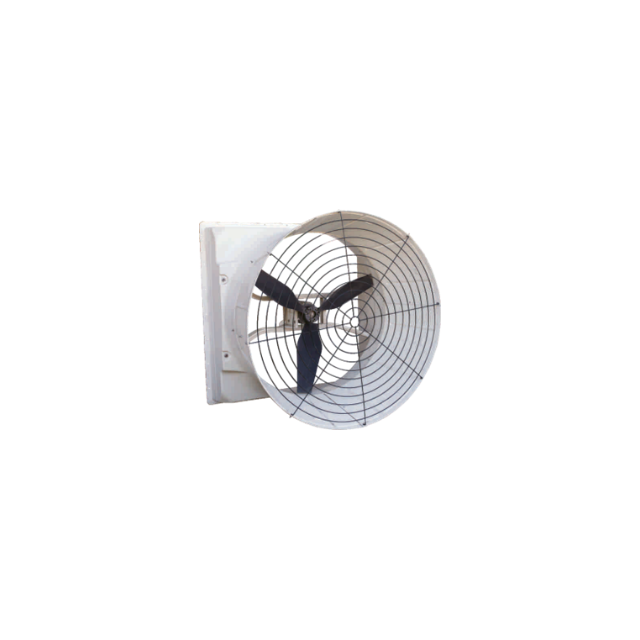
Standard square box fans push air out abruptly into the outside atmosphere. This abrupt exit creates massive air turbulence just outside the fan. Turbulence acts as resistance, forcing the internal motor to work much harder. The extended discharge cone solves this aerodynamic problem beautifully. It gradually expands the air volume before it exits the building. This smooth transition standardizes the exhaust flow efficiently. It predictably reduces air turbulence as it leaves the housing. Your motors consume less electrical power to move the exact same volume of air.
Effective tunnel ventilation requires excellent static pressure optimization across the entire building. The cone design minimizes unwanted backdrafts when specific fans sit idle. It also helps active fans push exhaust air against high external wind loads. A cone acts similarly to an aerodynamic nozzle in reverse. It actively supports the high static pressure required to cool mature birds quickly. It pulls air evenly and forcefully across the entire length of the barn.
We must also examine the material composition of these structural units. Fiberglass Reinforced Plastic combines woven glass fibers and a highly durable resin matrix. This advanced composite delivers a remarkably high strength-to-weight ratio. It boasts excellent thermal stability across extreme seasonal temperatures. Metals warp under intense summer heat, while standard plastics turn brittle in winter. FRP avoids both thermal warping and structural sagging completely.
| Housing Material | Corrosion Resistance | Thermal Stability | Aerodynamic Potential |
|---|---|---|---|
| Galvanized Steel | Low (Rusts in 3-5 years) | Moderate (Prone to warping) | Poor (Typically box design) |
| Basic PVC / Plastic | High (No rust) | Low (Becomes brittle in cold) | Moderate |
| Fiberglass (FRP) | Exceptional (Zero rust) | High (Resists extreme temps) | Excellent (Easily molded into cones) |
Integrating a high-quality FRP ventilation fan transforms your daily barn operations. The completely non-corrosive nature of fiberglass guarantees unyielding durability over time. You eliminate rust-related maintenance chores entirely. Farm crews no longer waste valuable hours patching rusted housing holes with sheet metal. This durability directly translates to drastically reduced replacement cycles. You buy the equipment once and rely on it for over a decade. It easily survives the aggressive atmospheric conditions of commercial poultry farming.
Energy efficiency represents another highly measurable and immediate financial outcome. You should expect significant baseline improvements in overall energy savings. The interior of a fiberglass housing features a specialized, smooth gel coat. This ultra-smooth surface drastically reduces air friction along the interior walls. Less friction predictably improves the overall CFM/Watt ratio (Cubic Feet per Minute per Watt). You move more air for every single watt of electricity consumed. These incremental daily savings compound massively across a large, multi-house facility.
Facility managers also appreciate the exceptional ease of routine maintenance. Strict biosecurity protocols require aggressive cleaning between flock cycles. You can pressure-wash FRP surfaces using high-PSI equipment without fear of denting them. Farm crews can apply harsh chemical sanitizers safely and liberally. These standard farm chemicals will not risk structural damage or degrade the housing over time. You maintain the highest biosecurity standards without destroying your expensive ventilation equipment.
Not all fiberglass housings offer the exact same operational value. You must evaluate specific physical traits and manufacturing standards before shortlisting vendors.
We strongly advise against purchasing thin-walled FRP units to save money upfront. Thin fiberglass will flex noticeably under high external wind loads. This flexing alters interior blade clearances and can eventually damage the motor shaft. You must specify a minimum thickness requirement for your farm's climate. Additionally, demand UV-resistant gel coats on all exterior-facing surfaces. Ultraviolet light degrades unprotected fiberglass quickly, exposing the inner fibers. A quality UV gel coat prevents exterior brittleness and stops long-term sun damage.
Buyers often overlook the internal metal components of a fiberglass fan. This oversight creates a very common and frustrating failure point later. A pristine fiberglass shell means absolutely nothing if the motor falls out. Ensure all internal motor mounts utilize heavy-duty stainless steel. Cast aluminum also serves as an excellent, rust-proof alternative for internal framing. Never accept standard galvanized steel hardware inside your new fiberglass housing. The interior hardware faces the exact same corrosive ammonia as the exterior.
Aerodynamic performance relies entirely on tight manufacturing tolerances. You must examine the shutter mechanisms and blade clearances closely during evaluation. Proper blade-to-housing clearance prevents dangerous air recirculation inside the cone. If the gap remains too wide, pressurized air slips back around the blade tips. This slip ruins your optimal exhaust velocity immediately. Tight tolerances ensure all air moves out of the building efficiently. It maximizes your financial investment in the aerodynamic cone design.
Upgrading to advanced fiberglass equipment requires careful installation planning and oversight. You face specific physical realities when retrofitting older agricultural barns.
We must address the distinct wall framing requirements first. Fiberglass cone fans weigh more than standard thin-metal box fans. They also require a slightly different dimensional footprint on the wall. You will likely need to adjust your existing rough openings. Discuss necessary structural reinforcements directly with your installation crew. Older wooden barns might need additional header supports to carry the increased weight securely. Do not mount heavy fiberglass units onto rotting or compromised wall studs.
Proper sealant application and flashing determine your long-term success. You must prevent water ingress around the new rough openings completely. Unchecked water damage will rot your structural framing rapidly. Furthermore, poor sealing destroys the airtight envelope of your barn. Effective cooling relies on strict static pressure control. Air leaks around the fan housing ruin this delicate pressure balance. Apply high-grade exterior agricultural sealants meticulously during the entire installation process.
We highly suggest adopting a phased rollout for large commercial operations. Replacing every fan simultaneously disrupts production and strains available labor. Follow a sensible implementation framework to manage this transition smoothly.
Upgrading your facility with an advanced fiberglass housing represents a highly measurable investment. It guarantees long-term operational stability and directly protects overall flock health. You eliminate the recurring nightmare of rusted, failing metal components. You also gain significant aerodynamic advantages through the extended cone design. These physical improvements stabilize your monthly energy consumption and reduce heavy maintenance labor.
We recommend taking immediate action to protect your livestock investments. Direct your maintenance teams to audit your current galvanized fan housings today. Look closely for early signs of failure, severe rust, or frame warping. Calculate your current CFM/Watt inefficiencies based on recent energy bills and fan ratings. Understanding your current daily losses will easily justify the necessary facility upgrade.
Take the next logical step forward. Contact a technical sales representative from a trusted ventilation manufacturer. Request their specific performance curves and structural material specifications. Compare their fiberglass models against your specific farm requirements to secure a lasting solution.
A: Fiberglass Reinforced Plastic (FRP) offers exceptional longevity in harsh agricultural environments. You can expect a typical lifespan of 10 to 15 years, and often much longer. FRP completely resists moisture and ammonia corrosion. In contrast, galvanized steel typically enters a severe degradation cycle within 3 to 7 years. Once the protective zinc coating fails, rust destroys the metal housing quickly.
A: Yes. The extended cone design smooths the exhaust air transition as it leaves the barn. This gradual expansion reduces air turbulence and back-pressure. Because the fan motor works against significantly less resistance, it draws less amperage. This aerodynamic improvement increases energy efficiency by up to 10-15% per fan, predictably lowering your monthly electricity costs.
A: They require some basic planning regarding weight and sizing. Fiberglass units often weigh more than thin metal box fans. You may need minor framing adjustments and stronger wall supports. However, manufacturers standardize these fans to fit typical agricultural rough openings. A qualified installation crew can retrofit them efficiently using standard construction techniques and proper lifting equipment.
A: Yes, they perform exceptionally well in freezing conditions. Fiberglass boasts excellent thermal stability. It does not become brittle or crack in severe winter temperatures. This durability gives it a massive advantage over some standard PVC or basic plastic housings. You can rely on its structural integrity and impact resistance year-round.
