


Views: 0 Author: Site Editor Publish Time: 2026-06-30 Origin: Site


Equipment failure in severe industrial settings frequently traces back to thermal management breakdowns. Standard cooling components degrade rapidly when exposed to constant moisture, abrasive particulates, and aggressive corrosive agents. This rapid degradation inevitably leads to unacceptable operational downtime and disrupted production lines.
Upgrading to a robust waterproof EC axial fan solves dual challenges for facility engineers. You guarantee critical environmental resilience while simultaneously optimizing energy consumption and system control.
However, not all waterproof marketing claims actually hold up under real-world industrial stress. This comprehensive guide provides a practical framework to evaluate technical specifications. You will learn how to validate ingress protection ratings accurately. We will help you select a cooling solution engineered specifically to survive your most demanding operational realities.
Selecting the right cooling equipment begins by defining your exact operational reality. Facility managers must identify specific environmental stressors early in the design phase. You want to avoid under-specifying your equipment. Under-specifying leads directly to premature motor failure and system shutdowns. Conversely, over-specifying resources wastes valuable capital on unnecessary protection levels. You must strike a precise engineering balance.
We classify harsh environments into three primary exposure types. Each category demands unique structural and electrical countermeasures.
Defining success goes beyond simply spinning a fan blade. A successful deployment extends standard maintenance intervals significantly. It prevents moisture-induced short circuits inside the motor core. Most importantly, a properly specified fan maintains the required CFM (Cubic Feet per Minute) despite heavy environmental resistance. You ensure continuous production without unexpected thermal emergencies.
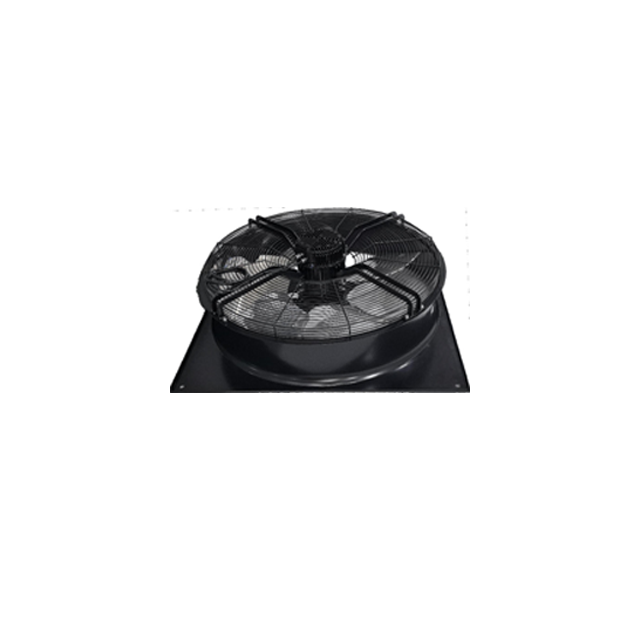
Manufacturers frequently use the term "waterproof" as a generic marketing buzzword. The term itself lacks strict engineering definitions. True protection relies entirely on the Ingress Protection (IP) rating system. The IEC 60529 standard defines these specific IP codes. They provide a verifiable engineering baseline for your IP-rated EC fan.
Understanding these numbers prevents catastrophic equipment selection errors. The two digits in an IP code represent entirely different protection categories.
The first digit measures protection against solid foreign objects. This ranges from large tools down to microscopic dust particles. Harsh environments generally demand high numbers here.
You will typically choose between IP5x and IP6x ratings. An IP5x rating means the fan is "dust protected." Some dust may enter the housing, but it will not interfere with normal operation. An IP6x rating indicates the equipment is entirely "dust-tight." A vacuum seal prevents all particulate ingress. Harsh industrial environments generally demand an IP6x baseline. EC electronics are highly sensitive. Fine metallic dust or conductive particulates can easily short-circuit exposed circuit boards.
The second digit measures resistance to liquid ingress. This metric dictates whether your fan survives a light drizzle or a high-pressure chemical wash.
Always request independent testing certifications from your supplier. You must evaluate these ratings carefully against your specific reality.
| IP Rating | Solid Protection (1st Digit) | Liquid Protection (2nd Digit) | Ideal Application Environment |
|---|---|---|---|
| IP54 | Dust Protected | Splashing Water | Protected outdoor telecom cabinets |
| IP55 | Dust Protected | Low-Pressure Water Jets | General manufacturing facilities |
| IP68 | Dust Tight | Continuous Submersion | Food processing washdown zones |
Assume standard IP testing utilizes only pure, clean water. Real-world facilities use soapy mixtures, heavy chemical solvents, and highly saline solutions. These aggressive liquids lower water surface tension. They penetrate seals much faster than pure laboratory water. You must account for this discrepancy during your final selection process.
External housings provide the first line of defense. However, long-term survival depends entirely on internal component protection. You must evaluate three core technical specifications to guarantee reliability.
True waterproof fans do not rely on tight plastic seams. They rely on advanced chemical isolation. You must verify the manufacturer's internal potting process.
Potting involves pouring liquid resin or polyurethane into the motor stator. This compound cures into a solid, impenetrable block. The motor windings and the internal Printed Circuit Board (PCB) become entirely encased. This process isolates all critical electronics from atmospheric moisture. Even if the external fan housing cracks or leaks, the internal electronics remain perfectly safe. Conformal coating provides a lighter alternative for less severe environments. It applies a thin protective chemical film directly over the PCB. However, fully potted motors remain the gold standard for ultimate moisture resistance.
Bearings represent the most common mechanical failure point in any rotary equipment. High humidity environments destroy standard bearings rapidly. Moisture infiltrates the bearing race and washes away essential lubricants.
You must rigorously evaluate bearing specifications. Specify dual-ball bearings for all harsh environment deployments. Ensure the manufacturer seals these bearings using heavy-duty, water-resistant grease. This specific grease repels moisture and prevents internal rust formation. Standard sleeve bearings are strictly unacceptable for moisture-heavy deployments. They rely on porous sintered metals that absorb ambient moisture, leading to rapid catastrophic seizure.
Harsh environments rarely feature open, unrestricted airflow paths. Equipment designers usually implement dense physical enclosures. They use thick protective grilles and heavy-duty ingress filters. These protective elements create massive static pressure barriers.
Your chosen fan must provide adequate static pressure to overcome these barriers. Standard fans stall out against heavy filters. They lose airflow velocity and eventually overheat. EC motors maintain exceptionally high torque profiles. They overcome this severe system resistance without overheating. You ensure consistent airflow delivery exactly where your sensitive equipment needs it most.
Electronically Commutated (EC) technology revolutionizes industrial thermal management. These advanced motors combine the best attributes of alternating current (AC) and direct current (DC) systems. They deliver unmatched performance metrics for continuous-operation facilities.
Traditional AC fans suffer from terrible energy conversion rates. They generate immense internal heat and waste substantial power. EC fans solve this inherent inefficiency.
The onboard electronics of an EC fan convert AC power to DC power internally. The brushless DC motor then operates at extraordinary efficiency levels. Most premium EC fans operate at 80% to 90% efficiency. They run significantly cooler than their AC counterparts. This internal temperature reduction actively extends the lifespan of the waterproof potting compounds and internal bearing lubricants.
Harsh environments experience dynamic temperature fluctuations. Running a fan constantly at maximum speed creates unnecessary mechanical wear. EC technology introduces intelligent, variable speed control.
Engineers control EC fans using PWM (Pulse Width Modulation) or standard 0-10V analog signals. The harsh environment fan dynamically adjusts its exact rotational speed based on real-time environmental temperatures. When the equipment runs cool, the fan slows down automatically. This intelligent modulation reduces unnecessary wear on the sealed bearings. It significantly lowers overall energy usage across the entire facility.
Unexpected thermal shutdowns paralyze production lines. Traditional fans simply fail without any prior warning. EC fans integrate modern predictive maintenance capabilities directly into the motor core.
Modern EC fans output precise tachometer signals. They feature integrated alarm sensors and digital communication protocols. These sensors alert system operators to minor RPM drops instantly. You can detect bearing wear or filter blockages long before a complete thermal failure occurs. Facility managers can schedule maintenance during planned outages rather than reacting to sudden catastrophic breakdowns.
Purchasing an IP68-rated fan does not guarantee a successful deployment. Implementation mechanics dictate long-term survival. Excellent fans frequently fail due to easily preventable installation errors. You must recognize and mitigate these practical field risks.
Water rarely forces its way through solid motor casings. It almost always enters through the electrical wire harness. This phenomenon is known as capillary action.
Moisture accumulates on the external wires. The micro-spaces between the wire strands act like tiny straws. Water travels straight down the wire harness directly into the motor core. You must specify heavily potted cable exits to block this pathway. Furthermore, technicians must install marine-grade drip loops during integration. A drip loop forces the wire to dip below the fan housing. Gravity pulls the water droplets off the wire before they ever reach the internal electronics.
Engineers often confuse waterproof ratings with chemical resistance. They represent two entirely different material properties. An external frame might easily pass an IP68 water submersion test. However, that same frame might disintegrate in a factory environment.
Standard polycarbonate frames become highly brittle when exposed to specific industrial solvents. Ammonia-based cleaning agents or harsh caustic degreasers cause rapid micro-cracking. You must verify chemical compatibility before final specification. Request specialized plastic blends or aluminum alloy frames if your facility uses aggressive washdown chemicals.
Waterproof encapsulation introduces a complex thermal challenge. The same polyurethane resin that blocks moisture also acts as a potent thermal insulator. Fully encapsulated motors inherently retain more internal heat.
You must ensure the manufacturer engineered the fan specifically for this reality. The internal PCB components must tolerate higher baseline temperatures. Carefully review the manufacturer's maximum operating temperature rating. Ensure they have fully accounted for the thermal dissipation limits of their specific potting compound. Placing a heavily potted fan into a high-ambient heat environment without proper airflow will cause rapid electronic degradation.
Selecting the right manufacturing partner is as crucial as selecting the right hardware. You need a supplier capable of supporting rigorous industrial demands. Base your vendor evaluation on transparency and practical customization.
Ask critical questions during the procurement phase. Do they offer customizable wire lengths straight from the factory? Splicing wires inside a wet zone creates immediate failure points. Factory-sealed custom wire lengths eliminate this risk entirely.
Can the supplier provide detailed MTBF (Mean Time Between Failures) data? Ensure this data reflects specific IP68 conditions. Standard dry-lab benchmarks mean nothing if your fan operates in a humid, corrosive environment. Demand reliability data that matches your actual operational reality.
Never roll out a massive facility upgrade based purely on a specification sheet. We strongly recommend initiating a limited prototyping phase.
Purchase a small batch of fans for localized facility trials. Place them in your most challenging environmental zones. Monitor their performance, RPM stability, and structural integrity over several weeks. Alternatively, subject the prototypes to rigorous environmental chamber testing. This practical verification step prevents costly fleet-wide implementation errors.
Selecting the proper thermal management solution requires careful environmental analysis. You must balance the severity of your facility conditions against strict IP rating definitions. Overlooking minor details like bearing types or wire routing leads to rapid catastrophic failures.
Always prioritize internal motor encapsulation over external housing aesthetics. A strong external frame cannot save a motor if capillary action pulls water through the wiring. True resilience lives inside the potted motor core.
Moving forward, map out your exact environmental exposure types. Cross-reference those challenges against precise IP6x standards. Finally, partner actively with transparent suppliers who understand chemical resistance and thermal trapping limits. By demanding rigorous test data and conducting controlled facility trials, you ensure your equipment survives the most brutal industrial realities.
A: No. IP55 only protects against low-pressure water jets and limited dust ingress. Washdown environments typically utilize high-pressure, high-temperature chemical sprays. These intense conditions require IP68 or IP69K ratings to withstand extreme pressure, intense heat, and aggressive chemicals without short-circuiting.
A: Yes, they generally retain more heat. Because the internal electronics are often potted (encased in solid resin) to block moisture completely, heat dissipation changes significantly. High-quality EC fans are engineered to manage this thermal retention, but maximum ambient temperature thresholds must be strictly observed by facility operators.
A: Weather-resistant usually implies basic protection against sporadic rain, splashing, and UV rays (often rated IP54 or IP55). True waterproof implies the mechanical ability to handle continuous heavy spray or complete submersion in liquids (rated IP67 or IP68) without suffering electrical failure.
