


Views: 0 Author: Site Editor Publish Time: 2026-07-09 Origin: Site


Robots do not always need a servo motor. Some need smooth speed, low heat, quiet running, and long service life. That is where an ec motor can fit. In this article, you will learn where it works in robotics, where it does not, and how to choose it safely.
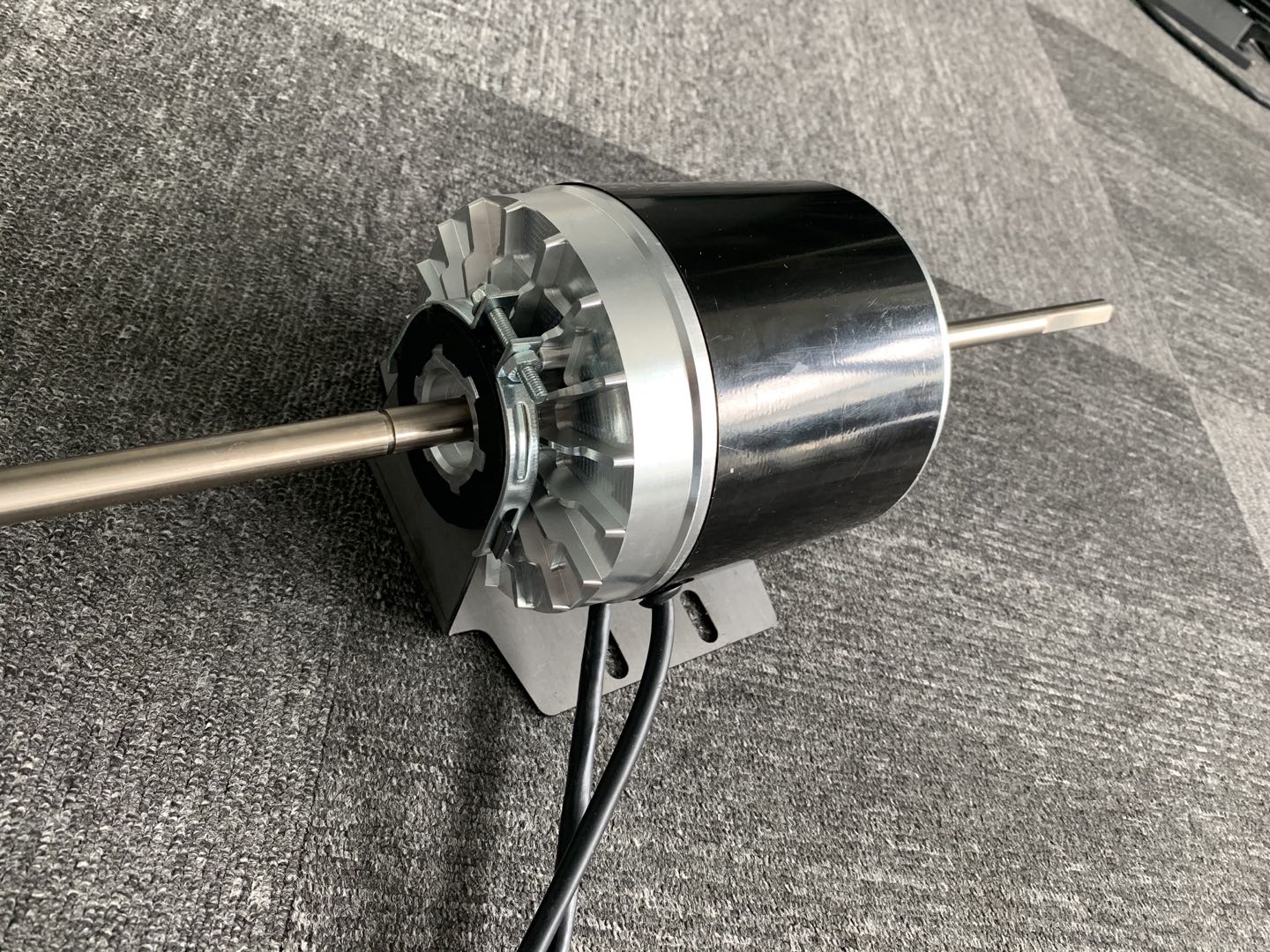
● Yes, an ec motor can be used for robotics, especially in rotating, cooling, pumping, ventilation, and mobile support systems.
● It is not always the best choice for high-precision robotic joints, where servo motors often perform better.
● EC motors are useful when the robot needs efficient speed control, low noise, compact structure, and lower maintenance.
● For robotic cooling, EC axial fans, EC centrifugal fans, and EC motor systems can help control heat from electronics, batteries, and control cabinets.
● Before selection, check torque, speed range, voltage, control signal, duty cycle, mounting space, and working environment.
Yes, you can use an ec motor for robotics. It can be a strong choice when the robot needs efficient rotary motion, variable speed, and stable long-term operation.
But it should match the task. Robotics is not one single application. A robot may need wheel movement, airflow, pumping, gripping, lifting, or precise joint control. Each function places different stress on the motor.
An ec motor is often a good fit for continuous or speed-controlled rotation. It is less ideal when the main goal is ultra-accurate position control.
EC motors fit well in robotic systems that need steady motion rather than complex position feedback. Common examples include robotic cooling fans, mobile platform support, small pump modules, motorized conveyors, ventilation units, and rotating auxiliary parts.
They are also useful in robots that run for long hours. Service robots, inspection robots, warehouse robots, and automated equipment often need motors that save energy and reduce heat.
An ec motor is not always a direct replacement for a servo motor. If a robotic arm must stop at an exact angle, hold position under changing load, or follow a fast motion profile, a servo system may be safer.
For example, a pick-and-place robot may need high-resolution feedback. A surgical robot needs extreme motion accuracy. A precision assembly robot may need tight control of torque and position. In these cases, servo motors often provide better control.
The question is not only “Can you use it?” The better question is “What does this motor need to do inside the robot?”
If it needs smooth speed control and long running time, an ec motor can work well. If it needs exact position control, compare it with a servo motor first.
Robots often have limited space and limited power. A motor that wastes less energy helps the whole system run cooler and more efficiently.
This matters in battery-powered robots. It also matters in enclosed equipment, where excess heat can affect sensors, drives, and control boards.
EC motors use electronic commutation instead of mechanical brushes. This helps reduce wear and improves efficiency compared with many traditional brushed motors.
Robots rarely work under one fixed condition. The load may change. The heat level may rise. The airflow demand may shift. A variable-speed motor can adjust output instead of running at full speed all the time.
In robotic cooling, this is especially useful. When the robot is idle, the fan can slow down. When the control cabinet gets hot, it can speed up. This can reduce noise and save energy.
Many robots work near people. Medical robots, service robots, delivery robots, laboratory systems, and commercial automation equipment should not create harsh noise.
An ec motor can support quieter operation when it is correctly selected and installed. Lower noise also improves user comfort and can help the machine feel more refined.
Brushed motors wear at the brush and commutator. In robots that run many hours, this can cause maintenance issues.
EC motors avoid this brush wear. For robots used in factories, warehouses, farms, and public spaces, lower maintenance can reduce downtime and service cost.
Note: Lower maintenance does not mean no maintenance. Wiring, bearings, dust, heat, and vibration still need routine checks.
This is one of the clearest use cases. Robots contain control boards, batteries, sensors, motors, and power electronics. These parts create heat.
An ec motor can drive a fan or blower to remove heat from the system. It can also support airflow inside a control cabinet, battery compartment, or charging station.
Some mobile robots need wheels, rollers, or rotating support parts. An ec motor may work when the system needs smooth speed and efficient running.
However, engineers should check starting torque, load changes, braking needs, and feedback. A mobile robot may need more than basic speed control if it carries heavy loads or moves over uneven ground.
Robots used in cleaning, agriculture, medical devices, and laboratory automation may need fluid movement. EC motors can support pump modules where steady speed, low noise, and efficiency matter.
The key is matching the motor to fluid resistance, duty cycle, and control requirements. If the pump must dose very exact volumes, extra feedback may be needed.
EC motors can also support robotic workstations, conveyors, ventilation modules, testing equipment, and auxiliary motion systems.
These are not always “robot joints,” but they are part of robotic automation. In many cases, this is where an ec motor provides the most value.
A servo motor is usually better when the robot must control exact position, angle, or torque. It uses feedback to correct motion in real time.
An ec motor is better when the system needs efficient speed-controlled rotation. It may not provide the same motion accuracy unless the design adds suitable feedback and control.
A stepper motor moves in steps. It is useful for simple positioning. But under heavy or sudden loads, it may lose steps.
An ec motor provides smoother rotation and can be more efficient during continuous running. It is often better for fans, pumps, and long-duty rotating systems.
A brushed DC motor is simple and familiar. But the brushes wear over time.
An ec motor uses electronic commutation. This can improve service life and reduce maintenance, especially in robots that run daily.
Tip: Do not choose a motor only by price. Compare the cost of downtime, heat, noise, power use, and service work.
Start with the real load. Check starting torque, running torque, peak torque, and required speed range.
Robots may start and stop often. They may also face changing loads. If the motor is too small, it may overheat or fail early.
The motor must match the robot’s power system. A battery-powered robot may use a different voltage range from a factory automation machine.
If voltage is unstable, the motor control may suffer. Engineers should review power margin, cable length, and protection design.
The robot controller must speak the same control language as the motor system. This may include analog control, PWM, 0-10V, RS485, or other signal types.
If the interface does not match, integration becomes slow and expensive. Control needs should be confirmed before sample testing.
Robots often have tight internal space. The motor must fit the frame, bracket, airflow path, cable route, and service access area.
Vibration also matters. A poor mounting design can create noise, loosen parts, or reduce motor life.
Dust, moisture, temperature, impact, and vibration can affect reliability. A robot used in a clean lab has different needs from one used in a warehouse or outdoor site.
The motor should be selected based on the real working environment, not only the catalog description.
An ec motor can lower energy use, reduce noise, and support smoother speed control. It can also reduce maintenance because there are no brushes to replace.
These benefits matter in robots that work near people or run for long shifts. They also matter in machines where cooling and stable operation are critical.
For equipment builders, EC motor systems can also support a cleaner control design. When speed can be adjusted through the control system, the robot can react better to changing conditions.
The main limit is precision. An ec motor is not always the right choice for high-accuracy robotic joints. It may need sensors, feedback, and a suitable controller to meet advanced motion needs.
Another limit is integration. The control signal, voltage, wiring, and protection design must fit the robot. If they do not, the project may face delays.
It is a smart choice when the robot needs efficient rotary motion, quiet operation, compact design, and long running life.
It is also smart for robotic cooling, airflow, pumps, conveyors, and other support modules. For precision arms and motion axes, servo motors should be compared first.
Yes, an ec motor can work in robotics when the task needs efficient, quiet, speed-controlled rotation. It is strong for cooling, pumps, airflow, and support motion. Suzhou Dowell Ventilation Technology Co., Ltd provides EC motor and fan solutions with smart control, low noise, and customization support for practical system value.
A: Sometimes, but an ec motor is not ideal for precise joint control.
A: It saves energy, runs quietly, and reduces maintenance.
A: Yes. It works well for fans and airflow control.
A: Often yes, but it may lower power and service costs.
A: Common causes include overload, heat, por wiring, and wrong control signals.


