


Views: 0 Author: Site Editor Publish Time: 2026-09-13 Origin: Site


Modern HVAC and agricultural ventilation systems are undergoing a massive transformation today. We are shifting rapidly from traditional AC motors to electronically commutated (EC) technology. Rising energy costs create significant operational burdens for facility managers across various industries. Stricter efficiency compliance standards demand much more innovative airflow solutions than ever before. Standard on/off or step-speed fans fail completely in dynamic, changing environments. They waste significant energy and constantly struggle to maintain consistent temperatures. A variable speed EC fan directly solves these exact operational challenges. It provides precise, sensor-driven airflow management tailored for complex spaces. This technology drastically reduces power consumption during crucial partial load operations. You can maintain optimal environmental parameters seamlessly without sacrificing peak system performance. In this comprehensive guide, we will explore the core advantages of EC fan systems. You will learn how to specify the exact right equipment for your facility. We will also examine control architectures and actionable implementation strategies to maximize your efficiency.
Efficiency Baseline: Variable Speed EC Motors consume up to 70% less energy than standard AC motors, particularly at partial loads.
Seamless Integration: Native support for 0-10V, PWM, and Modbus protocols enables dynamic fan speed adjustments in response to environmental conditions.
Total Cost of Ownership (TCO): While upfront capital expenditure is higher, ROI is typically achieved within 12–18 months through energy savings and eliminated VFD (Variable Frequency Drive) hardware costs.
Sizing Reality: Proper selection requires mapping CFM (Cubic Feet per Minute) and static pressure against specific ducting and filter resistance—not just matching motor wattage.
The transition toward electronic commutation represents a fundamental technology shift in motor design. A traditional AC motor runs natively at a fixed, constant speed based on grid frequency. Engineers previously altered this speed using external hardware. An EC motor radically changes this approach. It combines standard AC power input with high-efficiency DC motor characteristics. Built-in electronic microprocessors handle the motor commutation directly. This onboard intelligence converts the AC voltage to DC internally. It then precisely pulses the energy to the permanent magnets inside the rotor. This integrated design delivers unprecedented mechanical efficiency and eliminates external power supplies.
We must evaluate the legacy AC approach against direct EC integration. Historically, facilities achieved variable speeds by adding a Variable Frequency Drive (VFD) to an AC motor. This AC plus VFD setup introduces multiple inefficiencies. VFD efficiency drops sharply when operating at lower speeds. Friction and magnetic losses compound quickly. Conversely, EC motors maintain an incredible 80% to 90% efficiency across their entire speed range. They deliver maximum energy utilization even when running at 20% capacity. You completely eliminate the bulky VFD hardware from your electrical cabinets. Furthermore, EC fans solve persistent acoustic issues. Legacy VFD setups often generate a harsh, high-pitched magnetic motor hum. An EC system runs whisper-quiet. They require far less installation space, making retrofits incredibly straightforward.
Facilities face increasing pressure to meet stringent building codes. Sustainability compliance is no longer optional for modern construction. ASHRAE standards mandate specific energy utilization limits for commercial HVAC components. The European ErP (Energy-related Products) directives set high minimum efficiency grades for industrial fans. Upgrading to EC technology helps you meet these stringent codes effortlessly. These advanced systems provide highly verifiable energy reduction metrics. You can easily export this performance data for corporate sustainability reporting. You secure compliance while dramatically lowering your monthly power consumption.
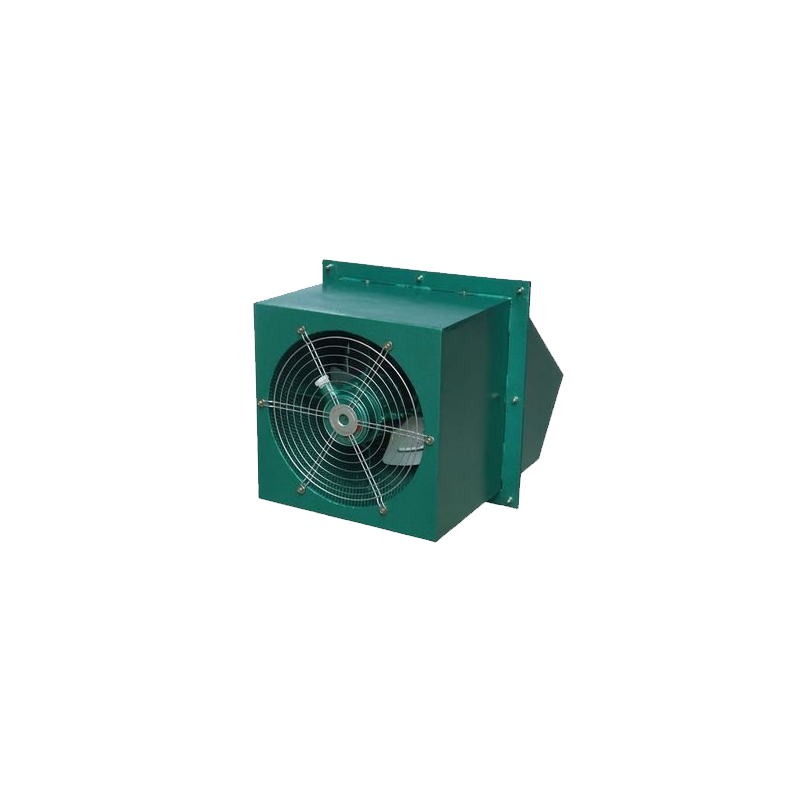
Selecting the right hardware requires strict attention to actual performance mapping. You cannot simply rely on nominal CFM (Cubic Feet per Minute) marketing claims. Manufacturers often test and rate fans at zero static pressure. This represents an ideal scenario without any ducting attached. Real-world applications introduce significant resistance to the airflow. You must carefully calculate your total system impedance. Factor in dense HEPA filters, sharp duct bends, and restrictive motorized dampers. A fan rated for 1000 CFM might only push 400 CFM against high static pressure. Always request precise static pressure curves from your supplier. Map your required airflow against the exact resistance of your physical ductwork.
Form factor alignment dictates your overall installation success. Different environments require very different structural fan designs.
Inline Duct Fans: These cylindrical units fit perfectly inside existing ductwork. They work best for tight HVAC retrofits. We frequently specify them for smart home distributed ventilation systems. They maintain high pressure over long duct runs.
Axial Exhaust Fans: These look like traditional propeller fans. You mount them directly on walls or panels. They move massive volumes of air at very low pressure. They are ideal for open agricultural facilities, server rooms, and commercial greenhouses.
Fan Form Factor Comparison Chart
Form Factor | Primary Use Case | Airflow Characteristic | Ideal Environment |
|---|---|---|---|
Inline Duct Fan | HVAC retrofits, Smart Homes | High static pressure, focused flow | Long ducting runs, filtered systems |
Axial Exhaust Fan | Greenhouses, Warehouses | High volume, low static pressure | Wall mounting, open-air exhaust |
Environmental resilience heavily impacts long-term reliability. Evaluate your exact operating environment thoroughly before purchasing. Assess daily exposure to high humidity, airborne dust, and corrosive elements. Standard indoor motors fail rapidly in harsh agricultural settings. Condensation easily shorts out exposed electronics. Greenhouses and industrial setups demand ruggedized hardware. You must specify a Variable Speed EC Motor boasting a verified IP54 or IP55 rating. The "5" indicates strong protection against dust ingress. The "4" or "5" signifies resistance to splashing or jetting water. This robust casing prevents premature printed circuit board (PCB) failure. It ensures your investment survives demanding operational conditions.
Dynamic adjustments require solid, reliable control protocols. You must carefully choose between analog and digital communication methods based on your infrastructure.
Analog protocols include 0-10V and PWM (Pulse Width Modulation) signals. These remain the established industry standard for simple setups. They work beautifully for local, hardwired sensor loops. Most basic smart home controllers rely natively on these analog signals. A 5V signal simply tells the fan to run at 50% capacity. They are easy to troubleshoot using a standard multimeter. However, analog signals suffer from voltage drop over very long wire runs.
Digital protocols include Modbus RTU and BACnet. Choose these sophisticated methods for facility-wide integration. Large Building Management Systems (BMS) require robust digital communication. Digital setups allow multiple fans to connect in a single daisy-chain configuration. They enable highly granular data logging. You can actively track real-time RPM, exact power consumption, and specific fault codes. This data empowers predictive maintenance strategies across your entire facility.
Sensor-driven automation creates a highly responsive closed-loop environment. You can integrate precise temperature, humidity, and CO2 sensors directly into the control loop. The fan reacts automatically to shifting room parameters. However, you must carefully manage the system's response latency. Tuning the Proportional-Integral-Derivative (PID) controller is absolutely critical. Poor PID tuning causes frustrating fan "hunting." This occurs when the fan constantly speeds up and slows down during minor environmental shifts. Proper calibration ensures smooth, gradual speed adjustments that maximize energy efficiency.
We increasingly see system integrators bridging commercial technology into residential spaces. Advanced smart home platforms actively handle these complex hardware integrations. Systems like Home Assistant and SmartThings provide excellent interfaces for EC technology. DIY enthusiasts frequently use Zigbee or Wi-Fi relays to control commercial-grade fans. They build custom automation scripts based on home occupancy and indoor air quality sensors. This brings industrial-level reliability into everyday residential environments.
You must acknowledge the initial capital requirements of this technology frankly. Upgrading to EC systems carries a distinct upfront cost premium. They generally cost 20% to 40% more than traditional AC alternatives. Transparent budgeting helps stakeholders fully understand the long-term ROI. The dramatic energy savings rapidly offset the initial purchase price. You also save money by eliminating external VFD purchases and simplifying the installation labor. Managers must project these savings accurately to secure initial funding approvals.
Electrical infrastructure demands careful evaluation before mass deployment. EC fans inherently draw non-linear currents from the electrical grid. This happens because of the internal AC-to-DC conversion process. Large-scale deployments of multiple EC fans introduce harmonic distortion into your electrical network. You must evaluate the potential need for active power factor correction (PFC). Without PFC, severe harmonic distortion strains your local grid. It can overheat transformers and trigger utility penalties. Consulting with a qualified electrical engineer prevents these infrastructure headaches. They can analyze your total harmonic distortion (THD) limits.
You must actively avoid common over-engineering pitfalls. Not every single scenario requires precise variable speed control. Identify applications where efficiency gains diminish significantly. For example, some exhaust systems strictly require constant 100% load operation by design. A smoke extraction fan or a critical hazard exhaust might never run at partial speeds. In continuous full-speed applications, the dynamic benefits of EC technology remain underutilized. A high-efficiency standard AC motor might suffice perfectly well for those specific, static cases. Always match the technology complexity to the actual operational requirement.
Follow a structured approach to finalize your hardware selection securely. This logical process ensures maximum operational performance and avoids costly sizing mistakes.
Audit current system performance gaps: Identify specific facility areas lacking precise control. Document instances of excessive energy usage and recurring noise complaints. Note any environments struggling with fluctuating temperatures.
Define maximum CFM and static pressure requirements: Base these critical numbers on actual, physical duct architecture. Measure existing pressure drops using a manometer if possible. Include all filter resistance values and damper restrictions in your final calculation.
Finalize your control strategy: Decide firmly between a local analog sensor loop or a centralized digital BMS network. This fundamental choice dictates the specific communication interface your new motor requires.
Actionable Advice: Always request detailed performance curves from your shortlisted manufacturers. Ask them to provide comprehensive ROI calculation models based on your local electricity rates. Verify that your system's operational curve lands squarely within the fan's optimal efficiency zone. Never finalize a purchase order based solely on nominal airflow numbers.
A: No. Standard AC TRIAC dimmers alter the voltage wave and will damage the EC motor's electronics. You must use a dedicated 0-10V controller, PWM signal, or an EC-specific potentiometer to adjust speeds safely.
A: Both operate internally on direct current, but EC fans plug directly into standard AC mains (110V/220V). The power conversion and commutation electronics are built-in, eliminating the need for bulky external power supplies.
A: Most commercial EC fans have a fail-safe mode. Depending on the manufacturer's firmware, the fan can be programmed to stop, hold its last known speed, or ramp up to 100% to ensure baseline ventilation continues.
