


Views: 0 Author: Site Editor Publish Time: 2026-09-01 Origin: Site


Thermal management dictates success in heavy-duty environments today. Component failure brings critical operations to a grinding halt. Operational downtime costs industrial companies thousands of dollars every hour. Energy waste further drains facility budgets unnecessarily. You can no longer rely solely on standard off-the-shelf fans. Industry leaders now transition to purpose-built Electronically Commutated (EC) technology. This critical shift ensures precise thermal control and unmatched equipment reliability. This article serves as your definitive technical and commercial guide. Engineering and procurement teams will learn how to evaluate and specify custom solutions. We will explore aerodynamic mapping, environmental hardening, and vendor selection processes. You will discover how an optimized thermal strategy drives long-term operational efficiency. By the end, you will know exactly how to integrate advanced cooling designs successfully.
Custom EC fans reduce energy consumption by up to 70% compared to traditional AC fans while providing precise, variable-speed thermal control.
Off-the-shelf fans often compromise system design; custom engineering ensures exact form-factor, voltage, and airflow matching.
Evaluating an OEM/ODM partner requires analyzing their prototyping speed, testing rigor (wind tunnel, acoustics), and global compliance (UL, CE).
Total Cost of Ownership (TCO) for custom EC technology typically offsets initial engineering costs within the first maintenance cycle.
Generic cooling solutions rarely meet the complex demands of modern facilities. Relying on standard catalogs often leads to significant operational inefficiencies.
Generic fans force engineers into a difficult corner. You either over-specify or under-specify the cooling system. Over-specification wastes massive amounts of electricity daily. It forces facilities to pay for unused cooling capacity. Under-specification creates dangerous thermal bottlenecks rapidly. These bottlenecks degrade sensitive internal components quickly. A custom EC fan for industrial equipment solves this dilemma completely. It matches real-time thermal loads accurately. You avoid unnecessary energy expenditures and prevent premature component degradation.
Modern equipment designs prioritize compactness heavily. Standard fans usually feature bulky, inflexible form factors. They struggle to fit inside tight electronic enclosures. Noise presents another major hurdle for engineers. Off-the-shelf units run at full speed continuously. This generates excessive acoustic noise across the factory floor. Facility managers must adhere strictly to occupational noise limits. Custom designs optimize blade geometry to reduce acoustic footprints. They deliver high airflow without violating safety noise thresholds.
Harsh environments destroy standard components rapidly. Dust, moisture, and heavy vibrations accelerate mechanical wear. Traditional brushed DC or standard AC fans require frequent replacements. You face constant, disruptive maintenance cycles. Each replacement cycle disrupts production schedules significantly. They inflate labor costs and reduce overall factory output.
Common Mistake: Do not assume standard fans save money upfront. Their frequent failures drain maintenance budgets rapidly over time.
Selecting the right motor technology dictates long-term performance. EC technology blends the best traits of AC and DC systems.
We see massive differences in power consumption profiles. AC motors waste energy through heat generation and mechanical slip. EC fans incorporate built-in AC-to-DC conversion internally. This maximizes electrical efficiency significantly. They consume up to 70% less power than standard AC models. This reduction lowers utility bills for large-scale operations.
Traditional AC fans operate simply. They turn on or off without any nuance. This crude control wastes energy during low-heat periods. EC technology offers infinite speed control instead. Engineers use Pulse Width Modulation (PWM) or 0-10V signals. The fan speeds up only when temperatures rise. It matches cooling output precisely to real-time thermal loads. You avoid over-cooling and optimize energy usage perfectly.
Brushless designs define the reliability of an industrial cooling fan. Brushes cause friction, sparking, and eventual failure. EC motors eliminate these physical brushes entirely. They experience vastly reduced mechanical friction. They also operate at much lower internal temperatures. This extends the operational lifespan dramatically. Maintenance teams spend less time replacing burnt-out motors.
Best Practice: Always integrate smart temperature sensors alongside EC units. Closed-loop feedback maximizes both energy savings and component lifespan.
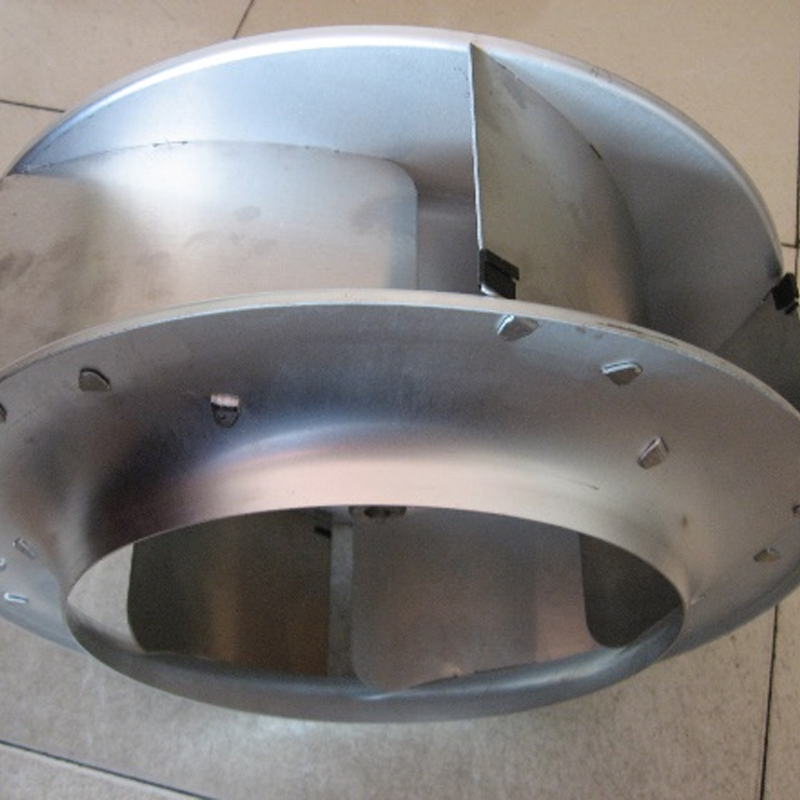
Successful thermal management requires meticulous engineering. You must tailor every specification to your specific application.
Airflow demands go beyond simple CFM ratings. Engineers must map custom impeller designs carefully. They analyze system impedance and pressure drop requirements closely. High-density enclosures restrict airflow severely. Custom blade profiles overcome this high static pressure. They push air through dense component layouts efficiently.
Standard frames rarely fit modern technological innovations. You might need non-standard mounting structures. Some enclosures feature unique, irregular shapes. Custom engineering modifies the frame dimensions exactly. It ensures secure installation within tight spatial constraints. Engineers design brackets perfectly aligned to your chassis.
Power inputs vary across different global regions. Custom voltage configurations ensure universal compatibility anywhere. You also need specialized wire harnesses for clean routing. IP-rated connectors guarantee seamless, secure integration. They prevent accidental disconnections during heavy machinery vibrations.
Industrial environments punish sensitive electronics relentlessly. High-dust facilities require robust filtration and superior sealing. Extreme-temperature zones demand specialized synthetic lubricants. Engineers select custom conformal coatings for internal circuit boards. They specify IP55 to IP68 ingress protection ratings. Specialized bearings withstand corrosive chemicals and heavy debris.
Protection Level | Solid Particle Resistance | Liquid Ingress Resistance | Ideal Industrial Application |
|---|---|---|---|
IP44 | Objects over 1mm | Splashing water | Clean indoor manufacturing |
IP55 | Dust protected | Water jets | Standard factory floors |
IP68 | Dust tight | Continuous immersion | Harsh outdoor equipment |
Designing the fan represents only the first step. Rigorous testing and compliance ensure real-world reliability.
Great solutions require deep collaboration between teams. Follow this proven workflow:
Define thermal loads and spatial constraints clearly.
Develop detailed CAD models of the proposed fan.
Run CFD (Computational Fluid Dynamics) thermal simulations.
Refine the aerodynamic design based on simulation data.
Manufacture initial physical prototypes for bench testing.
Physical prototypes undergo brutal validation phases. Wind tunnel mapping verifies exact airflow metrics accurately. Acoustic chamber testing ensures strict noise compliance. Engineers conduct accelerated life testing next. They simulate years of industrial loads in mere weeks. This exposes any hidden mechanical weaknesses early. You avoid deploying flawed units into production environments.
Global distribution demands strict certifications. The custom design must meet regional compliance mandates. UL and CE marks remain non-negotiable for most markets. RoHS compliance ensures hazardous materials stay out. ATEX certification proves essential for hazardous, explosive environments. A capable manufacturing partner handles this regulatory burden for you. They streamline the certification process entirely.
Your choice of manufacturing partner determines project success. Not all vendors possess true custom engineering capabilities.
Many firms build great initial prototypes. Few scale them efficiently into mass production. Evaluate the vendor's transition process closely. They must move from low-volume prototyping to mass production smoothly. High-yield production must occur without any quality degradation. Consistent manufacturing tolerances remain critical for reliability.
Global supply chains remain highly volatile today. Assess the transparency of their component sourcing. Ask where they source motor controllers and bearings. Diverse sourcing guarantees better lead-time reliability. It protects you from sudden material shortages. Strong supply chains keep your production lines moving.
Distinguish between basic assemblers and true engineering partners. Standard contract manufacturers just follow your provided blueprints. True engineering partners provide immense added value. They offer aerodynamic optimization and expert thermal consulting. They proactively identify design flaws before mass production begins.
Partner Evaluation Criteria:
In-house CFD simulation capabilities for rapid iterations.
Ownership of certified acoustic and wind tunnel testing facilities.
Proven track record applying IP-rated environmental hardening.
Transparent component sourcing documentation and robust vendor relationships.
Dedicated regulatory compliance teams familiar with global standards.
Custom EC fans bridge a critical engineering gap. They balance rigorous thermal requirements with long-term operational efficiency. Standard fans fail to deliver the precision needed today. Purpose-built solutions provide optimal airflow, noise reduction, and environmental resilience. They eliminate the cycle of constant replacements and thermal throttling. We recommend auditing your current thermal performance immediately. Identify areas suffering from excessive heat or high energy use. Then, submit your system specifications to an OEM partner. Ask them for a thorough feasibility and cost-benefit review. Taking this proactive step protects your heavy-duty investments effectively. It ensures your operations remain running smoothly for years.
A: A custom EC fan prototype generally takes 4 to 8 weeks to engineer. This timeline includes CAD modeling, CFD simulations, and initial physical manufacturing. Complex environmental hardening or unique dimensional constraints may extend this period. Partnering with vertically integrated manufacturers often accelerates the prototyping phase significantly.
A: Yes. Engineers routinely design custom EC solutions as drop-in replacements for outdated AC fans. They match the exact mounting hole patterns and frame dimensions. This direct retrofit process eliminates the need for expensive structural modifications to your existing equipment enclosures.
A: Upfront tooling and engineering costs initially increase the project budget. However, these expenses recover quickly through massive energy savings and reduced maintenance cycles. The customized precision eliminates premature equipment failures. These operational savings drastically improve the overall financial returns over the product's lifespan.
A: MOQs for custom OEM/ODM fans usually range from 500 to 1,000 units. Some engineering-focused partners offer lower MOQs for highly specialized, high-value industrial applications. Discussing your long-term volume projections early helps negotiate favorable terms during the initial prototyping and testing phases.
