


Views: 0 Author: Site Editor Publish Time: 2026-08-31 Origin: Site


Commercial HVAC systems account for up to 40% of total building energy consumption. This massive power draw makes ventilation infrastructure a prime target for operational cost reduction. Facility managers must address this to meet stringent regulatory compliance and budget goals.
Traditional AC motors are rapidly phasing out across the commercial sector. Stricter energy standards and rigorous ESG reporting requirements demand better alternatives. Electronically Commutated (EC) technology fills this critical gap effectively and reliably.
Upgrading to an EC fan for commercial ventilation goes beyond simple engineering. It represents a strategic financial decision for modern facilities. You will learn how to evaluate this technology, measure the return on investment, and navigate the transition process successfully.
OpEx Reduction: EC fans typically deliver 30% to 50% energy savings compared to traditional AC fans, particularly under partial-load conditions.
System Integration: Built-in variable speed controls allow seamless integration with existing Building Management Systems (BMS) via Modbus or 0-10V signals.
Total Cost of Ownership (TCO): While upfront costs are higher, the average payback period for a commercial ventilation fan upgrade ranges from 1.5 to 3 years.
Risk Mitigation: Successful retrofitting requires evaluating physical space constraints, BMS compatibility, and acoustic requirements before procurement.
Legacy AC fans operate efficiently only at peak load. In commercial settings, however, ventilation demands fluctuate constantly throughout the day. Occupancy levels change, and external weather shifts dynamically. Mechanical throttling methods attempt to control AC fan output. These legacy methods lead to massive energy waste. The motor still draws near-maximum power even when airflow requirements drop.
Increasing local energy codes are forcing facility managers to act. Decarbonization mandates push buildings toward aggressive sustainability targets. You must audit and replace inefficient air handling units (AHUs) to avoid steep fines. Many older systems simply cannot meet modern efficiency standards. Delaying these upgrades often results in higher operational penalties over time.
EC technology offers a precise solution to these fluctuating demands. An EC fan integrates a brushless DC motor directly into the fan assembly. It includes an onboard inverter to convert AC power to DC. This allows the fan to automatically match actual airflow demand. It slashes energy waste immediately. The motor speed ramps up or down smoothly, ensuring optimal climate control without the heavy energy draw of standard units.
EC motors maintain up to 90% efficiency even at low speeds. They rely on electronic commutation rather than mechanical brushes. Permanent magnets in the rotor reduce internal energy losses significantly. Conversely, AC motor efficiency drops drastically when you throttle them. A standard AC motor running at 50% speed might only operate at 40% efficiency. This discrepancy translates into enormous power savings for EC units during off-peak hours.
Traditional setups often require bulky Variable Frequency Drives (VFDs) to control AC motor speeds. VFDs add significant installation complexity and require dedicated wall space. They also generate troublesome electrical noise. EC fans do not require these external drives. The speed control electronics sit inside the motor housing itself. This streamlined design reduces wiring costs. It also eliminates multiple potential points of failure.
Energy loss in motors typically manifests as waste heat. Because EC technology is highly efficient, it generates far less heat. This reduces the secondary cooling load on your HVAC system. Additionally, EC motors operate with significantly lower acoustic profiles. They avoid the low-frequency hum commonly associated with VFD-driven AC fans. Quiet operation remains crucial for occupied commercial spaces like offices, schools, and hospitals.
Table: AC vs. EC Motor Characteristics
Feature | Traditional AC Motors | EC (Electronically Commutated) Motors |
|---|---|---|
Partial Load Efficiency | Low (Drops off sharply when throttled) | High (Maintains up to 90% efficiency) |
Speed Control | Requires external VFD | Integrated onboard electronics |
Heat Generation | High (Increases cooling loads) | Low (Minimal waste heat) |
Acoustic Profile | Prone to mechanical and magnetic hum | Exceptionally quiet operation |
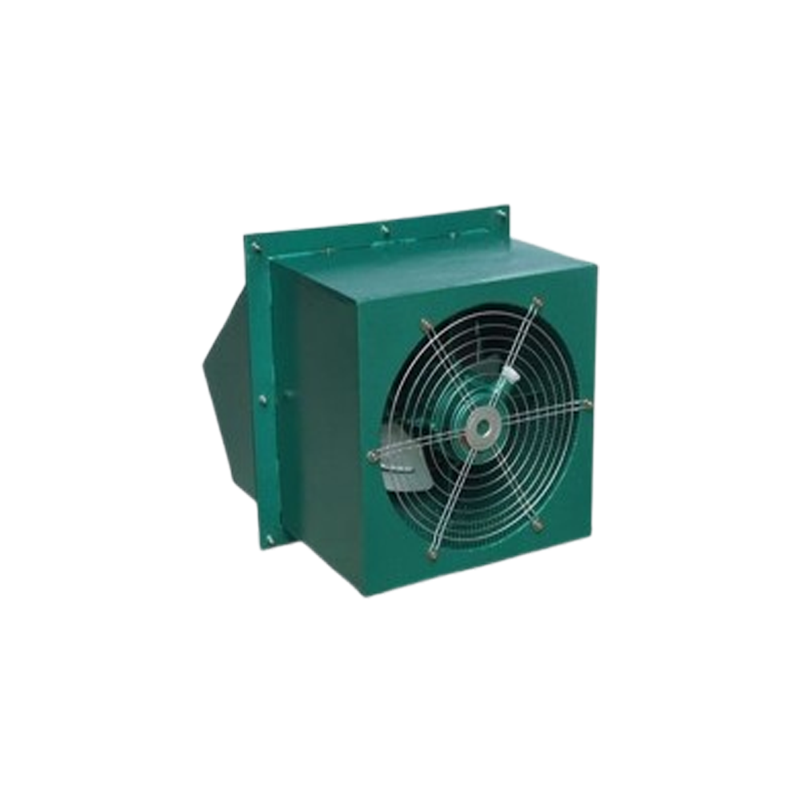
You must carefully assess static pressure capabilities and desired airflow volumes. Every building presents unique aerodynamic challenges. The impeller design must match your specific commercial application. Forward-curved impellers suit low-pressure, quiet environments like office buildings. Backward-curved impellers handle higher pressure drops effectively. They work best in data centers and industrial exhaust systems. Selecting the wrong impeller geometry degrades overall system efficiency.
A high-performance commercial ventilation fan must communicate flawlessly with your building. Evaluate the fan’s native communication protocols carefully. Ensure it supports 0-10V analog inputs or PWM signals as a baseline. For more advanced automated climate control, demand digital interfaces. Modbus RTU or BACnet compatibility allows seamless, two-way communication. This integration lets facility managers monitor fan speed, power consumption, and error codes in real time.
Always review the Mean Time Between Failures (MTBF) rating. EC fans inherently lack carbon brushes and drive belts. This design choice virtually eliminates routine mechanical maintenance. You no longer need to schedule periodic belt tensioning or bearing lubrication. However, the sensitive onboard electronics require protection. Ensure the fan carries an appropriate IP (Ingress Protection) rating if exposed to harsh, dusty, or humid commercial environments.
Space limitations frequently complicate HVAC upgrade projects. Fortunately, EC fans are often much more compact than traditional setups. They eliminate bulky external VFDs and large belt-drive assemblies. This compact nature makes them ideal for tight retrofit situations. Always assess your existing bulkhead and plenum space prior to installation. Proper clearance ensures optimal airflow and prevents unwanted pressure drops inside the housing.
Retrofitting requires careful electrical planning. Address potential harmonic distortion concerns early in the project. While modern EC electronics filter noise well, older building grids might still react unpredictably. You must ensure existing building electrical panels can support the new units. Verify the specific voltage and phase requirements of your chosen fans. Minor electrical upgrades might be necessary to accommodate the new power profile safely.
Replacing one massive AC fan carries logistical risks. A massive unit often cannot fit through standard commercial doorways. We highly recommend a fan array strategy to mitigate this risk. You replace the single large fan with a redundant grid of smaller EC fans. This ensures continuous operation if a single node fails. Multiple smaller fans easily fit through standard service elevators and doors, drastically cutting installation labor costs.
We must acknowledge the initial pricing reality. EC technology commands a premium over standard AC models. The integrated electronics and high-grade permanent magnets drive up manufacturing costs. However, viewing this solely as a capital expense paints an incomplete picture. You avoid buying external VFDs and heavy mounting hardware. These avoided costs help offset the premium purchase price right at the start.
Accurate OpEx modeling requires a straightforward calculation framework. You map out the current AC kW consumed against the proposed EC kW. Multiply this energy difference by your local utility rates. Then, multiply that figure by your annual operating hours. Because commercial fans often run 24/7, the operating hours are massive. Even a modest drop in kW consumption generates substantial financial savings month over month.
Labor costs eat into facility budgets quickly. Legacy fans require constant attention. You must factor in the eliminated costs of mechanical upkeep. Technicians no longer spend hours on belt replacements and sheave alignments. You remove regular greasing from the maintenance schedule entirely. Furthermore, you eliminate VFD troubleshooting and programming. These saved labor hours translate directly into measurable lifecycle financial savings.
Energy providers want to reduce grid strain. Many regional utility companies offer substantial custom rebates for verified efficiency upgrades. Swapping outdated AC motors for modern EC alternatives often qualifies for these programs. Some incentives cover up to 50% of the initial hardware cost. Engaging your utility provider early accelerates the payback period significantly. It transforms a good financial decision into an undeniable business advantage.
Trust, but verify, manufacturer claims. Look closely for independent, third-party certifications. Organizations like AMCA (Air Movement and Control Association) test and validate aerodynamic performance. In Europe, ErP (Energy-related Products) directives dictate strict efficiency baselines. Purchasing certified equipment ensures the stated energy efficiencies match real-world output. It prevents you from investing in subpar equipment that fails to deliver projected savings.
A reliable supplier does more than ship boxes. Choose manufacturers that offer robust, localized engineering support. They should provide computational fluid dynamics (CFD) modeling to simulate airflow in your specific AHU. This ensures the fans will perform optimally in your unique physical space. Additionally, look for suppliers willing to provide custom firmware. Tailored software ensures flawless integration with your legacy BMS environments.
Hardware failures happen, even with top-tier equipment. Evaluate the length and comprehensiveness of the manufacturer's warranty. Industry standards typically offer 2 to 5 years of coverage. Beyond the warranty, investigate their supply chain resilience. Ensure they maintain domestic stock of replacement components. Fast access to spare electronics or impellers prevents extended downtime. Reliable local distribution keeps your commercial building running smoothly.
Upgrading to an EC fan is a proven, highly effective strategy. It drastically reduces building energy consumption while modernizing your HVAC controls. The technology lowers maintenance burdens and creates a quieter, more comfortable commercial environment. The shift from outdated AC motors to smart, direct-drive technology solves multiple operational pain points simultaneously.
Do not view this retrofit as a simple sunk cost. Evaluate the upgrade based on accurate load profiling and long-term financial modeling. The massive reduction in energy waste at partial loads creates rapid financial returns. Careful planning around physical footprints and electrical infrastructure guarantees a smooth installation process.
Take action today to future-proof your facility. Request a comprehensive energy audit from a qualified technician. Download a technical sizing guide to understand your airflow requirements better. Contact an engineering specialist to model the specific return on investment for your building. The energy savings waiting in your ventilation system are too large to ignore.
A: Yes, the upfront hardware cost is higher. However, you eliminate the need to purchase and install external VFDs. Combined with a 30% to 50% reduction in daily energy usage, the operational savings rapidly accumulate. Most commercial facilities offset the initial premium completely within 18 to 36 months of continuous operation.
A: Yes. Retrofitting legacy systems is highly common and practical. Manufacturers design EC fans in modular "plug fan" configurations. These compact arrays easily slide into existing AHU plenums. They usually require minimal ductwork modification and fit neatly through standard building doorways.
A: No. EC units feature a direct-drive design. They lack troublesome mechanical components like belts, sheaves, or carbon brushes. Mechanical maintenance is practically zero. Routine facility checks simply focus on keeping the impellers free of debris and ensuring the electronic communication connections remain secure.
A: Most commercial EC fans come standard with 0-10V analog or PWM control inputs. They accept speed commands directly from standard HVAC sensors or legacy controllers. This allows simple integration without requiring complex programming or expensive network protocol gateways.
