


Views: 0 Author: Site Editor Publish Time: 2026-09-04 Origin: Site


Sourcing fans for commercial HVAC systems is no longer just about airflow specs. It is an exercise in supply chain risk management and long-term energy compliance. While the technological superiority of Electronically Commutated (EC) motors over traditional AC motors is established, the variance in manufacturer execution remains high. Controller reliability, aerodynamic design, and component lifespan differ drastically between factories. A poorly built motor disrupts climate control and damages your brand reputation.
To protect project margins and system longevity, project managers and OEM procurement teams must evaluate partners through a strict technical and commercial lens. Rigorous assessment prevents costly integration failures down the line. You need suppliers who understand complex aerodynamic requirements and regional compliance mandates. This guide provides a clear framework for selecting the right factory. You will learn how to verify production scale, validate engineering claims, and avoid common procurement pitfalls.
Technical alignment: A qualified partner provides verifiable performance curves, not just peak-efficiency claims.
Supply chain resilience: Large-scale commercial projects require manufacturers with proven second-source capabilities and scalable production.
Compliance & Testing: Mandate transparency in testing methodologies (e.g., AMCA standards) and regional energy compliance (ErP, UL, CE).
Every commercial HVAC project heavily relies on continuous operational uptime. Selecting the right EC centrifugal fan manufacturer goes beyond checking basic spec sheets. It directly influences your overall profitability. We frame this supplier evaluation around reducing warranty claims and preventing Air Handling Unit (AHU) integration failures. A failed motor in a commercial building triggers expensive emergency maintenance. It also creates unacceptable downtime for the end user.
Major OEMs are rapidly moving away from single-source dependencies. Relying on just one factory introduces massive vulnerabilities. Geopolitical shifts, material shortages, or logistical delays can easily ruin production schedules. Evaluating a secondary manufacturer safeguards your assembly lines against these unexpected disruptions. A robust second-source strategy ensures you always have a reliable backup. This approach stabilizes your lead times and protects your delivery commitments.
Furthermore, buyers must analyze operational impact versus the initial unit cost. Purchasing the cheapest available motor often backfires. Minor deficiencies in motor efficiency compound into significant operational expenses over a 10 to 15-year HVAC lifespan. Substandard bearing quality forces early replacements. Poor aerodynamic design forces the motor to run hotter and consume more electricity. A rigorous evaluation guarantees your equipment remains energy-efficient and durable.
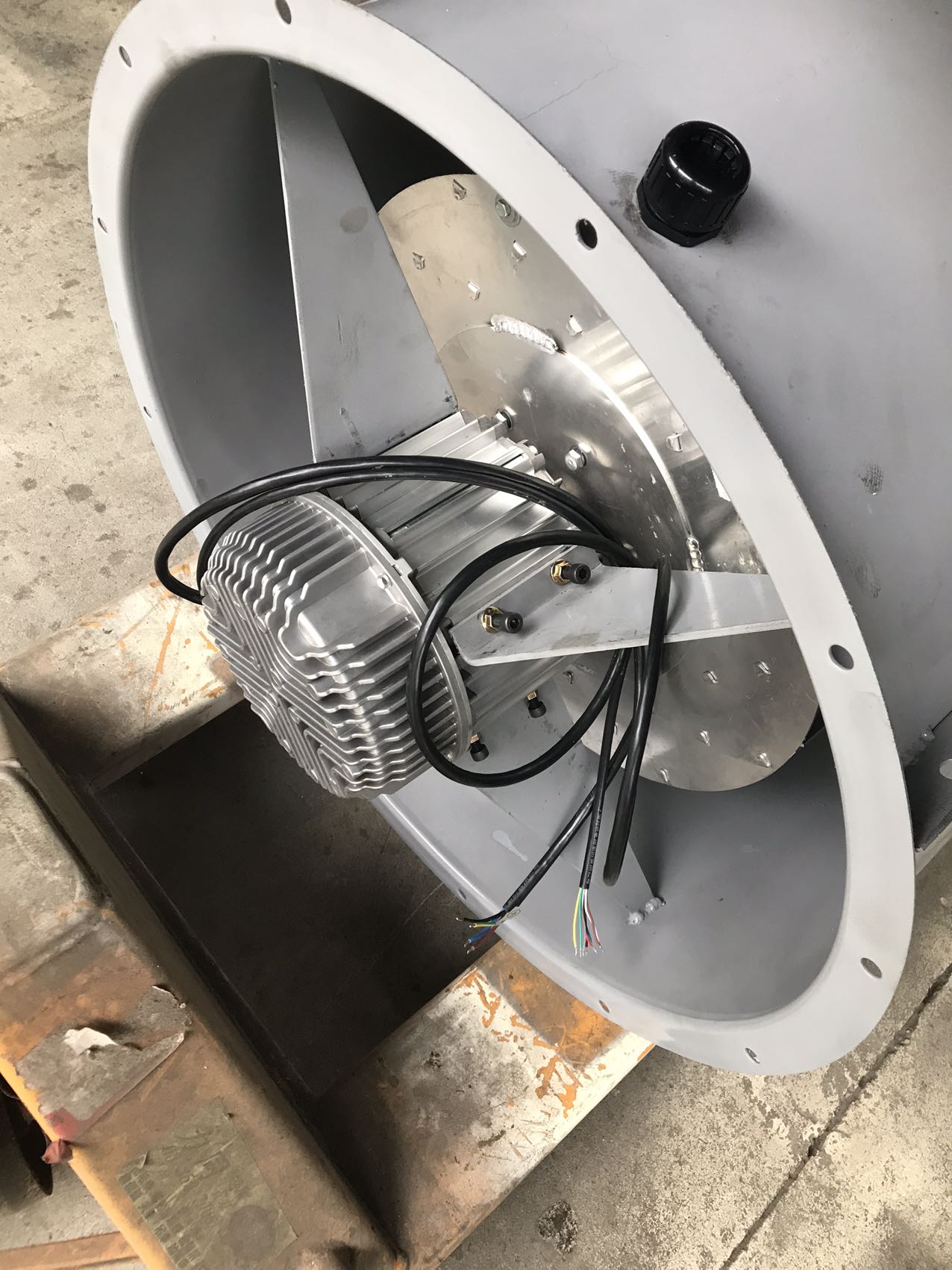
True manufacturing partners demonstrate deep expertise across multiple engineering disciplines. They do not just assemble parts. They engineer cohesive systems.
Assess their ability to match the EC motor perfectly to a backward-curved centrifugal impeller. This specific pairing dictates maximum aerodynamic efficiency. The impeller geometry must align with the motor torque curve seamlessly. We demand complete transparency on motor winding quality and magnet grading. Premium motors use high-grade neodymium magnets. Ask them about their heat dissipation design. Effective thermal management extends the lifespan of the onboard electronics. Poor cooling degrades permanent magnets rapidly. A trustworthy EC centrifugal fan supplier shares thermal imaging data to prove their cooling concepts work effectively.
Modern commercial buildings rely heavily on interconnected smart controls. Evaluate the onboard electronics rigorously. Do they support seamless 0-10V or PWM signal control? Can they interface using standard communication protocols like Modbus and BACnet? Building Management Systems (BMS) require these inputs for precision climate control. Custom firmware is frequently necessary for proprietary AHU configurations. A capable factory will adjust software parameters to match your specific control logic.
Generic fans rarely perform well in highly specialized environments. Look for proven expertise in your specific deployment area. Precision cooling for data centers requires different airflow characteristics than heavy industrial ventilation. Commercial AHU systems demand strict acoustic management to keep noise levels low. Ask candidates to present detailed case studies. These case studies should match your exact application requirements. They must understand the engineering nuances of your specific industry.
A brilliant engineering prototype means nothing if mass production fails. You must evaluate their physical facilities.
Large commercial projects need suppliers who can scale production dynamically. Evaluate their facility size and check for automated assembly lines. Automated winding machines ensure consistent motor quality. Check their monthly production yields carefully. This step ensures they can meet peak-season commercial demands without sudden delays.
To verify production readiness, follow these specific auditing steps:
Request a detailed breakdown of their automated testing stations.
Verify their peak monthly output capacity against your highest project demands.
Review their contingency plans for rare microchip or raw material shortages.
Inspect their quality control gates during the final assembly phase.
Component sourcing security is equally critical. Investigate where they source their microchips, copper wire, and bearings. Leading global brands often utilize NMB or SKF bearings for maximum reliability. Transparent supply chains equal highly predictable lead times. If they hide their sub-suppliers, you face hidden risks. You must know exactly whose components go into your motors.
Finally, assess their speed regarding custom sample generation. Prototyping should move swiftly and accurately. Compare this custom sampling speed against their standard mass production timelines. Long delays in custom tooling indicate a lack of internal machining capabilities. Agile factories use rapid prototyping to accelerate the design phase.
Trust requires verifiable data. You must review their testing infrastructure extensively.
A reliable partner possesses advanced, in-house testing facilities. They should operate AMCA-compliant wind tunnels to verify airflow metrics. Acoustic chambers are absolutely necessary for accurate noise profiling. Vibration analysis tools detect rotor balance issues early in the production cycle. Do not accept performance claims based solely on basic software simulations. They must test physical units under real aerodynamic loads.
Verify mandatory and voluntary compliance labels. CE and RoHS are strict standard requirements in European markets. North American deployments demand UL or ETL listings for electrical safety. Furthermore, strict adherence to European ErP directives ensures high baseline energy efficiency. Always ask for current, unexpired certification documents. Independent testing laboratories must issue these certificates.
Review their empirical data on Ingress Protection (IP) ratings. Water and dust resistance is vital for rooftop units. Request rigorous salt spray testing reports if coastal corrosion is a concern. Extreme temperature endurance testing proves the motor will not overheat during intense summer peaks. They should freeze and bake the motors to simulate harsh global climates.
Standard Compliance Metrics for EC Fan Manufacturers
Testing Category | Key Standard / Certification | Primary Focus Area |
|---|---|---|
Aerodynamic Performance | AMCA 210 | Airflow Volume, Static Pressure |
Electrical Safety | UL 507 / CE | Overload Protection, Insulation |
Energy Efficiency | ErP Directive | Minimum Motor Efficiency Levels |
Environmental Stress | IP54 / IP55 | Dust and Water Resistance Rating |
Procurement teams must recognize vendor warning signs early. Identifying these red flags prevents disastrous purchasing decisions.
Avoid suppliers overpromising performance curves. Be highly skeptical of perfectly linear performance claims. Legitimate aerodynamic curves show distinct static pressure drop-offs. If they cannot document their test conditions, their data is basically useless. Authentic suppliers provide detailed fan curves showing RPM, power consumption, and efficiency at various operating points.
Watch out for these common vendor selection mistakes:
Accepting simulated airflow data instead of actual wind tunnel results.
Ignoring the geographic origin of the onboard electronic components.
Overlooking missing regional safety certifications for your target market.
Failing to request accelerated life testing (ALT) documentation.
Lack of firmware support is a massive red flag. EC fans rely heavily on complex software to operate efficiently. Suppliers who offshore their controller programming struggle significantly. They often fail to troubleshoot integration bugs promptly. This severely delays your entire HVAC commissioning process. You need a partner who keeps software engineers on staff.
Beware the "assembly-only" trap. Basic assemblers rely entirely on generic, outsourced components. They lack genuine R&D capabilities and exert poor quality control over incoming parts. Differentiate true manufacturers from simple assembly workshops. True manufacturers engineer the motor, impeller, and controller as one unified, optimized system. Assemblers simply bolt incompatible parts together.
Evaluating partners effectively protects your HVAC systems from premature failures. Narrow down your candidates by requesting detailed performance curves at your specific operating points. Next, secure a physical sample for independent bench testing. Do not rely exclusively on shiny brochure specifications. Initiate a formal factory audit immediately afterward. You can conduct this virtually or physically. Focus strictly on their QC checkpoints and component traceability. Complete these verification steps before committing to an initial Purchase Order. Rigorous vetting guarantees a resilient supply chain and high-performing equipment for your customers.
A: Standard mass production lead times typically range from 4 to 8 weeks. This timeline fluctuates based on raw material availability and order volume. If your project requires custom tooling or highly specialized firmware, expect an additional 2 to 4 weeks. Always confirm firm delivery schedules during the initial quoting phase.
A: Reputable factories validate operational lifespan using standard L10 bearing life calculations. They pair this mathematical data with accelerated life testing (ALT) methodologies. By running motors continuously under extreme heat and heavy mechanical loads, they accurately simulate years of wear. This provides empirical data supporting their 40,000-hour guarantees.
A: Yes. Tier 1 manufacturers employ specialized in-house software teams precisely for this purpose. They easily customize Modbus registers, adjust PWM response curves, and set specific control parameters. This guarantees the fan communicates seamlessly with your proprietary OEM control boards and complex Building Management Systems.
