


Views: 0 Author: Site Editor Publish Time: 2026-08-26 Origin: Site


Tightening energy efficiency regulations, such as the rigorous ErP directives in Europe, heavily impact modern facilities across the globe. Rising energy costs now drive facility managers to fundamentally rethink their approach to industrial ventilation. We currently observe a massive transition from traditional, fixed-speed systems to intelligent, variable-speed airflow management. This technological shift promises substantial reductions in power consumption. However, it also demands a careful, evidence-based evaluation process. This article serves as a comprehensive technical and commercial guide. It helps facility operators determine whether the higher initial capital expenditure of newer technologies is truly justified for their specific operational scenarios. By understanding the underlying mechanical differences and performance metrics, you can make highly informed upgrade decisions. We will thoroughly explore how different fan designs impact your financial bottom line and overall system reliability. You will learn the core differences regarding energy efficiency, control architecture, and acoustic profiles. Ultimately, this detailed guide will help you optimize your long-term ventilation strategy effectively.
Efficiency Gap: EC (Electronically Commutated) fans use up to 30% less energy than AC (Alternating Current) fans, particularly at partial load conditions.
Control & Integration: EC fans feature built-in speed control (0-10V/PWM), eliminating the need for external Variable Frequency Drives (VFDs) required by AC systems.
ROI Timeline: While EC fans carry a higher initial cost, continuous-duty industrial applications typically see an ROI within 12 to 24 months.
Decision Rule: AC remains viable for simple, binary (on/off) applications in standard environments; EC is the standard for precision-driven, continuous operations like data centers, cleanrooms, and automated agriculture.
Before diving into a commercial evaluation, you must deeply understand the mechanical differences between these systems. Physical realities dictate both aerodynamic performance and energy consumption over time. Knowing exactly how these motors operate provides critical context for their financial and operational impacts. Facility engineers often overlook these fundamental mechanics when focusing purely on purchase price.
AC fans operate using standard induction motors. They connect directly to the alternating current power grid found in most commercial buildings. Their rotational speed relies entirely on the supply voltage frequency provided by the grid. If you want to modulate their speed to match changing airflow demands, you must install an external Variable Frequency Drive (VFD). This addition increases electrical complexity significantly. AC motors also experience noticeably higher mechanical and electrical losses. The electromagnetic induction process inherently generates excess heat during operation. This wasted heat reduces overall system efficiency and places unnecessary thermal stress on nearby mechanical components. Over years of continuous operation, this thermal stress accelerates bearing wear and increases maintenance demands.
EC fans utilize highly advanced brushless DC motors. Manufacturers build them incorporating integrated AC-to-DC conversion circuitry located directly within the unit itself. You plug them into standard AC mains, but they operate internally on highly efficient DC power. They feature sophisticated onboard microprocessors. These microprocessors ensure exact electronic commutation and seamless speed control at all times. This innovative design completely eliminates the slip losses typically common in standard induction motors. Consequently, EC fans maintain significantly lower operating temperatures even during peak loads. Cooler operation directly extends the lifespan of internal bearings and sensitive electronics. This self-contained motor technology represents a major leap forward in modern fluid dynamics and electrical engineering.
When evaluating an EC fan vs AC fan, you must look well beyond basic airflow metrics like CFM (Cubic Feet per Minute). Several critical dimensions dictate which technology suits your facility best.
Peak efficiency levels highlight the first major performance difference. An EC fan generally achieves peak electrical efficiency around 80% to 90%. An equivalent AC setup usually peaks somewhere around 60% to 70%. However, industrial ventilation fans rarely operate at full capacity continuously. They spend most of their functional lifecycle running at partial loads to match fluctuating environmental demands. The actual efficiency delta between the two technologies widens significantly when operating below 100% speed. At half speed, an EC motor surprisingly retains most of its baseline efficiency. Conversely, an AC motor experiences a sharp and costly drop-off in efficiency when slowed down by a VFD. This part-load performance gap represents thousands of dollars in wasted electricity for large-scale facilities.
Control architecture often dictates installation complexity and long-term reliability.
AC Limitations: Modulating an AC motor requires external VFDs. These bulky drives add considerable physical footprint to your mechanical rooms. They complicate system wiring schemas significantly. They also introduce potential electrical noise and harmonic distortion into your facility's power network.
EC Advantages: EC fans offer seamless Building Management System (BMS) integration out of the box. You can control them easily and precisely via Modbus protocols, 0-10V analog signals, or PWM (Pulse Width Modulation). They require absolutely no secondary hardware to achieve precise, real-time airflow modulation.
Noise levels matter heavily in many industrial and commercial environments. Pairing an AC motor to a VFD often creates a distinct, irritating "motor growl." This annoying magnetic noise travels easily through rigid metal ductwork, disrupting workspaces. EC fans eliminate this specific acoustic problem entirely. They run remarkably smoothly and quietly, even when operating at very low speeds. Furthermore, EC units offer a highly space-saving physical design. Manufacturers ingeniously house both the motor and the control electronics directly within the fan impeller hub. This highly compact footprint frees up valuable physical space inside tight air handling units.
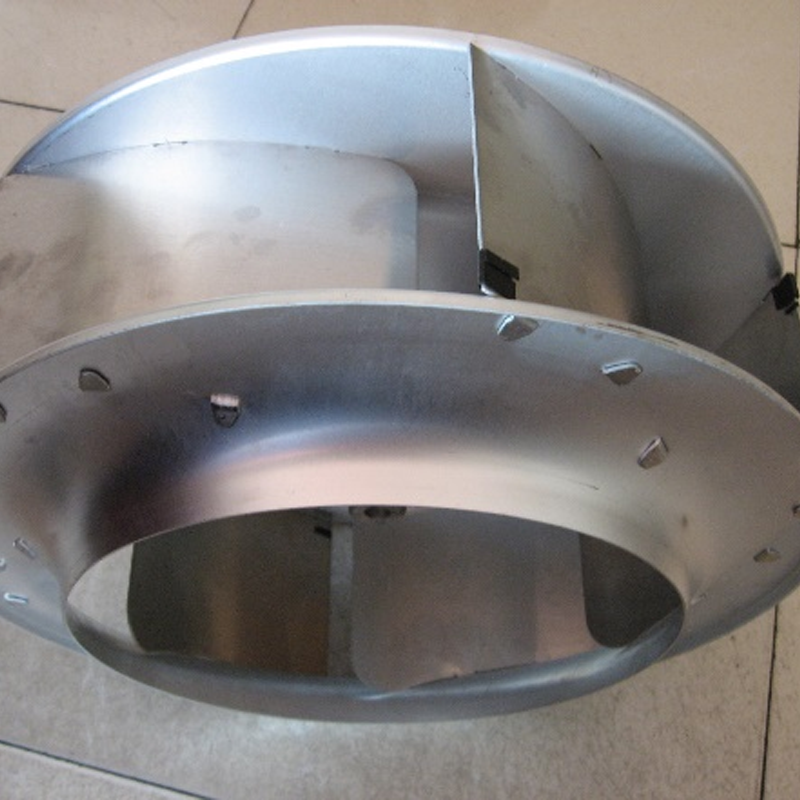
Evaluating the true financial impact requires looking closely at complete lifecycle spending. A proper EC fan comparison reveals very distinct differences in expenditure patterns over a ten-year operational timeline.
Facility managers must first acknowledge the premium upfront cost of EC units. Purchasing an EC fan typically requires a 20% to 40% higher capital expenditure than buying an equivalent AC setup. This initial price tag can easily deter budget-conscious buyers who focus only on immediate procurement costs. In standard construction budgets, this premium often faces heavy scrutiny from financial controllers.
The real financial advantage rapidly emerges in long-term operational expenditure savings. You must calculate power consumption reductions over a full 5-to-10-year lifecycle to see the complete picture. EC fans consume drastically less electricity during daily operations. Furthermore, they emit far less ambient heat into the moving airstream. This directly reduces the secondary cooling loads placed on your broader HVAC system. Lower cooling loads mean your chillers and compressors work less, compounding your monthly energy savings.
Routine maintenance requirements differ heavily between the two technologies. EC fans completely lack physical carbon brushes, immediately eliminating a very common mechanical wear point. They run significantly cooler, so internal steel bearings experience much less thermal degradation over time. This naturally extends overall bearing life and minimizes unexpected system downtime. Fewer breakdowns translate directly into lower annual maintenance budgets and fewer emergency repair calls.
Calculating your exact return on investment heavily depends on your specific usage profile. You can use a simple baseline heuristic to estimate this. Multiply the total power savings (in kW) by your average daily operating hours. Then, multiply that resulting figure by your local kWh electricity costs. Facilities running high-demand, continuous-duty applications usually recoup the premium CapEx entirely within 12 to 24 months. After this short payback period, the ongoing energy savings become pure operational profit.
Efficiency Comparison Chart
Operating Speed | EC Fan Efficiency | AC Fan Efficiency (with VFD) |
|---|---|---|
100% Load | 85% | 70% |
75% Load | 82% | 55% |
50% Load | 78% | 40% |
25% Load | 70% | 25% |
Replacing outdated ventilation systems involves specific engineering challenges. You must proactively assess potential retrofit risks before proceeding with a large-scale facility upgrade.
Deploying large arrays of EC fans can sometimes affect your local electrical grid. The internal AC-to-DC conversion process occasionally introduces Total Harmonic Distortion (THD) into electrical lines. High THD can strain facility transformers and interfere with sensitive nearby electronic equipment. Fortunately, you can easily mitigate this electrical risk. Installing active harmonic filters or specialized line chokes at the distribution panel resolves the issue completely.
Upgrading existing Air Handling Units (AHUs) requires careful, detailed engineering. Swapping legacy AC fans for modern EC variants is rarely a simple, immediate drop-in process. You must carefully account for different physical mounting brackets and potentially altered internal airflow patterns. The new modular units also require updated control wiring to connect properly to the central BMS. Working alongside experienced installation contractors ensures these mechanical transitions happen smoothly without causing extended facility downtime.
EC electronics remain highly robust under normal industrial conditions. However, extreme environmental factors pose a legitimate operational risk. If your facility experiences extremely high ambient temperatures, the onboard silicon electronics might fail prematurely. Highly corrosive chemical environments also directly threaten delicate integrated circuit boards. In these highly specific edge cases, a traditional, rugged AC motor paired to an externally housed VFD in a climate-controlled room remains the safer engineering choice.
Choosing the right equipment depends entirely on your operational priorities and environmental constraints. Review these strategic guidelines to finalize your technical decision.
Budget-constrained projects requiring only intermittent, non-continuous operation. Emergency exhaust systems, stairwell pressurization, and basic warehouse ventilation fall neatly into this category.
Harsh industrial environments where sensitive electronics inside the motor housing face high failure risks from extreme heat or airborne corrosive chemicals.
Systems needing only fixed-speed, basic on/off functionality without any demand for advanced airflow modulation.
Data centers and server rooms demanding highly precise, immediately responsive cooling to protect critical IT infrastructure.
HVAC upgrade projects actively aiming to meet stringent ESG (Environmental, Social, and Governance) goals or strict local energy compliance mandates.
High-duty-cycle agricultural or pharmaceutical applications where long-term energy savings rapidly offset the initial purchasing costs.
The choice between an EC fan vs AC fan ultimately comes down to long-term lifecycle savings versus strict initial budget constraints. You must carefully weigh the immediate capital expense against years of guaranteed operational efficiency. Decision-makers should heavily prioritize EC technology for variable-load and continuous operations. The compound energy savings heavily justify the initial financial investment. Conversely, you should strategically relegate AC technology to static, low-duty, or highly volatile environments where advanced controls provide no real benefit. To move forward effectively, we highly recommend conducting a comprehensive energy audit of your current ventilation system. Consult directly with an experienced HVAC engineer to map out potential efficiency gains accurately. Finally, request a customized financial calculation based on your specific daily airflow requirements to confirm your projected payback timeline.
A: Yes, component replacement can be pricier due to integrated electronics. However, overall failure rates remain significantly lower. The cooler operation and lack of carbon brushes mean fewer mechanical wear parts degrade over time. You will likely face fewer repair incidents overall.
A: Yes, you can upgrade through dedicated "plug-and-play" retrofit kits. The mechanical installation is straightforward. However, you will need to perform minor wiring and control system updates. Connecting the new unit directly to your Building Management System maximizes the energy efficiency benefits.
A: No, you do not need an external drive. The defining feature of an EC fan is its built-in variable speed control circuitry. This onboard microprocessor manages the exact commutation perfectly, rendering bulky external VFDs entirely obsolete.
A: Yes, they easily exceed minimum global efficiency standards, including the strict ErP Directive. Many traditional AC motors struggle to comply with these tightening regulations without undergoing significant modifications. EC units effectively future-proof your facility against upcoming environmental mandates.
