


Views: 0 Author: Site Editor Publish Time: 2026-08-31 Origin: Site


Procurement and engineering teams frequently face a distinct dilemma. Electronically Commutated (EC) fans require a significantly higher initial capital expenditure than traditional Alternating Current (AC) fans. You must justify this upfront financial cost to business stakeholders. To achieve this, you need verifiable operational expenditure reductions. Generic efficiency claims no longer satisfy strict facility budgets. You need concrete performance data. This article moves past basic marketing promises. We provide a solid framework for evaluating realistic EC fan energy saving potential across various applications. You will learn how to assess critical system-level impacts and calculate retrofit return on investment accurately. By understanding the mechanical differences and variable speed benefits, you can make informed purchasing decisions. We will explore affinity laws, secondary cooling savings, integration requirements, and compliance standards.
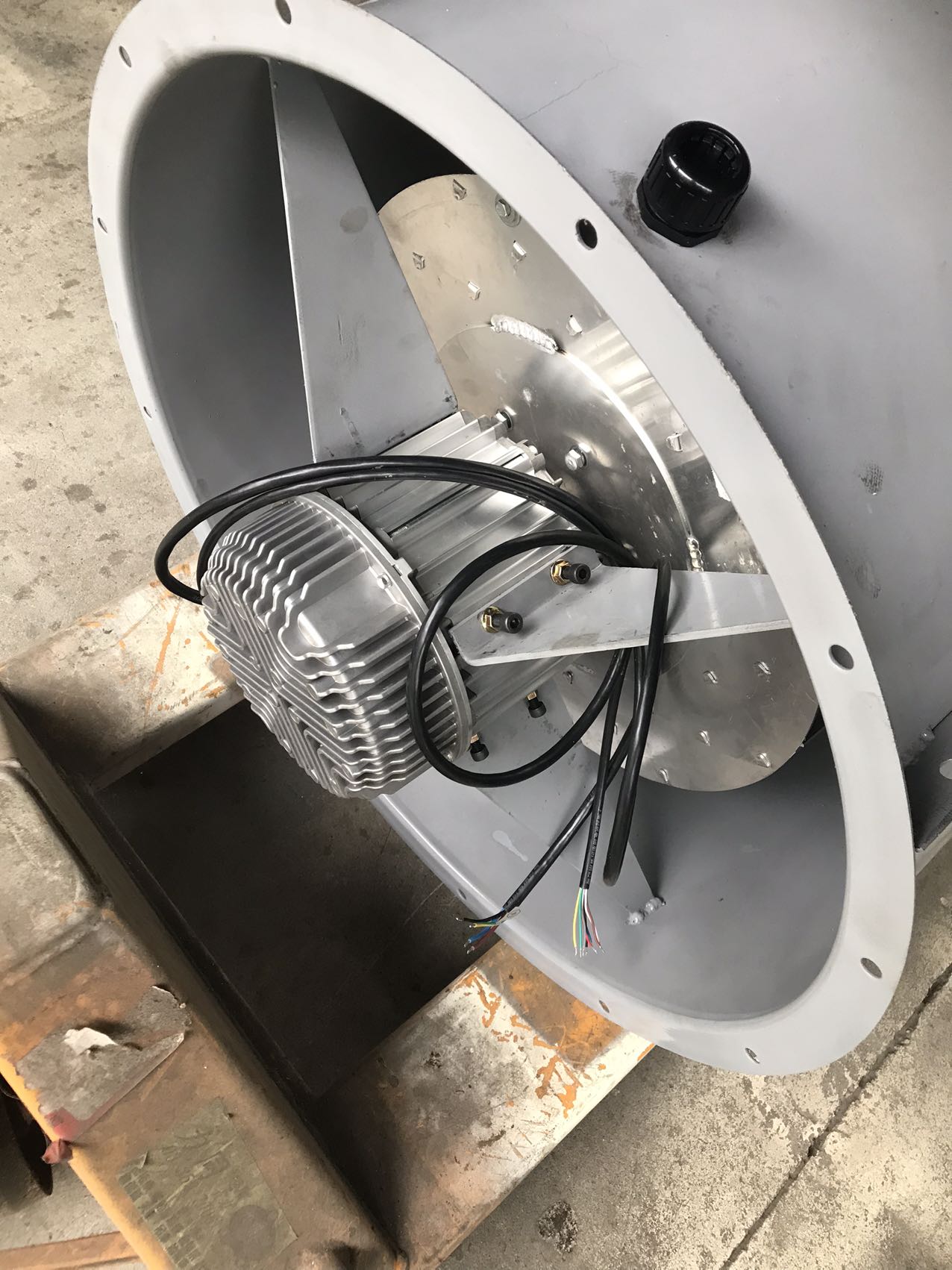
Motor architecture dictates performance limits. Traditional AC induction motors rely on magnetic field generation. They also suffer from inherent slip. These mechanical processes inherently waste electrical power. They convert valuable energy into excess heat. Conversely, an Energy-Saving EC Fan uses a sophisticated brushless DC motor design. It incorporates high-strength permanent magnets. It also features onboard electronic commutation. This modern architecture eliminates slip losses entirely. The motor runs much cooler. It uses electricity far more effectively.
Next, you must evaluate efficiency curves. AC motor efficiency drops aggressively when you reduce fan speed. They waste massive amounts of power during partial-load conditions. EC motors behave differently. They maintain a flat, highly efficient performance curve across a wide operating range. They adapt seamlessly to changing facility demands. You avoid the steep efficiency penalties associated with dimmed AC motors.
However, we must address common engineering skepticism. If you run both fans at full continuous speed, the differences look smaller. The energy savings of EC over AC at maximum load remain measurable but modest. You typically observe a 10-15% improvement. The true financial value unlocks during variable demand scenarios. When your system requires less airflow, the EC motor ramps down efficiently. This creates an exponential drop in power consumption.
Motor Technology Efficiency Comparison
| Feature | AC Induction Motor | EC Brushless Motor |
|---|---|---|
| Rotor Design | Electromagnetic (creates mechanical slip) | Permanent Magnets (eliminates slip) |
| Peak Efficiency | 20% - 70% (highly variable) | 80% - 90% (consistently high) |
| Part-Load Efficiency | Drops severely at low speeds | Remains flat and highly efficient |
| Operating Temperature | High (generates waste heat) | Low (reduces ambient cooling load) |
Understanding the Affinity Laws is critical for engineers. Fan power consumption is proportional to the cube of the fan speed. This fundamental physics rule drives massive financial returns. Consider a scenario where you reduce fan speed by just 20%. Your system airflow drops proportionally by 20%. However, your energy consumption drops by nearly 50%. You can verify this mathematically. Multiplying 0.8 by 0.8 by 0.8 equals 0.512. Therefore, the fan uses only 51.2% of its original power. EC fans leverage simple 0-10V or PWM control signals. They seamlessly adjust speed to match real-time environmental demand.
You need a reliable comparative cost model. Engineers use a standard formula to calculate annual financial returns. You can follow these exact steps to model your facility metrics:
This calculation establishes your baseline expectations. In continuous applications, the payback period happens incredibly fast. Server rooms and commercial refrigeration units run constantly. For these environments, you often achieve full ROI in just one to two years. Intermittent usage naturally extends the payback timeline. However, the long-term utility bill reductions remain substantial.
Data centers focus heavily on Power Usage Effectiveness (PUE). Upgrading your facility directly lowers this crucial ratio. You reduce overall facility power consumption. At the same time, you do not sacrifice IT cooling capacity. Lowering PUE improves your facility's sustainability profile. It also pleases financial stakeholders reviewing operational budgets. You achieve better cooling metrics without overhauling massive infrastructure.
Engineers frequently overlook heat rejection metrics. Standard AC motors run notoriously hot. They are often only 60% efficient. This means 40% of their consumed power converts directly into heat. They eject this waste heat directly into the conditioned airstream. Your main air conditioning compressors must work harder. They consume extra electricity to remove this motor-generated heat. EC motors run significantly cooler. This indirect benefit reduces the overarching load on your entire HVAC infrastructure.
Power factor matters immensely for industrial operations. Premium EC fans feature active Power Factor Correction (PFC). This internal technology reduces harmonic distortion. It lowers apparent power (kVA) demands on facility grids. Poor power factor triggers expensive utility penalties in many regions. Fixing this issue at the motor level protects your budget. It also improves overall grid stability for sensitive neighboring equipment.
Mechanical simplicity extends component lifespan significantly. EC motors lack fragile carbon brushes. They operate at much lower internal temperatures. These two factors dramatically reduce mechanical wear and tear. Slower grease degradation protects the internal bearings. Consequently, you can expect double the typical bearing life compared to traditional AC equivalents. Less maintenance means fewer operational disruptions. Your maintenance team spends fewer hours replacing failed units.
Acoustic performance presents another major advantage. Noise pollution causes serious issues in commercial spaces. EC fans operate much quieter. This benefit becomes especially apparent at lower speeds. You eliminate the annoying electrical hum associated with dimmed AC motors. Facilities often avoid purchasing expensive acoustic dampening materials. This saves both physical space and installation capital. It improves the environmental quality for building occupants.
Regulatory compliance drives modern engineering decisions. You must future-proof your facility designs today. The European ErP (Energy-related Products) directive sets strict efficiency baselines. Rising ASHRAE standards demand similar improvements globally. Traditional AC fans are gradually disappearing from commercial spec sheets. They simply cannot meet modern efficiency thresholds. Adopting EC technology ensures you meet tomorrow's legal requirements effortlessly.
Swapping equipment requires careful, methodical planning. Building Management Systems (BMS) integration stands as the top priority. To realize variable-speed savings, fans need appropriate controllers. You must ensure compatibility through Modbus RTU, BACnet, or simple 0-10V signals. Without smart control integration, the fans run at full speed permanently. This negates the partial-load financial benefits completely.
Retrofit projects face frequent dimensional challenges. Swapping AC to EC rarely offers a perfect plug-and-play experience. Form-factor discrepancies frequently occur between different generations of fans. Engineers must anticipate potential structural changes inside the air handling units. You might require custom bulkhead modifications. You often need fabricated adapter plates to secure the new housings safely. Do not ignore these mechanical realities during your site audit.
Always evaluate total installation costs thoroughly. Do not limit your financial math to hardware prices alone. Rewiring tasks consume expensive labor hours. Reprogramming the control logic requires specialized technicians. You must factor these exact labor expenses into your project budget. Accurate cost modeling prevents unexpected financial shortfalls. It ensures your EC fan energy saving calculations reflect real-world execution.
Defining success criteria requires operational focus. Many buyers look only at maximum free-air performance. This approach leads to poor real-world results. Instead, prioritize metrics like CFM/Watt at your specific target operating point. Your fans rarely run at maximum capacity. Optimize the selection for your everyday conditions. Look closely at the static pressure requirements of your ductwork.
You must ask vendors the right shortlisting questions. Demand transparent technical data before finalizing any purchase. Use this checklist during your procurement process:
Avoid the temptation of excessively cheap alternatives. Low-cost EC motors often lack robust electronic shielding. They might omit essential active PFC circuitry. These missing features cause massive headaches later. Cheap fans can introduce dangerous electromagnetic interference (EMI) into sensitive facility grids. This interference disrupts servers, facility sensors, and communication equipment. Always invest in proven, industrial-grade hardware from reputable manufacturers.
An EC fan represents a strategic operational investment. It guarantees variable-load efficiency and boosts system-wide reliability. This is never just a simple component swap. By upgrading, you dramatically reduce direct energy consumption. You also lower facility cooling loads indirectly. Furthermore, you secure immediate compliance with tightening global efficiency regulations. The transition future-proofs your entire ventilation infrastructure.
Your next step requires active data collection. Audit your current AC fan fleet immediately. Document their daily operating hours, typical speeds, and specific power consumption. Consult with a technical specialist to model your facility's exact payback period. Using a professional calculator will highlight the massive financial benefits waiting for your business. Start planning your retrofit strategy today.
A: Yes, but the exact margin of efficiency depends heavily on the application. The financial savings are massive in variable-speed setups. They are smaller in strictly fixed-speed, full-load scenarios. EC motors maintain high efficiency across their entire speed range, whereas AC motors waste significant energy when dimmed.
A: Electrically, EC fans accept standard AC input. This makes the primary power connection simple. Mechanically and functionally, you must ensure physical fitment. You also must connect control wires (such as 0-10V or PWM) to capture the true variable-speed energy savings. Custom adapter plates are sometimes required.
A: You can generally expect to pay 30-50% more upfront depending on the size and onboard electronics. However, you must contextualize this premium by the rapid operational payback. In continuous 24/7 applications, the energy savings typically cover this price difference within one to two years.
