


Views: 0 Author: Site Editor Publish Time: 2026-08-27 Origin: Site


In commercial refrigeration and cold chain logistics, evaporators operate continuously. This relentless demand makes their fan components prime targets for operational optimization. Facility managers constantly seek effective ways to cut power draw. They must achieve this without compromising food safety or storage conditions. Legacy AC fans generate excessive waste heat directly into the refrigerated space. Shaded-pole motors are especially guilty of this flaw. This waste heat forces the compressor to work much harder. It struggles constantly to maintain critical temperature setpoints. You end up paying for electricity twice. Upgrading to an EC fan for evaporator systems offers a measurable path forward. It provides drastically reduced energy consumption. It also delivers tighter temperature control across your facility. Facility managers must navigate the upfront costs correctly. They must also understand specific integration requirements to unlock these benefits.
Replacing a standard evaporator fan motor with an Electronically Commutated (EC) variant can substantially lower direct energy consumption and indirect compressor thermal loads.
The benefits extend beyond power savings, encompassing precise variable-speed control (0-10V/PWM), quieter operation, and extended lifespan in harsh, sub-zero environments.
A successful retrofit or OEM specification requires assessing control system compatibility, specific operating temperature limits, and proper Ingress Protection (IP) ratings against moisture and ice build-up.
Evaporator fans operate at extremely high duty cycles. They run almost constantly to maintain uniform airflow. This continuous circulation prevents temperature stratification inside cold storage rooms. Consistent air movement keeps perishable inventory completely safe. Poor airflow leads directly to localized warm spots. These warm spots accelerate food spoilage and ruin sensitive pharmaceuticals. We must treat airflow as a critical safety mechanism. It is not just a basic cooling function.
Standard AC motors operate strictly at a fixed speed. They suffer from exceptionally low electrical efficiency. Shaded-pole designs often fall below 30% efficiency during normal operation. This massive inefficiency creates hidden operational costs for your facility. You lose valuable power directly through the motor windings. The equipment pulls maximum amperage regardless of the actual cooling demand. This rigid operation wastes enormous amounts of electricity over a calendar year.
Inefficient motors shed their wasted energy primarily as heat. They reject this thermal energy directly into the cold room. We refer to this problem as the "double penalty." The refrigeration cycle must consume additional energy just to remove this added heat. Every single watt of waste heat demands extra compressor work. A traditional evaporator fan motor can severely impact your operational budget. We must evaluate these aging components as serious system bottlenecks. Replacing them removes a massive thermal burden from your primary compressors.
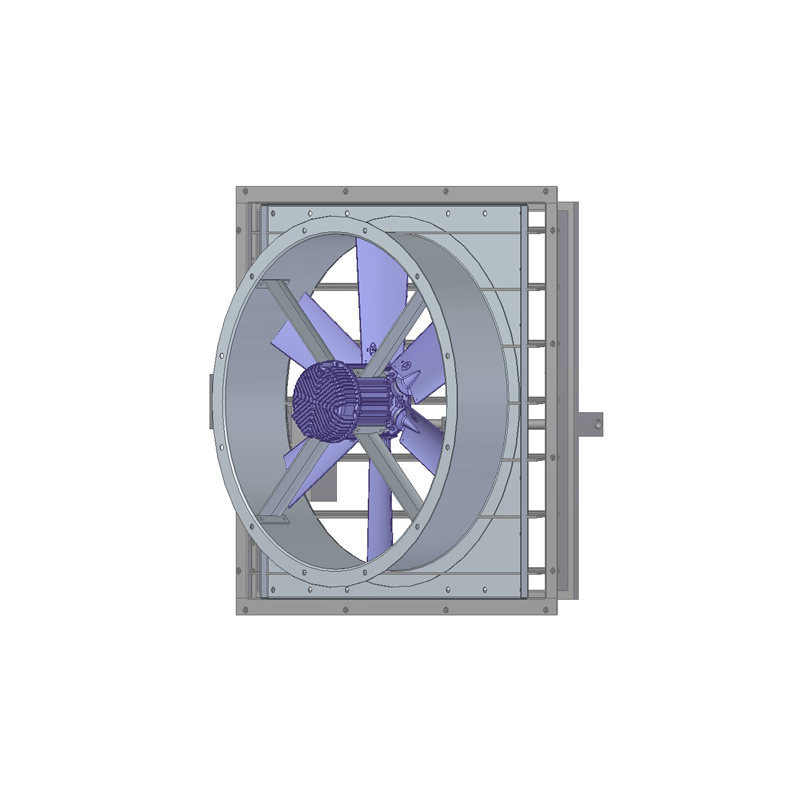
Electronically Commutated technology relies on advanced permanent magnets. It includes integrated electronics to control the internal magnetic field. This intelligent design achieves electrical efficiencies of up to 70% or more. The internal microprocessor switches the stator phases precisely. You completely avoid the magnetic slip inherent in AC induction motors. This precision ensures the rotor turns with minimal electrical waste. The technology represents a massive leap forward in motor design.
Transitioning from standard AC to modern designs yields a massive wattage drop. You must match the exact airflow (CFM) requirements first. Once matched, the power draw plummets immediately. We routinely observe direct energy reductions of 50% to 70% in field applications. This drop impacts your monthly utility bills right away. The energy savings accumulate rapidly in large-scale logistics centers. Hundreds of fans running continuously will show dramatic consumption differences.
External rotor designs offer a highly compact physical footprint. The motor actually sits inside the fan hub itself. Traditional axial setups require bulkier external motor housings. This compact benefit increases the internal evaporator casing volume. You gain better airflow aerodynamics across the entire coil surface. The extra space reduces air resistance inside the cabinet. Less air resistance means the fan works less to move the same air volume.
These advanced fans do carry a higher initial unit cost. However, the financial payback period often ranges from 12 to 24 months. This timeline depends entirely on your local utility rates. It also depends on the physical scale of your cold room operations. High energy costs accelerate the return on investment significantly. Continuous duty cycles also shorten the time needed to recoup your capital expenditure.
Table 1: Operational Comparison Between Motor Technologies
Performance Metric | Traditional AC Motor | Electronically Commutated Motor |
|---|---|---|
Electrical Efficiency | 20% - 30% (Shaded-pole) | 65% - 75%+ |
Heat Rejection | High (Causes double penalty) | Very Low (Minimal compressor strain) |
Speed Control | Fixed speed only | Variable (0-10V or PWM) |
Physical Footprint | Bulky external housing | Compact external rotor |
Modern motors allow for highly precise demand-based cooling. They feature built-in variable speed capabilities via 0-10V or PWM signals. The system can ramp down speeds during low-load periods. You can also reduce speeds during door-closed scenarios. This intelligent control prevents harsh on/off cycling. Smooth speed transitions reduce mechanical stress on the mounting hardware. You only use the exact amount of airflow required at any given moment.
Precise RPM control supports faster and more efficient defrosting cycles. You must manage airflow accurately when heating elements activate. Slowing the fan prevents unwanted cold air blasts into the room. It keeps the generated heat concentrated near the frost buildup. This targeted heating melts ice significantly faster. It reduces the total time your evaporator spends in the defrost phase. Quicker defrosts mean more time spent actively cooling the room.
Operational noise and vibration drop significantly after an upgrade. This acoustic advantage proves crucial for regulatory compliance. Many logistics facilities must adhere to strict occupational noise regulations. High noise levels cause worker fatigue and communication errors. A quieter environment improves overall workplace safety. Your maintenance teams and forklift operators will immediately notice the difference.
These units completely lack wearable carbon brushes. They also operate at much lower internal temperatures. Lower heat translates directly to extended bearing life. You face far fewer mandatory maintenance intervals. The equipment survives longer in harsh, sub-zero conditions. You spend less money on replacement parts and emergency labor. Reliable operation protects your perishable inventory from sudden equipment failures.
Installing variable-speed equipment into legacy systems carries distinct engineering risks. Many older setups wire strictly for simple on/off contactors. You must evaluate your current control system compatibility first. To unlock full value, you usually need control panel upgrades. The new controller must send the proper 0-10V or PWM signal. Without this signal, the new fan will simply run at full speed. You will lose the benefits of demand-based cooling entirely.
Cold rooms present severe environmental challenges for sensitive electronics. They feature high moisture levels and extreme defrost-cycle condensation. Freezing risks remain a constant threat to moving parts. You must specify appropriate Ingress Protection (IP) ratings for your equipment. Enclosures must meet IP54, IP55, or IP68 standards depending on the splash risk. We highly recommend fully potted electronics to prevent any moisture ingress. If condensation breaches the circuit board, the entire unit will fail catastrophically.
Retrofit projects must carefully account for the mechanical footprint. You need to verify mounting bracket compatibility before ordering replacements. The fan blade pitch must closely match the original design. The new unit must align with the aerodynamic requirements of the existing evaporator coil geometry. You cannot force a mismatched fan into an old housing. Poor fitment causes air bypass issues and drastically reduces cooling efficiency. Always measure the existing shroud clearances accurately.
Selecting the correct hardware requires careful engineering evaluation. You cannot treat these upgrades as simple drop-in commodities. Follow a structured approach to ensure long-term reliability.
Evaluate performance against static pressure: Ensure the chosen fan curve matches the resistance of your specific evaporator coils. Frost builds up naturally between defrost cycles. This frost dramatically increases air resistance. The motor must maintain adequate RPMs even when the coil becomes partially blocked.
Verify the operating temperature range: Check manufacturer data sheets for continuous operation limits in deep-freeze environments. Some specialized applications require -30°C to -40°C ratings. Standard commercial units may freeze solid at these extremes. Look for specialized cold-weather lubricants in the bearings.
Check compliance and certifications: Look for recognized industry standards on the spec sheet. You should demand UL, CE, and ErP directives as a baseline. The hardware must meet strict electrical safety rules. It must also comply with regional energy-efficiency mandates to qualify for utility rebates.
Assess vendor support and lead times: Select manufacturing partners who provide highly reliable technical data sheets. They should offer localized inventory for quick replacements. Strong integration support ensures your control systems communicate properly. Avoid vendors who cannot supply detailed aerodynamic performance curves.
You must also consider the materials used in the fan blades. Cold temperatures make standard plastics extremely brittle. Ice buildup can unbalance the blades and cause shattering. Specify cold-rated polymers or specialized metallic blades. These materials flex without breaking under extreme thermal stress. They also resist the weight of minor ice accumulation between defrost cycles.
Transitioning to modern fan technology is a highly defensible capital expense. Modern cold chains benefit immensely from this strategic upgrade. You eliminate the double penalty of waste heat immediately. You also gain precise control over your airflow demands. However, it is never a simple plug-and-play magic bullet. Success requires strategic alignment across your entire hardware stack. You must treat the fan, controller, and evaporator coil as a single integrated system.
Audit your current baseline energy draw today. Record the amperage of your legacy shaded-pole motors. Request a standardized payback calculation from a qualified manufacturer. Obtain a sample unit for physical testing in your facility. Monitor the temperature stability and power reduction for one month. The data will justify rolling the upgrade out across your entire cold storage network.
A: Mechanically, yes, drop-in replacements exist for most standard sizes. Electrically, however, it requires planning. To utilize variable speed features, your control system must provide a 0-10V or PWM signal. If you only have basic on/off wiring, the new fan will simply run at maximum speed constantly.
A: These fans typically maintain their specified RPM much better against rising static pressure. When frost blockages occur, air resistance spikes. The internal electronics detect this resistance and adjust power to maintain airflow. They will draw slightly more power to compensate, but they prevent rapid cooling loss.
A: You can generally expect a return between 1 to 3 years. It depends heavily on continuous operating hours. Your local cost per kWh dictates the exact timeline. Facilities running 24/7 at high capacity see the fastest financial returns from the energy savings.
A: They can be highly vulnerable if improperly specified. High-quality units built for refrigeration feature fully encapsulated (potted) electronics. They also utilize strict IP-rated enclosures. These specific design choices allow them to withstand daily condensation, harsh defrost cycles, and extreme sub-zero temperatures safely.
