


Views: 0 Author: Site Editor Publish Time: 2026-08-27 Origin: Site


HVAC system integrators and OEM engineers face mounting pressure today. Modern markets demand high-efficiency thermal performance. Regulatory mandates constantly push mechanical design boundaries. The European ErP directives represent just one example of these stringent global standards. Commercial and high-end residential applications require exceptional reliability. Traditional components struggle to meet these rigorous modern standards. They waste considerable energy during daily operation. They also fail to provide precise load matching. Designers must upgrade their internal components to stay compliant and competitive.
This article provides a clear framework for specifying advanced drive mechanisms. You will discover practical ways to evaluate aerodynamic matching. We explore smart control protocols and vital environmental durability requirements. The following sections highlight actionable strategies to mitigate common integration risks. You will learn how to avoid expensive design mistakes during product development. We also explain how to confidently shortlist reliable component suppliers.
You can use this guide to streamline your next engineering cycle. We focus heavily on practical application over theoretical concepts. Upgrading your airflow strategy directly improves overall equipment performance.
Replacing a traditional heat pump fan motor with an Electronically Commutated (EC) fan significantly reduces energy consumption while enabling precise, intelligent load matching.
Avoid common specification failures by accurately calculating static pressure, selecting appropriate IP ratings for outdoor ambient conditions, and ensuring software compatibility.
Vendor shortlisting should prioritize verifiable compliance (ErP, UL, CE), supply chain transparency, and local engineering support over baseline unit pricing.
Engineers constantly seek new ways to improve the Coefficient of Performance (COP). A well-optimized thermal system relies heavily on efficient air movement. Modern brushless motors maintain up to 90% efficiency across wide speed ranges. This performance consistency directly elevates the seasonal energy efficiency ratio (SEER). It also improves the seasonal coefficient of performance (SCOP). Traditional motors lose significant efficiency when operating below their peak speeds. They burn excess power simply overcoming internal friction. In contrast, an EC fan for heat pump delivers consistent aerodynamic thrust. It scales its power consumption linearly based on real-time demand. You get maximum thermal output for every watt consumed. This translates directly into better energy ratings for the final appliance.
Modern thermal applications require highly responsive smart controls. Advanced fans feature built-in electronics right inside the motor housing. You avoid the bulky setup associated with older mechanical designs. Traditional AC motors need separate Variable Frequency Drives (VFDs) to vary their speed. This legacy approach increases your wiring complexity significantly. It demands much more space inside the equipment chassis. EC technology offers a streamlined physical footprint. The integrated electronics handle internal commutation automatically. Engineers can simplify their electrical wiring schematics. Manufacturers save valuable space inside their metal enclosures. You also reduce the number of potential failure points.
Noise reduction matters greatly in residential and urban deployments. Consumers will not tolerate loud mechanical hums outside their bedroom windows. Stepless speed control plays a crucial role in acoustic management. These advanced motors adjust their rotational speed completely smoothly. They eliminate sudden acoustic spikes during compressor startup phases. At partial-load conditions, they spin slower to reduce aerodynamic turbulence. This stepless transition provides a noticeably quieter user experience. Quiet operation often determines commercial success for premium equipment brands. Municipalities frequently enforce strict noise ordinances in dense neighborhoods. Meeting these acoustic limits requires highly precise speed modulation.
Selecting the right blade design determines your overall system effectiveness. Axial designs push large air volumes at lower static pressures. They work perfectly for standard evaporator coil ventilation. Centrifugal designs handle much higher resistance environments. You might need them for ducted exhaust routing. You must align the blade geometry with specific airflow requirements. Every equipment enclosure creates unique aerodynamic resistance. Engineers must map the exact operating point on the performance curve. A mismatch causes the motor to stall or overwork. Both scenarios degrade the thermal transfer rate severely.
Modern system controllers rely on constant data communication. You must evaluate compatibility across various standard protocols. Most advanced HVAC systems use 0-10V analog signals. Many also utilize PWM (Pulse Width Modulation) or Modbus RTU digital signals. Seamless Building Management System (BMS) integration requires these reliable digital handshakes. The right heat pump fan motor uses closed-loop control logic. It responds instantly to changing refrigerant temperatures. It adjusts airflow immediately when internal pressures fluctuate. This smart integration keeps the thermodynamic cycle perfectly balanced. You avoid uncomfortable temperature swings inside the building.
Verify your main control board uses the exact same communication protocol.
Keep signal wires physically separated from high-voltage power lines.
Test the closed-loop response time during extreme temperature shifts.
Document the default fail-safe speed settings in your service manual.
Outdoor equipment faces brutal daily weather conditions. Your internal components must withstand extreme ambient temperatures. Specify IP54 or IP55+ ratings for reliable outdoor operation. These ingress protection levels keep dust away from sensitive electronics. They also prevent moisture from shorting the circuit boards. Coastal environments demand heavy corrosion protection. Salty ocean air degrades standard metal brackets rapidly. Manufacturers must use UV-resistant plastics for any exposed fan blades. Constant sun exposure makes cheap materials brittle over time. Robust environmental durability prevents premature field failures. It protects your brand reputation in harsh climates.
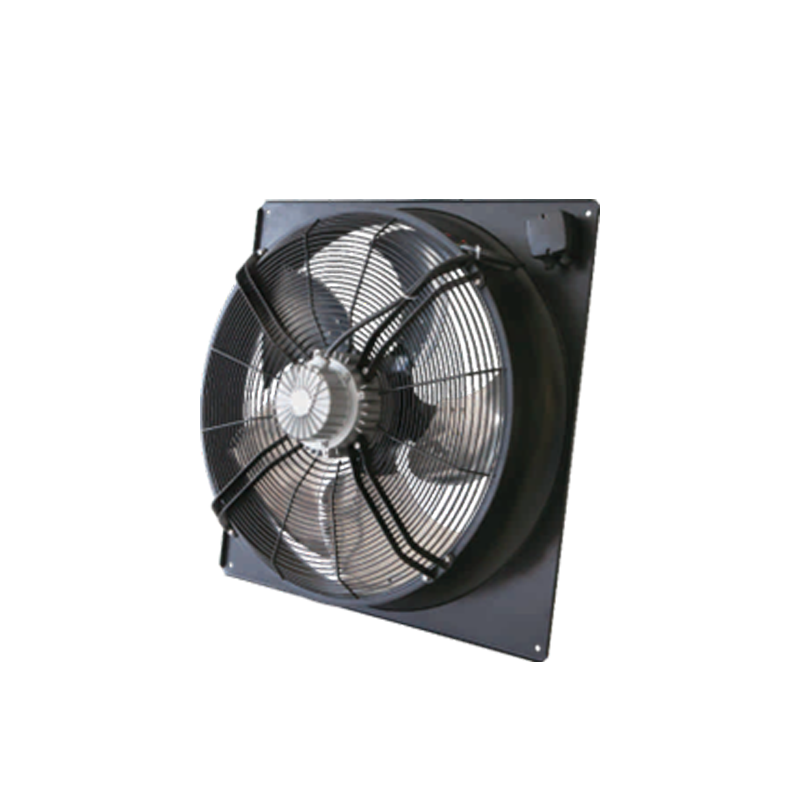
Different drive mechanisms offer distinct advantages and drawbacks. System integrators must evaluate these options carefully before finalizing designs. The wrong choice leads to wasted energy and frustrated customers.
Traditional AC options offer a lower initial unit cost. However, they generate high operational waste every single day. They lack dynamic speed control capabilities entirely. They run at full speed regardless of actual thermal demand. This mechanical inefficiency limits their modern applicability. They suit only budget-constrained, unregulated legacy replacements. Using them in new premium designs damages overall system efficiency. They cannot meet strict modern energy mandates.
Adding a VFD allows necessary variable speed control. Unfortunately, this combination introduces harmonic distortion into the electrical grid. It generates significant electrical noise affecting nearby sensors. Installation complexity rises because you must wire two separate components. The spatial footprint increases substantially inside the chassis. You need extra metallic shielding to manage electromagnetic interference. The external VFD also requires its own cooling clearance. This setup complicates the overall mechanical layout.
These advanced units require a higher initial financial investment. However, their built-in commutation eliminates the need for external VFDs. They resolve electrical harmonic distortion issues inherently. They offer plug-and-play intelligent control right out of the box. You get the lowest energy consumption during standard operations. Their streamlined nature speeds up factory assembly lines. We highly recommend them for all modern high-efficiency thermal designs.
Table 1: Drive Mechanism Capability Comparison
Drive Type | Energy Efficiency | Speed Control | Installation Footprint |
|---|---|---|---|
Legacy AC Motor | Low | None / Fixed | Small |
AC Motor + External VFD | Medium | Yes (External Setup) | Large |
Integrated EC Motor | High | Yes (Internal Setup) | Compact |
Even experienced engineers sometimes misjudge component requirements. Avoid these frequent specification failures to ensure smooth product launches. These mistakes often cause delays and expensive redesigns.
Oversizing the Motor: Many designers select components based strictly on peak theoretical loads. They ignore actual daily operating conditions entirely. Oversized motors run inefficiently during standard partial-load operation. This mistake wastes initial capital expenditure unnecessarily. It also adds useless weight to the final product. Always match the motor size to the most frequent operating parameters.
Ignoring System Impedance: Every metal chassis presents unique airflow resistance. Failing to map the exact system resistance curve causes major issues. The fan operates completely outside its optimal efficiency window. Aerodynamic performance drops, and acoustic noise levels increase. You must calculate static pressure accurately before final selection. Use simulation software to verify your physical enclosure design.
Overlooking EMC/EMI Compliance: Integrated electronics generate minor electromagnetic signals constantly. Neglecting to verify electromagnetic compatibility creates localized interference. This noise disrupts sensitive sensor readings within the main control board. The system might report false temperature spikes. Always specify components tested strictly for EMC/EMI compliance. Request the official test reports from your supplier.
Misunderstanding Input Voltage Fluctuations: Grid power remains unstable in many developing regions. Sudden voltage drops can trigger unexpected safety shutdowns. Failing to specify wide-voltage range components leads to nuisance tripping. Customers hate equipment shutting down randomly. Select drives designed to handle regional voltage instability gracefully. They should modulate power rather than crashing abruptly.
Disregarding Maintenance Accessibility: These advanced models include integrated electronics inside the motor housing. Sometimes, these electronics require future servicing or replacement. Designing a tight enclosure around the motor makes maintenance impossible. Field technicians struggle to reach the diagnostic ports. Always consider the physical dimensions required for standard tool access. Leave enough clearance for comfortable hands-on troubleshooting.
Selecting a reliable vendor requires strict internal vetting procedures. Do not base your decision solely on basic unit pricing. Cheap components often cause catastrophic field failures later.
Mandatory baseline checks protect your brand reputation heavily. Ensure the vendor demonstrates ErP directive compliance clearly. Verify their CE, UL, and RoHS documentation independently. Never shortlist vendors lacking verifiable third-party testing data. Legitimate suppliers publish their certification numbers openly on their websites. You should cross-reference these numbers with the issuing authorities. Non-compliant components can block your product from entering key international markets.
Standard off-the-shelf units rarely fit perfectly into custom enclosures. Your vendor must offer flexible modification options readily. They should adjust internal firmware settings to match your control logic. They must modify physical bracket designs for your specific chassis. Custom harness lengths speed up your factory assembly line. Vendors refusing minor customizations often provide poor long-term engineering support. Seek partners willing to adapt their designs.
Global logistics disruptions happen frequently in today's market. You must evaluate the manufacturer's production capacity carefully. Ask specific questions about their raw component sourcing stability. Review their global support infrastructure thoroughly. A robust supply chain ensures you meet your delivery commitments. Ask for their standard buffer stock policies. You need suppliers who can absorb sudden spikes in your manufacturing volume.
Take actionable next steps before authorizing bulk procurement. Request detailed aerodynamic performance curves immediately. Ask for 3D CAD models to check spatial clearances virtually. Order several sample units for localized prototype testing. Real-world testing validates theoretical performance claims accurately. Install the samples in your lab and run them continuously. Measure the actual acoustic output and power draw yourself.
Testing the component outside the actual metal enclosure.
Ignoring vibration harmonics transferred to the chassis.
Failing to test the minimum speed modulation limits.
Skipping extreme temperature chamber validations.
Following this structured shortlisting process eliminates unreliable vendors quickly. It builds a foundation for a stable, long-term manufacturing partnership. Proper vetting takes time but prevents massive future liabilities.
Transitioning to advanced aerodynamic drive mechanisms is no longer optional for premium OEMs. It represents a strict regulatory and performance necessity today. Success relies entirely on shifting your focus toward integrated system value. You must prioritize efficiency, compact footprints, noise reduction, and smart controls over basic unit pricing. Review your aerodynamic resistance curves carefully before finalizing any specification. Ensure your chosen vendor provides robust technical support and verifiable safety certifications.
We recommend initiating technical dialogue with two or three vetted manufacturers soon. Cross-reference their published performance curves against your specific operating envelope. Request physical samples to validate digital simulations. Rigorous early testing guarantees perfect integration and protects your final product quality.
A: These advanced units typically reduce energy consumption by 30% to 50%. The highest savings occur during partial-load scenarios. Standard AC motors run at full speed regardless of demand. Smart drives modulate their speed seamlessly. They consume only the exact amount of power necessary to maintain the required thermal transfer.
A: Yes, retrofitting is possible but requires careful planning. You must address control signal compatibility first. You usually need to add a 0-10V controller to modulate the new drive. Physical mounting constraints also apply. You must verify the integrated electronics housing fits within the original AC motor space.
A: Quality models feature robust protection mechanisms. They include built-in active Power Factor Correction (PFC). They also contain integrated overvoltage and undervoltage protection circuits. These features shield the sensitive internal components. They safely handle typical grid surges much better than unprotected legacy motors.
A: Manufacturers program specific fail-safe modes into the firmware. If the control signal drops, the unit responds based on OEM programming. It might default to a pre-set continuous speed to maintain baseline ventilation. Alternatively, it might execute a safe shutdown to prevent system damage. You can specify this exact behavior.
