


Views: 0 Author: Site Editor Publish Time: 2026-08-29 Origin: Site


Operating a cleanroom demands massive energy resources. Ventilation and filtration alone often consume over 50% of your facility's total power. You need reliable airflow to maintain strict environments.
Facility managers face increasing pressure to lower operational costs without sacrificing quality. Many are replacing outdated AC motors with Electronically Commutated (EC) technology. This shift helps meet stringent ISO air-change requirements while keeping monthly utility bills in check.
Evaluating an EC fan for cleanroom deployment requires looking beyond baseline energy efficiency. You must assess system compatibility, precise airflow control, and long-term reliability. We will explore how these advanced systems operate and integrate into modern facilities. You will learn to optimize your upgrades and ensure compliance for years to come.
Predictable ROI: EC cleanroom fans typically reduce energy consumption by 30–50% compared to traditional AC fans, offering a verifiable payback period based on continuous (24/7) operation.
Precision Control: Built-in speed control (0-10V or Modbus RTU) allows dynamic adjustments to Air Changes per Hour (ACH) as filter pressure drops over time, maintaining compliance without manual intervention.
Reduced Heat and Noise: The inherent efficiency of EC motors minimizes excess heat rejection into the clean space, reducing the secondary cooling load and lowering ambient vibration.
Integration Readiness: Modern EC fans are designed for seamless integration into localized Fan Filter Units (FFUs) and centralized HVAC arrays.
Traditional AC motors struggle in dynamic environments. They operate efficiently at full speed but lose significant efficiency when you dial them down. EC motors solve this problem entirely. They maintain high efficiency across their entire speed range. This flexibility proves critical for cleanrooms operating dynamically during occupied versus unoccupied hours. When nobody is in the room, you can lower the fan speed. An EC motor drops its power draw proportionally, saving massive amounts of energy.
Upgrading to modern fan technology requires an initial investment. EC fans carry a higher initial capital expenditure (CapEx) than legacy AC models. However, you recover this cost quickly through sheer operational efficiency. You can calculate your return on investment based on several key variables. First, factor in your local utility rates. Next, look at your operational duty cycle. Cleanrooms typically run 8,760 hours per year. Finally, account for reduced maintenance intervals. Because EC motors lack wearing brushes, they require far less upkeep.
The benefits of an efficient cleanroom fan extend beyond direct energy savings. Standard AC motors generate substantial waste heat. This heat radiates into your cleanroom plenum. Your cooling system must then work harder to remove it. EC motors operate at much lower temperatures. They reduce the sensible heat ratio inside the space. This dramatically lowers the mechanical burden on your facility's chiller or DX cooling systems. You save money on both ventilation and air conditioning simultaneously.
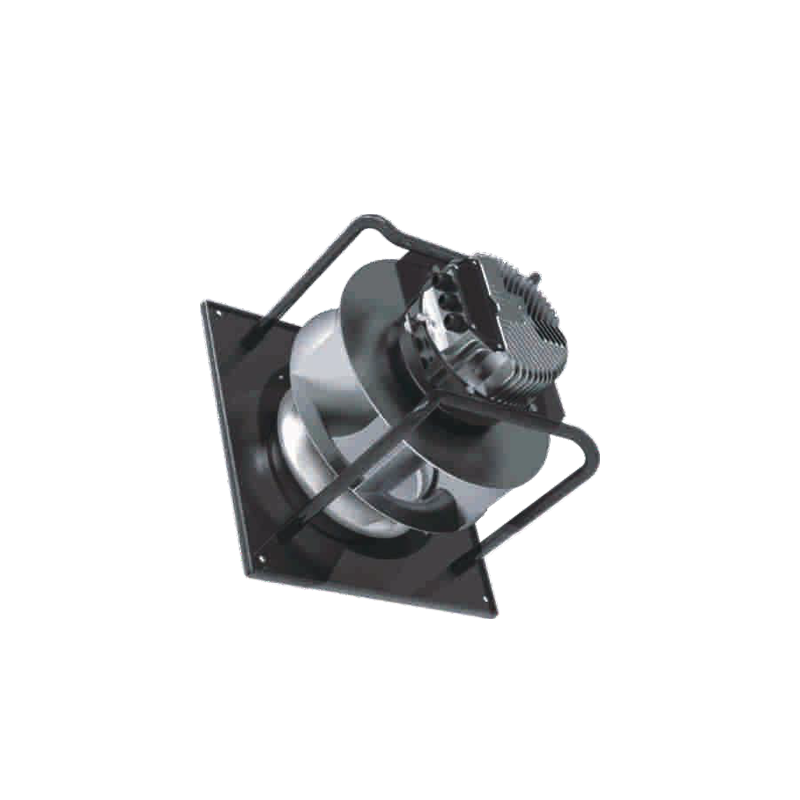
Cleanroom environments depend on dense filtration. The fan must deliver stable airflow against high static pressure. HEPA (H13/H14) and ULPA (U15) filters create significant resistance. If a fan lacks the necessary aerodynamic pressure, airflow volume will plummet. You must evaluate the performance curve carefully. The required operating point should fall squarely in the peak efficiency zone of the fan curve.
Best Practice: Always select a fan model capable of handling the filter's "dirty" pressure drop, not just its initial clean resistance. This ensures adequate airflow right up until filter replacement.
High vibration velocity compromises sensitive equipment. Semiconductor lithography tools and compounding pharmacy balances require extreme stability. You must demand strict dynamic balancing criteria, such as the ISO 1940 standard. Noise ratings are equally critical. Multiple small EC fans in Fan Filter Units (FFUs) can create cumulative noise issues. Specifiers must look for optimized impeller geometries that reduce tonal noise.
Common Mistake: Ignoring the acoustic impact of the plenum design. Even the quietest fan will amplify noise if placed too close to a reflective metal ceiling surface.
Contamination control goes beyond air filtration. The materials inside the fan itself matter. Rotors and impellers must not introduce particulates or volatile organic compounds (VOCs). Manufacturers usually construct them from specific composites or coated aluminum to prevent off-gassing and corrosion. Furthermore, the compact footprint is vital. For FFU applications, the axial depth of the fan determines how much overhead plenum space you retain.
Modern fan designs prioritize easy installation. EC centrifugal and axial fans fit seamlessly into standard grid sizes. Most cleanrooms use 2x4 ft or 4x4 ft FFU configurations. A standardized form factor allows technicians to drop the units directly into the ceiling grid. This speeds up construction and simplifies future replacements.
Standalone fans no longer meet modern facility standards. You need open communication protocols like Modbus RTU or BACnet. These protocols connect the fans to your Building Management System (BMS). Facility managers gain real-time monitoring capabilities. You can track RPM, monitor power consumption, and receive instant fault codes. This connectivity transforms reactive maintenance into a proactive strategy.
Airflow requirements change as filters capture particles. You can manage this automatically using closed-loop systems. Facility engineers pair differential pressure sensors with EC fan controllers. As filters load with particulate, resistance increases. The sensor detects this change immediately. It commands the controller to ramp up the RPM automatically. This guarantees a constant airflow volume without human intervention.
Cleanroom classifications dictate your ventilation strategy. ISO Class 8 and 7 environments tolerate lower velocity airflow. You can manage these spaces with standard EC configurations and moderate FFU coverage. However, ISO Class 5 and below demand extreme precision. These spaces require high unidirectional airflow, often called laminar flow. You will need dense FFU grids and highly synchronized, redundant EC fan arrays to maintain compliance.
Compliance relies heavily on your Air Changes per Hour (ACH) rate. You must calculate the required volumetric flow rate (CFM or CMH) accurately. First, determine the total room volume. Next, multiply it by your target ACH. Finally, size your EC fan array to meet this baseline. Always add a 20% degradation buffer. This buffer accounts for system aging, duct leakage, and increasing filter resistance over time.
Standard Cleanroom Ventilation Requirements by Class
ISO Class | Airflow Type | Typical ACH Range | Ceiling Coverage |
|---|---|---|---|
ISO 8 | Mixed / Non-unidirectional | 10 - 20 | 5% - 15% |
ISO 7 | Mixed / Non-unidirectional | 30 - 60 | 15% - 20% |
ISO 6 | Mixed / Unidirectional | 70 - 160 | 25% - 40% |
ISO 5 | Unidirectional (Laminar) | 200 - 360 | 35% - 70% |
Upgrading an existing facility presents unique challenges. Replacing existing AC fans in older FFUs rarely involves a simple swap. You often need to modify the electrical infrastructure. EC systems require low-voltage control wiring routed alongside the line voltage. Technicians must navigate cramped ceiling plenums safely. Proper shielding is necessary to prevent signal interference between power and control lines.
Electronic commutation relies on internal circuitry. These electronics can introduce Total Harmonic Distortion (THDi) back into your facility's electrical grid. High THDi affects sensitive manufacturing equipment and reduces power quality. You must address this risk early in the design phase. Evaluate whether active or passive harmonic filters are necessary. Many premium EC fans now include built-in harmonic mitigation to simplify installation.
Equipment availability can derail construction timelines. You must evaluate vendor reliability carefully. Look for favorable warranty terms, typically ranging from 2 to 5 years. Prioritize vendors offering drop-in replacement models. If a fan fails, you cannot wait months for a replacement. Readily available stock prevents costly facility downtime and protects your production schedule.
Selecting the right equipment for cleanroom operations demands careful evaluation. It is a balance between upfront capital, verifiable energy savings, and strict adherence to contamination control standards. Choosing advanced motor technology ensures your facility operates efficiently and remains compliant under shifting dynamic loads.
Buyers should prioritize vendors that offer transparent aerodynamic performance data. Look for native BMS integration capabilities out of the box. Ensure the manufacturer has a proven track record in critical environments, such as pharmaceuticals and microelectronics. Reliable partners reduce implementation risks.
Encourage your engineering team to audit your current ACH requirements. Calculate your baseline energy usage thoroughly. Consult with application engineers for a custom ROI and energy savings analysis. Taking these steps today sets the foundation for a sustainable, compliant facility tomorrow.
A: Mechanically, yes, if the form factor matches. However, electrical configurations will change, as EC fans require dedicated control wiring (0-10V/PWM/Modbus) to utilize their variable speed capabilities.
A: Depending on operating temperatures and load, EC fans typically exceed 40,000 to 70,000 hours (L10 lifespan) of continuous operation due to the lack of wearing brushes and lower internal heat generation.
A: EC motors are generally maintenance-free (sealed bearings). Maintenance focuses primarily on periodic visual inspections and ensuring the connected HEPA/ULPA filters are replaced before pressure drops exceed the fan's maximum static capabilities.
