


Views: 0 Author: Site Editor Publish Time: 2026-08-20 Origin: Site


Upgrading industrial ventilation using Electronically Commutated (EC) technology is a highly capital-intensive decision. It directly impacts facility energy consumption, acoustic performance, and compliance metrics. Many facility managers underestimate the sheer complexity of this engineering transition. They assume any modern motor will suffice for their cooling needs.
Sourcing from the wrong vendor often leads to premature motor failure. It also creates integration bottlenecks within existing Building Management Systems (BMS). Prolonged supply chain delays further derail critical infrastructure projects. We see this happen frequently in data centers and agricultural facilities. Poor procurement strategies leave engineering teams scrambling to fix incompatible equipment.
Selecting a reliable vendor requires looking far beyond basic datasheet specifications. You must rigorously evaluate their engineering capabilities, testing standards, and supply chain transparency. A true engineering partner provides certified performance data and reliable integration support. This guide explores how you can identify a highly capable partner for your industrial ventilation demands.
Transitioning to EC technology requires more than just swapping out old parts. It represents a comprehensive system-wide upgrade for your facility. Planners must view industrial ventilation as an interconnected ecosystem. A proper system upgrade synchronizes airflow profiles, motor efficiency, and digital control protocols. If you ignore this holistic approach, you risk creating severe aerodynamic imbalances.
Successful procurement requires establishing clearly defined technical success criteria early. You should initially target a 30% or greater reduction in electrical energy use. Compliance mandates like the stringent ErP 2015 directive remain non-negotiable for modern installations. Lowering the acoustic footprint also dramatically improves workplace safety. It helps you meet local occupational noise regulations effortlessly. We highly recommend mapping these criteria before contacting any suppliers.
Treating industrial fans as generic commodities introduces massive operational risk. Harsh industrial environments demand robust, highly engineered thermal management solutions. Generic equipment quickly deteriorates under continuous mechanical stress. Airborne dust, moisture, and chemical vapors will destroy standard commercial bearings rapidly. This ultimately leads to catastrophic system failures and unplanned downtime. You must specify equipment designed specifically for harsh atmospheric conditions.
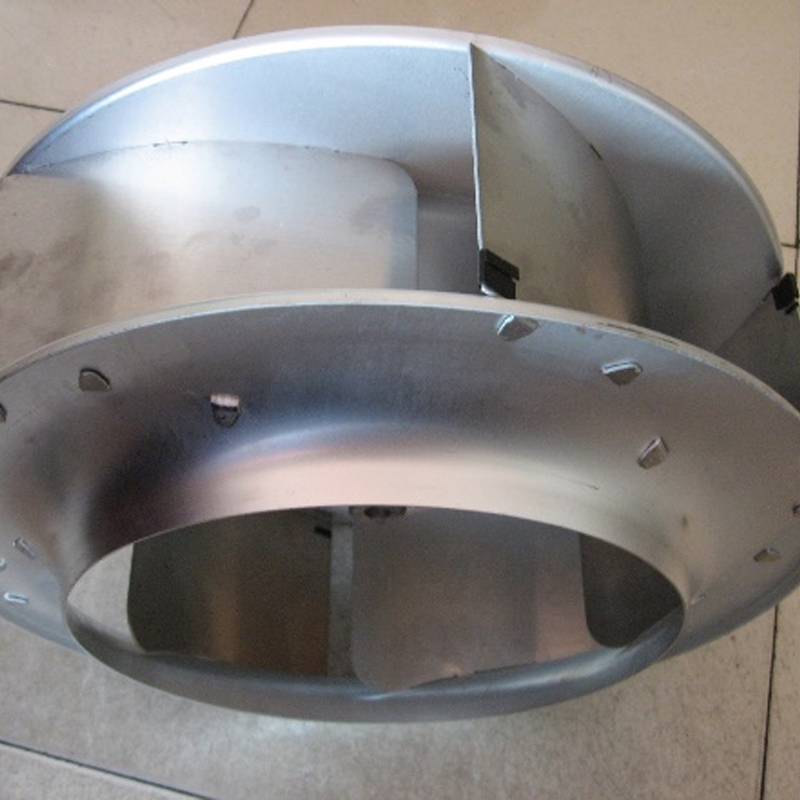
Assess a potential vendor's ability to supply various specialized form factors. Industrial applications often demand consistently high static pressure to overcome ductwork resistance. You need a partner capable of delivering specialized solutions like the EC Centrifugal Fan. Evaluate both backward-curved and forward-curved impeller designs for your specific structural layout. Backward-curved models generally excel in high-pressure scenarios without motor overloading.
Optimal aerodynamic efficiency relies entirely on motor and impeller synergy. Many companies operate simply as assemblers of third-party electrical components. You should prioritize firms designing both the EC motor and impeller in-house. This unified engineering approach strictly eliminates mechanical performance gaps. It ensures the motor operates perfectly within its ideal thermal parameters. We find this leads to significantly lower operating temperatures.
Modern automated facilities require deep smart control integration. Evaluate the vendor's onboard electronics carefully during your technical review. They must flawlessly support 0-10V PWM control, Modbus RTU, and RS485 communication protocols. Seamless integration into IoT and facility automation systems is completely mandatory today. Your BMS must monitor fan speed, power consumption, and error codes in real-time.
Determine their engineering agility regarding customization versus Commercial Off-The-Shelf (COTS) products. Standard commercial units often fail during extreme temperature fluctuations. Your vendor must demonstrate the ability to modify firmware rapidly. They should easily customize mounting brackets or upgrade IP ratings for your environment.
Comparison of Customization vs. COTS for Industrial Use| Evaluation Metric | Commercial Off-The-Shelf (COTS) | Customized Industrial Solutions |
|---|---|---|
| Deployment Speed | Fast (Usually available in stock) | Slower (Requires engineering and testing) |
| Firmware Flexibility | Locked standard configurations | Fully adaptable to specific BMS protocols |
| Environmental Resilience | Standard IP44 to IP54 ratings | Upgradable to IP68 for washdown areas |
| System Compatibility | May require adapters or external drives | Plug-and-play mechanical fitment |
Selecting a highly reputable EC fan manufacturer requires checking their regulatory baselines immediately. The vendor must meet mandatory global electrical and safety standards. These strictly include UL, CE, RoHS, and ErP compliance certificates. Operating without these certifications introduces severe legal and safety liabilities. You must request digital copies of these certificates during the initial vetting phase.
Aerodynamic and acoustic testing guarantee real-world performance accuracy. Look for dedicated in-house wind tunnel testing capabilities. These facilities should align perfectly with ISO 5801 or AMCA 210 standard guidelines. Anechoic chamber testing remains equally crucial for capturing accurate noise emission data. Without verifiable acoustic data, you risk violating local occupational noise limits.
Evaluate their environmental stress screening protocols thoroughly. Harsh industrial conditions require rigorous physical validation before mass production. Manufacturers must perform extensive salt spray tests for anti-corrosion verification. They should also conduct destructive vibration testing and extreme temperature cycling. These accelerated life tests prove the equipment can survive unpredictable facility environments.
Trustworthy vendors consistently prioritize engineering data transparency. They openly share the mathematical assumptions behind their MTBF claims. They proudly provide accurate bearing life calculations, commonly known as L10 life. They also provide highly transparent derivations of their aerodynamic performance curves. You should always reject vendors relying on estimated or simulated data sets.
Table 1: Essential Testing Standards for Industrial Ventilation| Test Category | Standard / Framework | Primary Purpose |
|---|---|---|
| Aerodynamic Performance | AMCA 210 / ISO 5801 | Validates airflow (CFM) and static pressure curves. |
| Acoustic Emissions | AMCA 300 / ISO 3744 | Measures sound power levels in an anechoic environment. |
| Electrical Safety | UL 507 / CE Low Voltage | Ensures motor insulation and electrical hazard protection. |
| Environmental Stress | ASTM B117 (Salt Spray) | Verifies coating durability against corrosive industrial atmospheres. |
Supply chain resilience heavily dictates your final project timelines. Assess the manufacturer's internal production capacity and raw material sourcing directly. Transparent lead times help you avoid massive project-stalling bottlenecks. The global shortage of microprocessors frequently delays EC controller production. A capable vendor maintains strategic semiconductor buffer stocks to mitigate these delays entirely.
Consider the balance of global reach versus local technical support. Offshore pricing often looks incredibly attractive during the initial bidding phase. However, localized technical support provides immense operational value during installation. You need accessible inventory buffering for emergency spare parts. Responsive aftermarket service prevents minor software glitches from causing prolonged facility shutdowns.
Prototyping speed serves as a critical indicator of manufacturing capability. A strong manufacturing partner rapidly provides physical sample units. You must perform rigorous on-site validation before signing a bulk purchase order. We advise running these samples through your actual BMS network. This physical testing exposes communication latency or wiring issues early in the process.
Industrial procurement requires a highly structured, data-driven approach. Ad hoc purchasing decisions inevitably lead to mismatched ventilation equipment. Use the following structured steps to filter your vendor list efficiently.
Choosing a specialized manufacturer represents a critical strategic partnership. It directly dictates your operational continuity and long-term energy compliance. A rigorous selection process eliminates costly aerodynamic performance failures. You must look past basic marketing materials and focus strictly on engineering fundamentals.
Trust physical sample testing over glossy sales brochures. Demand verified compliance certificates and third-party acoustic data before signing any agreements. Keep your engineering standards exceptionally high. Reject vendors unwilling to provide transparent bearing life calculations or detailed Modbus integration maps.
Define your exact facility operating parameters immediately. Document your required CFM, maximum static pressure, and supply voltage accurately. Initiate a structured RFQ process today using our shortlisting framework. By partnering with a transparent and technically proficient vendor, you secure robust industrial ventilation for years to come.
A: Standard models might take 2 to 4 weeks for delivery. However, custom aerodynamic profiles or firmware tweaks can extend lead times to 8 to 12 weeks. This heavily depends on the manufacturer's raw material supply chain and current testing backlog.
A: Advise requesting their underlying test methodology directly. Ask for accelerated life testing data. You should also check for specific bearing life (L10) calculations. Reputable vendors will openly share these mathematical formulas rather than hiding behind generic marketing numbers.
A: Direct-to-manufacturer purchasing becomes viable when you reach specific Minimum Order Quantities (MOQ). It is also necessary if you require custom engineering or specific firmware modifications. Distributors work best for low-volume, immediate replacement needs using standard off-the-shelf parts.
A: An IP54 rating handles standard dust and splash protection for clean indoor facilities. However, you should request IP68 ratings for harsh washdown areas or submersion risks. Always match the IP rating strictly to your facility's specific environmental hazards.

