


Views: 0 Author: Site Editor Publish Time: 2026-08-27 Origin: Site


Rising energy costs heavily impact industrial profitability across the globe. Stricter environmental compliance mandates, like ErP directives, force facility managers to rethink daily operations urgently. Legacy AC motors operate with severe operational inefficiencies. They drain power continuously and inflate utility bills unnecessarily. We must transition from these static, energy-heavy ventilation methods to intelligent systems. Demand-driven airflow optimizes every single watt of electricity consumed. Modern facilities require smarter technology to stay competitive and compliant. This article provides a rigorous, decision-stage framework. You will learn how to evaluate an EC fan for industrial ventilation thoroughly. We focus on actual implementation realities and strict financial returns. We also cover how to match fan specifications to specific operational demands reliably. You will learn how integrated electronics eliminate energy waste completely. These smart units streamline mechanical installation and reduce maintenance burdens. By the end, you will understand exactly how to future-proof your critical infrastructure.
Traditional AC fans consume massive excess power routinely. They run continuously at maximum speed. Often, your facility does not require maximum airflow to maintain safe environments. This continuous full-load operation wastes tremendous amounts of electricity every single day. Standard motors rely on crude voltage reduction or physical mechanical dampers for airflow control. Standard induction motors rely heavily on mechanical dampers or louvers to restrict airflow. The motor continues running at full RPM against a closed physical barrier. This forces the system to work harder, generating excessive backpressure and heat. It is exactly like pressing the gas pedal in your car while slamming on the brakes. These outdated methods create severe energy bottlenecks. They convert unused electrical power into unwanted thermal heat instead of usable air movement.
Hidden maintenance costs drain your operational budgets continuously. Legacy systems carry heavy mechanical burdens. Standard AC motors generate substantial friction during continuous use. They rely on external VFDs, complex wiring architectures, and bulky belt-driven mechanisms. Belts slip frequently. They degrade quickly and snap without warning. Bearings wear out fast due to high operating temperatures. Mechanics must constantly lubricate bearings and tension belts manually. The resulting mechanical stress degrades internal components rapidly. It forces maintenance crews to replace parts on an accelerated schedule. These recurring maintenance tasks cause unexpected downtime and disrupt production.
Regional compliance standards actively target inefficient equipment globally. The European Commission ErP directives phase out low-efficiency industrial motors aggressively. Governments set strict energy consumption targets for heavy industry. Facilities failing to meet these targets face severe regulatory penalties. You must upgrade to highly efficient technologies immediately. Upgrading protects your operational licenses and shields your business from hefty compliance fines.
EC technology utilizes an advanced integrated motor design. It combines a highly efficient brushless DC motor with an onboard AC-to-DC converter. This integration completely eliminates the energy loss seen in standard VFD setups. Standard AC motors suffer from magnetic slip and heavy copper losses. Brushless DC motors do not experience these inherent flaws. The onboard electronics efficiently convert incoming AC power into precise DC voltage internally. This seamless power conversion ensures maximum aerodynamic output per electrical input. The integrated circuit controls the magnetic field precisely, synchronizing rotor speed with magnetic rotation flawlessly.
Precise speed modulation gives you absolute control over ventilation. Facilities can match exact airflow demand continuously. You easily prevent massive over-ventilation during off-peak operational hours. As environmental conditions change, the fan adjusts its RPM instantly. The mathematical relationship between fan speed and power consumption follows the affinity laws. These laws prove incredibly beneficial for variable speed applications. If you reduce fan speed by 20%, you do not just save 20% on energy. You actually reduce power consumption by nearly 50%. This non-linear relationship transforms partial-load operations into massive cost-saving opportunities. Legacy AC motors step down speed by burning off excess energy as heat. EC motors dynamically adjust power intake to match the exact physical requirement. This prevents wasted wattage entirely.
You need a verifiable financial framework before upgrading your systems. EC fans certainly command a premium purchase price upfront. However, the payback period usually lands firmly between 12 to 24 months. You achieve this rapid return through immediate electricity savings. You also benefit from greatly reduced maintenance downtime. Less friction means fewer replacements and less labor cost.
Table 1: Operating Profile Comparison (AC vs. EC Motor)
| System Feature | Legacy AC System | Modern EC System |
|---|---|---|
| Initial Capital Cost | Low to Moderate | Premium / Higher Initial Investment |
| Energy Efficiency (Full Load) | Moderate (60-70%) | Extremely High (Up to 90%) |
| Energy Efficiency (Partial Load) | Very Low (Drops sharply) | Consistently High |
| Speed Control Method | Requires external VFD or dampers | Integrated digital control |
| Maintenance Frequency | High (Belts, bearings, lubrication) | Very Low (Direct drive, brushless) |
Axial models excel at moving high volumes of air at low pressures safely. They push air straight through the central fan axis. Use them for general warehouse exhaust or large-scale facility cooling. They mount easily into exterior walls, roof vents, or large cooling towers. Their broad blade design efficiently cycles massive air capacities quickly. You will find them ideal for heat extraction in open manufacturing halls.
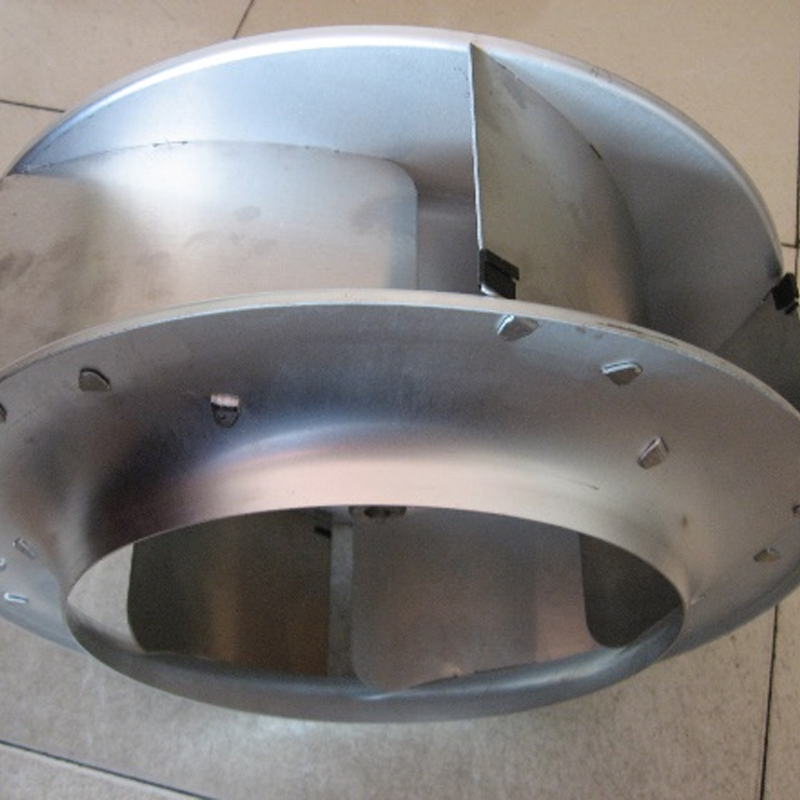
Some operations demand high-resistance, ducted air movement directly. Centrifugal models overcome high static pressure effortlessly. They pull air into the center and push it out at a 90-degree angle. You need them for complex ductwork systems. They are perfect for critical electrical enclosure cooling. They force cool air deep into dense, restrictive environments securely. The backward-curved impellers prevent dust accumulation, maintaining efficiency even in dirty airstreams.
Confined spaces require highly flexible operational solutions. A Portable EC Centrifugal Fan serves as an exceptionally versatile option. You can deploy it for localized machinery cooling rapidly. It works perfectly for temporary ventilation zones. Fixed installations are sometimes impractical during maintenance turnarounds or facility construction. These agile units deliver powerful, targeted airflow precisely where workers need it most. They remove toxic welding fumes or accelerate material drying times safely. Industrial teams relocate them easily as project demands shift.
Never judge a fan purely by its maximum output rating alone. You must evaluate aerodynamic performance critically. Look at the airflow delivery per watt of energy consumed (CFM/W). This specific metric reveals true operational efficiency. A high CFM/W ratio guarantees you move maximum air using minimal electricity. When testing aerodynamic performance, reference trusted industry standards like those from AMCA (Air Movement and Control Association). Independent laboratory testing verifies manufacturer claims objectively. Without standardized testing data, you risk installing equipment that underperforms in real-world conditions.
Excessive noise creates dangerous, stressful working conditions daily. Assess acoustic performance and noise reduction benefits carefully. EC motors run remarkably quietly compared to standard AC models. Their smooth magnetic rotation eliminates harsh mechanical humming. Lower decibel levels keep your facility compliant with strict OSHA standards. Quiet operation directly improves worker safety and daily comfort on the factory floor.
Modern systems require seamless digital integration completely. Evaluate the onboard control electronics meticulously. You need direct BMS (Building Management System) compatibility. Standard interfaces eliminate the need for costly external communication gateways. Look for these crucial standard connections during procurement:
Industrial environments routinely destroy fragile electronic equipment quickly. Durability remains non-negotiable for serious operations. Check the IP ratings on any unit you evaluate carefully. You need an IP54 or IP55 rating at the absolute minimum. These ratings guarantee robust protection against industrial dust infiltration. They protect against moisture, splashing water, and incidental chemical exposure. Solid enclosures keep sensitive internal electronics safe from premature failure. Furthermore, consider the thermal operating range of the internal electronics. High-quality models feature robust heat sinks built directly into the motor housing. This keeps the integrated circuit boards cool even during continuous heavy-duty operation.
Swapping AC for EC involves distinct physical realities always. We call this retrofit friction. EC fans are often much more compact than legacy models due to integrated designs. However, the physical changeover requires preparation. Existing mounting plates, custom brackets, or specific duct connections might require structural adapters. Engineering teams must measure existing clearances carefully. Planning the mechanical transition perfectly minimizes installation delays. It reduces unexpected labor costs significantly during the changeover.
EC technology eliminates bulky external VFDs entirely from the system. This simplifies the high-voltage electrical layout considerably. Yet, you must address the low-voltage control architecture immediately. Wiring networks connecting to centralized control panels require specific updates. They must handle precise low-voltage communication signals reliably. Ensure your electrical contractors understand these hybrid power requirements thoroughly. Separate high-voltage power lines from low-voltage data cables to prevent dangerous signal interference.
Fleet-wide upgrades demand meticulous supply chain planning always. Verify manufacturer lead times before committing to a massive facility rollout. Request highly detailed warranty terms in writing. Ensure you have guaranteed access to localized technical support. Delays in receiving replacement parts can severely stall critical production lines. Review this basic rollout checklist before proceeding with procurement:
Upgrading your airflow systems goes beyond simply buying new components. It represents a vital, calculated investment in measurable energy reduction. It guarantees long-term system reliability across your entire facility. Intelligent motor designs actively slash operational expenses every single hour. They ensure strict regulatory compliance moving forward seamlessly.
Begin by auditing your current energy baseline immediately. Identify high-run-time ventilation zones to serve as your initial pilot testing areas. Request detailed lifecycle cost projections from your potential suppliers carefully. Use these financial models to justify the capital expenditure to your leadership team. We heavily encourage facility managers and procurement leads to take action.
Contact technical sales teams today to discuss your specific needs. Secure a site-specific airflow and energy audit to map out your best upgrade path.
A: EC fans typically last significantly longer than legacy AC alternatives. They often exceed 40,000 to 50,000 operational hours. This extended lifespan occurs due to lower operating temperatures and highly efficient magnetic designs. Furthermore, they lack the carbon brushes found in older motors, entirely eliminating a major point of mechanical wear and tear.
A: Yes, you certainly can. Plug-and-play retrofit kits are widely available for immediate deployment. You might need minor mechanical adaptations, such as custom mounting plates, to ensure a tight fit. However, electrical integration is usually greatly simplified because you completely remove legacy, failure-prone VFDs from the existing circuit.
A: Yes, these industrial-grade portable units are exceptionally durable. They feature robust, reinforced housings and highly rated IP motors. Engineers specifically designed them to easily withstand severe industrial dust, flying debris, and frequent physical relocation across harsh manufacturing facilities or active construction environments.
A: The higher initial cost reflects the advanced technology inside. They feature integrated power electronics, intelligent speed control modules, and premium magnetic materials. However, this upfront cost is rapidly offset by massive operational savings. They consume far less electricity, making them significantly cheaper to operate over a standard 3-to-5-year lifecycle.
