


Views: 0 Author: Site Editor Publish Time: 2026-08-28 Origin: Site


Upgrading cooling tower performance often stalls at the fan drive system. Traditional AC motors rely heavily on mechanical belts and pulleys. These legacy drive mechanisms introduce significant energy losses and severely limit variable-load efficiency. Facility managers and HVAC engineers face mounting pressure to reduce energy consumption. Consequently, they are increasingly evaluating Electronically Commutated (EC) technology. Industry professionals need reliable solutions to meet strict energy compliance codes and optimize part-load operations. Older fan systems simply cannot adapt dynamically to shifting environmental loads. This guide breaks down the verifiable efficiency gains, precise control capabilities, and everyday implementation realities. We will carefully explore the advantages of upgrading to an EC fan for cooling tower applications. You will learn exactly how this technology resolves mechanical inefficiencies and future-proofs facility cooling networks.
Direct-Drive Efficiency: EC fans eliminate mechanical transmission losses (belts/gears), typically reducing energy consumption by up to 30-50% during part-load conditions.
Simplified Variable Speed: Built-in speed control removes the need for external Variable Frequency Drives (VFDs), reducing complex wiring and electrical footprint.
BMS Integration: Native Modbus and 0-10V/PWM control allow for precise, real-time temperature regulation aligned with facility cooling demands.
ROI Focus: While initial CapEx is higher, the payback period typically ranges from 1.5 to 3 years through reduced energy use and eliminated maintenance cycles.
Cooling towers rarely operate at 100% design load year-round. Seasonal weather shifts drastically alter facility cooling demands. Day-to-night temperature drops also reduce the thermal load placed on your system. However, standard AC induction motors run inefficiently outside their peak load window. They consume excessive power even when cooling demands plummet. Legacy fans struggle to adapt to these daily environmental changes without wasting massive amounts of electricity.
Standard AC systems rely heavily on complex mechanical linkages. Belt-driven setups suffer inherent friction losses constantly. These transmission losses routinely waste up to 10% of total input energy before reaching the impeller. Maintenance teams must regularly re-tension belts to prevent slipping. High-moisture environments degrade belts, pulleys, and gearboxes rapidly. Frequent mechanical failures create costly operational downtime. When a belt snaps during peak summer heat, the entire facility suffers immediately.
Many facilities try retrofitting traditional AC fans using external Variable Frequency Drives (VFDs). This approach introduces entirely new electrical complications. VFDs can cause severe harmonic distortion across your building's electrical network. They often induce stray shaft currents. These destructive currents lead to rapid bearing pitting over time. Engineers must install expensive shielded cabling to mitigate this electrical noise. Adding a VFD also requires bulky wall-mounted cabinets and complex conduit runs.
An EC fan system offers a superior, elegant alternative. It combines the motor, electronic controller, and aerodynamic impeller into one direct-drive unit. This integrated design resolves frustrating transmission losses instantly. It entirely removes external drive complexities from your electrical panel. Facilities regain lost efficiency while shedding ongoing mechanical maintenance burdens.
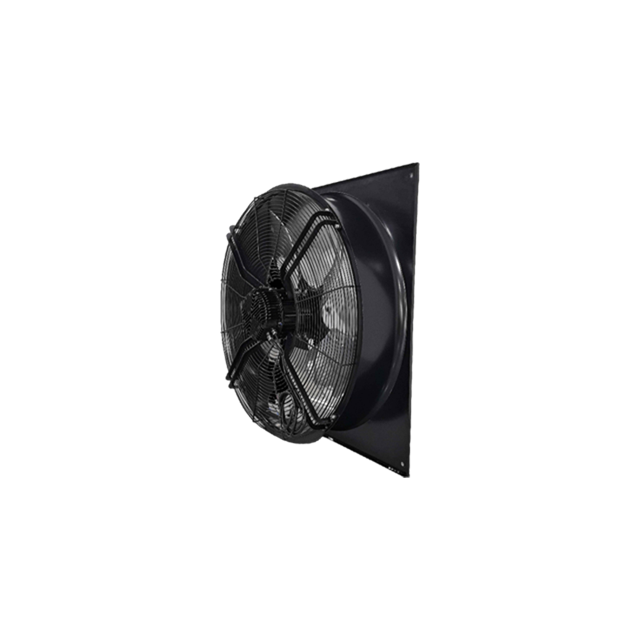
Brushless DC (BLDC) motor technology drives these modern commercial fans. Permanent magnets inside the rotor generate a highly stable, constant magnetic field. This advanced design helps the motor maintain exceptionally high efficiency levels. It performs beautifully even at drastically reduced operating speeds. Traditional AC motors lose efficiency rapidly when slowed down by external drives. The integrated electronics perfectly commutate the magnetic fields for optimal torque.
Understanding fundamental fan affinity laws reveals the true energy-saving potential. Fan power consumption drops by the cube of the speed reduction. A modest 20% speed reduction yields nearly a 50% energy drop. A 50% speed reduction requires only 12.5% of the full-load power. You unlock massive energy savings during cooler months or routine nighttime operation. Even slight RPM adjustments yield profound financial savings over an annual billing cycle.
Legacy cooling systems often rely on harsh staged, on/off cycling. This abrupt switching creates massive power spikes during every motor startup. Peak demand charges spike accordingly on your monthly utility bill. It also causes intense mechanical wear on shafts and bearings. A modern cooling tower EC fan replaces this clumsy cycling with continuous modulation. The fan adjusts its speed smoothly in real-time. Modulated operation eliminates damaging power surges entirely. It also keeps condenser water temperatures exceptionally stable.
Facilities must establish verifiable metrics to prove these energy savings conclusively. Always capture baseline power consumption data before initiating any hardware upgrade. Measure the existing system's efficiency in kW/ton under various load conditions. Compare these baseline metrics against post-installation data rigorously. Clear numbers make it easy to validate your initial energy reduction goals.
Common metrics to track during a comprehensive energy audit include:
Baseline peak power demand (kW) during maximum summer loads.
Average part-load energy consumption (kWh) over a typical shoulder-season week.
System cooling capacity measured dynamically in kW/ton.
Frequency and duration of traditional fan cycling events.
Ambient wet-bulb temperatures corresponding to power spikes.
Modern EC fans prioritize seamless integration into existing facility controls. They feature built-in, plug-and-play control signal inputs right from the factory. You can directly wire 0-10V, 4-20mA, or digital PWM signals into the fan. This simple connection interfaces flawlessly with existing analog PID controllers. Analog control loops become highly responsive and incredibly reliable. The fan ramps up exactly as condenser water temperatures begin to rise.
Building Management Systems (BMS) require robust digital communication networks. These sophisticated fans utilize native RS485/Modbus RTU protocols. Facility managers gain comprehensive remote monitoring capabilities instantly. The digital system transmits predictive maintenance alerts before actual catastrophic failures occur. Operators can execute real-time RPM adjustments directly from their centralized control screens. You never need to send a technician to the roof to check fan status.
Precise RPM management directly correlates to superior acoustic control. Noise compliance represents a major regulatory hurdle in dense urban environments. Standard fans run at full speed and generate excessive airborne noise. EC technology slows the fan down exactly when building cooling demand drops. This targeted speed reduction drastically lowers sound power levels. Night-time operation becomes whisper-quiet, ensuring strict municipal zoning compliance. Hotels and hospitals find this acoustic benefit particularly valuable for guest comfort.
Larger industrial cooling towers often benefit from strategic hardware redundancy. Engineers increasingly evaluate EC fan arrays for high-capacity applications. A modular array uses multiple smaller fans instead of one massive AC fan. This intelligent setup provides built-in N+1 redundancy natively. If one fan requires maintenance, the others automatically increase speed to compensate. The facility avoids total system failure and maintains uninterrupted critical cooling.
Control Method Comparison Chart
Control Type | Input Signal | Primary Benefit | Ideal Application |
|---|---|---|---|
Analog Control | 0-10V / 4-20mA | Simple, plug-and-play integration | Standalone PID loop regulation |
Digital Pulse | PWM (Pulse Width) | High-resolution speed accuracy | Microprocessor-driven environments |
Network Protocol | RS485 Modbus RTU | Two-way data and remote monitoring | Complex Building Management Systems |
Relay Output | Dry Contact Alarm | Instant fault notification | Legacy alert panel systems |
Retrofitting an existing cooling tower requires careful logistical planning upfront. Traditional AC motors, heavy gearboxes, and thick drive shafts are incredibly bulky. They require expensive crane rentals and heavy lifting equipment to remove safely. In contrast, fully integrated EC fan units are remarkably compact and lighter. Installers must still plan for necessary structural adaptations inside the tower. You will likely need customized adapter plates. Sturdy mounting brackets ensure the new fan sits perfectly within the existing aerodynamic shroud. Proper alignment prevents unwanted vibration and maximizes overall aerodynamic efficiency.
Environmental resilience remains absolutely non-negotiable for cooling towers. Fans endure a constant barrage of 100% saturated airflow. You must specify high IP-rated fans for long-term survival outdoors. Look exclusively for IP54, IP55, or IP68-rated electronic components. Corrosion-resistant coatings protect highly vulnerable internal metal parts. Epoxy-coated stators aggressively repel moisture and prevent premature rust formation. Stainless steel hardware prevents fasteners from degrading under chemical water treatments.
Upgrading transforms your entire maintenance strategy completely. Legacy systems force technicians into endless reactive mechanical maintenance routines. Teams spend countless hours greasing bearings, aligning bent shafts, and replacing snapped belts. This new technology eliminates these tedious mechanical chores entirely. Facilities transition seamlessly toward proactive, data-driven software monitoring. Intelligent diagnostics alert you to slight bearing friction increases long before a failure occurs.
We must honestly acknowledge the practical risks of this upgrade. The primary barrier is always upfront capital expenditure. High-quality electronically commutated fans cost more initially than basic AC motors. Additionally, facility technicians must actively evolve their daily skill sets. They need to shift from mechanical troubleshooting to basic electronic diagnostics. Training staff on software interfaces is essential for long-term operational success.
Best Practices for Tower Retrofits:
Inspect the structural integrity of the existing fan deck before mounting new hardware.
Verify all new electrical connections feature waterproof, marine-grade cable seals.
Update technician standard operating procedures to include proactive software diagnostics.
Ensure adequate clearance around the electronic heat sink for proper air cooling.
Calculating the return on investment requires analyzing multiple financial angles carefully. Many local energy providers offer substantial utility rebates to commercial customers. These incentive programs aggressively target inefficient commercial HVAC systems. Upgrading to ECM or EC motor technology often qualifies for significant cash returns. Aligning your facility with strict ASHRAE 90.1 standards ensures immediate regulatory compliance. It also guarantees your building meets modern energy efficiency benchmarks recognized globally.
You must evaluate potential equipment vendors rigorously. Avoid generic suppliers who simply sell off-the-shelf parts out of a catalog. Ask specific, challenging questions before finalizing your expensive purchase. Do they provide custom energy audit projections before the sale? These technical projections must utilize your historical weather data and specific building load profiles. Generic, national-average estimates rarely reflect actual on-site savings accurately.
Cooling towers generate unusually high static pressure due to dense fill materials. You must confirm the vendor's impellers are optimized specifically for this demanding environment. Standard ventilation blades will stall or fail catastrophically under heavy static loads. Specialized, swept-blade designs push air efficiently through the heavy water cascade.
Finally, scrutinize the warranty terms regarding electronic components. The supplier must stand behind their product's durability in persistently wet environments. Ask about guaranteed failure rates and local replacement part availability. A robust warranty provides vital peace of mind during the initial payback period.
An upgraded fan drive completely transforms your facility cooling infrastructure. It securely transitions the system from a heavy mechanical liability into an intelligent, controllable asset. You immediately eliminate parasitic drive losses and gain unprecedented control over airflow. The upgrade is highly justifiable for modern, efficiency-focused facilities. Buildings with wildly fluctuating cooling loads and high utility rates benefit immensely. It also serves as a highly visible fast track for hitting aggressive corporate sustainability targets.
To begin your modernization journey, follow these action-oriented next steps:
Conduct a localized energy audit to accurately capture your current mechanical inefficiencies.
Request a computational load profile from a qualified, specialized HVAC vendor.
Establish a definitive baseline ROI timeline using verified local utility rates.
Schedule a pilot installation on a single tower to validate predicted energy savings.
A: Yes, through a straightforward retrofit process. Technicians remove the existing motor, drive shaft, and traditional fan blades entirely. They then install the compact EC unit using customized mounting brackets and adapter plates. You rarely need to make major structural changes to the actual cooling tower shell during installation.
A: No. EC fans feature integrated electronics that handle commutation and speed control internally. This built-in functionality eliminates the high cost, wasted panel space, and complicated wiring associated with external VFDs. It also prevents the damaging harmonic distortion issues commonly associated with external drive retrofits.
A: Purpose-built units handle saturated conditions exceptionally well. They use fully encapsulated electronics, double-sealed bearings, and heavy-duty corrosion-resistant materials. High IP ratings (like IP55 or IP68) ensure these components easily withstand 100% humidity, aggressive water ingress, and harsh chemical treatments common in cooling loops.
A: Most commercial and industrial retrofits see a full return on investment between 18 and 36 months. The exact timeline depends heavily on your local utility costs, total annual operating hours, and variable cooling load profiles. Securing local utility rebates can shorten this payback period significantly.
