


Views: 0 Author: Site Editor Publish Time: 2026-07-09 Origin: Site


Modern ventilation faces tightening energy compliance standards. Organizations like ASHRAE and European ErP directives enforce strict efficiency thresholds. Operating costs continue to rise globally. This makes legacy airflow technology financially unsustainable for most facility managers. Traditional AC motors usually operate on binary logic. They run completely on or off. Sometimes they use rigid multi-speed settings. These older setups lead to massive energy waste. They cause poor climate control across different building zones. You also hear high acoustic noise at partial loads.
Upgrading to a variable speed EC motor solves these core issues entirely. It shifts your strategy from static ventilation to demand-controlled airflow. You gain exact environmental management. Facilities achieve verifiable return on investment through drastic energy reductions. You no longer guess at airflow needs. The system adjusts dynamically to match real-time requirements. We will explore how this technology reshapes modern HVAC setups. You will learn the difference between true variable speed and basic multi-speed units. We will also cover implementation risks and practical retrofit strategies to guide your next upgrade.
Industry professionals often misunderstand motor classifications. You can see this confusion across numerous HVAC forums. Technicians frequently use "ECM" and "Variable Speed" interchangeably. This creates major specification errors. All Electronically Commutated Motors share similar internal hardware. They use intelligent electronics to drive the rotor. However, their control logic differs drastically. You must understand this difference to select the right equipment.
We break down the control logic into two main categories. First, we have multi-speed ECMs. Manufacturers pre-program these units to specific torque or RPM steps. They might offer discrete Low, Medium, and High settings. They operate very efficiently at these set points. Yet, they lack granular control. You cannot tune them between these rigid steps. Second, we have true variable speed models. These are capable of continuous modulation from zero to one hundred percent. The motor adjusts its RPM seamlessly. It maintains exact static pressure. It hits precise airflow targets dynamically.
The internal mechanism explains this efficiency. The integrated microprocessor converts incoming AC power into DC power. It uses this DC power to control the magnetic fields perfectly. This dictates the exact rotor speed. It operates without physical carbon brushes. Eliminating brushes removes mechanical friction. It also stops electrical arcing. You get a highly efficient, intelligent fan drive.
You must evaluate performance across the entire operating range. Systems rarely run at peak capacity. They spend most hours operating at partial loads. Standard AC motors lose significant efficiency when you dial them down. Their energy consumption does not drop proportionally with their speed. An EC motor behaves completely differently. It maintains exceptionally high efficiency even at low speeds. Efficiency ratings often remain above 80 percent during partial load operations.
Acoustic performance represents another major advantage. Older AC units often rely on triac controllers to modulate voltage. This crude method creates a distinct, annoying motor hum. It irritates building occupants. It harms indoor air quality indirectly. Facility managers often turn fans off entirely to stop the noise. EC technology completely eliminates this voltage modulation noise. The motor runs silently at all speeds. This greatly improves indoor comfort.
We must also look at the financial lifecycle model. Upfront costs run higher for advanced electronic technology. Yet, the long-term budget benefits become clear quickly. You gain immediate energy savings. The motors generate far less waste heat. This puts significantly less strain on your cooling systems. You also gain a much longer operational lifespan.
| Performance Metric | Standard AC Motor | True Variable Speed EC |
|---|---|---|
| Efficiency at 100% Speed | 60% - 70% | 85% - 90%+ |
| Efficiency at 50% Speed | Drops below 40% | Maintains > 80% |
| Acoustic Noise (Low Speed) | High (Triac Hum) | Near Silent |
| Heat Generation | High (Strains AC) | Very Low |
| Lifespan Expectancy | Moderate (Friction wear) | High (Brushless design) |
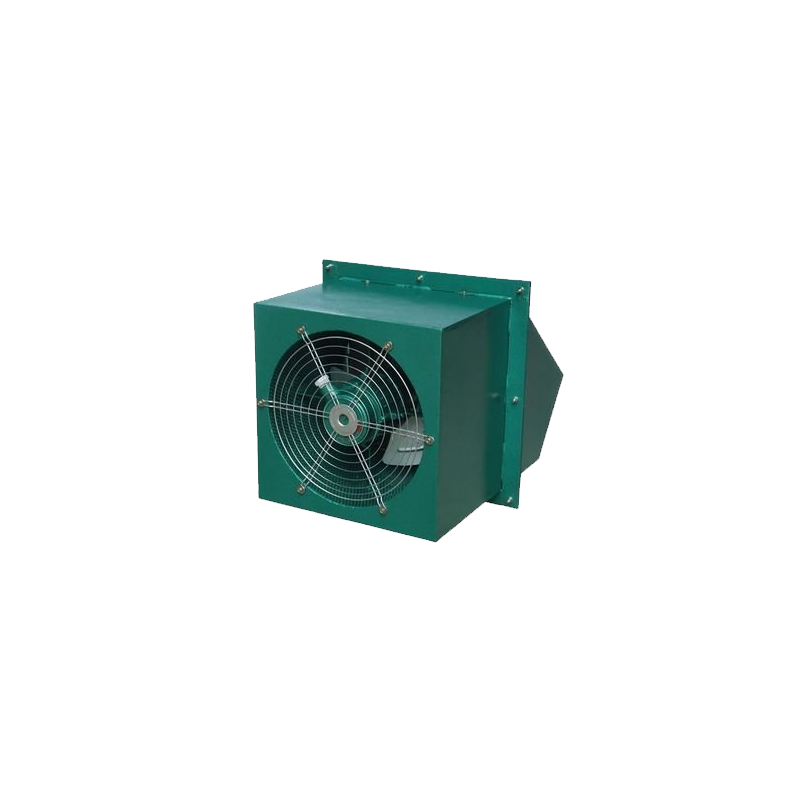
Different environments require vastly different airflow strategies. A ventilator motor equipped with continuous modulation fits perfectly into complex modern buildings. You cannot rely on static airflow when occupancy loads change hourly. The technology adapts instantly to dynamic environmental demands. We see three primary application scenarios where this technology dominates the market.
Real-world facilities benefit greatly from these applications. Hospitals rely on exact pressure differentials to isolate wards. Data centers need continuous, precise cooling adjustments to protect servers. Green buildings depend on these units to achieve high certification scores. The flexibility of the technology serves nearly every modern HVAC requirement.
Specifying the correct unit requires deep technical consideration. You cannot simply select a horsepower rating and expect success. You must evaluate the control interface compatibility first. Your existing system architecture dictates this choice. Does your master controller output analog 0-10V signals? Do you rely on PWM signals? Perhaps your building management system uses digital protocols. Many facilities now mandate Modbus or BACnet communication. You must ensure the motor module speaks the same language.
Aerodynamic matching plays a critical role in system efficiency. Do not buy separate components if you can avoid it. Sourcing fully integrated units works best. Manufacturers engineer the motor and the impeller together. They optimize the fan wheel specifically for that exact drive profile. This guarantees the published efficiency data. Component matching often ruins aerodynamic flow. It introduces turbulence and lowers overall system efficiency.
Environmental and compliance ratings matter just as much. You must check the specific IP ratings for your application. Exhaust systems need strong moisture and dust resistance. Kitchen exhaust fans require specialized grease-resistant ratings. Ensure the unit meets or exceeds all local energy directives. European markets demand strict ErP compliance. North American markets look for high ASHRAE standards.
| Specification Area | What to Check | Why It Matters |
|---|---|---|
| Control Interface | 0-10V, PWM, or Modbus | Ensures the motor communicates with the building system. |
| Aerodynamics | Integrated Motor + Impeller | Prevents turbulence and guarantees published efficiency. |
| Environmental Rating | IP54, IP55, or higher | Protects electronics from dust, moisture, and debris. |
| Power Supply | Single-phase vs Three-phase | Matches facility voltage to prevent electrical failure. |
Retrofitting older systems carries specific technical risks. You must handle wiring and voltage sensitivities very carefully. EC units require a constant power connection. They do not cycle power to turn on and off. You must run separate, shielded low-voltage control wiring for the speed signals. You cannot simply wire them into old AC relays. Do not connect them to legacy triac switches. Feeding modulated power into an intelligent module will destroy the onboard electronics immediately.
Programming and configuration pose another distinct challenge. These are not generic plug-and-play components. True variable speed units require precise software setups. You often need proprietary diagnostic tools. Some units require specialized OEM programming upon installation. You must set minimum and maximum RPM parameters. You must define rotation direction digitally. Field technicians need proper training to handle these commissioning steps correctly.
Maintenance differences require a complete mindset shift. You leave behind traditional mechanical maintenance tasks. You no longer change worn drive belts. You do not replace carbon brushes. Instead, you perform electronic troubleshooting. You read module fault codes. You monitor digital performance trends. Because the electronics are sensitive, you must install robust surge protection. Power grid spikes remain the leading cause of premature failure in these systems.
Specifying a variable speed system is no longer a premium upgrade. It serves as a baseline requirement for modern ventilation. Facilities demand compliant, highly efficient, and quiet airflow solutions. Upgrading removes the rigid limitations of binary AC technology. It introduces a paradigm of exact, demand-driven climate control. You eliminate energy waste while drastically improving indoor comfort levels.
Decision-makers must update their shortlisting logic. You should prioritize long-term financial value and control compatibility. Do not focus solely on initial unit costs. Compare manufacturers based on lifecycle efficiency, ease of integration, and technical support. The cheapest upfront unit often drains budgets through programming failures and energy waste.
Your next step requires professional evaluation. Consult an experienced engineering team today. Ask them to perform a system-specific energy audit. Request a detailed motor retrofit analysis for your facility. They will help you map out the specific control interfaces and aerodynamic requirements needed for a successful upgrade.
A: Payback periods depend heavily on local utility rates and operating hours. Most commercial applications see full returns within one to three years. Systems running continuously at partial loads yield the fastest financial returns. Energy savings typically offset the higher initial purchase price rapidly.
A: Direct drop-in replacements exist, but they have major limitations. True integration requires dedicated continuous power lines and separate low-voltage control wiring. You cannot use existing AC voltage-modulation controllers. You must upgrade your control logic to utilize the actual variable speed benefits safely.
A: Most control modules are not field-repairable. When an electronic failure occurs, technicians replace the entire module rather than swapping tiny internal components. This reality makes robust electrical surge protection absolutely critical to protect the sensitive internal microprocessors from sudden voltage spikes.
A: It vastly improves indoor air quality. It allows for continuous, low-speed air circulation. This keeps air moving constantly through filtration systems without creating uncomfortable drafts. It also prevents the severe energy penalties associated with running standard motors constantly at full speed.
