


Views: 0 Author: Site Editor Publish Time: 2026-09-02 Origin: Site


Facility managers and mechanical engineers face a critical challenge today. Escalating energy costs constantly strain operating budgets. Stricter building codes, like updated ASHRAE standards, demand unprecedented efficiency. Meanwhile, aging infrastructure severely threatens system reliability. The industry currently sees a massive, rapid phase-out of inefficient belt-driven AC motors. They are quickly losing ground to electronically commutated (EC) technology. We must examine the commercial realities of integrating an EC fan for HVAC unit modernization. This shift represents a necessary financial decision rather than just a passing trend. You will discover the fundamental engineering differences driving this transition. You will also learn practical evaluation criteria for executing seamless system upgrades. Finally, we provide a strategic framework for calculating actual payback and ensuring a successful implementation.
Efficiency at Part-Load: An HVAC EC fan consumes up to 30–50% less energy than traditional AC fans, specifically during partial-load operations.
Simplified Infrastructure: EC fans eliminate the need for external Variable Frequency Drives (VFDs), belts, and pulleys, reducing mechanical failure points.
Retrofit Viability: Replacing single massive legacy fans with modular EC fan arrays offers built-in redundancy and easier installation in tight mechanical rooms.
Higher CAPEX, Lower OPEX: While upfront costs are higher, the typical ROI timeline for commercial HVAC EC upgrades falls between 1.5 to 3 years.
Standard AC motors create massive operational liabilities for modern facilities. Tightening Department of Energy (DOE) efficiency regulations severely penalize high energy footprints. Local carbon mandates force building owners to cut emissions drastically. Older AC units simply consume too much power to remain compliant. Building owners face severe pressure from ASHRAE 90.1 energy standards. These frameworks penalize outdated mechanical designs. Legacy fans heavily jeopardize your chances of achieving LEED certification.
Maintenance burdens also drain facility resources continuously. Facility teams face ongoing operational costs just to keep older systems running. They must replace worn belts frequently. They spend hours greasing mechanical bearings. Managing external VFD complications requires specialized technical labor. Furthermore, traditional belt-driven systems create a constant physical mess. Belts shed fine rubber dust as they wear down over time. This black dust directly coats the evaporator coils. Dirty coils restrict heat transfer and drastically reduce overall cooling capacity. You essentially pay more money for less cooling.
Inefficient airflow management severely worsens the problem. Legacy AC fans typically run at full speed regardless of actual cooling demand. Systems rely on inefficient mechanical dampening mechanisms to restrict airflow. This process wastes enormous amounts of energy during off-peak hours. The motor works at maximum capacity while dampers physically block the air. You pay for maximum electrical draw while utilizing only a fraction of the output.
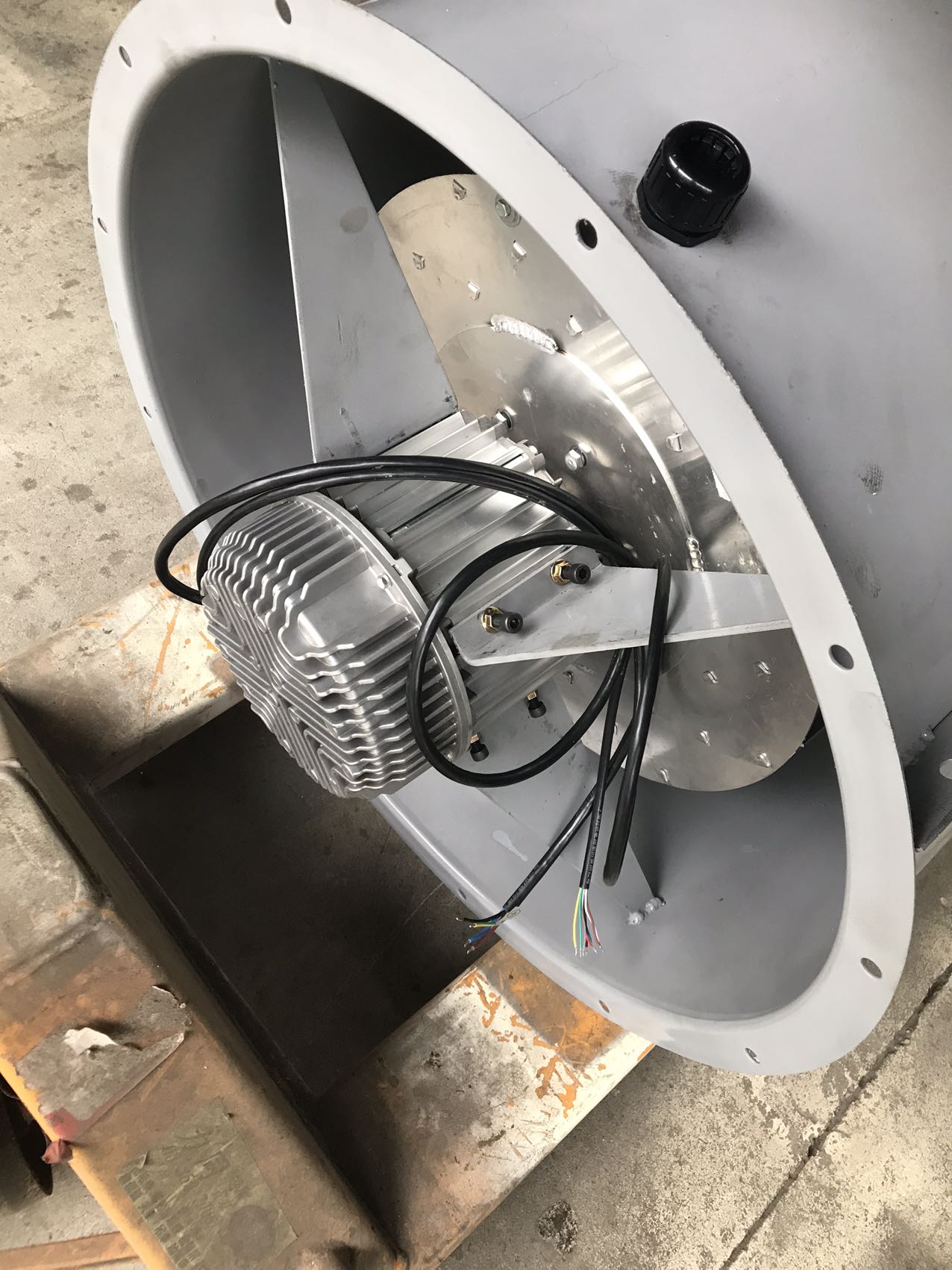
We must define the underlying technology driving this industry shift. EC stands for Electronically Commutated. An EC motor operates fundamentally as a brushless DC motor. It features built-in alternating current conversion capabilities. The motor houses sophisticated integrated electronics right inside the casing. To understand the difference, look inside the hardware. EC motors utilize built-in Hall effect sensors. These sensors constantly monitor the exact position of the rotor. The internal microprocessor then adjusts the magnetic field perfectly. Traditional AC induction motors constantly experience "slip" between the magnetic field and the rotor. This slip causes inherent energy losses. EC motors operate synchronously, completely eliminating this wasteful slip.
Integrated speed control offers a massive engineering advantage. Standard AC motors require separate Variable Frequency Drives (VFDs) for speed modulation. VFDs consume significant physical wall space. They also generate additional heat inside mechanical rooms. Conversely, EC technology features native, continuous speed modulation. The motor automatically adjusts its RPM based on real-time system demand. It ramps up and down smoothly without external hardware interventions.
Acoustic and thermal performance also see dramatic improvements. Traditional motors dump significant heat directly into the airstream. This forces the entire cooling system to work harder. EC components run significantly cooler. They minimize internal heat generation efficiently. They also operate much quieter, particularly at lower RPMs. This quiet operation improves overall system acoustics. Occupants experience less background mechanical noise, improving comfort in offices and healthcare facilities.
You cannot simply swap old components for new ones blindly. Upgrading your system requires precise engineering calculations. You must evaluate several key criteria before making a final purchasing decision.
System sizing and airflow matching demand careful attention. You must evaluate exact static pressure capabilities. You need precise CFM (Cubic Feet per Minute) requirements based on current building usage. Be mindful of changing system dynamics. When you remove old belts and sheaves, you reduce internal friction. The overall static pressure inside the cabinet drops.
Common Mistake: Do not perform a direct 1:1 horsepower swap. Older motors often operated significantly oversized. If you blindly match the old horsepower, your new system will severely over-perform. Recalculate your current load needs to avoid wasting capital on excessively large units.
BMS integration capabilities represent another critical evaluation point. Your new components must communicate seamlessly with existing Building Management Systems. Verify compatibility with standard control protocols. Distinguish between BACnet IP and older BACnet MS/TP networks. Ensure your selected hardware supports the specific network architecture your facility currently uses. Evaluate these common integration standards:
Modbus RTU communication requirements
BACnet integration protocols
0-10V analog signal connections
Space and form factor constraints often dictate your final selection. Evaluate direct-drive plenum fans against standard axial fans. Base this decision strictly on your existing Air Handling Unit (AHU) dimensions. Direct-drive plenum units often save considerable space. They completely eliminate the bulky housings required by older centrifugal fans.
You must also assess redundancy requirements accurately. Facilities like data centers or hospitals demand zero-downtime environments. Single large fans introduce a highly risky single point of failure. Multiple smaller fans arranged in an array offer superior reliability. If one unit fails, the others automatically speed up. They maintain optimal airflow while you safely schedule a replacement.
Retrofitting older AHUs provides incredible logistical benefits for maintenance teams. The fan array approach revolutionizes system upgrades entirely. Replacing a massive centrifugal fan previously required tearing down mechanical room walls. It often required cranes or heavy rigging equipment just to move the iron.
An HVAC EC fan array solves these severe logistical nightmares immediately. You can move smaller modular units easily through standard doorways. They fit perfectly inside standard passenger elevators. This modularity dramatically simplifies the entire installation process. It eliminates the need for expensive structural demolition.
You should expect highly transparent estimates regarding system downtime. Retrofit downtime is typically significantly shorter than replacing a massive single unit. Teams can often complete an array retrofit over a single weekend. They dismantle the old unit piece by piece. They then slide the modern modular units into place quickly.
Bypassing legacy components yields a significantly cleaner system. The removal process eliminates several problematic parts permanently. Technicians remove heavy variable pitch sheaves. They take out all drive belts and pulleys. They cut away older, bulky motor mounts. This results in a much cleaner, lighter AHU cabinet. The cabinet experiences far less structural vibration. It also allows much better internal airflow dynamics.
Legacy AC System vs. Modern EC Array Retrofit
System Component | Legacy AC Setup | Modern EC Array |
|---|---|---|
Drive Mechanism | Belts, pulleys, sheaves | Direct drive, internal motor |
Speed Control | External wall-mounted VFD | Integrated digital controller |
Redundancy | None (single point of failure) | High (N+1 array configuration) |
Cabinet Weight | Extremely heavy | Significantly lighter |
Facility leaders must acknowledge specific adoption risks openly. These upgrades present unique financial and operational challenges initially. Proper planning mitigates these risks effectively and protects your investment.
Initial CAPEX shock remains a common hurdle during procurement. EC components carry a premium upfront cost compared to standard AC equivalents. You must calculate the true Return on Investment (ROI) accurately. Factor in local utility rebates. Account for drastically reduced maintenance hours over the equipment's lifespan.
Electronic component vulnerability requires serious operational consideration. The drive is built directly into the motor housing. If the integrated controller fails, you cannot simply swap a drive on the wall. A failure often requires replacing the entire motor unit. You must stock appropriate replacement modules on-site to prevent extended downtime. Furthermore, treat these integrated motors like computer hardware. The internal controllers utilize specific firmware versions. You must establish a clear protocol for managing firmware updates safely. Skipping vital updates might expose the system to communication errors.
Power quality sensitivity is another absolutely critical factor. You must thoroughly evaluate your building's existing power quality. The onboard electronics contain highly sensitive internal components. They can react poorly to severe incoming voltage spikes. Modern electronic drives can sometimes inject noise back into your building's electrical grid. Harmonic distortion can steadily degrade the electronics over time.
Best Practice: Always install proper surge protection at the panel. Discuss harmonic mitigation strategies with your electrical engineer. You might need to install passive harmonic filters alongside your new array. This proactively protects your substantial capital investment.
Choosing the right vendor strictly determines the success of your upgrade. You must provide specific data to get accurate engineering proposals. You also need a vendor who offers robust post-installation support.
Follow this numbered checklist when gathering data requirements for vendor evaluation:
Measure the precise target CFM required for the specific building zone.
Calculate the exact static pressure of the existing ductwork layout.
Document the facility's altitude, as air density heavily impacts performance.
Confirm the exact incoming electrical voltage and phase availability.
Note the operating temperature range inside the mechanical room environment.
Evaluating vendor support goes far beyond simply comparing initial price tags. You must scrutinize vendor warranties carefully. Check for local stocking availability in your region. If a unit fails, you cannot wait six weeks for overseas shipping. You also need robust technical support for BMS commissioning. Connecting digital controls often requires specialized troubleshooting expertise.
Finally, ask shortlisted vendors for a fully documented energy audit. Request a detailed payback calculation specific to your facility's exact utility rates. This structured financial evaluation proves the investment's true worth. It helps secure crucial approval from executive boards. It demonstrates exactly when the energy savings will surpass the initial upgrade cost.
Energy Savings Profile Chart
Motor Speed (Load) | Standard AC Motor Efficiency | EC Motor Efficiency |
|---|---|---|
100% Load | Approx. 85% | Approx. 90% |
80% Load | Approx. 75% | Approx. 88% |
50% Load | Approx. 50% | Approx. 85% |
30% Load | Approx. 35% | Approx. 80% |
Switching away from legacy motors represents a highly strategic engineering move. You essentially future-proof your entire HVAC infrastructure immediately. This proactive decision shields your facility against rapidly rising energy costs. It ensures long-term compliance with increasingly strict building standards. Modernizing your mechanical room successfully transforms a major maintenance headache into a highly efficient asset.
We strongly encourage facility leaders to take immediate, measured action. Start by piloting a retrofit on a single, high-usage AHU first. Benchmark the actual energy savings over a three-month period. Measure the exact reduction in ongoing maintenance hours. Use this hard operational data to justify a comprehensive facility-wide upgrade confidently. Taking this calculated step ensures you maximize reliability while minimizing long-term operational expenses.
A: Most commercial AHUs and rooftop units (RTUs) can be retrofitted successfully. However, the process usually requires structural modifications to the internal bulkhead. Technicians must also install updated wiring and configure new BMS integrations to support the digital communications required by the new motors.
A: These advanced motors operate with significantly less mechanical friction. With no belts to wear out and much cooler operating temperatures, they boast an impressive lifespan. You can expect 40,000 to 50,000+ hours of reliable operation, heavily depending on your facility's specific operating conditions and preventative maintenance routines.
A: Yes, they are highly preferred in CRAC (Computer Room Air Conditioning) units. Their precise airflow scalability and extraordinarily low heat generation make them ideal. They align perfectly with aggressive data center PUE (Power Usage Effectiveness) goals, ensuring maximum cooling efficiency without introducing excess internal heat.
A: No. The necessary speed control electronics are entirely integrated into the motor's housing. This complete integration permanently eliminates the need for an external Variable Frequency Drive. It also removes the associated complex wiring and frees up valuable wall space inside your tight mechanical rooms.
