


Views: 0 Author: Site Editor Publish Time: 2026-07-03 Origin: Site


Commercial poultry farming operates in aggressively harsh environments where industrial-grade ventilation is absolutely mandatory. High bird densities generate immense heat, dangerous moisture, and caustic ammonia daily. Traditional galvanized steel fans have long served as the baseline standard for agricultural facilities. However, modern commercial operators are increasingly shifting toward fiberglass reinforced plastic (FRP) alternatives. Standard metal simply degrades too quickly when continuously exposed to caustic bird waste. While demanding a notably higher initial investment, FRP cone fan housing is uniquely engineered to solve two specific bottom-line problems. First, it completely eliminates the rapid corrosion caused by ammonia buildup. Second, it resolves severe airflow inefficiency experienced under high static pressure conditions. By understanding these specific mechanical advantages, you can make smarter operational upgrade decisions. In this comprehensive guide, you will learn why composite materials outperform metal, how aerodynamic cones cut energy bills, and what to verify during procurement.
Poultry barns create a uniquely punishing and highly acidic atmosphere. High stocking densities mean thousands of birds reside in closed quarters. Bird respiration alone pumps massive volumes of moisture into the indoor air. Manure breakdown constantly releases harmful ammonia gases. High ambient humidity traps these hazardous gases indoors. This chemical mixture creates a highly corrosive environment daily. Such an atmosphere aggressively attacks standard agricultural equipment. Galvanized steel housings suffer immediate vulnerability under these conditions.
Continuous exposure compromises metal housings surprisingly fast. Zinc coatings on galvanized steel eventually wear thin. Once the raw steel oxidizes, rust begins forming rapidly. Rust typically attacks welded joints and structural edges first. This creeping oxidation leads directly to severe structural fatigue. Motor mounts gradually loosen over time. Loose mounts cause whole units to vibrate heavily during operation. Vibration accelerates mechanical wear on vital bearings and drive belts.
A degrading poultry farm fan loses its vital aerodynamic integrity. Rust creates rough internal surfaces and housing deformations. The internal motor must work much harder just to move the same air volume. This hidden mechanical strain drives up your monthly energy bills significantly. Inefficiency breeds excessive heat within the fan motor itself. Worse, you risk catastrophic equipment failure during peak summer heat loads. If exhaust fans fail in July, flock mortality spikes within mere hours. Traditional metal units simply offer a much shorter runway before overall efficiency drops.
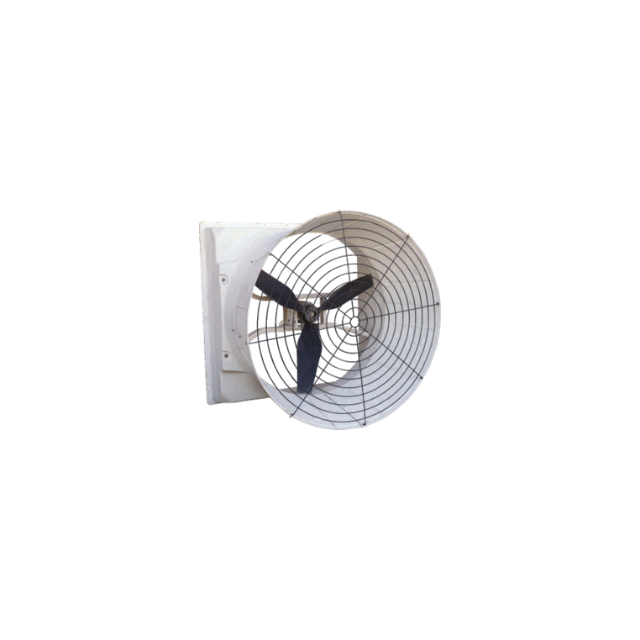
Fiberglass Reinforced Plastic (FRP) changes the entire durability equation for agricultural facilities. We define FRP as an advanced industrial composite material. It intimately combines a tough polymer resin with woven fiberglass strands. This precise fusion delivers an extreme strength-to-weight ratio. The resulting material feels surprisingly light during physical installation. However, it remains incredibly rigid under heavy operational stress. Structural integrity never compromises daily cooling performance.
Chemical inertness acts as its primary defense mechanism in barns. FRP materials do not react chemically to concentrated ammonia gas. They easily resist the acidic uric acid found in bird droppings. Biosecurity protocols require harsh chemical washdown procedures between flocks. Operators use foaming acids and strong liquid disinfectants regularly. These aggressive cleaning agents strip thin zinc coatings off metal fans easily. Conversely, composite housings shrug off these caustic washes effortlessly. The outer surface remains smooth and fully intact year after year.
Thermal stability offers another major engineering advantage. Metal expands and contracts wildly during extreme weather shifts. FRP housings do not warp under intense summer heat. They never become brittle or fragile during deep winter freezes. This impressive dimensional stability maintains a perfect, tight seal around the spinning fan blades. A tight seal prevents unwanted air leakage at the blade tips. Tight engineering tolerances guarantee maximum air pulling power for your facility.
Physical shape dictates absolute performance in modern fluid dynamics. The specialized cone discharge design brilliantly smooths the exit of exhaust air. Traditional square box fans push air abruptly into a flat wall of outside air. This creates immense turbulence and drag resistance. The cone shape harnesses the well-known Venturi effect perfectly. As air moves through the expanding cone diameter, physical pressure drops smoothly. This gradual expansion drastically reduces turbulent back-pressure against the spinning blades.
Reducing this air resistance allows the fan motor to operate much more freely. You move a significantly higher Cubic Feet per Minute (CFM) of air. You achieve this impressive air volume using the exact same electrical horsepower. Maximizing your CFM per watt becomes a crucial metric for farm profitability. High-efficiency aerodynamics translate directly to consistently lower utility invoices.
Tunnel-ventilated houses present a uniquely difficult aerodynamic challenge. Exhaust fans must forcefully pull outside air through wet evaporative cooling pads. They draw this heavy, humid air down the entire length of the building. This massive draw creates high static pressure conditions indoors. Standard box fans often struggle heavily here. Air slips backward over the blade tips under stress. The precision gap in a molded composite housing minimizes this air spillage. It maintains high-velocity performance even under these demanding static pressure loads.
Buyers definitely face a higher initial capital expenditure for composite units. A modern composite housing costs noticeably more upfront than a basic metal box fan. However, smart operators evaluate the energy efficiency payback closely. You should frame the real return on investment (ROI) around ongoing electricity savings. Moving more air per watt pays off very quickly in commercial settings. Over thousands of summer operating hours, you see direct operational cost reductions.
Let us examine the stark contrast in equipment lifecycles. Lifespan replacement cycles heavily favor composite materials. Quality composite units often boast a 15 to 20-year operational lifespan. In sharp contrast, standard metal fans require heavy maintenance rapidly. You might need to replace a rusted steel housing in just five to seven years. Frequent equipment replacements drain capital budgets unnecessarily.
Consistent, reliable ventilation directly impacts your agricultural yield. Good indoor air quality protects vital flock livability metrics. It strongly reduces respiratory diseases caused by lingering ammonia gas. Optimal ventilation helps birds convert feed into muscle more efficiently. It optimizes target growth weights perfectly across the entire flock. Optimized market weights remain the ultimate financial metric for commercial farms.
To clearly illustrate these operational differences, review the performance chart below:
| Feature / Metric | Traditional Galvanized Fan | FRP Cone Fan |
|---|---|---|
| Corrosion Resistance | Low (Susceptible to rust and ammonia) | High (Chemically inert to barn acids) |
| Expected Lifespan | 5 - 7 Years (Requires frequent part swaps) | 15 - 20+ Years (Highly durable structure) |
| Energy Efficiency (CFM/Watt) | Moderate (Suffers from turbulence) | Excellent (Optimized by Venturi effect) |
| Maintenance Needs | High (Rust removal, tightening mounts) | Low (Simple pressure washing) |
| Performance in High Static Pressure | Drops significantly due to air spillage | Remains highly stable and consistent |
Upgrading your ventilation infrastructure requires careful structural planning. Composite fans possess a noticeably bulky physical footprint. Ensure your existing barn walls feature adequate structural framing. The framing must confidently handle both the physical weight and the operating vibration. High-capacity fans generate substantial torque upon motor startup. Weak walls will flex and cause severe housing damage over time.
A durable housing is only as reliable as its internal moving components. We strongly advise buyers to evaluate motors and bearings stringently. Examine the specific shutter mechanisms closely before committing to a purchase. Butterfly shutters often outperform traditional mechanical louvers entirely. Butterfly designs open fully and reduce airflow drag significantly. Traditional louvers gather dust and stick partially closed. Sticking louvers choke your airflow instantly.
Supplier validation remains an absolutely critical procurement step. You must vet international or domestic manufacturers thoroughly. Do not rely solely on slick marketing brochures. Always demand hard evidence of physical performance.
Follow these essential supplier validation guidelines:
Choosing composite materials represents a highly strategic operational shift. You stop treating barn ventilation as a short-term consumable expense. You start managing it properly as a long-term capital asset. The financial benefits of absolute corrosion resistance are undeniable. Enhanced aerodynamics secure your tight profit margins against constantly rising electricity rates. Reliable temperature control guarantees optimal bird health.
We strongly encourage farm operators to take immediate action. Audit your current exhaust fan energy consumption today. Walk your barns and assess the exact metal corrosion levels across your equipment. Request detailed CFM/Watt specifications from leading composite fan suppliers. Use these exact manufacturer numbers to calculate your potential site-specific ROI. Investing smartly today ensures your farm remains highly profitable tomorrow.
A: An FRP housing typically provides a robust 15 to 20-year expected lifespan. This impressive longevity depends on adhering to regular cleaning schedules. External mounting without shading exposes units to constant UV rays. Even then, the composite material vastly outlasts traditional galvanized steel in caustic environments.
A: No, it actually increases your overall energy efficiency. The cone attachment helps the motor work less against harsh air resistance. The smooth discharge reduces turbulent back-pressure significantly. This aerodynamic improvement results directly in lower electricity use per CFM of air moved.
A: You utilize standard pressure washing protocols. Operators can safely spray down the interior and exterior surfaces between flocks. Unlike metal housings, aggressive chemical cleaning agents won't strip protective coatings off composites. The fiberglass matrix remains chemically inert and fully intact for decades.
A: Yes, retrofitting is highly common and financially beneficial. However, you must carefully address physical installation logistics first. Wall framing modifications may be strictly necessary. You need to accommodate the specific protruding dimensions of the cone housing compared to standard flush-mount box fans.
