


Views: 0 Author: Site Editor Publish Time: 2026-07-10 Origin: Site


EC fans are changing how ventilation works. They do not just spin at one fixed speed. An ec motor combines a brushless motor, magnets, and smart electronics. In this article, you will learn how it works, why it saves energy, and how it improves airflow control.
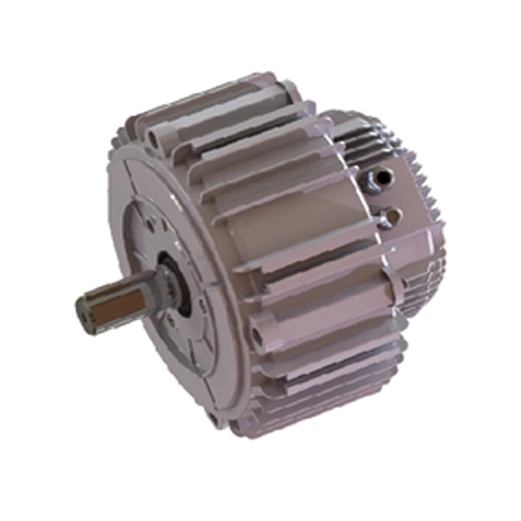
EC means electronically commutated. In simple words, the motor uses electronics to switch current. A traditional brushed motor uses physical brushes for this job. An EC fan motor does not need them.
This matters because brushes can wear down. They can also create friction and electrical noise. An ec motor avoids those issues by using an electronic controller. The result is smoother rotation, better speed control, and less wear inside the motor system.
In fan applications, this control is very useful. A fan rarely needs full speed all day. It may need more airflow at noon and less airflow at night. EC technology lets the fan respond to that change instead of wasting power.
Most EC fan motors use a brushless permanent magnet design. The rotor contains permanent magnets. The stator contains copper windings. When the controller powers the windings in order, it creates a moving magnetic field.
The rotor follows that magnetic field. This motion turns the shaft. The shaft then drives the fan blade, wheel, or impeller. Since the rotor uses permanent magnets, the motor can create strong torque with less wasted energy.
This is one reason EC fans are common in HVAC, heat pumps, cooling systems, air handling units, and industrial ventilation.
The electronic controller is the brain of the EC fan motor. It decides when to power each winding. It also adjusts speed based on the control signal.
Some systems use integrated electronics. Others work with a matched inverter or external control setup. The best choice depends on the fan design and the larger system. For example, a compact ventilation unit may need integrated control. A larger industrial system may need flexible control integration.
The process starts when electrical power enters the fan motor system. Depending on the design, the input may come from a single-phase or three-phase power supply. The motor does not send this power straight to the rotor.
Instead, the electronics process it first. This is a key difference. The motor needs controlled electrical pulses, not simple fixed power.
The control electronics manage voltage, current, and timing. They convert the incoming power into controlled output for the motor windings. This allows the fan to change speed smoothly.
Think of it like a driver pressing the accelerator. The motor does not always run at top speed. The controller gives it only the power it needs.
This is why EC fans work well in systems with changing airflow demand. They can slow down during low demand. They can speed up when heat, pressure, or ventilation need rises.
Inside the motor, the stator has several windings. The controller sends current through these windings in a planned sequence. Each change in current changes the magnetic field.
This electronic switching is called commutation. In an EC motor, it happens without brushes. The electronics do the switching, so timing can be more accurate.
Better timing helps the motor run with less vibration. It also helps reduce wasted heat. For fans that run many hours a day, these small gains matter.
As the stator field moves, the rotor follows it. The permanent magnets inside the rotor are pulled by the changing magnetic field. This produces rotation.
The rotor turns the shaft. The shaft drives the fan impeller. The impeller then moves air through the fan housing, duct, heat exchanger, panel, or ventilation opening.
This is the basic working chain: power enters, electronics regulate it, windings create a field, the rotor turns, and the fan moves air.
The controller needs to know the rotor position. Some systems use sensors. Others estimate position through control algorithms. Either way, the controller must switch current at the right time.
If the timing is poor, the motor can lose efficiency. It may run hotter or make more noise. If the timing is accurate, the motor runs more smoothly.
This position control is one reason EC fan motors can offer stable speed regulation. It helps the fan react to changing load without rough starts or sudden drops.
An EC fan motor can respond to a control signal. Common control options include 0–10V, PWM, or digital communication such as RS485. The exact method depends on the system.
For example, a building control system may send a lower signal when the room is cool. The fan slows down. When the temperature rises, the control signal increases. The fan speeds up.
The same idea applies to heat pumps, condensers, cooling towers, cabinet ventilation, and livestock ventilation. The fan does not need to guess. It follows the demand signal.
The final result is controlled airflow. The motor speed affects how much air the fan moves. It also affects sound level and power use.
This is where EC fan motors show real value. They do not only create rotation. They create controlled rotation. That means better airflow matching, lower wasted energy, and smoother operation in real working systems.
Many old fan systems run at fixed speed. If less air is needed, they may still run near full output. This wastes power and can create excess noise.
An EC fan motor avoids this problem. It can reduce speed when demand drops. In many fan systems, small speed reductions can cut energy use sharply. The exact saving depends on the fan curve, duty cycle, and system resistance.
This makes EC fans useful in places where airflow changes often. Examples include offices, factories, workshops, greenhouses, poultry houses, refrigeration systems, and heat pump units.
Fans often spend much of their life below full load. A cooling system may only need full airflow on hot days. A ventilation system may need less airflow during low occupancy.
An EC motor can keep good efficiency during these lower-load periods. It does not rely only on dampers or on-off cycling. Instead, it adjusts motor speed.
This helps reduce power use. It also reduces mechanical stress. The fan starts more smoothly and runs closer to the real airflow demand.
The purchase price is only one part of fan cost. Energy use, noise, maintenance, and downtime also matter. An EC fan motor can support lower operating costs because it runs only as fast as needed.
For equipment that runs every day, this matters more. A small efficiency gain can become valuable after many operating hours. That is why EC fans are often considered for HVAC upgrades, air handling units, industrial ventilation, and cooling equipment.
Airflow should match the system need. Too little airflow can cause heat buildup, poor air quality, or weak ventilation. Too much airflow can waste energy and create noise.
EC motor control helps solve this balance. The fan can increase or decrease speed based on temperature, pressure, humidity, or system commands. This makes the fan more useful in smart systems.
For example, a heat pump may need different airflow in heating and cooling modes. A factory cabinet may need more cooling during peak load. A livestock house may need airflow changes during the day. EC control supports these changes.
Fan noise often rises as speed increases. When an EC fan motor slows down, sound can drop as well. This is helpful in offices, commercial buildings, labs, animal housing, and residential heat pump systems.
Lower noise is not only about comfort. It can also affect equipment placement. If a fan runs quieter, designers may have more freedom when planning the system layout.
Modern ventilation systems often need communication. They may connect to sensors, control boards, or building management systems. EC fans can support this by accepting control signals.
A simple signal may adjust speed. A more advanced system may monitor performance and control several fans together. This helps engineers build more responsive ventilation systems.
An axial fan moves air along the same general direction as the shaft. It is useful when the system needs large air volume. Common uses include heat pumps, cooling towers, condensers, cabinet ventilation, and general air movement.
When an EC motor drives an axial fan, the system can adjust air volume more easily. This helps cooling and ventilation systems avoid fixed-speed waste.
A centrifugal fan pulls air into the center and pushes it outward. It often works better when the system has ducts, filters, or higher pressure demand.
EC centrifugal fans are useful in HVAC systems, air handling units, fan boxes, and industrial ventilation. Their variable-speed control helps them respond to pressure and airflow changes.
Fan type | Air movement | Common use | EC motor value |
EC axial fan | Straight airflow path | Cooling, ventilation, heat exchange | High air volume control |
EC centrifugal fan | Air changes direction | Ducted systems, HVAC, fan boxes | Better pressure response |
Both types | Speed can change | Smart ventilation systems | Energy and noise control |
Both fan types can benefit from EC technology. The best choice depends on airflow volume, pressure, installation space, and control needs.
When the motor slows down, airflow drops. When it speeds up, airflow rises. This sounds simple, yet it is the core value of EC fan control.
The fan no longer works like a basic on-off device. It becomes a controllable airflow source. This is better for systems that need stable temperature, air quality, or equipment cooling.
The fan does not work alone. Ducts, filters, heat exchangers, guards, and outlet designs all create resistance. This resistance affects airflow and load.
An EC fan motor can adjust better than a fixed-speed motor. Still, it cannot fix poor system design. If the duct is too narrow or the filter is clogged, airflow may still suffer.
The motor is only part of the fan system. The impeller shape, blade material, housing, and mounting position all affect performance. A strong motor paired with the wrong impeller may waste energy.
Good fan design matches the motor, impeller, control method, and airflow target. This is especially important for custom projects. It helps reduce noise and improve long-term reliability.
An EC fan motor works by using electronics to control a brushless permanent magnet motor. It adjusts speed, saves power, lowers noise, and improves airflow control. Suzhou Dowell Ventilation Technology Co., Ltd provides EC motors, EC axial fans, EC centrifugal fans, and customization support for demanding ventilation systems. Its products help users build smarter, quieter, and more efficient fan solutions.
A: An ec motor is an electronically controlled brushless motor.
A: An ec motor changes current timing through electronics.
A: They slow down when full airflow is not needed.
A: Usually yes, but lower energy use can offset cost.
A: Axial suits volume; centrifugal suits pressure.


