


Views: 0 Author: Site Editor Publish Time: 2026-07-28 Origin: Site


Off-the-shelf cooling solutions often fall short in high-density power electronics, harsh industrial environments, or applications requiring strict EMI shielding. Standard plastics deform easily under continuous heat stress. Basic motors quickly fail when pushed beyond generic operational limits.
While upgrading to an EC axial fan with metal housing resolves durability and efficiency bottlenecks, specifying a custom build introduces financial and operational risks. These risks include extended lead times, prototype iterations, and compliance hurdles. You cannot afford prolonged downtime or repeated redesigns during product development.
Before committing to a vendor or signing off on a bespoke design, engineering and procurement teams must evaluate specific structural, electrical, and environmental criteria. Careful evaluation ensures the final product aligns perfectly with your system requirements. You will learn how to assess materials, motor synergies, and supplier capabilities below.
Engineers often start projects using commercial-off-the-shelf (COTS) fans to save time and upfront expenses. However, these standard units routinely expose severe limitations during rigorous field testing. Identify the specific failure points of current cooling solutions before you begin the redesign process. Plastic frames frequently experience thermal creep and deformation at high temperatures. These deformations alter blade clearances and cause catastrophic friction failures. Standard fans also struggle to deliver sufficient static pressure in densely packed enclosures. They often generate unacceptable acoustic profiles when forced to operate at maximum RPM.
You must outline a strong business case for a custom EC axial fan to justify the initial engineering investment. Customization extends the lifespan of expensive downstream components. It reduces energy consumption significantly during 24/7 continuous operations. A bespoke design helps you avoid the dangerous "close enough" compromise in power electronics thermal management. When standard cooling fails, it takes thousands of dollars of sensitive equipment down simultaneously.
Define clearly what a successful deployment looks like for your specific application. Vague goals lead to endless design loops. Instead, establish rigorous, quantifiable targets for your engineering team and potential suppliers. Common success criteria include:
Choosing the right housing material dictates the physical longevity of your cooling system. You must compare die-cast aluminum against galvanized or stainless steel. Each material offers distinct advantages and trade-offs. Die-cast aluminum provides excellent thermal conductivity. It acts as a secondary heat sink for the internal motor electronics. Aluminum keeps overall unit weight low, which helps in mobile or airborne applications. Conversely, stainless steel provides unmatched structural rigidity. It resists severe impacts and aggressive chemical washdowns in food processing or marine environments. You must assess your strict weight constraints against necessary structural strength.
A metal frame axial fan inherently shifts the resonant frequency of the entire cooling unit. Plastic frames absorb and dampen micro-vibrations naturally. Metal frames transmit these vibrations directly into your equipment chassis. Detail the absolute necessity of comprehensive vibration testing during the prototyping phase. You should integrate elastomeric isolation mounts into the custom housing design. These mounts prevent long-term structural fatigue in both the fan and the surrounding enclosure.
Sensitive electronic components demand robust protection from electromagnetic interference. Specify exact grounding requirements when designing your custom frame. The metal housing effectively serves as a Faraday cage. It blocks stray radio frequency interference (RFI) from disrupting nearby microprocessors or communication arrays. Ensure your supplier integrates dedicated grounding tabs or bare metal contact points into the powder-coating process. Proper grounding paths neutralize electrical noise instantly.
| Material Type | Weight Profile | Vibration Transmission | Best Application Scenarios |
|---|---|---|---|
| Die-Cast Aluminum | Lightweight | Moderate (Requires standard isolation) | Telecommunications, Aerospace, IT Server Racks |
| Galvanized Steel | Heavy | High (Requires robust dampening) | Heavy Industrial, HVAC, Factory Automation |
| Stainless Steel | Heavy | High (Requires robust dampening) | Marine, Food Processing, Corrosive Environments |
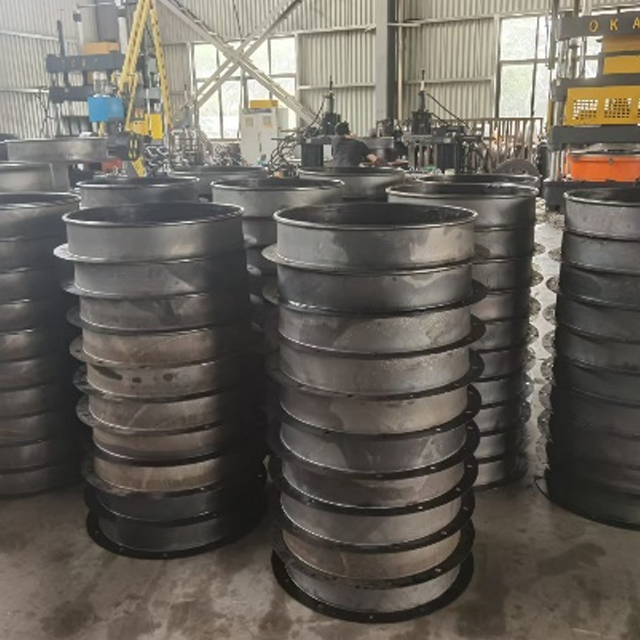
Aerodynamic optimization goes far beyond simply choosing a blade shape. You must address the critical blade-to-housing clearance. Custom metal housings must maintain exceptionally tight tolerances during manufacturing. Large gaps allow air to slip backward, which drastically reduces system static pressure. Conversely, clearances that sit too tight risk blade collision if thermal expansion occurs. Proper clearance prevents blade stall and maximizes airflow without causing excessive acoustic turbulence.
Customizing the internal electronics of the EC motor unlocks its true operational value. Check the implementation of the internal control board thoroughly. Verify the exact operating voltage range to ensure compatibility with your power supply fluctuations. Determine the required control inputs, such as 0-10V analog signals or high-frequency PWM. You also need precise output signals. A reliable tachometer output provides real-time speed monitoring. An integrated alarm output immediately alerts your central controller if rotational faults occur.
Never rely on generic datasheet specifications for a custom build. Demand system-specific performance curves from the supplier. These charts map Airflow against Static Pressure. You must ensure the fan's best efficiency point (BEP) aligns perfectly with your equipment's actual operating impedance. If the BEP falls outside your normal operating range, the fan wastes energy and generates unnecessary heat. Mapping efficiency ensures you get exactly what you pay for.
Industrial applications frequently subject equipment to extreme environmental stress. For applications operating in high moisture and corrosive environments, standard potting techniques remain entirely insufficient. Exposure to 99% relative humidity at elevated temperatures forces moisture through microscopic cracks in standard sealants. You must detail the need for complete stator encapsulation using specialized epoxy resins. Demand conformal-coated printed circuit boards (PCBs) to protect surface-mount components from condensation shorts. Implement marine-grade housing treatments, such as heavy anodization or salt spray resistant epoxy paints, to prevent exterior degradation.
Thermal extremes dictate specific internal mechanical configurations. Specify your exact operating temperature range before requesting a quote. Standard lubricants break down or freeze when pushed beyond room-temperature boundaries. Ensure the supplier utilizes high-temperature-rated sealed ball bearings. They must apply appropriate synthetic lubricants designed specifically for your thermal extremes. Failing to address lubrication leads directly to premature mechanical failure and seized motors.
Ingress protection claims often mislead inexperienced buyers. Define clearly the difference between passing a standardized IP68 test and surviving long-term real-world exposure. A laboratory IP68 test only proves the unit survived submersion in still water for a few hours. It does not replicate high-pressure chemical washdowns or years of abrasive dust exposure. Follow these steps to ensure true environmental survivability:
Navigating the prototyping phase requires transparent financial and operational agreements. Clarify immediately who owns the custom tooling once production begins. Many buyers assume they own the molds they paid for, only to face legal battles when attempting to switch suppliers later. Understand exactly what the financial structure looks like for iterative design changes. Customization rarely achieves perfection on the first attempt. You need a supplier who offers predictable, reasonable costs for subsequent engineering tweaks and prototype revisions.
Evaluate the actual testing and validation capabilities of your shortlisted manufacturers. Do not trust vendors who rely solely on theoretical software modeling to validate performance. Ensure the manufacturer operates fully certified physical testing facilities. They need in-house wind tunnels to verify airflow and static pressure under AMCA standards. They require true anechoic chambers to accurately measure acoustic noise profiles without background interference. They must utilize programmable thermal chambers for real-world stress testing. Physical validation separates premium engineering partners from basic assembly houses.
Regulatory compliance remains a major hurdle during custom development. Verify that any bespoke structural or electrical modifications do not void essential safety certifications. Your custom fan must still carry legitimate UL, cUL, TUV, and CE marks. Furthermore, ensure all new materials strictly adhere to RoHS environmental directives. A non-compliant fan prevents your entire final product from legally entering international markets.
Create a logical, data-driven vendor matrix to streamline your final decision. Compare the minimum order quantities (MOQs) required by each facility. Evaluate unit pricing at different volume tiers. Most importantly, audit their historical performance in similar bespoke projects. Ask for sanitized case studies showing how they solved complex thermal problems for other clients in your specific industry. Past performance remains the strongest indicator of future success.
Customizing an EC axial fan represents a highly strategic investment in overall system reliability. Success dictates moving far beyond basic dimensions and generic airflow targets. You must rigorously evaluate material science, electronic integration strategies, and long-term environmental durability. Addressing resonance, EMI shielding, and internal motor synergy prevents catastrophic failures in the field.
Compile a comprehensive, highly detailed technical specification sheet immediately. Document your exact thermal loads, environmental extremes, control interfaces, and mechanical constraints. Use this robust document to initiate Request for Quotations (RFQs) with fully vetted, well-equipped manufacturing partners. Proactive specification guarantees a cooling solution that truly protects your critical infrastructure.
A: The timeline from initial CAD design to prototype delivery and mass production typically ranges from 8 to 16 weeks. This duration depends heavily on tooling complexity, required environmental testing phases, and material availability. Standardizing the motor while only customizing the housing can shorten this window significantly.
A: Metal transmits vibrations differently and lacks the natural dampening of plastic. However, proper motor balancing, precise aerodynamic blade design, and the use of elastomeric isolation mounts often result in superior overall acoustic performance, especially in high-power, high-RPM industrial applications.
A: Reliable suppliers provide calculated Mean Time Between Failures (MTBF) data based on established reliability standards like MIL-HDBK-217F or Bellcore. Ensure they adjust these baseline calculations specifically for your intended operational temperature, environmental humidity, and anticipated duty cycle.
A: Industry practices vary, but tooling costs are frequently amortized into the unit price or fully rebated after you reach a specific volume threshold. Always negotiate ownership and rebate terms in writing before authorizing the first prototype run.
