


Views: 0 Author: Site Editor Publish Time: 2026-09-05 Origin: Site


Facility managers and HVAC engineers face immense pressure today. You must reduce energy consumption and meet strict building compliance standards continuously. At the same time, you cannot compromise indoor air quality or thermal management. Traditional AC fans often fall short of these modern demands. Even when paired with external variable frequency drives, they struggle with efficiency at partial loads. Legacy systems also introduce unnecessary integration complexity into your facility network. An EC fan for HVAC offers a robust, highly controllable alternative. It acts as a direct-drive unit merging a brushless DC motor with onboard electronics for precise airflow management. This article provides an objective framework for evaluating EC technology. We will explore how it operates, where it excels, and how to mitigate implementation risks. You will learn practical strategies to optimize your ventilation systems and maximize mechanical efficiency.
Built-in Precision: EC fans eliminate the need for external VFDs, offering seamless 0-100% speed modulation for exact airflow matching.
Superior Part-Load Efficiency: Unlike AC motors, EC motors maintain high efficiency even at lower speeds, dramatically reducing lifecycle energy costs.
Streamlined Retrofits: Compact footprints make EC fans highly viable for upgrading existing Air Handling Units (AHUs) and precision cooling systems.
Strategic Sourcing: Selecting the right HVAC EC fan supplier requires evaluating not just component cost, but BMS integration capabilities, compliance (UL/ErP), and supply chain reliability.
Understanding airflow control begins with breaking down the technology itself. We define Electronically Commutated (EC) fans as a highly advanced category of air movement devices. They utilize a synchronous motor equipped with permanent magnets. An integrated inverter drives this motor. Standard induction motors must consume electricity to induce a magnetic field on the rotor. EC motors use permanent magnets to generate this field naturally. This fundamental shift minimizes magnetic slip and significantly reduces internal heat generation.
You will notice a stark difference in modulation capabilities. Traditional setups often rely on stepped control, inefficient mechanical throttling, or abrupt on/off cycling. These methods wear down components rapidly. Conversely, the integrated electronics inside an EC motor accept continuous signals. They respond perfectly to 0-10V analog inputs, PWM (Pulse Width Modulation), or digital Modbus communications. You can adjust the fan speed continuously to match exact building demands. The system ramps up smoothly, avoiding sudden mechanical stress on the housing.
Engineers also appreciate how EC technology eliminates component bloat. Legacy systems require distinct, separated parts. You typically need a bulky AC motor, a separate VFD mounted on a wall, and a complex network of belts and pulleys connecting everything to the fan impeller. EC architecture combines the motor, drive, and control electronics into one single, integrated unit. This consolidation offers three distinct advantages:
It eliminates transmission losses completely, as there are no belts to slip or degrade over time.
It saves substantial cabinet space, freeing up room for additional cooling coils or filtration media.
It simplifies electrical wiring, requiring only a single power supply and communication line.
Moving beyond generic claims of energy savings requires looking at specific operational outcomes. HVAC systems rarely operate at full design capacity. In fact, most systems run at part-load conditions for roughly 80% of their operational lifespan. This reality makes part-load efficiency a critical evaluation metric.
When you lower the speed of a standard AC motor using a VFD, its electrical efficiency drops sharply. The drive introduces electrical noise, and the motor struggles to maintain torque. EC fans handle part-load conditions exceptionally well. They consume significantly less power across the entire speed spectrum. Following the fan affinity laws, reducing fan speed by 20% can yield nearly a 50% drop in power consumption. Because the internal inverter perfectly controls the magnetic commutation, the EC fan maintains a highly efficient energy profile even at very low RPMs.
Chart: Fan Speed vs. Relative Power Consumption (Conceptual Summary)
Operating Speed (%) | Standard AC Motor Power (%) | EC Motor Power (%) | Relative Efficiency Gain (%) |
|---|---|---|---|
100% | 100% | 88% | 12% |
80% | 75% | 51% | 24% |
60% | 55% | 21% | 34% |
40% | 40% | 8% | 32% |
Physical maintenance requirements also drop significantly. Traditional belt-driven fans require constant attention. Maintenance teams must regularly check belt tension, replace worn belts, and lubricate external bearings. A direct-drive, brushless EC fan changes this dynamic entirely. The absence of brushes means no carbon dust accumulation or brush replacement. The direct-drive configuration eliminates belt tensioning protocols altogether. Your maintenance teams can redirect their focus toward more critical system diagnostics.
Table 1: Physical Maintenance Comparisons
Maintenance Task | Legacy Belt-Driven AC System | Direct-Drive EC System |
|---|---|---|
Belt Replacement | Required every 6-12 months | Not Applicable |
Bearing Lubrication | Frequent manual greasing | Sealed for life (typical) |
Drive Alignment | Critical during installation & upkeep | Not Applicable |
Dust Extraction | High (due to belt wear) | Minimal |
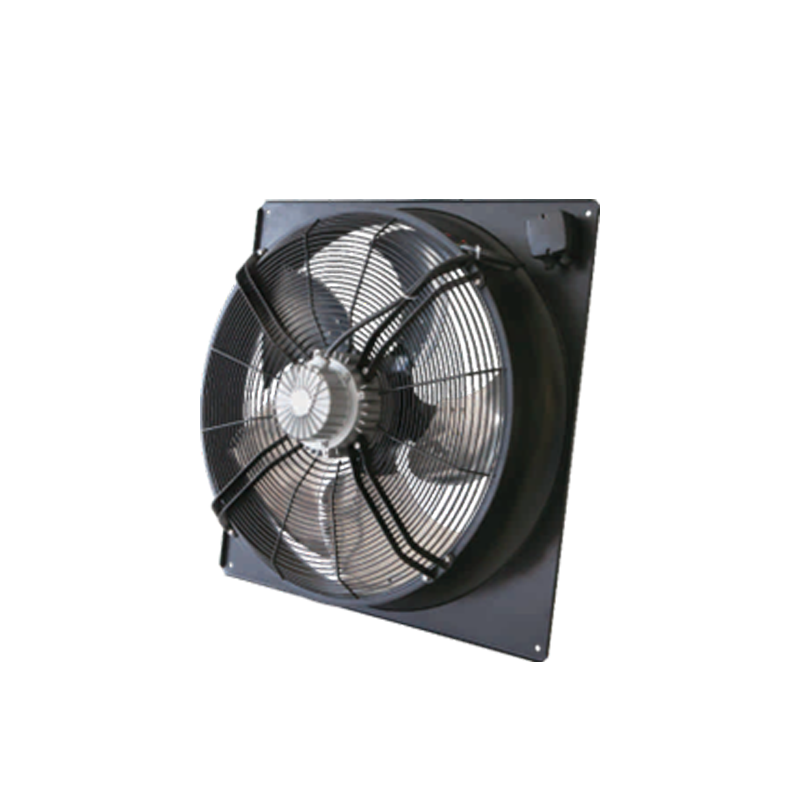
The theoretical benefits of EC technology translate into measurable performance gains across several demanding HVAC applications. Facility engineers must identify where these upgrades yield the highest operational impact.
AHU Retrofits and Fan Arrays: Upgrading an older Air Handling Unit often involves replacing a single, massive AC centrifugal fan. These older fans are prone to catastrophic failure. If the single motor dies, the entire building loses ventilation. Engineers now replace these giant single fans with a modular "fan wall." They use an array of smaller EC plug fans acting together. This provides immediate redundancy. If one small fan fails, the others ramp up slightly to compensate. It also saves immense space inside the AHU cabinet, improving internal airflow and serviceability.
Precision Cooling for Data Centers: Environments like data centers and cleanrooms demand exact airflow control. Thermal loads fluctuate constantly based on server usage. EC fans prevent costly over-cooling. They respond instantly to temperature sensors, managing sensible heat loads effectively. They ensure uniform pressure distribution under raised floors without wasting unnecessary power.
Condenser and Rooftop Units (RTUs): Outdoor equipment faces variable ambient conditions. During cooler weather, a condenser fan does not need to run at full speed. EC fans ramp up only when necessary to maintain appropriate head pressure in the refrigeration cycle. This precise modulation reduces ambient noise dramatically, which is a major advantage for commercial buildings near residential zones.
Best Practice: When designing a fan array, install backdraft dampers on each individual EC fan. This prevents air from short-circuiting back through a disabled fan during maintenance, ensuring the rest of the array maintains static pressure.
While the advantages remain clear, upgrading your airflow systems is not a simple plug-and-play endeavor. We must address several implementation realities to ensure a smooth transition.
Grid and power quality considerations demand immediate attention. You must address the elephant in the room: harmonic distortion. EC fans utilize internal rectifiers to convert incoming AC power into DC power for the motor. This conversion process can introduce electrical noise into the building's power grid. While reputable manufacturers build advanced electronics into their fans to mitigate this, poor facility power quality can amplify the issue. Engineers must evaluate existing electrical conditions upfront. In older facilities, you might still need to install active harmonic filters at the distribution panel to meet IEEE 519 standards.
Next, anticipate BMS integration friction. Connecting modern EC fans to legacy Building Management Systems requires careful planning. You cannot assume immediate digital handshakes. Verify protocol compatibility early in the design phase. Determine whether the facility relies on BACnet MS/TP, BACnet/IP, or Modbus RTU. Check if the fan's onboard controller supports these protocols natively, or if you require an external gateway. Proper integration allows facility managers to monitor RPM, power consumption, and error codes remotely.
Finally, understand spatial and airflow profiling. We strongly warn against blind 1:1 replacements. Taking out a traditional forward-curved scroll fan and dropping in a modern plenum EC fan changes the internal dynamics of the cabinet entirely. Scroll fans direct air unidirectionally out of a physical discharge port. Plenum fans pressurize the entire cabinet, pushing air out evenly in all directions. If the AHU casing is poorly sealed or the internal components block omnidirectional flow, performance will suffer. A proper aerodynamic assessment is absolutely required before removing legacy equipment.
Common Mistake: Failing to account for the electrical footprint. Even though EC fans consume less overall power, their initial inrush current during start-up can occasionally trip highly sensitive breakers. Always review the protective device ratings during the electrical design phase.
Selecting the correct partner dictates the long-term success of your ventilation upgrades. You must frame your supplier selection around long-term reliability rather than just comparing spec sheet capabilities.
Move your evaluation beyond basic metrics. Look at how the manufacturer tests their equipment under sustained stress. Ask about their thermal potting processes for the internal electronics. Electronics fail faster when exposed to vibration and moisture. A qualified supplier will protect the vulnerable inverter boards with industrial-grade resins to ensure they survive harsh AHU environments.
Compliance and certification establish trust. Instruct your procurement teams to verify regional compliance standards rigorously. In Europe, look for strict adherence to ErP (Energy-related Products) directives. In North America, the fans must carry UL or CSA safety certifications (such as UL 705). Additionally, insist on performance data certified by AMCA (Air Movement and Control Association). AMCA certification ensures the airflow and acoustic data published in the catalog matches real-world performance.
Technical support separates adequate vendors from exceptional partners. A qualified HVAC EC fan supplier should offer robust aerodynamic selection software. They must provide detailed acoustic data across various frequency bands, not just a single decibel rating. During a retrofit, unexpected spatial constraints always arise. You need a supplier whose engineering team can help model airflow trajectories and recommend the best fan wheel geometry for your specific cabinet dimensions.
Lastly, evaluate the supply chain and lead times. Global logistics remain unpredictable. You cannot afford to leave an AHU dismantled for weeks waiting on parts. Evaluate the supplier's inventory buffering strategies. Do they rely heavily on just-in-time manufacturing, or do they maintain localized warehouses? Strong localization strategies mitigate project delays and ensure replacement parts are available immediately if a fan experiences a lightning strike or power surge.
Transitioning to EC technology represents far more than a simple equipment swap. It serves as a strategic upgrade to your operational efficiency and system reliability. By eliminating belts, integrating precise control, and maximizing part-load performance, these systems protect building infrastructure while maintaining perfect indoor air quality. They align mechanical operations with modern environmental targets.
We recommend taking measured, action-oriented next steps. Do not attempt a massive, facility-wide rollout immediately. Instead, initiate a pilot retrofit program. Commission a comprehensive energy audit on your two highest-consuming Air Handling Units. Establish a solid performance baseline using current AC data. Install the new EC fan array, integrate it with your BMS, and measure the difference in power draw over thirty days. This localized success will provide the exact data you need to justify upgrading the remainder of your HVAC portfolio.
A: Generally, yes. EC fans offer higher part-load efficiency and eliminate the complex wiring between external drives and motors. They also take up less space. However, an AC and VSD setup might be maintained temporarily if you recently installed brand-new, high-efficiency AC motors and want to maximize that existing lifecycle before upgrading.
A: You can realistically expect an EC fan to operate efficiently for 40,000 to over 70,000 hours. The exact duration depends heavily on the ambient operating temperature and average running speed. Because the electronics are highly durable, the physical bearing life is typically the primary limiting factor in the unit's longevity.
A: Yes, they perform exceptionally well outdoors. You must ensure the supplier specifies the correct IP rating for the environment, usually IP54 or IP55. It is also crucial to request special corrosion-resistant protective coatings for both the electronic enclosures and the motor housing to withstand rain and humidity.
