


Views: 0 Author: Site Editor Publish Time: 2026-07-13 Origin: Site


Livestock environments pose unique and unrelenting challenges for facility managers. Corrosive ammonia, extreme humidity, thick airborne dust, and high-pressure washdowns create a brutally harsh reality for equipment. Traditional AC fans simply cannot survive these hostile conditions indefinitely. They experience high failure rates, unexpected downtime, and inflated maintenance costs. When ventilation stops suddenly, heat stress quickly threatens animal welfare and facility profitability. We need a more resilient solution. The EC animal husbandry fan serves as the industry-standard upgrade. It delivers unmatched durability and precise climate control. Facility operators increasingly turn to electronically commutated technology to guarantee continuous airflow. By upgrading, you prioritize long-term reliability over endless repair cycles. We will explore why these advanced fans withstand agricultural extremes so effectively. You will also learn how they improve animal health while simultaneously lowering monthly operational expenses.
A traditional barn ventilation fan faces a relentlessly hostile operating environment from the moment you install it. Exposed copper windings and unsealed housings deteriorate rapidly. Manure off-gassing releases high concentrations of ammonia and hydrogen sulfide into the air. These harsh chemicals aggressively corrode internal AC motor components. Over time, this chemical threat degrades the insulation around electrical wiring. This degradation inevitably causes fatal electrical shorts and sudden fan failure.
Feed dust and animal dander add another severe layer of mechanical stress. Standard motors rely entirely on open cooling vents to prevent overheating during operation. Airborne particulate matter easily bypasses these open vents. Thick dust coats internal temperature sensors and grinds down traditional metal bearings. Friction increases exponentially as the bearings lose lubrication. Efficiency drops sharply, and the motor eventually burns out from excess heat.
Strict sanitation protocols further compound these equipment risks. Mandatory barn cleanings involve high-pressure water spraying and harsh chemical disinfectants. Low-IP-rated fans cannot block this pressurized moisture. Water inevitably penetrates the outer motor casing during routine washdowns. This liquid ingress guarantees early equipment failure. Your maintenance team must then deal with sudden downtime right before bringing new animals into the facility.
Rural agricultural settings also struggle constantly with unstable local power grids. Voltage fluctuations, brownouts, and surges happen frequently at the end of long rural transmission lines. Standard on/off AC motors handle these power spikes very poorly. They draw massive startup currents to get the heavy fan blades moving. This aggressive power draw strains compromised electrical systems. You need a fan built specifically to handle these volatile power conditions safely.
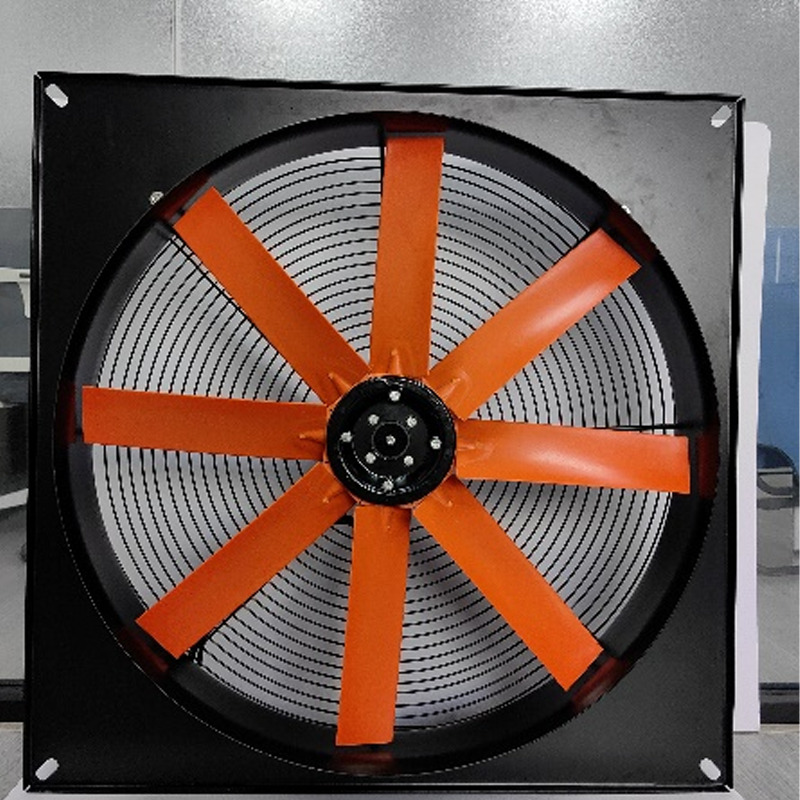
Engineers design the modern electronically commutated fan to counter agricultural hazards directly. They reject the outdated designs of legacy equipment. Let us examine the specific engineering features ensuring long-term survival in livestock barns.
First, they utilize a fully enclosed motor design. Ratings typically range from IP55 to IP68. This critical upgrade eliminates external cooling vents entirely. Dust, dander, and moisture cannot breach the electronically commutated motor. The sealed enclosure protects sensitive magnets and stators from direct chemical exposure. Even when sprayed directly with a hose, the internal components remain bone dry.
Advanced material selection provides a formidable second layer of defense. Manufacturers abandon easily corroded metals like untreated steel. Instead, they build structural housings using fiberglass-reinforced plastics and coated aluminum. Specialized polymers actively resist prolonged exposure to agricultural chemicals. These materials shrug off concentrated ammonia and daily acidic washdowns without degrading or rusting.
Next, engineers fiercely protect the digital brain of the fan. The built-in variable frequency drive (VFD) and smart electronics are fully potted. Technicians pour a thick, waterproof resin over the circuit boards. This encapsulating resin seals the circuitry against extreme atmospheric humidity. This step prevents the microscopic short circuits plaguing standard AC models during humid summer months.
Finally, EC technology includes built-in soft start capabilities. Standard fans slam on at full power instantly. They generate violent power spikes and stress mechanical mounting parts. Conversely, EC fans ramp up their speed smoothly. Eliminating sudden torque jolts extends the mechanical lifespan significantly. It also dramatically reduces wear on support frames and rotational bearings.
Upgrading to an agricultural EC fan requires a higher upfront capital investment (CAPEX). However, facility managers must evaluate this price tag against long-term operational savings (OPEX). The true financial return relies on massive, recurring reductions in both energy consumption and maintenance labor.
Variable speed optimization drives this compelling financial return. EC fans follow the "Affinity Laws" of fluid dynamics. According to these physical laws, motor power requirements drop exponentially as speed decreases. If you reduce the fan speed by just 20% during cooler nighttime hours, energy usage drops by roughly 50%. Standard AC fans run blindly at 100% speed regardless of actual temperature needs. Smart controllers adjust EC fan speeds automatically. They match airflow precisely to real-time cooling requirements, eliminating wasted electricity.
Maintenance reduction also delivers measurable labor savings. Traditional motors need frequent brush replacements, belt tensioning, and greasing. They also suffer from high failure rates requiring complete, emergency motor swap-outs. The direct-drive nature of EC technology eliminates rubber drive belts entirely. Sealed bearings and brushless designs require almost zero routine maintenance. Your maintenance crew spends less time fixing broken equipment. They spend more time managing actual livestock production.
Do not overlook available energy rebates. Many utility companies offer lucrative agricultural energy-efficiency grants. They actively subsidize EC technology upgrades because these intelligent fans reduce peak demand strain on rural power grids. These local financial incentives can offset the initial purchase price significantly. You should contact your local utility provider before planning a facility retrofit.
| Performance Metric | Standard AC Fan | EC Animal Husbandry Fan |
|---|---|---|
| Speed Control Method | On/Off (100% constant capacity) | Variable Profiling (10% to 100%) |
| Energy Consumption Profile | High (constant maximum power draw) | Low (scales dynamically with demand) |
| Routine Maintenance Needs | Frequent (belt tensioning, greasing) | Minimal (brushless, direct-drive) |
| Utility Rebate Eligibility | Rarely eligible for modern grants | Frequently subsidized by local utilities |
Precise climate control directly dictates overall animal health and productivity. Consistent airflow mitigates deadly heat stress and dangerous ammonia concentrations. High ammonia levels permanently damage the sensitive respiratory tracts of poultry and swine. A reliable ventilation system prevents this toxic gas buildup continuously. Better air quality translates immediately to lower respiratory disease rates. Healthier animals exhibit improved feed conversion ratios and reach their target market weights faster.
Acoustic stress is an often-ignored but critical welfare factor. Standard mechanical fans generate a high-frequency whine and loud metal clatter. This constant noise pollution induces chronic stress in sensitive livestock. The smoother magnetic operation of EC motors eliminates this harsh mechanical noise almost entirely. Quieter barns create a much calmer environment. This quiet atmosphere promotes natural feeding, resting, and socialization behaviors among the herd or flock.
Regulatory bodies and non-governmental organizations continue tightening agricultural welfare guidelines globally. Factory farms face intense public scrutiny regarding animal living conditions. You need stable, verifiable climate control data to prove compliance during unexpected audits. Smart EC fans integrate seamlessly with digital barn controllers. They log performance data, temperature drops, and airflow metrics continuously. This transparent historical data helps you meet modern animal welfare standards confidently.
Selecting the right equipment requires careful, methodical evaluation. Not all EC fans offer the exact same level of performance or environmental protection. Protect your investment by following these criteria when shortlisting your hardware options.
Transitioning to EC technology serves as a critical risk-mitigation strategy for harsh agricultural environments. It is much more than a simple energy-saving measure. The powerful combination of ruggedized hardware and intelligent climate control provides undeniable operational value. You eliminate the frequent breakdowns that threaten animal lives and facility profits.
Before planning your next facility upgrade, remember these core benefits:
Take action today to protect your agricultural facility. Request detailed technical spec sheets from reputable manufacturers. Schedule an on-site ventilation audit to identify failing legacy equipment. If you remain hesitant about the initial costs, run a pilot test on a single barn line. You will quickly see the dramatic operational benefits firsthand.
A: Yes. Most manufacturers design EC fans to fit standard wall housings and rough openings used by traditional AC models. Upgrading usually requires minimal structural modifications. Wiring is also straightforward, though you must ensure your existing barn controllers output compatible control signals, such as 0-10V or Modbus RTU, to utilize variable speeds.
A: You can clean them using standard washdown procedures if they feature a high IP rating (IP55 or higher). The fully enclosed motor blocks high-pressure water and liquid chemical disinfectants. Always verify the manufacturer's chemical compatibility guidelines to ensure specific cleaning agents will not degrade the outer housing or rubber seals.
A: EC fans handle voltage fluctuations much better than traditional AC motors. Their integrated electronic drives feature built-in smart safeguards, including active overvoltage and undervoltage protection. If a severe brownout occurs, the fan safely powers down to protect internal circuits, then automatically restarts smoothly once stable voltage returns.
A: Yes, they remain inherently more efficient than AC motors even at full speed due to their brushless, electronically commutated design. However, the most dramatic financial returns occur when utilizing variable speed profiling. Dialing back the RPM during cooler periods exploits fluid dynamic laws to slash energy consumption exponentially.
