


Views: 0 Author: Site Editor Publish Time: 2026-08-28 Origin: Site


Sourcing commercial or industrial fans no longer means simply evaluating standalone components. Modern procurement focuses heavily on securing a deeply integrated technical partnership. Choosing the right EC axial fan manufacturer directly impacts system-level energy efficiency, acoustic performance, and long-term maintenance requirements. Electronically Commutated (EC) technology inherently delivers superior efficiency and precise speed control when compared to legacy AC alternatives. However, the actual quality of implementation varies wildly among different vendors across the global market. Some offer advanced custom designs, while others simply assemble standard parts. This guide provides a clear, actionable framework for engineering and procurement teams to evaluate a potential partner. You will learn how to properly assess a supplier based on verifiable R&D, strict manufacturing standards, and supply chain resilience. By the end, you will know exactly what criteria separate true industry leaders from basic commodity assemblers.
A qualified manufacturer must provide transparent aerodynamic and acoustic testing data, not just peak efficiency marketing claims.
Application-specific R&D (such as custom form factors or specific IP ratings for harsh environments) separates true manufacturers from generic assemblers.
Lifecycle value and energy efficiency should dictate vendor selection; evaluate the supplier's integration support, motor longevity, and precise control capabilities (e.g., Modbus/0-10V).
Supply chain resilience—including flexible MOQs (Minimum Order Quantities), rapid prototyping, and global compliance—is critical for mitigating rollout risks.
Procurement teams must carefully define their criteria for success before initiating a vendor search. Framing your goals around long-term lifecycle value is much more effective than focusing strictly on the initial unit cost. EC fans carry a higher upfront price tag than traditional AC models because they integrate advanced electronics and permanent magnet motors. You will only realize their true financial benefits through sustained energy savings and reduced maintenance over years of continuous operation. A cheap fan that fails prematurely destroys any upfront capital savings.
Treating an EC axial fan manufacturer as a simple commodity vendor introduces significant risks to your engineering pipeline. Generic sourcing often leads to undocumented firmware changes. These hidden alterations can suddenly break communication between the fan and your facility control systems. You might also encounter inconsistent motor winding quality, which drastically reduces bearing life. Furthermore, standard off-the-shelf fans typically lack the application-specific thermal protection required for demanding environments. When a fan operates in high-heat conditions without adequate safeguards, catastrophic motor failure becomes inevitable.
Because of these risks, buyers must apply a comprehensive evaluation lens. You need to assess a manufacturer’s entire capability matrix. This means looking deeply at how they design, test, build, and support their products. A polished product spec sheet means very little if the vendor cannot guarantee raw material traceability. By elevating the conversation from basic part numbers to strategic manufacturing capabilities, you ensure a much safer, more reliable integration process for your equipment.
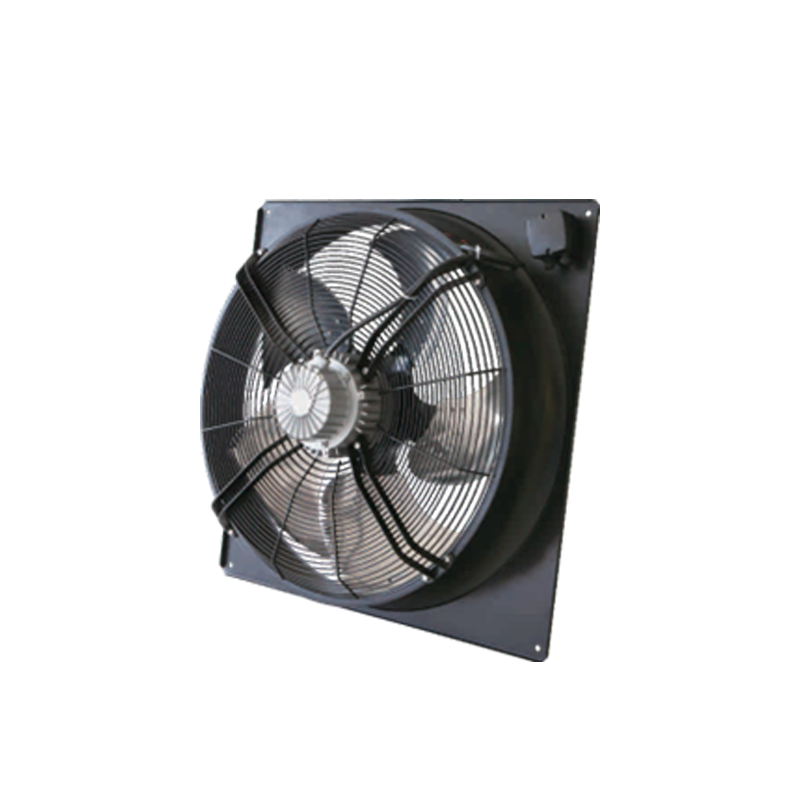
A true engineering partner possesses vast OEM and ODM flexibility. They possess the ability to move far beyond static, off-the-shelf catalogs. Your application will often dictate unique mechanical constraints. Look for vendors who proactively offer custom mounting layouts to fit tight chassis spaces. They should also design specialized impeller geometries to hit your exact airflow targets. Even simple customizations, like providing specific cable harnesses or pre-wired connectors, save your assembly lines thousands of labor hours.
Software and integration competence is equally critical. EC fans function as smart devices. They require seamless communication with broader machine control networks. You must verify their capability to align integrated electronics with your specific facility protocols. A capable manufacturer typically supports several distinct control methods:
PWM (Pulse Width Modulation): Ideal for simple, direct speed control in compact electronic cooling applications.
0-10V Analog Signals: The standard interface for basic HVAC integration and variable speed demands.
Modbus RTU: Essential for building management systems requiring bi-directional data, allowing you to monitor RPM, temperature, and fault codes.
IoT-Ready Interfaces: Advanced protocols that enable predictive maintenance and remote cloud monitoring across widespread deployments.
Aerodynamic design capabilities clearly separate genuine innovators from basic assemblers. Ask for concrete evidence of Computational Fluid Dynamics (CFD) usage. Top-tier engineers use CFD software to simulate and optimize airflow paths long before cutting physical molds. This digital testing reduces turbulence, limits acoustic noise, and maximizes aerodynamic efficiency. Manufacturers relying solely on legacy blade molds cannot provide the performance enhancements modern systems require.
You cannot trust performance claims without verifiable lab testing. A credible vendor must operate proprietary acoustic chambers and wind tunnel testing facilities. Avoid vendors who outsource their core quality assurance. Outsourced testing usually means they cannot provide highly specific, granular performance curve data when your engineers request it. Direct, in-house testing proves they deeply understand their own aerodynamic designs and can rapidly validate custom iterations.
Environmental stress screening ensures the product survives real-world deployment. You should demand detailed reports on how they push their fans to the point of failure. Standard testing protocols must address multiple failure vectors:
Thermal and Humidity Testing: Validating reliable startup and sustained performance in extreme ambient temperatures, from freezing cold to scorching heat.
Vibration and Run-out Tolerance: Measuring shaft stability to guarantee long-term bearing life under dynamic loads.
Ingress Protection (IP) Validation: Conducting real-world verification of IP55 or IP68 ratings. This is crucial for outdoor applications exposed to heavy rain or high-moisture industrial environments.
Quality Management Systems (QMS) provide the baseline for production consistency. ISO 9001 compliance is non-negotiable. However, you should also look for strict raw material traceability. If a batch of magnets or bearings contains defects, the manufacturer must possess the tracking systems necessary to isolate the affected units immediately.
EC Fan Environmental Testing Benchmarks
Test Category | Primary Purpose | Ideal Industry Standard |
|---|---|---|
Acoustic Chamber | Measure pure sound power without room echo | ISO 3744 or ISO 3745 |
Wind Tunnel Test | Plot accurate pressure vs. airflow curves | AMCA 210 / ISO 5801 |
Salt Spray Test | Verify anti-corrosion coating durability | ASTM B117 (min. 480 hours) |
Ingress Protection | Confirm resistance to dust and water | IEC 60529 (IP55/IP68) |
Interpreting performance curves correctly requires engineering diligence. Many vendors heavily market their maximum free-air efficiency. However, industrial systems never operate in empty space. Filters, heat exchangers, and ductwork create significant resistance. You must verify a manufacturer’s efficiency claims by requesting data mapped directly to your specific operating point. Look closely at how the fan performs under your exact static pressure and airflow requirements.
You must also apply strict motor efficiency lenses when evaluating an EC axial fan supplier. The integrated EC motor drives the entire value proposition. Assess the quality of their stator design and magnet grading. High-grade neodymium magnets yield better torque and efficiency but cost more. Furthermore, evaluate their internal heat dissipation strategies. A well-designed motor housing pulls heat away from the sensitive electronics and bearings. Poor thermal management actively destroys the microprocessors driving the commutation.
Conducting an accurate ROI calculation requires transparent, quantitative data. Require the supplier to provide detailed Watt-per-CFM metrics across different RPM loads. Because EC fans excel at partial speeds, knowing the power consumption at 50% or 75% load is critical. You can use these specific power metrics to build highly accurate energy savings models. Vendors who hesitate to share partial-load power data likely use inferior electronic controllers.
Generic fans fail rapidly in specialized environments. Matching the technology to the environment requires a manufacturer with a proven track record in your specific operational context. Consider the distinct demands of different industries. Cooling towers and outdoor condensers present massive environmental challenges. Fans placed here require robust anti-corrosion coatings, UV-resistant composite materials, and incredibly high moisture tolerance. Without these specific upgrades, chemical exposure and sunlight will degrade the fan blades within months.
Conversely, data centers and indoor HVAC systems present entirely different challenges. These applications demand ultra-low noise profiles to comply with occupational safety standards. They also require N+1 redundancy reliability, meaning the fan arrays must operate continuously without sudden failure. Precise active cooling controls allow the system to ramp up exact airflow volumes in response to real-time server temperatures.
Navigating global compliance forms the final pillar of application expertise. Regulatory and safety certifications dictate where you can legally sell your integrated machines. The supplier must hold verifiable, up-to-date certifications for your target markets. Look for CE marks for European deployment and UL listings for North American safety standards. Additionally, strict adherence to RoHS (Restriction of Hazardous Substances) and ErP (Energy-related Products) directives proves they manufacture environmentally responsible components.
Rapid product development cycles demand exceptional prototyping speed. When your engineers design a new machine, they cannot wait months for a test fan. Evaluate the manufacturer’s ability to deliver functional, customized prototypes swiftly. A strong partner usually maintains dedicated prototyping teams. They bypass standard production queues to help you validate your designs and get to market faster.
Production scalability and lead times become paramount once you transition to high-volume manufacturing. You must evaluate the manufacturer's true capacity limits. Ask probing questions about their raw material buffer stocks. Global chip shortages severely impact EC motor production. Vendors who aggressively stockpile critical microprocessors insulate you from sudden supply shocks. Localized warehousing also serves as a massive advantage. It mitigates global shipping delays and ensures a steady supply of components to your assembly line.
Implementation risks often revolve around inventory management. You must balance Minimum Order Quantities (MOQs) for custom runs against the harsh realities of inventory holding costs. A rigid vendor demanding massive upfront orders strains your cash flow. A flexible, partnership-driven supplier will negotiate staggered deliveries or tiered MOQs. This flexibility allows you to scale production smoothly without drowning in warehouse costs.
Finally, examine their warranty and field support structures. You need transparent warranty terms that clearly cover both the mechanical motor and the integrated electronics. Hardware is only half the equation. Technical support for firmware troubleshooting during installation is vital. If a fan fails to communicate with your PLC, you need immediate access to their software engineers, not just a customer service portal.
Your shortlisting logic should ultimately rely on objective, verifiable data. Base your final vendor selection on a comprehensive matrix of transparent lab testing, specific control integration capabilities, and proven supply chain stability. Moving past basic spec sheets protects your product's reputation in the field.
To move forward effectively, take three actionable next steps. First, request a physical sample for an internal engineering teardown to inspect their build quality. Second, demand detailed performance curves plotted exactly at your system's operating duty point. Finally, audit their ISO certifications and quality control procedures before engaging in any high-volume contracts. Thorough vetting today prevents catastrophic line-down situations tomorrow.
A: Manufacturers own the fundamental R&D, CFD aerodynamic design, and firmware programming processes. This allows them to offer deep OEM customization and rapid technical support. Distributors simply buy and resell off-the-shelf configurations. They cannot alter motor firmware or adjust blade geometries to suit tight application constraints.
A: Do not accept verbal assurances. Request certified third-party lab reports. Alternatively, ask for detailed documentation of their in-house environmental stress screening. Valid proof includes time-stamped videos or data logs of salt-spray tests and continuous water jet testing confirming IP55 or IP68 capabilities.
A: Standard models offer significantly faster lead times and lower MOQs, making them ideal for standard HVAC applications. However, custom designs become critical if you face tight physical space constraints, strict acoustic noise limits, or highly unique static pressure requirements that standard blades cannot overcome.
A: Initial prototyping typically takes 4 to 8 weeks, as engineers must design and machine custom elements. Full-scale production runs generally require 10 to 16 weeks. These timelines depend heavily on the supplier's supply chain maturity, electronic component buffer stock, and geographic location.
