


Views: 0 Author: Site Editor Publish Time: 2026-07-21 Origin: Site


The commercial sector is rapidly shifting away from traditional AC and DC motors. Facilities now favor Electronically Commutated (EC) systems instead. Strict energy regulations and a relentless push for building automation actively drive this massive transition. However, upgrading is not a simple choice. Advanced motor technology inherently carries a premium upfront cost. Return on investment is never universal, and you cannot assume guaranteed savings. Success depends heavily on continuous operational demands, precise modulation requirements, and your specific application environment.
We designed this guide to provide facility managers and engineers with a rigorous evaluation framework. You will learn exactly how to identify which systems justify the initial capital expenditure of an upgrade. Read on to discover the specific environments where integrating EC fans delivers the highest measurable impact.
Procurement teams often stall when reviewing the initial capital expenditure of advanced fan systems. EC technology commands a higher purchase price than standard AC alternatives. To overcome this hurdle, your evaluation must shift away from strict unit costs. You need a comprehensive, multi-year return on investment (ROI) model to accurately capture the true financial impact.
You cannot simply replace a fan and hope for lower bills. You must define measurable success criteria before starting any retrofit project. We recommend focusing on three specific outcomes to build a solid business case:
The solution requires moving beyond basic energy efficiency calculations. You must start valuing "intelligent cooling" as a core operational asset. EC technology leverages integrated motor electronics to continuously read system feedback. The fans dynamically respond to subtle pressure changes within the ductwork. They ramp up or slow down exactly when needed. This intelligent modulation eliminates the massive energy waste associated with constant-volume systems. It allows facilities to achieve optimal performance without human intervention.
A poorly planned retrofit often ignores control integration. You must account for how the new motors will communicate. When you align your financial models with these dynamic capabilities, the higher initial cost quickly justifies itself through sustained operational savings.
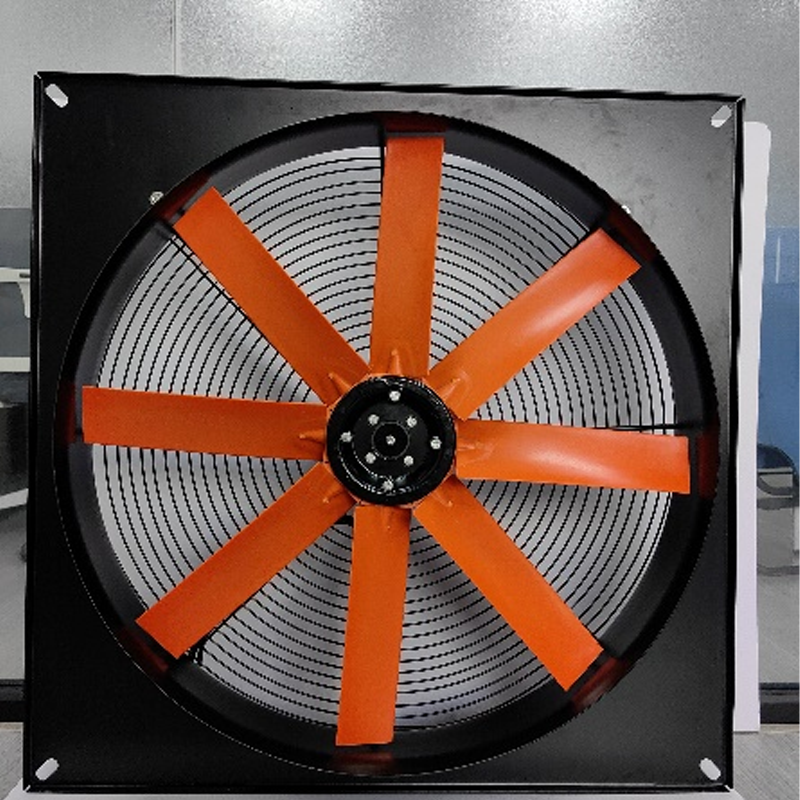
Data centers face intense scrutiny regarding their energy consumption. Facilities battle fluctuating heat loads and the cooling demands of high-density server racks. Furthermore, local governments enforce strict regulatory limits on overall facility energy use. Operators must aggressively lower their Power Usage Effectiveness (PUE) ratios to remain compliant and profitable.
Standard cooling systems struggle to manage unpredictable thermal spikes. They rely on staging compressors or cycling fans on and off. This approach wastes massive amounts of electricity. It also creates dangerous temperature swings in the server aisles. High-density equipment requires stable, consistent airflow to prevent catastrophic hardware failures.
Continuous, infinite speed modulation solves this critical problem. Advanced fan systems adjust instantly to shifting thermal load changes. Unlike older setups, they do not suffer from the efficiency loss inherent in variable frequency drive (VFD) AC motors. VFDs cause parasitic power losses at lower operating speeds. Conversely, EC electronics maintain peak efficiency across the entire speed spectrum. They ramp smoothly to provide exactly the required airflow.
When evaluating these systems, you must compare EC and AC performance specifically on partial-load energy draw. Most data center cooling units operate between 40% and 70% capacity during standard conditions. At these speeds, integrated electronics drastically outperform VFD-driven AC motors.
You must also assess the secondary benefits of advanced motor deployment. Servers contain highly sensitive spinning disks and delicate microprocessors. Standard AC motors generate noticeable mechanical vibration and electrical noise. Advanced fans run much smoother. This reduced vibration protects sensitive server equipment. Additionally, the integrated electronics produce significantly lower harmonic distortion on the facility’s power grid. Lower distortion means cleaner power delivery to your mission-critical IT infrastructure.
Commercial buildings face unique daily challenges. Facility managers must adapt to unpredictable building occupancy levels. They need to optimize indoor air quality (IAQ) while controlling costs. Additionally, they must consistently meet evolving ASHRAE compliance standards for fresh air circulation.
Legacy HVAC systems use static, constant-volume fans. These old units blast air regardless of how many people occupy a room. Utilizing a smart ventilation fan introduces much-needed direct-drive reliability. It removes the cumbersome belts, bearings, and pulleys present in traditional air handling units. Direct-drive design inherently reduces mechanical failure points. It ensures uninterrupted airflow during peak building hours.
Implementation heavily relies on sophisticated control methods. You can leverage native 0-10V, PWM, or Modbus communication protocols. These built-in connections allow seamless integration into your existing Building Management System (BMS). You no longer need to install expensive, secondary controllers or external drives. The fan acts as a network-ready node right out of the box.
However, you must acknowledge the risks involved in upgrading. Network security is a primary concern. Integrating intelligent devices into legacy HVAC automation systems can expose vulnerabilities. IT departments must isolate BMS networks from core corporate data servers. Protocol mismatches also cause frequent delays. You must ensure your central controller speaks the exact same Modbus language as the newly installed fans.
Below is a comparative breakdown of communication protocols commonly used in commercial retrofits.
BMS Integration Protocol Comparison
| Protocol Type | Setup Complexity | Data Feedback Capabilities | Best Application Environment |
|---|---|---|---|
| 0-10V Analog | Very Low | Basic Speed Control Only | Small standalone commercial spaces |
| PWM (Pulse Width Modulation) | Low | Speed Control and Fault Alarms | Medium HVAC units and exhaust arrays |
| Modbus RTU | High | Full diagnostics, power consumption, RPM | Large enterprise buildings and hospitals |
Selecting the right protocol ensures you maximize the native capabilities of the smart hardware. It transforms a simple cooling device into an active participant in your building's energy management strategy.
Heavy manufacturing spaces push standard equipment past its breaking point. Automotive cooling applications, metal fabrication floors, and specialized cleanrooms represent incredibly hostile environments. Standard cooling fans fail rapidly here. Airborne dust clogs conventional motor windings. High moisture levels short-circuit exposed electronics. Extreme ambient temperatures cause standard bearing grease to degrade and fail prematurely.
You cannot install commercial-grade hardware in these locations. You must deploy an industrial EC fan engineered specifically for survival. These specialized units feature high Ingress Protection (IP) ratings. Manufacturers seal the integrated electronics completely away from the outside atmosphere. They construct the housings with robust vibration resistance to withstand the constant shaking of heavy machinery.
You must rigorously evaluate environmental limits before writing a specification. Follow these best practices for harsh environment implementations:
Engineers often make the mistake of underspecifying the enclosure rating to save budget. This shortcut guarantees premature failure. When specifying equipment for a paint booth or a corrosive chemical processing plant, the mechanical housing must utilize specialized alloys or heavy-duty composite plastics. Investing heavily in physical protection ensures the internal electronics survive long enough to deliver their promised efficiency gains.
Facilities rarely have the budget to upgrade every air handler simultaneously. You need a structured evaluation framework to prioritize your projects. This framework must calculate realistic payback periods based on verifiable site data.
You must build an evaluation matrix relying on transparent assumptions. Do not use national average energy costs. You must input your exact local kilowatt-hour costs. You must determine the estimated daily operating hours for each specific machine. Finally, audit your historical maintenance spend. Include the cost of replacement belts, grease, and the hourly labor required to perform that upkeep.
Implementation risks often ruin a well-planned financial model. You must anticipate physical and electrical retrofitting challenges long before placing an order. Common hurdles include matching existing fan dimensions. The new form factor must fit inside the existing bulkheads. You must verify power supply compatibility. Older buildings may supply 480V delta power, while the new electronics might require a specific wye configuration with a dedicated neutral.
Managing airflow profiling post-installation represents another critical step. An upgraded fan array alters the pressure dynamics of the entire duct system. You must hire a certified technician to balance the system to prevent unintended whistling or drafty zones.
Follow this strict shortlisting logic to maximize your success rate:
Applying this logic prevents you from wasting capital on low-impact zones. It focuses your engineering efforts on the machinery consuming the largest portion of your utility budget.
Strategic hardware upgrades succeed only when technology aligns perfectly with application demands. Advanced fan systems belong in environments where intelligent control, variable demand, and continuous operation intersect. They excel in data centers battling thermal loads and commercial spaces navigating strict air quality regulations. Conversely, simple, intermittent exhaust needs rarely justify the premium technology.
You must treat these upgrades as calculated engineering projects, not standard maintenance swaps. Assess the specific mechanical demands, the BMS communication requirements, and the surrounding environmental hazards.
We recommend initiating a limited pilot test before committing to a facility-wide rollout. Request a comprehensive energy audit on a single high-usage Air Handling Unit (AHU) or one specific server room. Monitor the energy consumption, mechanical reliability, and network stability for three months. This localized data will prove your assumptions and secure the executive buy-in needed for broader implementation.
A: A realistic payback period typically falls into the 1.5 to 3-year range. This timeline heavily depends on your local kilowatt-hour energy rates and the equipment's daily duty cycle. Systems running 24/7 at partial loads generate the fastest financial returns. Intermittent systems take much longer to pay for themselves.
A: Yes and no. You will see a massive reduction in mechanical maintenance because these units lack wear parts like carbon brushes, belts, and pulleys. However, they do require periodic electronic and software diagnostics. Facility teams must occasionally check control signal integrity, update firmware, and verify sensor calibrations.
A: The integrated electronics are highly susceptible to moisture, dust, and extreme heat if not properly protected. Manufacturers combat this by applying potting or conformal coating directly onto the PCB boards. They also assign strict IP ratings to the enclosures. Proper IP specification prevents moisture and dust ingress from short-circuiting the drive.
