


Views: 0 Author: Site Editor Publish Time: 2026-09-04 Origin: Site


Sourcing ventilation components for enterprise HVAC and industrial machinery carries enormous stakes. A single motor failure can cripple entire production lines or compromise critical data center environments. Global engineering teams are rapidly shifting toward Electronically Commutated (EC) technology. Strict global energy regulations, such as ErP directives, drive this adoption alongside a pressing demand for precision airflow control. Choosing the right manufacturing partner goes far beyond negotiating unit costs. Your supplier directly dictates your system-level reliability, product scalability, and ultimate speed-to-market. In this guide, we explore the essential criteria for evaluating a manufacturing partner. You will learn how to match specific aerodynamic profiles to industrial applications and assess core engineering capabilities. We also break down the prototyping lifecycle and highlight the compliance standards necessary to mitigate operational risks in harsh environments.
Evaluating an OEM partner requires looking past baseline specifications to assess in-house aerodynamic testing, firmware customization, and supply chain resilience.
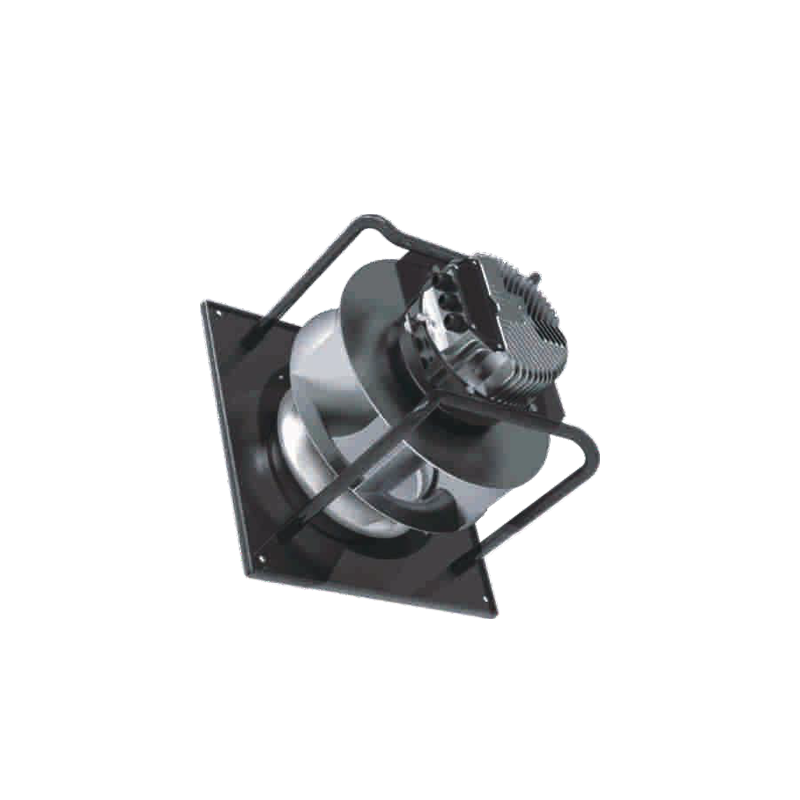
Selecting between an EC Centrifugal Fan and axial configurations depends heavily on specific static pressure requirements and enclosure constraints.
Verifiable compliance (UL, CE, ErP) and transparent lifecycle testing are non-negotiable criteria for mitigating recall risks in industrial equipment.
A structured prototyping phase—from initial CAD integration to acoustic mapping—is the strongest indicator of a manufacturer's technical maturity.
Your choice of manufacturing partner defines your operational stability. A capable supplier acts as an extension of your own engineering team. They protect your production lines from unexpected disruptions. They also ensure your final equipment easily passes strict regulatory audits.
Modern ventilation equipment faces extreme regulatory scrutiny. Regional energy standards dictate market access. For example, Europe enforces stringent ErP 2015 directives. The United States follows tough DOE standard frameworks. You cannot sell non-compliant products in these regions. Partnering with a compliant OEM mitigates this severe risk. They design their motors to exceed current efficiency mandates. They also anticipate future regulatory shifts. This proactive approach keeps your product lines viable for years. It prevents sudden redesigns due to unexpected regulatory failures.
Global supply chains remain highly volatile. Component shortages frequently impact production timelines. Long lead times can paralyze your market rollout. You need an OEM with vertically integrated production lines. Look for partners who handle motor winding in-house. They should also manage their own PCB assembly. This vertical integration removes layers of dependency. They do not rely on third-party sub-contractors for critical parts. It allows them to pivot quickly during global material shortages. You secure a reliable flow of components as a direct result.
Selecting the correct aerodynamic profile is critical. You must match the impeller design to your exact operating environment. Incorrect selections lead to poor performance and premature motor failure.
Data centers demand precise cooling. Computer Room Air Conditioning (CRAC) units rely on reliable airflow. Cleanrooms and Air Handling Units (AHUs) share this exact need. They must overcome high system resistance. You need specialized equipment for these demanding environments. A high-quality EC Centrifugal Fan handles this challenge easily. It pushes air powerfully against restrictive HEPA filters and dense heat exchanger coils.
You must also choose between impeller styles. Backward-curved impellers operate efficiently without a scroll housing. They deliver excellent static pressure and resist dust accumulation. Forward-curved impellers require a specialized housing. They move air quietly but suit different spatial configurations. EC configurations enhance both designs by adding variable speed control. This allows the system to adjust output instantly based on real-time sensor feedback.
Some environments require massive air movement without high pressure. Heat exchangers and heavy-duty condensers fit this profile. Agricultural ventilation systems also demand vast air volumes. Axial EC solutions fit these use cases perfectly. They move large quantities of air across wide open spaces. They operate with incredible efficiency at low static pressures. This design reduces energy consumption significantly while maximizing cooling spread.
Table: Application Suitability Comparison
Fan Type | Airflow Characteristic | Static Pressure Handling | Primary Industrial Applications |
|---|---|---|---|
Centrifugal (Backward-Curved) | Directional, focused flow | High to Very High | Data Centers, Cleanrooms, AHUs |
Centrifugal (Forward-Curved) | High velocity, enclosed flow | Medium to High | Packaged HVAC, VAV boxes |
Axial | Broad, sweeping flow | Low to Medium | Condensers, Agriculture, Cooling Towers |
Not all manufacturing facilities offer the same engineering depth. You must evaluate their core capabilities rigorously. This assessment separates mere assemblers from true engineering partners.
Off-the-shelf motors rarely fit complex industrial systems perfectly. You need an OEM EC fan that integrates seamlessly. Assess the manufacturer's ability to customize internal firmware. They should implement your specific communication protocols. Standard interfaces like 0-10V and PWM are basic requirements. Advanced networks require Modbus RTU or BACnet compatibility. The partner must also program custom RPM curves. This ensures the motor ramps up smoothly, avoiding sudden current spikes.
Theoretical models look great on paper. However, actual acoustic performance often differs wildly. Look for transparent data derived from certified testing chambers. They should follow strict AMCA standards. Real-world testing exposes hidden aerodynamic flaws. Focus heavily on vibration analysis data. Excessive vibration destroys bearings rapidly. Ask how they address tonal noise reduction. Unpleasant motor whining often ruins otherwise excellent equipment designs.
A successful prototype means little if mass production fails. Define strict standards for their assembly lines. Automated winding machines ensure consistent stator quality. Precision balancing is absolutely critical for high-speed operation. Demand compliance with the ISO 1940 standard for balancing accuracy. Finally, verify their end-of-line functional testing. Every single unit must spin up and pass electrical checks before shipping. Batch testing alone leaves you vulnerable to hidden defects.
Industrial machinery often operates in brutal environments. Dust, moisture, and chemical vapors constantly attack electrical components. Ensure the availability of specific NEMA or IP ratings. IP54 or IP55 ratings offer solid protection for general industry. IP68 might be necessary for extreme wash-down areas. Request conformal coating for all internal PCBs. This thin polymer layer prevents moisture from shorting the microcontrollers. Demand corrosion-resistant materials, like galvanized steel or specialized polymers, for the impellers and frames.
A structured prototyping phase is the strongest indicator of technical maturity. It transforms a conceptual design into a reliable production unit. Rushing this phase always leads to field failures.
Initial Feasibility and CAD Integration: Engineers need 3D modeling support early. They rely on thermal simulations to predict heat dissipation. These tools ensure the fan fits specific spatial constraints. A tight chassis limits airflow paths and creates unexpected turbulence. Early CAD integration solves these layout conflicts before physical parts exist.
Rapid Prototyping and Sample Validation: You need clear timeframes for receiving physical samples. Off-the-shelf modifications might take a few weeks. Fully custom aerodynamic designs often take months. Once received, your lab performs rigorous fit-checks. You validate the physical dimensions against the initial 3D models.
System-Level Tuning: The prototype rarely performs perfectly on the first try. You must collaborate closely with the manufacturer's engineers. They will fine-tune the motor firmware remotely or on-site. They match the RPM curves to your actual, measured system impedance. This tuning eliminates harmonic resonance within your chassis.
Transition to Volume Production: Moving to mass production introduces new challenges. You must manage tooling finalization carefully. Quality standards must lock in precisely. Packaging design becomes crucial here. Bulk transit often damages sensitive motor shafts. Custom packaging trays absorb shock and ensure safe global delivery.
Industrial product recalls devastate brand reputations. You must demand verifiable proof of quality from your manufacturing partner. Promises hold no weight when field failures begin.
Do not accept basic claims of compliance. You must verify certifications directly. CE, UL/cUL, and RoHS marks are non-negotiable for global distribution. An invalid UL certification can delay your product launch indefinitely. Independent registry checks confirm these claims. Reputable manufacturers willingly provide their certification numbers. They maintain updated files with major testing laboratories. This transparency proves their commitment to electrical safety.
Even the best assembly lines encounter bad material batches. Component traceability minimizes the fallout. Demand strict batch tracking for critical sub-components. Bearings and microcontrollers are especially vulnerable to supplier defects. If a bearing batch fails prematurely, traceability saves you. You can isolate the exact production run quickly. You recall only the affected units instead of your entire inventory. This targeted approach protects your reputation and limits operational chaos.
Motors look fine when they first leave the assembly line. The true test happens after thousands of hours in harsh conditions. Demand evidence of Accelerated Life Testing (ALT). This testing pushes components to their breaking point rapidly. Ask for their thermal shock testing data. Motors must survive sudden transitions from freezing to extreme heat. Request their high-voltage stress test results. These tests prove the internal insulation can survive unexpected power surges on the industrial grid.
An OEM EC fan is not a simple commodity part. It is a critical subsystem that dictates overall equipment performance. Its reliability directly determines the market viability of your final HVAC or industrial product. A poorly selected supplier introduces unacceptable risks into your production pipeline.
When shortlisting partners, prioritize technical depth over isolated performance claims. Look for robust engineering support and transparent testing data. A stable, vertically integrated supply chain protects your delivery schedules. These factors matter far more than a slightly higher static pressure figure on a datasheet.
Take decisive action with your engineering and procurement teams today. Request detailed performance curves for your specific operating points. Schedule a facility audit, either virtually or physically, to inspect their automated lines. Initiate an initial technical consultation to assess their firmware customization capabilities firsthand.
A: MOQs vary significantly based on customization depth. Modifying firmware on a standard dimension unit might require an MOQ of just 100 to 300 pieces. However, developing fully custom tooling for unique impellers pushes MOQs much higher. Expect requirements of 1,000 to 5,000 units for fully bespoke aerodynamic designs to offset initial engineering costs.
A: Yes, but it requires careful electrical planning. EC units run on AC power but convert it internally to drive a DC motor. You can eliminate bulky Variable Frequency Drives (VFDs) previously used for AC control. You must ensure the physical mounting aligns and route low-voltage control wiring (like 0-10V) to manage the new variable speed capabilities.
A: Modifying existing, off-the-shelf platforms is fast. You can receive these prototypes in three to six weeks. If your application requires fully custom aerodynamic designs and new injection molds, expect a longer timeline. This comprehensive process, including tooling creation and AMCA-standard acoustic validation, typically spans three to five months.
A: Standard interfaces include simple 0-10V analog inputs and PWM (Pulse Width Modulation) signals for basic speed control. For deep integration into a Building Management System (BMS), advanced industrial network options are essential. Modbus RTU is widely standard, while BACnet is frequently requested for modern commercial HVAC infrastructure.
