


Views: 0 Author: Site Editor Publish Time: 2026-07-08 Origin: Site


Tightening regulatory landscapes drive a massive shift in commercial buildings. Facility teams are rapidly transitioning from standard AC induction setups to electronically commutated technology. Department of Energy (DOE) efficiency standards demand more from every component. You must adapt quickly to meet these stringent codes.
However, selecting the right equipment requires a delicate balance. You must weigh upfront capital expenditure against long-term operational savings. Seamless system compatibility is also critical for success. Engineers and facility managers face a tough purchasing decision. An upgrade impacts both energy bills and daily operational stability.
We designed this article to provide a practical framework. It helps engineers, facility managers, and procurement teams evaluate these advanced units. You will learn how to specify and source components for commercial setups. We will guide you through sizing, control integration, and mechanical fitting. You will also discover how to navigate implementation risks. Read on to master the technical tradeoffs of modern commercial retrofits.
You must establish clear success metrics before deploying a new EC motor. A successful deployment looks different for every facility. Some projects target specific kW or CFM reductions. Others prioritize strict compliance with updated municipal energy codes. Noise reduction targets also play a huge role in environments like hospitals or schools. We recommend benchmarking your existing baseline. This helps you quantify exact performance improvements post-installation.
Modern efficiency mandates reshape commercial retrofits and new builds. The DOE continuously raises the bar for minimum energy performance. Standard induction motors often fall short of these new regulations. Electronically commutated technology provides the high-efficiency performance required today. Local building codes increasingly penalize inefficient systems. Proactive upgrades protect your facility from future compliance penalties.
Manufacturers often claim massive theoretical energy savings. You must contrast these claims against realistic efficiency gains. Real-world performance depends heavily on varying load profiles. A system running at continuous full speed yields different savings than one operating under variable loads. Part-load conditions highlight the true efficiency advantage of electronically commutated designs. You should model your specific operational hours to forecast accurate energy reductions.
Evaluating continuous operating parameters is your first critical step. You must match CFM (Cubic Feet per Minute) and external static pressure requirements perfectly. System resistance changes dynamically in commercial environments. The selected unit must deliver adequate airflow across the entire pressure curve.
Avoid the severe risk of over-sizing. Engineers often specify larger-than-necessary capacities as a safety margin. This practice limits the operational efficiency band. An oversized unit operates at lower speeds where efficiency plummets. It also introduces potential acoustic issues. Precise load matching guarantees optimal aerodynamic performance.
Best Practice: Always conduct a fresh static pressure test before replacing an old blower. Ductwork modifications over the years often change system resistance.
You must decide between simple analog control and full digital integration. Analog systems use standard 0-10V or PWM signals. They are simple to wire and troubleshoot. Digital integration uses protocols like Modbus RTU or BACnet. Digital setups allow granular monitoring and remote diagnostics. They transmit real-time data regarding RPM, power consumption, and fault codes.
BMS integration requires careful evaluation. The software handshake between the onboard controller and the centralized management system must be flawless. Compatibility issues cause frustrating commissioning delays.
Control Interface Comparison
| Interface Type | System Complexity | Ideal Application | Data Feedback Level |
|---|---|---|---|
| 0-10V Analog | Low | Standalone ventilation units | None (One-way communication) |
| PWM (Pulse Width) | Low | Basic variable speed control | Minimal (Basic speed validation) |
| Modbus RTU | High | Multi-fan arrays (Fan Walls) | Full (RPM, power, fault codes) |
| BACnet MS/TP | High | Whole-building BMS networks | Full (Comprehensive diagnostics) |
Assess footprint differences between existing belt-drive setups and direct-drive alternatives. Traditional AC induction units utilize bulky belts and pulleys. Direct-drive configurations are significantly more compact. This compactness frees up valuable internal cabinet space.
Mounting considerations remain crucial during retrofits. Evaluate the structural integrity of the existing blower housing. Old bulkheads might require reinforcement before accepting a direct-drive mount. The new assembly must sit perfectly level to prevent vibration.
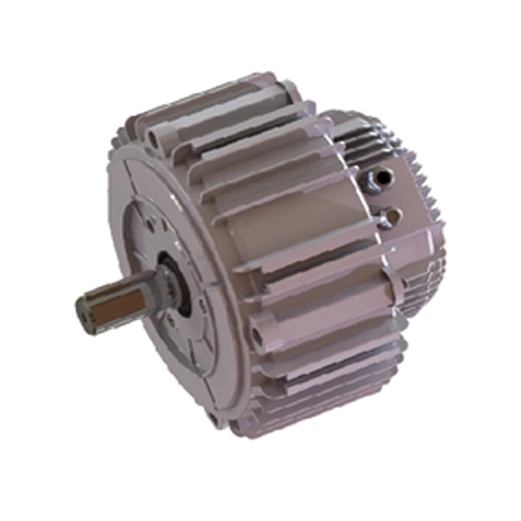
We must transparently address the higher initial purchase price. Advanced commutated technology costs more upfront than traditional AC induction equipment. The integrated electronics and permanent magnets drive this premium. However, this higher CapEx directly reduces your monthly OpEx. The dramatic reduction in power consumption shifts the financial scale. Facility managers must look beyond the initial invoice to justify the upgrade.
Several variables impact your Return on Investment (ROI) timeline. Local utility rates dictate the financial value of every saved kilowatt. Operational hours heavily influence payback speed. Environments with highly variable loads benefit significantly more than strict fixed-speed applications. A hospital running 24/7 sees rapid payback. An office building running 10 hours a day sees a longer timeline. You must model these assumptions accurately.
You achieve significant savings by eliminating mechanical transmission parts. Direct-drive setups remove V-belts and pulleys from the equation. This eliminates regular belt tensioning and replacement tasks. It also removes external Variable Frequency Drives (VFDs) from the wall. Weigh these continuous savings against potential repair costs. Replacing integrated electronics can be expensive if a power surge causes a failure. Proper power protection mitigates this risk.
Onboard electronics can introduce power quality issues. Total Harmonic Distortion of current (THDi) is a valid concern for large retrofits. The internal rectification process creates non-linear loads. Excessive harmonics overheat transformers and trip circuit breakers. Discuss these potential issues with your electrical engineer. Determine when active or passive harmonic filters are necessary. Compliance with IEEE 519 standards ensures a clean electrical environment.
Shaft currents present a serious risk to rotating equipment. High-frequency switching inside the inverter induces voltages on the shaft. This voltage discharges through the mechanical bearings. The resulting arcing causes premature bearing failure known as fluting. Address this risk immediately during specification. High-capacity units require preventative measures. Installing grounding rings routes the current safely away from the bearings.
Common Mistake: Ignoring shaft grounding on units over 5 HP. This oversight often leads to catastrophic bearing failure within the first year of operation.
Swapping out traditional blower units requires realistic scheduling. You cannot simply drop a new unit into an old cabinet instantly. Mechanical adjustments take time. You may need to cut new mounting plates or modify bulkheads. BMS reprogramming adds another layer to the timeline. Software technicians must map the new digital data points. Plan for at least one to two days of downtime per primary air handler.
Prioritize manufacturers or distributors who provide robust pre-sale engineering. They should offer comprehensive system auditing before you buy. Localized technical support is invaluable during installation. Commissioning assistance ensures the equipment operates exactly as specified. A strong vendor acts as a partner, not just a parts supplier.
Evaluate the availability of exact replacement parts. Custom-engineered solutions often carry painful lead times. Standard off-the-shelf units minimize future downtime. If a critical component fails, you need a replacement immediately. Ask vendors about their domestic stocking levels. Clarify their expedited shipping capabilities before signing a contract.
Verify all industry-standard testing and certifications. The equipment should carry UL, AMCA, and CE marks. These certifications validate safety and performance claims. Scrutinize the warranty terms carefully. Pay special attention to the electronic control modules. Mechanical warranties often outlast electronic warranties. Ensure you understand exactly what the manufacturer covers.
We recommend initiating a localized energy audit immediately. Do not attempt a facility-wide rollout blindly. Request a pilot installation for a single unit first. Measure its performance against your legacy equipment. This real-world test validates your energy models. It also exposes any unforeseen mechanical or software integration hurdles.
Moving to electronically commutated technology delivers immense strategic value. You drastically lower energy consumption while gaining granular control over your environment. However, success is never guaranteed by simply buying expensive hardware. Successful adoption relies on strict alignment between motor capabilities and existing infrastructure. You must accurately match aerodynamic demands and control protocols. Realistic ROI modeling ensures the project makes financial sense for your stakeholders. We encourage you to reach out to qualified technical sales teams today. Ask them for a custom financial analysis. You can also download a detailed specification checklist to kickstart your next major facility upgrade.
A: Direct drop-in replacements are rare. You typically need mechanical adaptations to accommodate the new direct-drive form factor. You must also remove existing external VFDs, as the new unit contains its own drive. Wiring updates are necessary to handle new control signals and power routing.
A: Mechanical bearing life typically exceeds 40,000 hours under normal conditions. However, the lifespan of the integrated controller depends heavily on ambient operating temperatures. Consistently high heat degrades electronic capacitors faster. Proper cabinet ventilation maximizes the lifespan of both mechanical and electronic components.
A: No, you do not need an external VFD. The variable speed control mechanism is fully integrated into the back of the unit. This renders any external frequency drives redundant. Removing the old VFD saves significant wall space and simplifies your electrical infrastructure.
