


Views: 0 Author: Site Editor Publish Time: 2026-09-12 Origin: Site


Facility managers face immense rising pressure today. They must reduce building operational expenses and meet stricter energy compliance standards. Crucially, they must achieve this without compromising HVAC performance. Building owners expect high efficiency alongside low operating costs. Managing these dual expectations requires upgrading outdated mechanical equipment. Legacy AC fans running at constant speeds drain maintenance budgets quickly. They rely on inefficient Variable Frequency Drives (VFDs) and act as a primary source of wasted energy. You can solve this persistent problem by transitioning to Electronically Commutated (EC) technology. This shift provides a verifiable, data-backed strategy. It drastically lowers power consumption, reduces maintenance overhead, and improves overall system control. By integrating a modernized airflow solution, you gain precise environmental management. This transition transforms a traditional ventilation setup into a highly optimized, intelligent system.
Part-Load Efficiency: EC fans consume up to 70% less energy than standard AC motors at partial speeds due to continuous modulation.
Maintenance Reduction: Direct-drive designs eliminate belts, pulleys, and carbon brush wear, directly lowering routine maintenance costs.
System Integration: Built-in controllers allow seamless integration with Building Management Systems (BMS) for precise, demand-based airflow.
Favorable ROI: Despite a higher initial CAPEX, the payback period for an energy saving EC fan retrofit typically ranges from 1 to 3 years depending on duty cycles.
Standard AC motors operate efficiently only at full load. Real-world HVAC systems rarely demand maximum cooling capacity continuously. They spend the vast majority of their time at partial loads. This operational mismatch leads to massive energy waste across commercial properties. Standard induction motors draw excessive power even when cooling demands drop. Facility teams often apply mechanical dampers or bulky VFDs to throttle airflow. These legacy workarounds generate excess heat and mechanical stress.
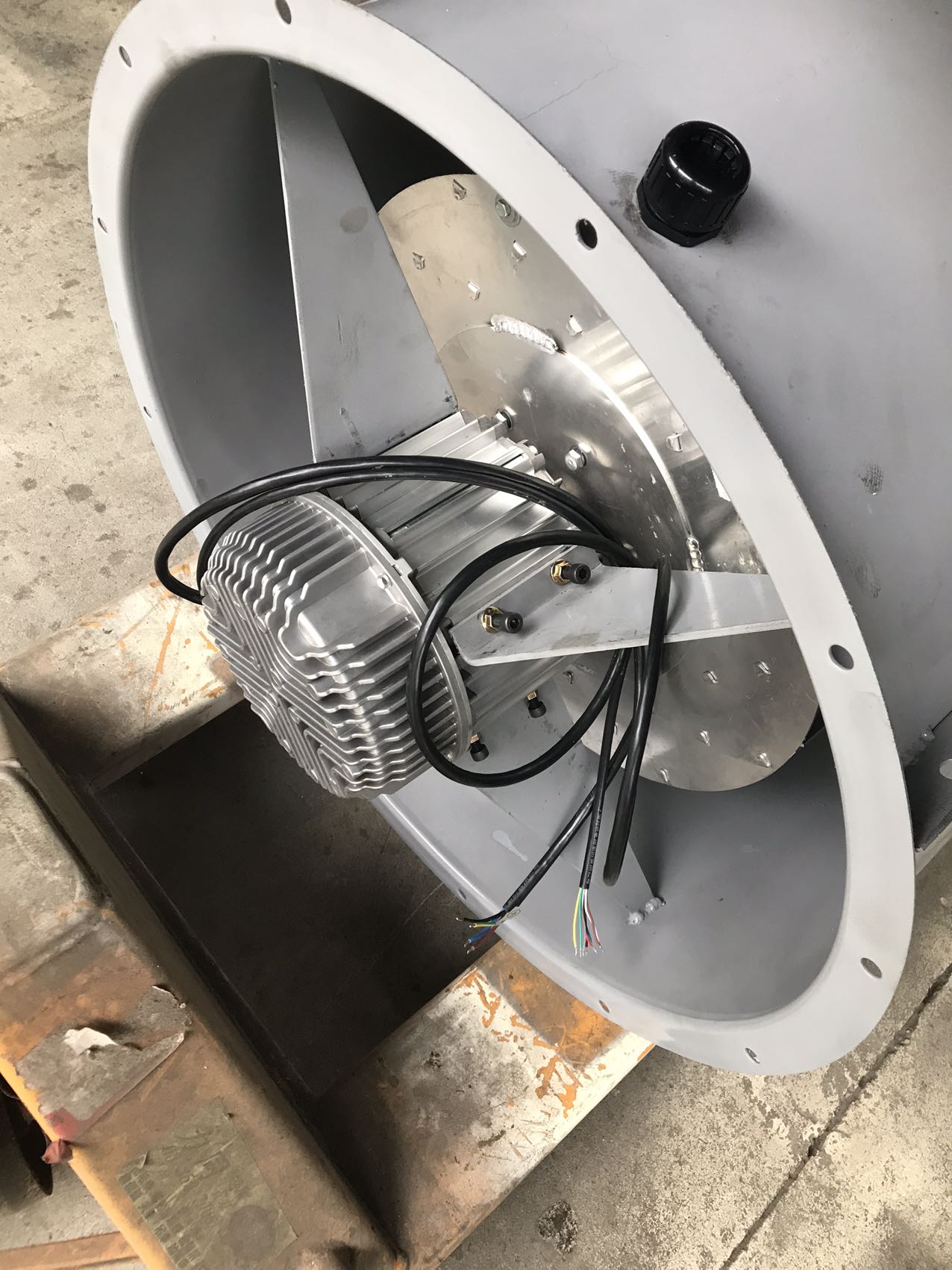
An EC motor fundamentally solves this engineering flaw. It combines standard AC power input and a DC motor's inherent efficiency. An onboard microprocessor manages this electrical conversion seamlessly. The controller switches the magnetic field precisely to drive the rotor. This process eliminates the "slip" found in traditional induction motors. Permanent magnets inside the rotor ensure high torque and rotational efficiency. The motor operates exactly at the speed required by the environment.
This technical shift eliminates massive system inefficiencies. You remove external VFDs entirely from the control loop. You also eliminate power-robbing transmission components. Traditional setups rely heavily on belts and pulleys to adjust fan speeds. These components suffer from transmission losses and mechanical drag. Direct-drive EC operation transfers rotational energy directly to the fan impeller. This streamlined approach minimizes energy loss between the power source and the air stream.
We must acknowledge one skeptical-friendly caveat. At 100% full speed, EC and AC efficiency gaps narrow significantly. A standard AC motor performs reasonably well when pushed to maximum capacity. You unlock the true value of an energy saving EC fan during variable, partial-load operations. It modulates speed precisely to match real-time demand. If your facility runs fans at partial speeds for long hours, the savings accumulate exponentially.
Fan speed and power consumption share a strict cubic relationship. Engineers refer to this mathematical rule as the Affinity Laws. Reducing a fan's speed by just 20% cuts its energy use by nearly 50%. Standard motors struggle to leverage this rule efficiently because they run at fixed speeds. EC technology modulates RPM dynamically. The onboard controller scales the motor speed back exactly when building loads decrease. This precise throttling capitalizes on the Affinity Laws directly.
EC motors also feature built-in "soft-start" capabilities. They ramp up their rotational speed gradually rather than instantly. Traditional motors pull a massive surge of current upon startup. Utility companies monitor these sudden spikes closely. They penalize commercial buildings through expensive peak demand charges. The soft-start function prevents these massive power spikes completely. Consequently, facilities see a sharp reduction in their monthly peak demand billing.
Motor Speed (%) | Airflow Output (%) | Power Required (%) |
|---|---|---|
100% | 100% | 100% |
90% | 90% | 73% |
80% | 80% | 51% |
70% | 70% | 34% |
60% | 60% | 22% |
Labor costs for HVAC maintenance continue to rise annually. EC units feature an absolute absence of friction-wear parts. Maintenance teams no longer tension, align, or replace rubber belts. They do not need to monitor carbon brushes for degradation. The direct-drive architecture drastically reduces required labor hours. Traditional belt-driven fans generate dust and particulate matter as belts degrade over time. This debris clogs filters and fouls cooling coils.
You avoid these messy, time-consuming cleanup tasks. Routine HVAC inspections become faster and much simpler. Facility managers can reallocate maintenance staff to more critical operational tasks. They spend fewer hours inside confined air handling units. Lower maintenance frequency translates directly to measurable operational savings.
EC fans naturally operate at much lower temperatures than standard induction motors. The high efficiency of permanent magnets prevents excessive heat generation. Soft starting also reduces mechanical vibration across the entire unit. These combined factors decrease wear and tear on the broader HVAC infrastructure. Bearings last longer because they do not suffer from severe thermal expansion.
You delay costly system replacements significantly by upgrading the fan component. A cooler motor protects adjacent electrical components from heat-induced failure. Reduced chassis vibration prevents sheet metal fatigue in the air handling cabinet. Modernizing the prime mover inherently upgrades the reliability of the entire ventilation system.
Data Centers & Server Rooms
Data centers demand constant, precisely modulated cooling arrays. High thermal loads fluctuate instantly based on server processing demands. Standard cooling systems often over-cool these spaces, wasting massive amounts of electricity. Upgrading Computer Room Air Handlers (CRAHs) makes a definitive difference here. An EC plug fan retrofit stabilizes the facility's Power Usage Effectiveness (PUE). The intelligent fans react instantly to subtle server temperature changes. They increase airflow slightly during processing peaks and dial back during idle periods. This micro-modulation keeps server racks perfectly balanced without excess energy expenditure.
Commercial Buildings & Retrofits
Commercial office buildings face wildly fluctuating daily occupancy levels. Air Handling Units (AHUs) must adapt dynamically to changing human density. Built-in BMS integration allows these units to match ventilation exactly to need. The system reads real-time indoor air quality metrics. It interfaces with existing CO2 or temperature sensors located throughout the floors. If a conference room empties, the system scales airflow down automatically. This demand-based ventilation prevents cooling empty spaces. Office managers achieve strict energy efficiency certifications much faster using this strategy.
Industrial Ventilation
Industrial manufacturing plants rely entirely on equipment reliability. Harsh, continuous-duty environments punish standard mechanical equipment constantly. Airborne dust, moisture, and high ambient temperatures cause frequent motor failures. A Power-Saving EC Fan withstands these rigorous conditions effortlessly. The sealed motor housings protect internal electronics from contamination. Any unexpected downtime in a factory directly equates to lost revenue. Robust electronic controls ensure consistent, fail-safe operation. Plant managers prefer this technology because it guarantees continuous production schedules while cutting utility bills.
Transitioning to modern airflow systems requires a clear evaluation framework. Facility leaders must map technical features to tangible business outcomes. Understanding these specific benefits simplifies the purchasing decision.
Feature: Modbus/0-10V control. Outcome: This translates into easy BMS integration. You avoid purchasing costly external controllers or pulling complex new wiring. The fan speaks the native language of modern building automation directly out of the box.
Feature: Compact motor footprint. Outcome: You gain easier installation inside confined retrofit spaces. EC motors lack bulky external drives. They fit easily into existing cabinets, allowing engineers to build efficient plug fan arrays.
Feature: Acoustic optimization. Outcome: The unit produces significantly lower noise levels. You improve occupant comfort in acoustic-sensitive environments like hospitals, libraries, or corporate boardrooms.
Start your evaluation by calculating baseline versus projected usage. Assess your current fan duty cycles carefully over a typical month. Facilities running fans 24/7 at variable loads will see the fastest return on investment. Determine exactly how many hours your system spends at partial capacity. If your current AC fan runs at 60% capacity but draws 80% power, you have identified prime energy waste.
Check local utility programs immediately. Many energy providers offer substantial rebates for modernizing equipment. They reward companies upgrading to energy-efficient airflow solutions. These financial incentives accelerate the payback period drastically. Often, utility rebates cover a large percentage of the initial hardware cost. Contact your power provider to verify specific program requirements before beginning the retrofit project.
We warn facility managers against "blind" retrofits. You must evaluate existing AHU structures thoroughly first. Check if the aging cabinet housing can physically accommodate a new fan wall. Sometimes, the existing sheet metal requires structural reinforcement. Engineers often install custom blank-off plates during the retrofit. These heavy-duty plates prevent air bypass around the new fan module. They ensure the unit generates maximum static pressure without leaking air back into the supply plenum. Proper aerodynamic fitment determines the ultimate success of the upgrade.
Industry professionals increasingly replace one massive AC fan with multiple smaller units. We call this configuration a fan array. This approach provides excellent built-in airflow redundancy. If one individual unit fails unexpectedly, the others ramp up automatically. They maintain the precise design airflow until maintenance technicians arrive. Your building never loses complete cooling capacity. However, wiring multiple units introduces slight installation complexity. Technicians must network the control cables properly to ensure synchronized operation across the array.
These advanced fans handle standard AC power natively. You do not need to replace your entire building's power feed. Even so, existing electrical panels require a thorough safety audit. Breakers must handle the initial charging current of the integrated electronics. Capacitors inside the EC drive draw a brief inrush of power when energized. Ensure absolute compatibility between your existing switchgear and the new technology. Review the electrical schematics with a certified contractor before finalizing the installation schedule.
Upgrading facility ventilation requires strategic capital allocation and careful planning. The upfront cost of modernizing your airflow equipment is undeniably higher than buying a replacement AC motor. However, OPEX reductions in electricity, maintenance, and equipment longevity shift the financial math entirely. They make this upgrade a standard requirement for proactive, cost-conscious facility management. Energy savings accumulate rapidly, offsetting the initial investment within a few short years.
Advise your internal decision-makers to start by auditing your highest-run-time HVAC units. Prioritize systems operating continuously under variable loads for the fastest returns. Look for older air handlers struggling to maintain consistent temperatures. We encourage you to request a professional energy audit immediately. Calculate your projected return on investment using your exact local utility rates. Consult a mechanical engineering specialist to model your potential savings today. Taking action now protects your facility against rising energy costs tomorrow.
A: They yield the highest savings in variable-load environments. These are systems not needing to run at 100% capacity continuously. They modulate speed dynamically to save power based on real-time demand. If a facility requires constant 100% maximum airflow 24/7, the ROI is much slower. The technology shines best when matching fluctuating environmental cooling loads.
A: Because they run cooler and utilize soft-start technology, these motors last significantly longer. They typically exceed 40,000 to 50,000 hours of continuous operation. They consistently outlast standard AC motors. Traditional induction motors suffer from higher thermal heat and mechanical stress, leading to premature bearing failure.
A: Yes, they are highly suited for retrofits. Industry professionals often refer to these modular replacements as EC plug fan upgrades. You do not need to replace the entire HVAC system. Proper engineering is required, however. You must ensure the correct form factor and aerodynamic fit within the existing housing.
