


Views: 0 Author: Site Editor Publish Time: 2026-09-04 Origin: Site


Commercial refrigeration often accounts for over 50% of a facility's total energy consumption. This massive power draw makes motor efficiency a critical lever for maximizing operational profitability. Most legacy cooling systems rely heavily on Alternating Current (AC) shaded-pole and permanent split capacitor (PSC) motors. These traditional units run at continuous, unyielding speeds. They generate excess heat and waste significant electrical power during low-load periods.
Facility managers constantly struggle to balance strict temperature demands against rising utility costs. Electronically Commutated (EC) technology effectively bridges the gap between efficiency and high performance. It offers dynamic speed control to match real-time cooling loads perfectly. This capability directly impacts your bottom line. In this article, you will learn the core mechanics behind these advanced motors. We will explore exactly how they reduce secondary cooling loads. Finally, you will discover actionable steps for retrofitting older equipment to achieve immediate, measurable energy savings.
Facility operators must define what a successful cooling system upgrade looks like before initiating any retrofits. A measurable upgrade delivers reduced kWh consumption and extends maintenance intervals. It also ensures stabilized temperature variance across commercial displays and cold storage rooms. Setting these operational success criteria gives engineering teams a clear baseline to measure future performance.
Traditional single-speed AC fans completely fail to adapt to ambient temperature changes. They run at maximum capacity regardless of the actual cooling requirements inside the cabinet. This rigid operation leads to severe over-cooling during nighttime hours or low-traffic periods. It accelerates mechanical wear on the bearings and degrades internal components prematurely. The hidden costs compound quickly as maintenance cycles shorten and utility bills climb.
Inefficient fan motors inherently emit waste heat directly into the refrigerated space. This system-wide impact creates a destructive thermal cycle. The primary compressor must work much harder just to remove the heat the fan itself generated. You essentially pay twice for poor engineering: once to power the inefficient fan, and again to power the compressor to cool down the fan's waste heat. By recognizing these compound inefficiencies, managers can accurately measure the true financial drain of legacy hardware.
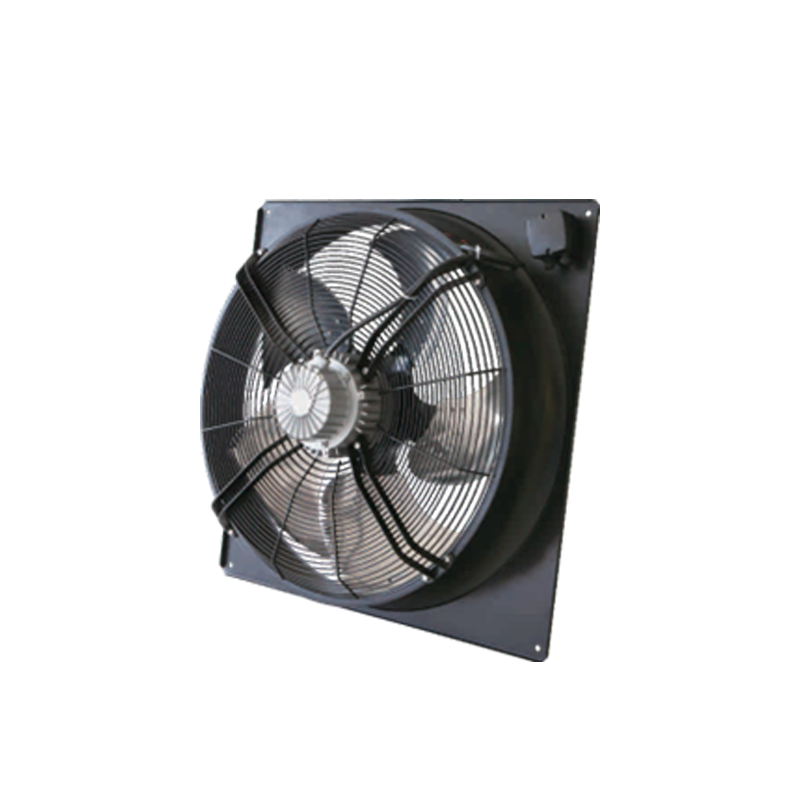
Many operators wonder what makes these modern motors fundamentally different from traditional counterparts. The core technology integrates a brushless DC motor directly with an onboard AC-to-DC converter. We can skip the deep physics and focus purely on practical mechanics. The motor accepts standard alternating current from the facility grid but converts it to direct current internally. This seamless conversion allows it to leverage the superior magnetic efficiency of DC operation without requiring separate, bulky external power supplies.
The real operational magic lies in smart speed regulation. An EC fan for refrigeration matches its RPM exactly to the immediate cooling demand. It achieves this dynamic modulation using standard 0-10V or Pulse Width Modulation (PWM) signals from a controller. This leverages the Affinity Laws of fluid dynamics beautifully. When you reduce the fan speed by just 20%, you cut power consumption by nearly 50%. A 50% speed reduction yields roughly an 87% drop in energy usage.
We must also look closely at power factor and raw motor efficiency. Traditional AC shaded-pole motors typically achieve only 30% to 40% efficiency. Much of their input energy converts instantly into useless heat and magnetic slip. Conversely, electronically commutated motors routinely hit 70% to 80% efficiency levels across a wide operating range. They maintain high power factors, meaning they utilize electrical current far more effectively than legacy designs.
Table: Comparing Motor Efficiencies in Refrigeration Applications
| Motor Type | Typical Efficiency Range | Speed Control Capability | Heat Dissipation into Cabinet |
|---|---|---|---|
| AC Shaded-Pole | 30% - 40% | Single Speed (On/Off) | High |
| Permanent Split Capacitor (PSC) | 45% - 60% | Stepped / Limited | Moderate |
| Electronically Commutated (EC) | 70% - 80%+ | Infinite Variable (0-10V/PWM) | Very Low |
Energy savings tell only part of the story when modernizing a facility. Upgrading hardware yields systemic operational benefits across your entire cooling infrastructure. These secondary advantages often solve chronic issues legacy systems create.
Slower, continuous airflow prevents severe temperature stratification. In commercial display cases and walk-in coolers, rapid blast-chilling from single-speed fans often freezes products located near the discharge vents. An intelligent refrigeration EC fan maintains a gentle, constant breeze across the evaporator coils. It keeps ambient temperatures uniform from the top shelf to the bottom rack, completely avoiding product damage and food spoilage.
Aerodynamic noise remains a critical compliance factor for modern facilities. Customer-facing retail environments require quiet operation to maintain shopper comfort. High-density data centers also enforce strict occupational noise limits to protect technicians. Advanced fan blade geometries combined with smooth electronic commutation significantly reduce decibel output. You eliminate the aggressive humming and vibration inherent to older AC motors.
Heat ultimately destroys electronics and mechanical bearings. Because these advanced motors run highly efficiently, they generate minimal internal heat. Lower operating temperatures for the motor itself mean drastically reduced thermal stress on critical components. The bearings retain their grease lubrication much longer. The integrated circuit boards suffer less degradation over time. This directly improves equipment longevity and lowers long-term replacement frequency.
Transitioning away from legacy hardware requires methodical engineering planning. Replacing legacy plug fans or axial units involves specific steps to ensure safety and performance. You cannot simply guess dimensions or electrical loads.
The retrofit engineering logic follows a distinct process:
Spatial constraints heavily influence product selection during retrofits. Fortunately, electronically commutated fans often feature a highly compact footprint. The motor integrates directly into the impeller hub. This makes drop-in replacements highly feasible in tight supermarket cases. However, you must perform precise mounting adapter assessments. An ill-fitting bracket causes mechanical vibration, which rapidly ruins the acoustic benefits and stresses the mounting wall.
True efficiency requires smart communication. You must determine the requirements for interfacing the new units with existing Building Management Systems (BMS) or local evaporator controllers. Check if your current controllers output 0-10V analog signals or Modbus protocols. Some legacy boards only feature simple relay switches. In those scenarios, you might need an intermediary digital-to-analog converter to unlock the variable speed profiles.
Every facility upgrade carries inherent deployment risks. Acknowledging these challenges upfront ensures a smooth, predictable installation process.
Buyers must acknowledge the premium upfront cost of these modern upgrades. Purchasing advanced motors requires a larger initial capital expenditure compared to buying a standard PSC replacement part. You are investing in integrated electronics, precision bearings, and rare-earth magnets. We encourage managers to focus strictly on the rapid payback period rather than the initial sticker shock. The operational savings quickly offset the procurement premium.
Refrigeration environments present incredibly harsh operating conditions. Moisture, daily frost cycles, and frequent condensation constantly threaten internal circuitry. You must verify precise Ingress Protection (IP) ratings before placing an order. Specifying IP54 or IP55 models is an absolute necessity for cold rooms. These ratings guarantee robust environmental resilience, protecting the sensitive integrated electronics against splashing water and airborne dust.
Hardware alone cannot guarantee efficiency. Improperly programmed variable speed profiles easily negate your expected energy savings. If a commissioning technician hardwires the new unit to run at 100% speed continuously, the efficiency drops significantly. Always conduct thorough post-installation energy audits. Compare the actual measured electrical draw against your originally modeled savings. This verification step confirms the control logic operates exactly as intended.
Moving from preliminary research to actual procurement requires a highly structured approach. Start by gathering rigorous data on your current infrastructure. Instruct your maintenance team to audit current motor specifications. You need accurate data on supply voltage, operational airflow, static pressure drops, and physical impeller dimensions. Accurate data prevents costly returns and installation delays.
Next, build a realistic financial model. We recommend calculating exact payback periods using your specific local utility rates. Map out your estimated operational run hours per year. Additionally, heavily research potential energy efficiency rebates. Many regional utility incentive programs offer substantial cash rebates for commercial motor upgrades, drastically improving the financial model.
Finally, choose your supplier based on strict engineering criteria. Prioritize vendors offering robust technical support and clear warranty terms for the onboard electronics. Look for partners who provide custom programming capabilities. Top-tier suppliers will pre-configure the speed profiles based on your specific evaporator coil requirements before shipping the units to your facility.
Upgrading to electronically commutated technology is no longer an experimental engineering choice. It represents a strict operational baseline for minimizing long-term expenses and maximizing facility reliability. By replacing inefficient, heat-generating AC motors, operators drastically cut daily power consumption while stabilizing ambient temperatures.
Dynamic speed control ensures your cooling equipment only works as hard as necessary. Take immediate action to audit your existing refrigeration infrastructure. Consult an applications engineer to assess your current hardware limitations. Request a detailed ROI calculator to project your future energy savings accurately. Review a technical spec sheet tailored to your facility's specific cooling load to begin your modernization journey today.
A: In most commercial scenarios, the technology pays for itself within 12 to 24 months. This realistic benchmark depends heavily on daily run hours and local electricity rates. Facilities operating continuously see the fastest return on investment. Applying local utility rebates further shortens this payback period.
A: Yes, they physically fit into existing setups using proper mounting adapters. However, dropping them in as a simple on/off replacement limits their potential. Maximizing efficiency requires integrating a variable speed controller. Connecting it via a 0-10V signal ensures dynamic adaptation to real-time cooling loads.
A: All electric motors generate some residual heat due to physics. However, these advanced units run significantly cooler than their AC counterparts. Their high electrical efficiency minimizes wasted energy dissipated as thermal output. This drastically reduces the overall secondary burden on your refrigeration cycle and primary compressor.
