


Views: 0 Author: Site Editor Publish Time: 2026-07-06 Origin: Site


HVAC and industrial cooling systems consume massive amounts of facility energy worldwide. Legacy fans operate constantly and serve as the primary culprit behind this excessive power draw. We see traditional AC induction motors wasting significant electricity through inefficient designs and poor speed controls. Facility managers face mounting pressure to reduce utility bills. They also struggle to meet strict environmental targets. Transitioning away from these outdated systems provides a critical upgrade path. It ensures regulatory compliance while delivering immediate operational cost reductions. Specifically, the electronically commutated motor offers a revolutionary leap in performance over standard AC options. You can slash power waste dramatically. You also simplify your entire cooling infrastructure by making this strategic switch. This article objectively evaluates how an energy-efficient upgrade impacts overall system performance. We will explore the internal mechanics driving these incredible energy savings. Finally, you will learn how to assess implementation viability and execute a successful facility retrofit.
Standard AC motors operate efficiently only when running at full load. They rely entirely on physical slip to generate magnetic torque. This inherent mechanical reality generates excessive heat. It wastes valuable energy during everyday operations. When you run an AC motor at maximum capacity, it performs adequately. However, real-world HVAC systems rarely demand constant maximum airflow. Building temperatures fluctuate constantly based on occupancy and weather.
Traditional speed control methods introduce severe operational drawbacks. Facilities often install mechanical dampers to restrict airflow manually. They also use complex belt-and-pulley systems or external variable frequency drives (VFDs). These older components introduce numerous mechanical failure points. They also cause parasitic power losses. You end up burning electrical energy just to overcome the physical restrictions created by closed dampers. Belts slip and degrade continuously over time. This degradation requires constant maintenance attention from your engineering team.
Global energy regulations are growing increasingly strict every year. Carbon reduction mandates force modern facilities to phase out low-efficiency motors rapidly. Governments actively push for greener commercial building standards globally. You must adapt to these changing regulatory environments proactively. Failing to upgrade means risking severe non-compliance penalties. It also ensures your facility remains burdened by unnecessarily high monthly utility bills. Modern sustainability standards demand much smarter airflow solutions.
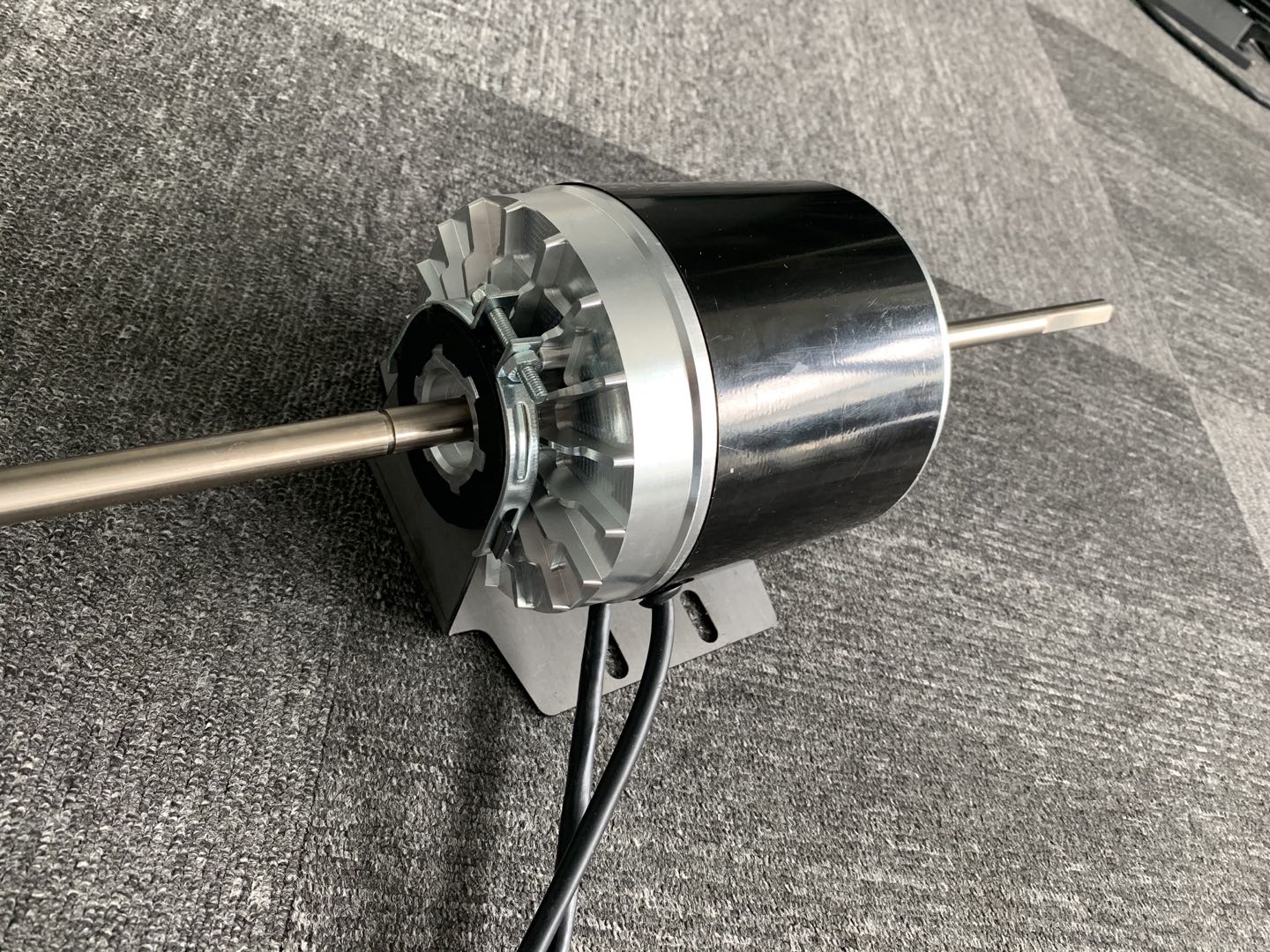
This technology effectively bridges standard AC and advanced DC power technologies. An EC motor acts fundamentally as a brushless DC motor. It includes sophisticated built-in electronics within the casing. These electronics allow the unit to run seamlessly on your standard AC power infrastructure. You get the incredible benefits of DC efficiency immediately. You achieve this without rewiring your entire commercial building or installing external transformers.
Permanent magnet rotors play a vital role in this modern design. They eliminate the heavy electromagnet-induced rotors found in legacy AC models. This removal eliminates physical "slip" entirely from the operational equation. It also stops secondary copper and heat losses. Removing these physical barriers fundamentally raises the base efficiency of the unit. The motor runs significantly cooler under continuous loads.
Electronic commutation drives this entire intelligent system. An integrated microprocessor dynamically adjusts the internal magnetic field. It optimizes both torque and speed continuously. The system reads external control signals to deliver exact airflow requirements instantly. You avoid the mechanical waste typical of older belt-driven configurations. The motor only works exactly as hard as the current environment dictates.
Premium models utilize Active Power Factor Correction (PFC). Active PFC actively monitors and stabilizes the electrical power draw. It ensures the EC motor,energy-efficient motor maximizes real power usage efficiently. This stabilization minimizes harmful electrical strain on your local grid. It keeps your overall facility power quality exceptionally high. It also protects other sensitive electronic equipment sharing the same power supply from voltage drops.
Efficiency curves highlight a massive performance gap between motor technologies. AC motors drop significantly in efficiency when operating below a 70% load. They struggle to maintain performance when throttled down mechanically. The power factor plummets quickly. Conversely, electronically commutated units maintain a perfectly flat, high-efficiency curve. They perform exceptionally well even when throttled down to 20% speed.
The Fan Affinity Laws explain this advantage perfectly. These fundamental physical laws dictate how power scales with rotational speed. Reducing a fan's speed by just 20% results in nearly a 50% drop in energy consumption. If you reduce speed by 50%, power consumption drops by roughly 87%. Smart systems natively exploit these physical laws. They scale back power draw instantly as system demand drops. You only pay for the exact airflow you need at any given moment.
The following table illustrates the operational differences between legacy setups and modern upgrades:
| Operational Feature | Traditional AC Motor | Electronically Commutated Motor |
|---|---|---|
| Speed Control Method | External VFD, Mechanical Belts, Dampers | Integrated Microprocessor via PWM/0-10V |
| Partial Load Efficiency | Poor (Drops rapidly below 70% load) | Excellent (Maintains ~90% at low speeds) |
| Heat Generation | High (Due to physical magnetic slip) | Low (Utilizes permanent magnet rotor) |
| Acoustic Noise Levels | Noticeable tonal hum at low operating speeds | Exceptionally quiet operation across all speeds |
| Maintenance Needs | High (Belt replacements, frequent lubrication) | Minimal (Direct drive, sealed bearings) |
Calculating return on investment requires analyzing specific facility variables closely. You must review your exact operating hours carefully. You also need localized kWh electricity costs. Next, compare the premium cost of new hardware against legacy maintenance expenses. Standard AC setups require frequent and expensive replacements. You must buy new belts, sheaves, and external drives regularly. Maintenance teams spend countless hours adjusting these older systems.
To calculate your specific payback period, follow these fundamental steps:
Most commercial facilities see a complete financial payback within one to three years. You secure long-term profitability and operational reliability after this short initial period.
Extended equipment lifespan represents a major operational benefit for maintenance departments. These modern units operate at much lower internal temperatures. They waste very little electrical energy as useless heat. This directly translates to longer bearing life for the rotating equipment. It significantly reduces your overall motor burnout risk. You replace expensive equipment far less often. Facilities experience fewer unexpected mechanical breakdowns during peak seasons.
Acoustic performance improves dramatically upon successful installation. Upgraded fans eliminate the annoying "motor hum" completely. External VFD-driven AC motors notoriously whine at low operating speeds due to harmonic distortion. Removing this tonal noise reduces noise pollution in sensitive commercial applications. Office workers, hospital patients, and residential tenants experience a much quieter environment. Expensive sound dampening materials become completely unnecessary in your ductwork.
Space and weight reduction simplify engineering layouts significantly. Manufacturers cleverly combine the motor and the intelligent controller into a single compact housing. This streamlined design frees up valuable mechanical room space. It also simplifies your structural mounting requirements drastically. You handle much less physical bulk during the installation process. This makes complex rooftop upgrades or tight-space mechanical retrofits much easier to execute.
We must address the primary financial objection directly. Modern efficient motors definitely carry a higher initial purchase price. However, you should justify this cost via a comprehensive lifecycle analysis. Do not rely solely on restrictive upfront procurement budgets. The long-term operational savings heavily outweigh the initial hardware price tag. You save massively on daily energy, routine maintenance, and replacement parts. Presenting a multi-year savings projection usually secures executive budget approval quickly.
Harmonics and grid impacts require very careful engineering consideration. Cheaper imported units often lack Active Power Factor Correction. They can introduce severe harmonic distortion into your sensitive electrical system. Specifying Active PFC remains absolutely critical for large facility installations. It protects your expensive transformers and building wiring from dangerous overheating. It keeps your power sine wave clean and compliant with utility standards.
Building Management System (BMS) integration demands close attention. You must verify digital control compatibility before purchasing new hardware. Common communication protocols include 0-10V, PWM, Modbus, or BACnet. Ensuring seamless communication allows your building automation system to perform flawlessly. The central computer can monitor status and adjust fan speeds perfectly in real-time.
Physical retrofit constraints pose unique mechanical challenges. Modern units are very compact by design. However, matching existing mounting brackets requires precise engineering verification. You must also evaluate impeller styles very carefully. Centrifugal and axial fan setups demand vastly different structural alignments. Improper mounting can cause dangerous vibrations and premature bearing failure.
Follow a clear strategic roadmap to ensure a successful facility retrofit. You want to target units that yield the highest immediate financial returns. Careful planning prevents costly implementation mistakes.
Upgrading to an electronically commutated system involves adopting an optimized airflow strategy. It is far more than simply buying a basic replacement part. You are fundamentally modernizing how your commercial building breathes and operates.
Initial hardware costs do sit higher than legacy AC equivalents. However, the compounding operational benefits make this the definitive choice for modern facility management. You gain precise speed control, massive energy reductions, and greatly simplified maintenance routines. Overall system reliability increases while your facility carbon footprint shrinks.
We strongly encourage you to conduct an energy audit immediately. Target your highest-draw HVAC assets first. Calculate your potential energy savings and plan your comprehensive retrofit strategy today.
A: AC motors rely on alternating current and physical induction. This mechanical process creates excess heat and limits speed control. Conversely, electronically commutated motors use permanent magnets. They feature integrated electronics to convert AC to DC power internally. This advanced design allows for frictionless, highly precise variable speed control.
A: Yes. They routinely exceed stringent IE4 and IE5 global efficiency classifications. Because of this extremely high performance, they easily meet and surpass most energy efficiency mandates. They represent the gold standard for commercial and industrial regulatory compliance worldwide.
A: Yes, but it requires a careful engineering evaluation. Upgrading often involves replacing both the motor and the impeller simultaneously. Purchasing a single integrated "plug fan" unit ensures optimal aerodynamics. It also guarantees proper structural fit and safe balancing within your existing air handler.
A: No. One of the primary advantages is the integrated intelligent design. The variable speed controller sits directly inside the motor housing. This completely eliminates the need for an external variable frequency drive. It also removes the associated wiring complexities and expensive installation costs.
