


Views: 0 Author: Site Editor Publish Time: 2026-09-06 Origin: Site


Rising server densities and artificial intelligence workloads are currently pushing legacy cooling infrastructure well beyond its thermal limits. Traditional CRAC and CRAH units typically rely on standard AC fans. These mechanically throttled units create problematic hot spots across the server floor. They also tend to overcool inactive zones simultaneously. Consequently, fixed-speed cooling artificially inflates Power Usage Effectiveness (PUE) metrics. Facility managers urgently need a better approach to handle extreme heat generation.
Transitioning to an EC fan for data center cooling solves this fundamental problem. It shifts thermal management away from reactive, high-energy operations. Instead, you gain a precision-controlled, demand-driven system. EC technology adapts instantly to changing heat loads. This ensures you only use the exact energy required to maintain optimal server temperatures. In this article, you will learn how EC fans transform cooling efficiency. We will cover built-in redundancy, retrofit strategies, and crucial evaluation criteria to guide your upcoming infrastructure upgrades.
Precision Thermal Matching: EC (Electronically Commutated) fans dynamically adjust speed to match exact IT heat loads, eliminating overcooling.
Energy & PUE Reduction: Upgrading to a Data Center EC Fan can reduce cooling fan energy consumption by 30% to 50% compared to traditional AC motors, particularly at partial loads.
Retrofit Viability: Implementing EC plug fans or fan arrays in existing infrastructure minimizes downtime while introducing built-in redundancy for mission-critical uptime.
BMS Integration: Native digital controls allow seamless integration with Building Management Systems (BMS) for granular, predictive thermal management.
Traditional data center cooling relies heavily on AC centrifugal fans. These mechanical systems often run at fixed speeds. They use physical dampers or basic step controls to modulate airflow. This approach causes massive energy waste. An EC motor completely changes this dynamic. It integrates a brushless DC motor directly inside the fan impeller. An onboard electronic inverter converts AC supply power into DC power internally. This intelligent design allows for infinitely variable speed regulation. The fan speeds up or slows down seamlessly. It responds instantly to real-time thermal variations across your server racks.
Targeted airflow management prevents dangerous thermal pooling. High-density AI server deployments require precise cooling delivery. Blasting cold air into an entire room is highly inefficient. EC technology pushes exact air volumes directly into your active cold aisles. You eliminate localized hot spots at the server level effortlessly. Facility managers no longer need to execute whole-room temperature drops. This targeted strategy stabilizes your entire cooling environment.
Data centers rarely operate at 100% thermal capacity continuously. IT workloads fluctuate based on time and user demand. This makes partial load efficiency critical. Standard AC fans suffer severe efficiency drop-offs when throttled down. Conversely, EC fans maintain exceptionally high motor efficiency across their entire operating range. You save significant energy during off-peak hours.
Operational Load | Standard AC Fan Efficiency | EC Fan Efficiency | Airflow Modulation Method |
|---|---|---|---|
100% Full Load | 65% - 70% | 85% - 90% | Direct Drive / Fixed |
80% Partial Load | 50% - 55% | 85% - 88% | Continuous Digital Control |
50% Partial Load | 30% - 40% | 80% - 85% | Continuous Digital Control |
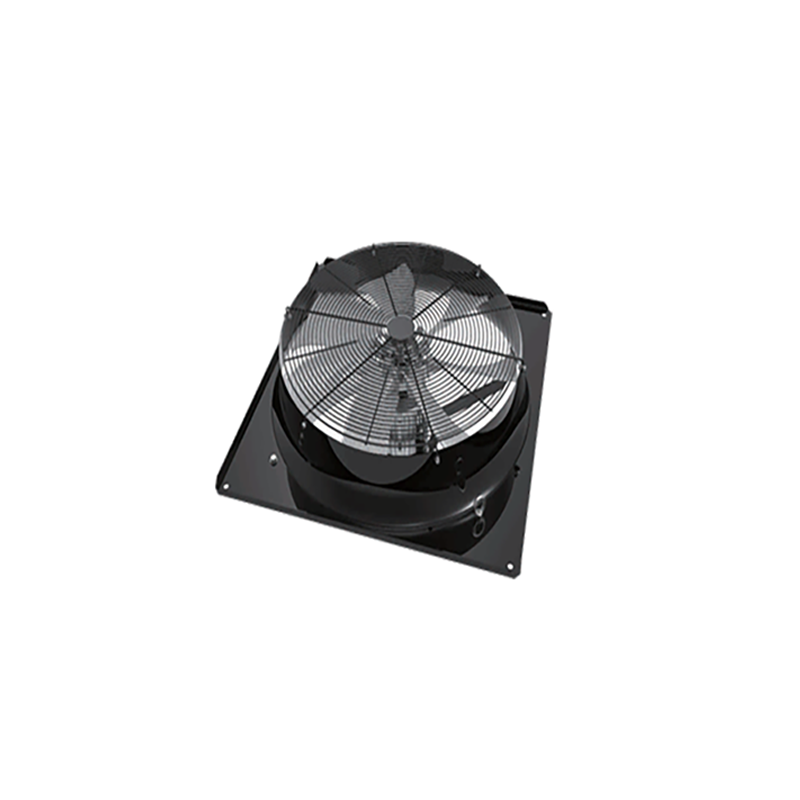
Modern facility designs emphasize modularity and resilience. The industry is rapidly shifting away from single, large centrifugal blowers. Relying on one massive fan introduces a single point of failure. Instead, operators now utilize arrays of multiple, smaller EC fans. A fan array groups several compact units into a single structural wall. This grid operates synchronously to deliver massive cumulative airflow. The modular approach vastly improves system reliability.
An array configuration enables true N+1 redundancy in action. Hardware failures happen in mission-critical environments. If one fan in an array fails unexpectedly, the system compensates immediately. The integrated digital controls detect the voltage drop instantly. They automatically adjust the remaining fans' speeds upward. This sequence maintains consistent static pressure and airflow seamlessly. You experience zero thermal degradation during a component failure.
Here is exactly how the N+1 redundancy sequence executes:
The onboard controller identifies a localized fan fault.
The Building Management System logs the error for maintenance.
The active PID loop calculates the resulting static pressure deficit.
The system signals the remaining functional fans to increase RPM.
Total airflow delivery returns to the required baseline within seconds.
Furthermore, smaller EC fan arrays offer distinct spatial advantages. Bulky belt-driven AC blowers consume enormous physical footprint within the white space. Compact plug fans free up critical square footage. They also reduce structural vibration significantly. Smaller impellers generate less low-frequency noise. This creates a safer, quieter working environment for data center technicians.
You do not need to build a new facility to harness EC technology. Upgrading legacy CRAC and CRAH units is a highly viable strategy. The process involves removing outdated AC centrifugal fans entirely. Technicians strip out the heavy motors, drive belts, and pulleys. They replace these components with direct-drive EC plug fans. These modern units slide directly into the existing mechanical housing.
Minimizing downtime is always the primary concern during upgrades. Live, mission-critical environments cannot simply shut down cooling systems. Facility teams must utilize phased retrofit strategies. You can upgrade one CRAC unit at a time while neighboring units share the thermal load. Strategic deployment of portable cooling arrays can bridge temporary gaps. This careful orchestration ensures 100% uptime during the entire transition.
You will face specific compatibility issues during retrofits. Physical dimensional constraints often require custom mounting plates. Older electrical systems might need updated breakers to handle the new electronics. Adapting old mechanical housings to fit modern EC profiles takes precise engineering.
Always measure the internal cabinet dimensions before ordering replacement fans.
Install custom blanking plates to prevent internal air recirculation around the new fans.
Verify the existing power supply voltage matches the new internal inverters.
Skipping the installation of proper air baffles, which ruins static pressure.
Failing to calibrate the new digital sensors against the legacy BMS outputs.
Over-sizing the EC fans without calculating the actual IT rack density.
Choosing the right hardware dictates your operational success. You must evaluate specific technical criteria before finalizing any purchase. Not every fan fits every high-density environment. Facility managers must look beyond basic dimensions. You need to focus on aerodynamic performance and digital connectivity.
Static Pressure and Airflow Metrics: You must map your IT rack density directly to cooling output. Calculate your average kilowatts per rack. Map this figure to the required CFM (Cubic Feet per Minute). Your chosen fan must overcome the specific pressure thresholds of your under-floor plenums.
BMS Compatibility and Telemetry: An ideal Data Center EC Fan features native digital controllers. Ensure the integrated hardware supports industry-standard protocols. Modbus and BACnet are mandatory for remote monitoring. These protocols enable automated speed adjustments and crucial predictive maintenance alerts.
MTBF (Mean Time Between Failures): Evaluate long-term reliability metrics closely. EC technology eliminates traditional wear-and-tear parts. You no longer worry about snapping belts or grinding pulleys. Direct-drive systems inherently boast much higher MTBF ratings.
Vendor and Compliance Standards: Choose OEM components from established manufacturers. Verify they meet global efficiency directives. ErP 2015 compliance ensures top-tier energy performance. Look for recognized UL and CE certifications to guarantee electrical safety.
Securing capital approval requires a solid financial justification. Energy savings modeling is your strongest argument. You must provide a framework for calculating the expected payback period. Start by establishing your localized utility rates. Next, record your facility's baseline PUE. Finally, calculate the projected partial-load operating hours. EC fans deliver massive savings during these off-peak periods. They draw significantly less amperage when running at reduced speeds.
Maintenance cost reduction accelerates your financial returns. Factor in the operational savings from eliminating mechanical upkeep. You completely eradicate costly belt replacements. You remove the labor hours previously spent greasing bearings. Furthermore, smooth digital starts reduce physical wear on your chilled water cooling coils. These cumulative operational savings add up quickly.
Utility rebates also play a massive role in justification. Local power grids face unprecedented demand from AI data centers. Many utility providers offer lucrative efficiency rebates for modernization. Dropping your energy consumption often qualifies your facility for custom incentives. These cash rebates drastically shorten your upgrade payback period. Achieving your corporate sustainability goals becomes much easier alongside these financial wins.
EC fans represent a foundational upgrade for any modern data center. They are much more than just a simple energy-saving component. These intelligent units provide granular, resilient thermal management. They adapt instantly to complex AI workloads. By eliminating mechanical belts and fixed speeds, you create a more reliable cooling ecosystem. Built-in redundancy protects your mission-critical servers from unexpected thermal events.
Facility managers should take immediate action to capture these benefits. Begin by conducting a comprehensive thermal audit of your existing CRAC units. Identify which mechanical fans consume the most power. Consult with an engineering partner to model the specific financial returns of a retrofit. Upgrading your infrastructure today will future-proof your facility against tomorrow's rising heat loads.
A: The average payback period typically ranges between 12 and 24 months. This rapid return is driven by a 30% to 50% reduction in fan energy consumption. You also gain significant operational savings from eliminating routine mechanical maintenance, such as replacing drive belts and lubricating bearings.
A: Yes, they integrate easily. Most modern EC controllers accept standard 0-10V analog signals. For deeper data integration, you can utilize digital protocol gateways. These gateways translate native fan telemetry into Modbus or BACnet, ensuring seamless communication with your older legacy BMS software.
A: Fan arrays eliminate the single point of failure found in traditional large blowers. They utilize automated, redundant load-sharing. If one small fan experiences a motor failure, the remaining fans immediately increase their RPM. This ensures your CRAC unit maintains constant airflow without interrupting server cooling.
A: Absolutely. The fundamental EC motor principle scales perfectly across applications. Large form factors power massive CRAH units for whole-room cooling. Meanwhile, compact EC fans integrate seamlessly into in-row coolers, rear-door heat exchangers, and secondary direct-to-chip liquid cooling distribution units.
