


Views: 0 Author: Site Editor Publish Time: 2026-07-07 Origin: Site


Stricter energy compliance standards and rising operational costs are forcing facility managers and engineers to rethink their HVAC and ventilation strategies. Today, legacy equipment drains budgets and struggles to meet modern environmental mandates. You simply cannot afford inefficient airflow management in commercial or industrial spaces. The traditional reliance on standard AC motors is being aggressively challenged. Modern facilities demand variable-speed control and higher partial-load efficiency to optimize daily operations. Traditional systems waste immense amounts of energy during off-peak hours.
This paradigm shift makes evaluating an EC motor critical for future-proofing your building infrastructure. This article provides a transparent, evidence-based framework for evaluating these technologies. We will examine whether upgrading to or specifying newer motor technology justifies the initial capital expenditure for your specific ventilation requirements. You will learn the mechanical differences, performance metrics, and real-world deployment strategies necessary to make an informed engineering decision.
To evaluate ventilation systems properly, we must first understand the fundamental mechanical differences driving them. Airflow generation relies entirely on motor physics. Let us examine how standard Alternating Current (AC) and Electronically Commutated (EC) configurations operate under real-world conditions.
Traditional AC motors remain the most common driver in legacy HVAC systems. They function based on magnetic fields generated by alternating alternating current. These units operate at fixed speeds dictated by the incoming electrical frequency. In North America, this frequency typically sits at 60 Hz. Because the frequency remains constant, the motor runs at a singular, inflexible speed.
To modulate airflow, engineers must install external Variable Frequency Drives (VFDs). A VFD artificially alters the electrical frequency reaching the motor. However, this external modulation introduces several engineering challenges. VFDs often cause acoustic noise due to electrical harmonics. They also create noticeable power losses during the frequency conversion process. We frequently observe excess heat generation when standard motors run below their intended design speeds.
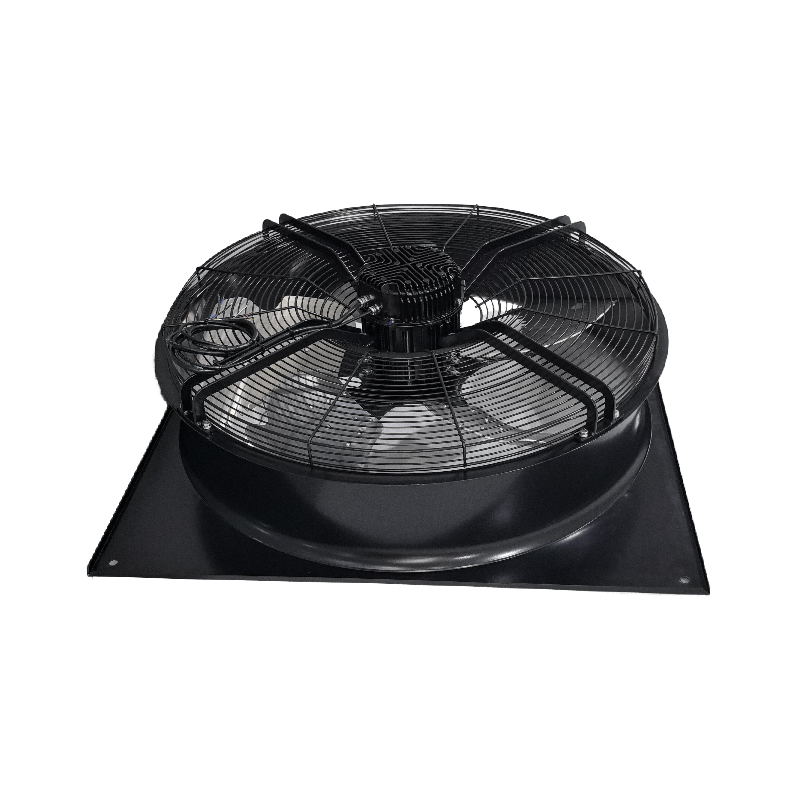
EC technology represents a massive leap forward in motor design. These units utilize onboard electronics to convert incoming AC power into Direct Current (DC) internally. By operating on DC power, the motor avoids the inherent inefficiencies of alternating magnetic fields. They feature permanent magnets on the rotor. This design eliminates the energy waste associated with inducing a magnetic field in the rotor core.
Furthermore, these units incorporate integrated microprocessors. These smart controllers allow for seamless, infinite speed modulation. You do not need external VFDs to control an EC system. The design reality is highly efficient. It consolidates the motor, the variable speed drive, and the control logic into one single, compact unit. This integrated approach drastically reduces installation complexity and eliminates harmonic distortion issues.
Conducting a thorough AC motor comparison requires looking beyond theoretical peak performance. Real-world ventilation systems rarely operate at 100% capacity around the clock. We must evaluate these technologies across dynamic load conditions, acoustic profiles, and system integration capabilities.
Peak efficiency numbers often mislead system designers. Most ventilation systems spend their operational lives running between 40% and 80% capacity. Standard AC motors lose efficiency exponentially when dialed back from their peak load. When a VFD slows an AC unit to half speed, motor efficiency can plummet below 50%. The energy required to maintain the magnetic fields does not scale down linearly.
Conversely, EC technology excels under partial loads. They maintain an impressive efficiency profile of 80% to 90% even at partial speeds. The internal DC conversion and permanent magnets ensure minimal energy waste. This flat efficiency curve aligns perfectly with variable ventilation demands. When building occupancy drops, the system slows down while remaining highly efficient.
Noise and heat significantly impact facility operations. Standard AC motors generate excess heat and a distinct magnetic hum when throttled by external drives. The harmonic distortion from a VFD creates vibration. This vibration translates directly into mechanical noise through the ductwork. Additionally, the excess heat generated by inefficient operation forces the primary HVAC system to work harder.
EC units run significantly cooler. Their high efficiency means less electrical energy converts into waste heat. This cooler operation directly extends bearing life. It also reduces the secondary cooling load on your facility's climate control system. Furthermore, the integrated electronics eliminate the electrical hum associated with chopped sine waves.
Modern building management relies on precise, data-driven adjustments. EC units natively accept standard industry control signals. You can easily feed them a 0-10V analog signal or a Pulse Width Modulation (PWM) signal. This native compatibility allows precise, real-time airflow adjustments. You can link motor speed directly to environmental sensors monitoring CO2 levels, ambient temperature, or indoor humidity. Standard systems require complicated intermediary hardware to achieve this level of granular control.
| Evaluation Metric | Standard AC Motor + VFD | EC Motor (Integrated) |
|---|---|---|
| Part-Load Efficiency | Drops significantly below 60% speed | Maintains 80-90% efficiency at all speeds |
| Speed Modulation | Requires external VFD installation | Built-in microprocessor control |
| Operating Temperature | High heat generation at lower speeds | Runs cool, extending component lifespan |
| Acoustic Noise | Prone to magnetic hum and vibration | Virtually silent operation at partial loads |
| BMS Connectivity | Requires add-on modules/interfaces | Native 0-10V and PWM integration |
Replacing legacy equipment requires a clear financial justification. Facility managers must balance initial procurement costs against long-term operational savings. A comprehensive financial evaluation proves that raw component prices rarely tell the whole story.
We must acknowledge a transparent baseline assumption. Advanced motor technology carries a higher initial purchase price. You can expect to pay 20% to 40% more for an electronically commutated unit compared to a standard AC equivalent. This CapEx hurdle often deters immediate adoption during tight budget cycles.
However, you must calculate the subsequent OpEx savings. The most immediate return comes from drastic reductions in kilowatt-hours (kWh). Because ventilation runs continuously in many buildings, even a 20% reduction in power draw yields massive financial returns. Furthermore, you eliminate the need to purchase, install, and wire external VFDs. Maintenance intervals also stretch further apart due to cooler operating temperatures and reduced mechanical wear.
Return on Investment (ROI) depends heavily on operational uptime. We typically observe the fastest payback periods in high-uptime environments. Facilities operating 24/7 often recover their initial premium within 12 to 24 months. After this breakeven point, the energy savings translate directly into net operational profit.
Intermittent usage scenarios naturally extend the ROI timeline. If a system only runs a few hours daily, the payback period lengthens. In these situations, financial justification becomes highly dependent on local utility rates. You should also investigate regional energy rebates. Many local utility companies offer substantial financial incentives for upgrading to high-efficiency ventilation equipment.
Technology selection must align with specific environmental demands. Upgrading to an EC motor fan provides distinct advantages in specialized applications. Let us explore the industries where this technology drastically outperforms legacy options.
Data centers operate under extreme thermal constraints. Their primary requirement involves high-precision, continuous operation. Facility engineers must adhere to strict Power Usage Effectiveness (PUE) mandates. Standard cooling setups often over-deliver air, wasting enormous amounts of electricity.
The outcome of adopting newer technology here is profound. Smart electronics allow localized, dynamic cooling adjustments. Server racks experiencing heavy computational loads receive maximum airflow immediately. As workloads shift, the fans throttle down seamlessly. This precise matching prevents energy waste and keeps PUE metrics well within compliance thresholds.
Agricultural applications present incredibly harsh operating environments. The core requirement involves severe moisture and dust resistance. Furthermore, operators need variable airflow to match distinct day/night or seasonal thermal cycles. Animals and plants require stable microclimates to thrive.
Fully sealed units provide reliable microclimate control. They survive aggressive environmental factors better than standard open-drip motors. The ability to slowly ramp up airflow prevents sudden drafts that stress livestock. Farmers can tie the fan speeds directly to internal humidity sensors, ensuring optimal growing conditions without manual intervention.
Older commercial buildings face unique regulatory and spatial challenges. The main requirement often involves meeting new, aggressive energy codes like ASHRAE 90.1. Facility managers must achieve these standards within existing, tight spatial footprints. Traditional motor-plus-VFD configurations rarely fit easily into cramped legacy mechanical rooms.
The compact nature of integrated fans solves this dilemma. By combining the drive and motor into one housing, engineers free up valuable plenum space. This integration drastically simplifies electrical runs. You no longer need to mount heavy drives on adjacent walls or run shielded cables across the ceiling. This spatial efficiency accelerates retrofit project timelines significantly.
Every mechanical upgrade carries inherent deployment risks. Proper planning prevents unexpected downtime and budget overruns. You must systematically evaluate your facility's readiness for advanced motor technology.
Physical mounting differences pose the most common hurdle. Legacy AC blowers utilize standard NEMA frame sizes. Modern integrated fan arrays often feature entirely different mounting brackets and dimensional footprints. You cannot always execute a simple drop-in replacement.
Engineers must evaluate the scope of the physical retrofit. Sometimes, you can replace individual motors using custom adapter plates. In other cases, it makes more financial sense to remove the entire legacy blower. Upgrading to a complete modular fan wall system often yields better long-term reliability than piecemeal motor swaps.
Advanced microprocessors require clean, stable electricity. Onboard electronics remain sensitive to voltage spikes and harmonic interference from other heavy machinery. You must evaluate your site's power quality before installation.
Discuss potential power anomalies with your electrical contractor. You may need to install dedicated surge protection devices. Shielding the integrated drives from severe grid fluctuations ensures they achieve their expected multi-year lifespans.
Availability impacts project timelines. You can usually purchase off-the-shelf standard motors from any local industrial supply house. They remain abundant and highly commoditized.
Conversely, specialized integrated components often require specific lead times. Manufacturers build many high-efficiency units to order based on precise voltage and RPM requirements. You must factor these extended procurement windows into your project schedule. Keep essential replacement units in your local inventory to prevent prolonged downtime.
Choosing the right mechanical driver for your ventilation system drastically impacts long-term facility performance. The final verdict is clear. Choosing between legacy equipment and modern integrated technology is rarely a question of pure performance. Electronically commutated systems remain objectively superior in both energy efficiency and granular control. They eliminate external drives, reduce acoustic noise, and adapt instantly to changing environmental demands.
Your true decision hinges on operational hours and lifecycle energy savings. Facilities running continuous or highly variable ventilation schedules will recover their premium costs rapidly. You must look past the initial purchase price to realize these compounding monthly savings.
Take proactive steps to modernize your infrastructure today. We highly recommend scheduling a technical consultation with an HVAC engineering specialist. They can assess your specific facility’s airflow requirements and model your potential payback period. Utilize an energy savings calculator to transform theoretical efficiency gains into actionable financial data.
A: Energy savings typically range from 30% to 50%. The exact percentage depends heavily on your application. In continuous-operation environments with variable loads, the savings reach the higher end of that spectrum. Standard motors waste immense energy running at partial speeds, whereas modern integrated units maintain peak electrical efficiency across their entire operational range.
A: No, you do not need an external VFD. These advanced units feature fully integrated speed control microprocessors built directly into the housing. This onboard electronics package handles all AC-to-DC conversion and speed modulation internally. This renders external VFDs obsolete, saving you significant installation time, wiring costs, and wall space.
A: High-efficiency units generally outlast their standard counterparts. Because they convert power internally to DC, they generate significantly less waste heat. Lower operating temperatures dramatically extend the life of internal bearings and winding insulation. When supplied with clean power, these integrated units provide exceptional longevity and require far less routine mechanical maintenance.
A: Direct swaps are sometimes possible, but they require careful engineering verification. You must check physical structural mounts, as modern units often have different dimensional footprints. Additionally, you must evaluate wiring harnesses and control system compatibility. Often, it is more efficient to upgrade the entire fan assembly or install a fan wall rather than adapting old housings.
