


Views: 0 Author: Site Editor Publish Time: 2026-09-09 Origin: Site


Upgrading to electronically commutated technology is no longer a fringe engineering choice. It acts as a regulatory and operational baseline for modern HVAC, refrigeration, and industrial cooling. While the energy-saving mechanics of this technology are universal, realizing these benefits in practice remains complex. The long-term reliability and seamless integration support you receive depend entirely on your supply chain partner. Finding the right vendor determines whether your systems perform optimally or struggle with premature failures. This guide provides a definitive framework for evaluating and shortlisting an EC motor manufacturer. We will show you how to select a partner capable of delivering scalable, compliant, and genuinely energy-efficient fan systems. You will learn to assess technical capabilities, navigate global certifications, and mitigate common implementation risks effectively.
Selecting an EC motor manufacturer requires assessing both technical integration capabilities (aerodynamics, smart controls) and supply chain resilience.
True energy savings rely on system-level matching (motor, impeller, and controller), not just standalone motor efficiency ratings.
Compliance with global efficiency directives (e.g., ErP 2015, UL, CE) should be treated as a strict manufacturer prerequisite, directly impacting your ESG reporting and product marketability.
Mitigating implementation risks requires transparent communication regarding lead times, minimum order quantities (MOQs), and retrofitting technical support.
Achieving maximum return on investment requires viewing your cooling components holistically. Any standard EC Motor easily outperforms traditional AC alternatives by up to 30% in raw efficiency. However, optimal operational savings demand more than a bare motor. You need a partner who engineers the motor, impeller, and integrated drive as a single aerodynamic unit. When suppliers mismatch these components, turbulence and acoustic noise quickly erase the promised energy gains.
The financial model for these advanced systems relies heavily on reduced operational expenditures (OpEx). Initial capital expenditures naturally run higher than older technologies. You offset this upfront premium rapidly through dramatically lower energy consumption. Brushless designs eliminate physical friction entirely. This absence of brushes drastically reduces maintenance schedules and extends operational lifespans. Moreover, precise speed control allows fans to ramp down during low-demand periods. Running a fan at half speed consumes roughly one-eighth of the power. This cubic relationship drives massive financial savings over a decade of operation.
Partnering with top-tier suppliers directly accelerates your corporate sustainability initiatives. Original Equipment Manufacturers (OEMs) face mounting pressure to prove environmental, social, and governance (ESG) compliance. An established partner supplies verifiable efficiency data. You can then leverage this data to substantiate your end-user carbon reduction claims. This transparency builds market trust and strengthens your brand positioning against competitors relying on outdated technologies.
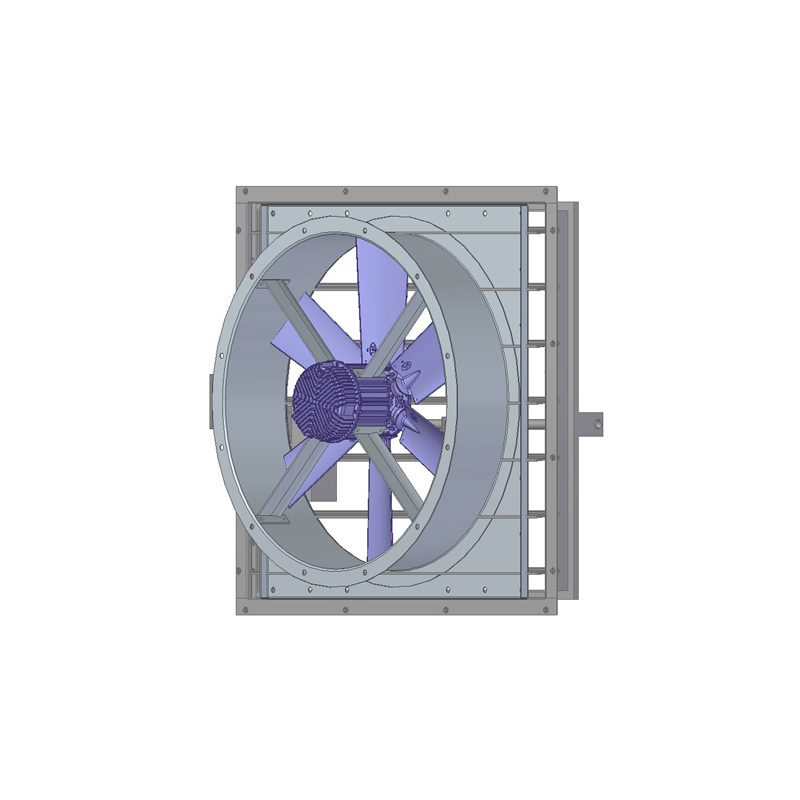
Evaluating potential partners requires looking beyond basic product catalogs. You must assess their engineering depth and production maturity thoroughly. A true manufacturing partner adapts to your specific application constraints rather than forcing a one-size-fits-all solution.
Assess their capacity to modify physical dimensions and environmental protections. Can they adjust shaft lengths to fit your unique OEM enclosures? Do they offer customized mounting brackets for tight spaces? Environmental protection also matters heavily. A standard IP54 rating handles basic dust and water splashes adequately. Conversely, harsh industrial environments demand IP68 ratings for full submersion resistance. Your vendor must adapt these specifications seamlessly to prevent premature field failures.
Modern facilities rely on intelligent automation. Evaluate the proprietary controllers your vendor provides. They must support industry-standard communication protocols. Look for 0-10V analog inputs, PWM signals, and Modbus RTU connectivity. These protocols ensure seamless integration into existing Building Management Systems (BMS). Without native BMS compatibility, facility managers cannot execute predictive maintenance or dynamic load balancing effectively. Ask your vendor about firmware update paths to ensure long-term digital relevance.
Look for distinct evidence of automated winding processes on their production floor. Automated winding guarantees uniform copper distribution across the stator. This consistency prevents localized hot spots and electrical imbalances. Next, examine their end-of-line testing protocols. Quality vendors conduct 100% testing for vibration, acoustic signatures, and thermal mapping. They should proudly display current ISO 9001 and ISO 14001 certifications as proof of their operational maturity.
Global disruptions frequently derail OEM project timelines. Localized warehousing prevents these catastrophic production bottlenecks. Discuss component sourcing openly during the vetting process. Ask where they source their rare-earth magnets and microprocessors. Transparent sourcing practices shield your production lines from sudden geopolitical shocks. Strong vendors maintain buffer stocks of critical microelectronics to guarantee stable lead times.
Table 1: Manufacturer Capability Comparison
Evaluation Category | Basic Commodity Supplier | Strategic Technical Partner |
|---|---|---|
Customization | Standard catalog sizes only | Custom shaft lengths, brackets, and IP68 options |
BMS Integration | Basic on/off or manual speed dials | Native Modbus RTU, 0-10V, and PWM support |
Quality Testing | Batch sampling tests | 100% end-of-line acoustic and thermal mapping |
Supply Chain | Opaque sourcing, volatile lead times | Transparent component origins, localized warehousing |
A credible vendor must proactively design products for global efficiency mandates. Treating certifications as an afterthought severely limits your international distribution capabilities. You must verify compliance across three distinct regulatory categories.
European and American markets enforce strict minimum efficiency grades. The ErP (Energy-related Products) directive in Europe sets non-negotiable efficiency thresholds for fan systems. If a product fails ErP 2015 standards, it cannot legally enter the European Union. Similarly, the Department of Energy (DOE) enforces rigorous fan energy index (FEI) standards in the US. Your partner must provide documentation proving compliance across these distinct regional frameworks.
Electrical safety marks dictate commercial viability. UL recognition remains strictly required for North American installations. The CE mark serves as the mandatory equivalent for Europe, while CSA covers the Canadian market. Beyond electrical safety, material compliance is equally critical. RoHS and REACH directives restrict hazardous substances like lead and cadmium in electronic components. Customs agencies will impound shipments lacking proper RoHS documentation.
Avoid relying purely on in-house marketing data for performance claims. Some vendors exaggerate airflow capabilities under ideal, unrealistic conditions. Advise your engineering teams to shortlist manufacturers utilizing third-party AMCA-certified testing chambers. The Air Movement and Control Association (AMCA) provides unbiased, standardized testing. AMCA certification ensures the airflow and acoustic metrics printed on the spec sheet match real-world physical performance.
Implementation strategies differ wildly based on your end goal. Facility managers upgrading legacy infrastructure face different hurdles than product engineers designing new appliances. A strong vendor supports both operational modes.
Facility managers require simple, painless upgrades. Shutting down a data center or hospital wing for days is unacceptable. Ask how the manufacturer supports replacing legacy AC or DC motors. Look for standardized frame sizes corresponding to older industry norms. Adaptable mounting plates bridge the physical gap between old mounts and new systems. Voltage-independent designs prove incredibly valuable here. Auto-sensing electronics (e.g., 115V-277V) eliminate complex rewiring. They allow technicians to connect the new unit to existing power grids safely and rapidly.
Product engineers need deep technical collaboration. Detail the manufacturer’s prototyping process before signing contracts. How fast can they deliver custom samples for your R&D lab? Custom development often involves optimizing airflow paths within constrained appliance spaces. A capable vendor provides computational fluid dynamics (CFD) modeling support. They will help you shape the fan shroud and impeller to maximize aerodynamic efficiency inside your specific chassis.
Deploying advanced commutation technology carries inherent technical risks. Failing to anticipate these pitfalls results in budget overruns and system downtime. We recommend implementing strict vendor requirements to mitigate these three common risks.
Risk 1: The "Cheap EC" Trap
The market currently suffers an influx of low-cost, poorly commutated motors. These budget units frequently experience early electronics failure. They also generate high harmonic distortion, polluting the building's electrical grid. Mitigation: Require explicit MTBF (Mean Time Between Failures) data. Demand comprehensive warranty terms covering both the mechanical bearings and the integrated inverter board. Insist on active power factor correction (PFC) capabilities to prevent grid pollution.
Risk 2: Control Protocol Mismatch
An advanced fan is useless if it cannot understand commands. Facility teams often discover the new motor fails to communicate properly with legacy PLCs or existing BMS networks. Mitigation: Demand verified compatibility charts before purchase. Request initial field-test units. Connect these test units to your automation network to confirm bi-directional communication works flawlessly before ordering bulk quantities.
Risk 3: Lead Time Volatility
Many vendors promise rapid delivery during sales pitches but falter during mass production. Microchip shortages can stall motor manufacturing for months. Mitigation: Negotiate strict service level agreements (SLAs) regarding buffer stock. Define clear minimum order quantities (MOQs) for custom variants. Establish tooling ownership terms in writing before finalizing the vendor contract.
An EC motor manufacturer operates as a strategic technical partner, not just a commodity vendor. The electronics, aerodynamics, and supply chain logistics they provide directly impact your operational success. Treating this procurement solely as a pricing exercise leads to premature failures and complex integration headaches down the road.
Decision-makers must prioritize verifiable system-level efficiency data above all else. Robust BMS integration, transparent supply chain practices, and automated quality control testing matter far more than the lowest unit price. True value emerges from long-term reliability and reduced maintenance demands.
To move forward safely, evaluate your current cooling infrastructure carefully. Request a technical consultation or a custom sample from your shortlisted vendors. Conduct rigorous field testing within your specific application environment to validate their aerodynamic and acoustic claims before committing to mass production.
A: The return on investment typically ranges from 1 to 3 years. This period depends heavily on your continuous duty cycles and local energy costs. Facilities running fans 24/7, such as data centers or cold storage units, often see payback in under 18 months due to massive energy reductions.
A: Yes, it connects directly to standard AC grids. Integrated electronics inside the motor housing convert the incoming AC supply to DC internally. This design makes them entirely plug-and-play, eliminating the need for external variable frequency drives (VFDs) or separate inverters.
A: Minimum order quantities vary by engineering complexity. Off-the-shelf catalog models often require no MOQ or very low minimums (e.g., 10-50 units). However, custom-engineered solutions requiring unique shaft lengths, customized firmware, or specific impellers typically demand MOQs ranging from 500 to 1,000 units to justify tooling costs.
A: Reputable manufacturers validate claims through third-party aerodynamic testing labs. They provide official AMCA certification documents and detailed performance curves. These curves map exact power consumption against varying airflow and static pressure conditions, ensuring you get accurate, unbiased efficiency data.
