


Views: 0 Author: Site Editor Publish Time: 2026-09-05 Origin: Site


Upgrading or specifying the right condenser fan motor is no longer just about matching RPMs. It acts as a critical variable in overall HVAC system efficiency. It also ensures strict regulatory compliance across global markets. Suboptimal fan selection directly leads to excessive energy consumption. Furthermore, it generates higher acoustic signatures. It often causes premature system failure in highly demanding outdoor environments. You must prevent these operational failures to protect your bottom line. While Electronically Commutated (EC) technology stands out as the industry standard, making the transition requires careful planning. Selecting the exact EC fan for condenser applications requires balancing aerodynamic performance with intelligent control integration. You must also prioritize environmental durability. In this comprehensive guide, you will learn how to evaluate core engineering dimensions. We will explore advanced control protocols. Finally, we will outline common implementation risks so you can guarantee a successful, long-lasting upgrade.
Condensers rarely operate at maximum design conditions. Ambient temperatures fluctuate constantly throughout the day and night. Traditional AC motors run at fixed speeds. They waste tremendous amounts of energy during off-peak thermal loads. They force systems to cycle on and off aggressively. This constant cycling wears down mechanical components rapidly. Conversely, EC technology allows for precise speed modulation. EC fans adjust their output instantly. They respond directly to changing cooling demands. This capability solves the fundamental inefficiency of legacy condenser systems.
You measure deployment success through verifiable energy reductions. A properly sized system routinely achieves over 30% energy savings. At the same time, it maintains optimal refrigerant condensing temperatures across all duty cycles. Keeping head pressures stable prevents unnecessary compressor strain. It ensures the entire refrigeration cycle operates smoothly. Success also means lowering acoustic output during partial loads. This creates a quieter, more compliant installation.
EC fans definitely carry a higher initial capital expenditure. They cost more upfront than older AC alternatives. Stakeholders often question this initial premium. When modeling return on investment, base your calculations carefully. You must rely on actual part-load operational hours. Avoid relying solely on hypothetical peak-efficiency comparisons. Most condensers spend the majority of their operational life at partial capacity. This is where EC technology delivers the highest financial returns. Evaluate the capital expenditure against realistic, year-round ambient temperature profiles.
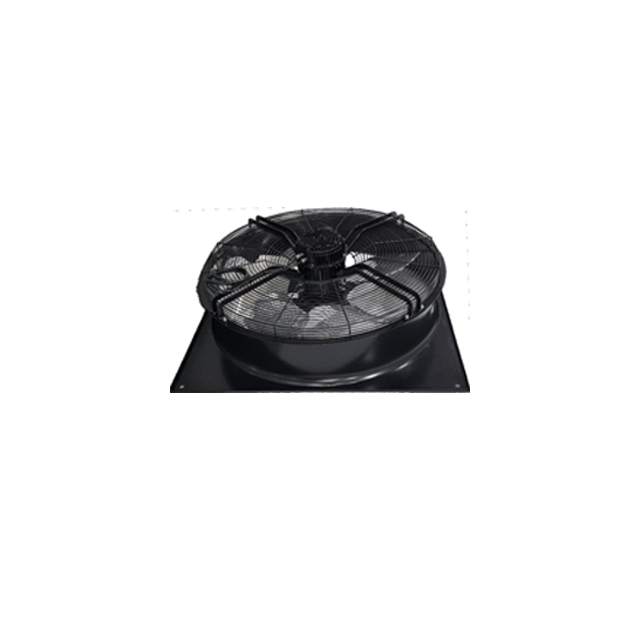
Axial fans move air parallel to the rotating motor shaft. They serve as the default choice for commercial air-cooled condensers. Engineers specify them heavily for heat pump ventilation systems. You will also find them dominating cold room units. They excel at moving massive volumes of air. They perform optimally against low-to-medium static pressures. Furthermore, they are highly scalable. You can easily arrange them into large multi-fan arrays. When selecting an EC fan for condenser units, axial designs usually offer the best airflow-to-power ratio.
Centrifugal fans pull air in and discharge it radially. They serve niche, highly demanding applications. You will use them for concealed condenser units. They work well in deeply ducted systems. They solve problems in environments experiencing extreme spatial constraints. They generate exceptional performance against high system resistance. However, they remain generally less efficient for standard open-air heat rejection. They consume more power to move the same volume of unrestrictive air. Use them only when physical limitations demand it.
You should establish a clear baseline for your engineering teams. Default automatically to EC axial designs. Rely on them for open-air installations. Shift toward a centrifugal solution only when specific ducting dictates it. Extreme static pressure mandates radial airflow. Otherwise, stick to the proven efficiency of axial geometry.
EC Fan Architecture Comparison
| Feature | EC Axial Fans | EC Centrifugal Fans |
|---|---|---|
| Primary Use Case | Open-air condensers, heat pumps | Ducted systems, concealed units |
| Static Pressure Handling | Low to Medium | High to Extreme |
| Airflow Volume | Very High | Moderate |
| Energy Efficiency (Open Air) | Excellent | Suboptimal |
You must carefully match aerodynamic output to the physical coil. Reading the fan curve against condenser coil resistance is critical. If you undersize the fan, you choke the airflow. This leads to dangerously high head pressures. Over-sizing the fan creates completely different problems. It wastes electrical energy constantly. It also increases aerodynamic noise unnecessarily. Follow these sizing steps to ensure accuracy:
Evaluating sound power levels (dBA) requires strict attention. This metric proves crucial for urban installations. Heat pumps often face strict nighttime noise ordinances in residential zones. You must mitigate tonal frequencies. Look specifically for swept-blade aerodynamic designs. Modern impellers feature serrated trailing edges. These biomimetic shapes break up turbulent air streams. They reduce low-frequency humming significantly. We recommend testing sound pressure levels at part-load speeds.
Operating temperature ranges dictate motor survivability. Rooftop condenser units face brutal conditions. They absorb direct solar radiation while pulling hot exhaust air. Standard motors overheat quickly. You must verify the internal electronics can survive these thermal loads. Ingress Protection (IP) ratings are equally important. You need IP54 or IP55 minimum ratings. This protects against rain, industrial dust, and coastal salt spray. Specifying a rugged condenser fan motor guarantees longevity in harsh climates. It seals the sensitive stator coils away from corrosive moisture.
Matching voltage requirements demands early coordination. You must choose between single-phase and three-phase architectures. Large commercial sites utilize three-phase power for better load balancing. You also need to manage power factor corrections. Modern EC fans include active power factor correction (PFC). This prevents harmonic distortion on the local grid. It keeps electrical footprints clean and utility providers happy.
Smart integration separates modern EC fans from legacy equipment. You must evaluate standard 0-10V analog inputs first. A simple DC voltage variation dictates the RPM. Alternatively, PWM (Pulse Width Modulation) offers robust digital speed control. For large commercial facilities, prioritize Modbus RTU. Modbus allows deep BMS (Building Management System) integration. You can daisy-chain multiple fans together. It enables real-time RPM monitoring. It also reports specific fault codes directly to maintenance dashboards.
Physical integration determines installation speed. You must analyze grille designs carefully. Wall-ring configurations guide airflow and improve efficiency. Mounting brackets must match legacy dimensions. The physical swap of older hardware must minimize structural modifications. Cutting sheet metal on a rooftop wastes expensive labor hours. Request standardized mounting plates. Ensure the fan's axial depth fits within the existing chassis footprint.
Original Equipment Manufacturers require reliable supply chains. Partner closely with manufacturers who offer consistent lead times. Demand fast prototype sampling for thermal chamber testing. You also need global voltage compatibilities. Look for motors offering 50/60Hz seamless operation. Universal voltage ranges allow you to standardize inventory. You can ship the same condenser unit to Europe or North America effortlessly.
You cannot ignore global energy legislation. Ensure the selected motor meets regional standards. The ErP Directive governs efficiency minimums across Europe. The DOE regulations enforce strict energy targets in the US. Failing to meet these standards prevents product commercialization. Always request certified laboratory test reports. Verify the aerodynamic efficiency grades match the published literature.
Upgrading older systems introduces severe electrical risks. Older AC condenser controllers utilize phase-cutting techniques. Some use simple voltage reduction transformers to control speed. You cannot wire these directly to EC motors. Chopped AC sine waves will instantly destroy the EC motor's onboard inverter. They fry the internal DC-bus capacitors. You must implement dedicated EC controllers. Alternatively, install modern BMS relay upgrades to provide clean power.
Mechanical harmony matters deeply in sheet metal enclosures. Multi-fan condenser setups often experience sympathetic vibrations. One fan's frequency amplifies the adjacent fan's vibration. This acoustic resonance creates severe noise complaints. It also fatigues the metal over time. Protect your investment proactively.
Selecting the optimal EC fan for your condenser systems remains an exercise in careful balance. You must harmonize aerodynamic efficiency with intelligent control compatibility. You also need to guarantee rugged reliability in harsh environments. Ignoring any of these pillars leads to suboptimal performance and high maintenance costs. To move forward successfully, avoid off-the-shelf guesswork completely. Engineers and OEMs should immediately move to a strict shortlisting phase. Request specific aerodynamic fan curve data from your suppliers. Demand 3D CAD models to verify spatial tolerances before ordering. Finally, secure sample units for rigorous thermal chamber testing. Testing validates your engineering assumptions and secures your long-term success.
A: Mechanically, yes, if the mounting bracket matches perfectly. Electrically, no. EC fans require constant line voltage to power their internal electronics. They use a separate low-voltage control signal, like 0-10V or PWM, for speed regulation. This differs completely from older voltage-regulated AC motors. Wiring them incorrectly will cause immediate hardware failure.
A: IP54 serves as the standard minimum for basic outdoor protection against dust and splashing water. However, IP55 or higher is strongly recommended. You need IP55 for environments experiencing heavy rain, snow accumulation, or fine industrial dust. Higher ratings protect internal electronics from aggressive corrosion.
A: EC fans modulate their rotational speed to exactly match the variable cooling load of the cold room. This precise adjustment maintains highly stable condensing pressures. It reduces mechanical strain on the compressor. Most importantly, it prevents unnecessary power draw during low-load periods, saving massive amounts of energy.
