


Views: 0 Author: Site Editor Publish Time: 2026-09-07 Origin: Site


Transitioning from traditional AC to Electronically Commutated (EC) technology is no longer optional for modern HVAC and industrial systems. Strict energy efficiency mandates heavily drive this industry shift. Global regulations, such as ErP directives, force facilities to upgrade their air movement infrastructure rapidly. Engineers must meet these strict parameters. You also need to achieve long-term financial goals alongside compliance.
While EC technology itself is highly proven, system reliability hinges entirely on your manufacturing partner. Not all suppliers offer true integration. Many simply bolt together unmatched components. True integration demands perfect synergy. The motor, impeller, and controller must operate as one matched unit. Choosing the wrong vendor introduces massive operational risks.
This guide outlines exact steps for evaluating an EC centrifugal fan manufacturer. We will examine engineering capability, supply chain resilience, and verifiable performance data. You will learn to navigate OEM customization and mitigate deployment risks.
True EC vs. Retrofit Illusions: A reliable manufacturer engineers the impeller, motor, and onboard electronics as a single, aerodynamically optimized unit, not just a bolted-on variable frequency drive (VFD).
Vetting for Compliance: Shortlist only vendors providing transparent, third-party validated data for AMCA standards, CE/UL certifications, and ErP compliance.
Customization vs. Lead Times: Balancing OEM customization (e.g., specific BMS control protocols) with standard off-the-shelf components is the primary driver of project timelines and scalable adoption.
Engineers face immense pressure regarding energy consumption. Procurement teams must hit stringent energy targets daily. Facilities demand up to 50% energy savings over older AC setups. However, you cannot sacrifice airflow stability. Maintenance overhead must also remain extremely low. This creates a difficult balancing act for facility managers.
An EC Centrifugal Fan operates as a highly complex mechatronic system. It requires perfect harmony between electronics, stators, and aerodynamics. Poor manufacturing introduces severe systemic risks. Systems often suffer from electrical harmonic distortion. Bearings fail prematurely under unbalanced loads. Controllers frequently lose communication protocols.
How do you guarantee long-term success? Your chosen vendor must demonstrate a highly proven track record. They need to mitigate these complex risks proactively. You must demand proof of rigorous in-house R&D. Reliable vendors perform extensive Computational Fluid Dynamics (CFD) analysis. Comprehensive end-of-line testing remains absolutely non-negotiable.
System Feature | Standard AC Motor + VFD | True EC Integrated System |
|---|---|---|
Component Matching | Separately sourced, often mismatched | Engineered as one optimized unit |
Energy Efficiency | Moderate losses at partial loads | Peak efficiency across all speeds |
Acoustic Profile | High magnetic motor noise | Quiet operation, optimized aerodynamics |
BMS Communication | Requires external control modules | Native onboard Modbus/0-10V |
True manufacturers eliminate the guesswork entirely. They design the impeller around the exact magnetic profile of the motor. This prevents aerodynamic stalling. It also ensures the electronics do not overheat during continuous low-speed operation. You secure a reliable baseline for building efficiency.
Evaluating standard solutions requires a different approach than custom builds. Standard commercial Off-The-Shelf (COTS) solutions work perfectly for basic retrofits. Many facilities need immediate parts for fast upgrades. You evaluate manufacturers based on inventory readiness. They supply standard backward-curved models. They also offer forward-curved geometries for lower pressure needs. Quick deployment solves urgent facility cooling demands.
OEM applications require much deeper engineering capabilities. Custom engineering adapts form factors directly. Vendors often modify heavy-duty mounting plates. They rewrite software logic for specific integrations. Air Handling Units (AHUs) demand precise structural dimensions. Cleanrooms require stringent contamination controls and specific airflow profiles. Data centers need highly dense cooling arrays.
Airflow and static pressure define the required impeller geometry. Manufacturers must match impeller shapes to exact system pressure constraints. Backward-curved blades handle high pressure exceptionally well. They operate without a scroll housing. Forward-curved options move high air volumes at lower pressures. They require a specific housing design. You must align these geometries accurately.
Always verify the exact duty point requirements before requesting custom quotes.
Prioritize standard form factors unless your AHU presents strict spatial limitations.
Discuss firmware modifications early if your facility uses proprietary control networks.
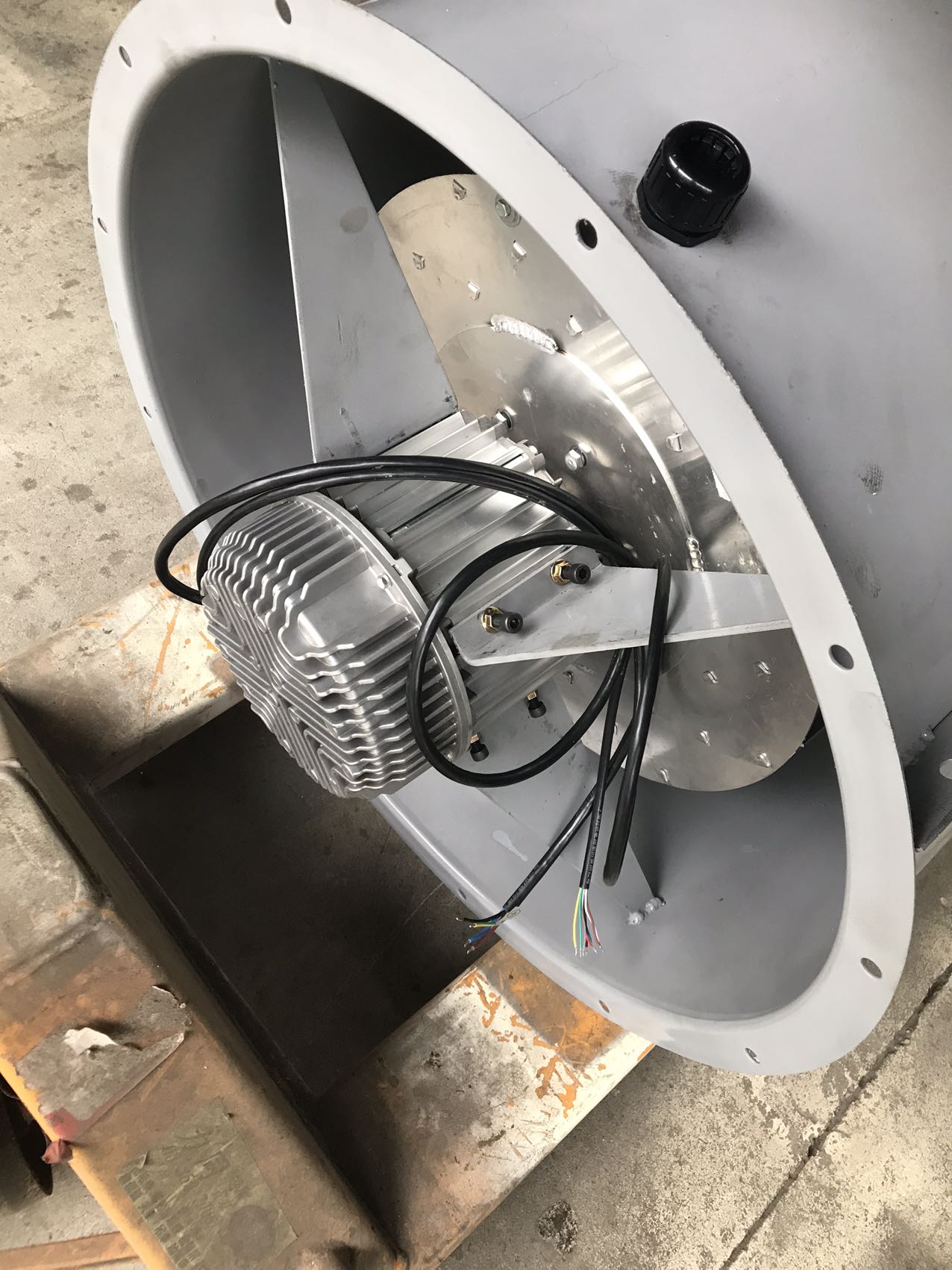
You must systematically audit potential partners. Use these five criteria to filter out underperforming vendors. This process ensures you select a highly resilient EC centrifugal fan manufacturer.
In-House R&D and Testing Infrastructure: Do they outsource critical aerodynamic components? Top-tier vendors own their complete testing labs. They utilize large-scale wind tunnels. They validate acoustic noise levels inside certified anechoic chambers. This guarantees design accuracy.
Regulatory Compliance and Verifiable Data: You must demand transparent performance curves. ISO 9001 and ISO 14001 are standard baseline certifications. Look specifically for UL/cUL, CE, and RoHS marks. Published data must reflect real-world operating conditions. Do not accept peak lab efficiency as a guarantee.
Smart Control Capabilities: Evaluate the onboard electronics thoroughly. Does the manufacturer natively support 0-10V or PWM inputs? True EC controllers feature built-in Modbus RTU. They include integrated PID controllers. You should not need external hardware.
Supply Chain Resilience and Capacity: Assess their raw material sourcing strategies. EC motors rely heavily on rare earth magnets. Production scalability matters for large rollouts. Ask for realistic lead times regarding bulk OEM orders. Predictable supply chains prevent project delays.
Warranty and Technical Support: Request a transparent analysis of warranty conditions. Ask about the expected L10 bearing life. High-quality units exceed 40,000 operational hours easily. Ensure the availability of direct engineering support. You will need their expertise during the prototyping phase.
Vendors meeting all five criteria provide exceptional stability. They act as engineering partners rather than simple parts suppliers. They help you navigate complex regulatory landscapes seamlessly.
Installation phases reveal the true quality of your chosen equipment. Retrofitting brings very specific spatial challenges. You often replace old belt-driven AC fans inside tight enclosures. Direct-drive EC plug fans save significant space. However, precise physical alignment remains critical. A capable vendor provides highly accurate 3D CAD models. They supply comprehensive retrofit compatibility data upfront.
Electrical integration poses several distinct deployment risks. Electrical harmonics can disrupt sensitive local grids. Improper grounding issues cause erratic motor behavior. You must ensure seamless digital handshake protocols. The fan must communicate flawlessly alongside existing HVAC controllers. A communication failure leads to massive energy waste.
Environmental threats degrade mechanical performance rapidly. Harsh industrial zones introduce heavy moisture. Dust accumulation destroys unprotected bearings. Your vendor must offer adequate Ingress Protection. IP54 or IP55 ratings act as absolute minimums for industrial use. Corrosion-resistant coatings protect essential metallic components.
Failing to upgrade legacy building wiring before installing modern EC drives.
Ignoring airflow obstruction caused by existing AHU structural supports.
Overlooking IP ratings when installing fans in humid coastal environments.
Thorough planning prevents these costly implementation errors. Involve your manufacturer's technical team early. They offer valuable insights regarding airflow optimization. Their experience helps you bypass common installation pitfalls entirely.
You need a repeatable process for selecting vendors. Moving from a broad list to a final partner requires analytical rigor. Follow this exact sequence to ensure an optimal procurement outcome.
Step 1: The Desktop Audit. You cross-reference all published manufacturer datasheets. Compare them strictly against your system duty point requirements. Plot your exact CFM or CMH needs. Map them against system static pressure. Exclude vendors offering poorly documented performance curves immediately.
Step 2: Requesting Prototypes and Samples. Legitimate vendors actively encourage field sample testing. They want you to validate the OEM units. You must run these prototypes inside your actual application. Monitor the thermal output closely. Record the acoustic profile under maximum load. Validate all electronic communication protocols before mass production begins.
Step 3: Factory Audits and Lifecycle ROI Calculation. Move beyond the initial unit purchase price. Calculate the five-year operational savings accurately. Include comprehensive energy reduction metrics. Factor in all eliminated maintenance labor. Direct-drive systems remove problematic belts and pulleys entirely. This creates massive long-term financial relief.
Evaluation Metric | Minimum Acceptable Standard | Tier-One Vendor Benchmark |
|---|---|---|
Performance Data | Basic printed datasheets | Third-party AMCA certified curves |
Customization Support | Standard parts only | Custom firmware and mounting adapters |
Testing Facilities | Outsourced acoustic testing | In-house wind tunnel and anechoic chamber |
Lifecycle Guarantee | 1-year limited warranty | Verified L10 bearing life >40,000 hours |
Scoring vendors objectively removes procurement bias. It highlights the true engineering leaders in the market. You secure a reliable pathway to facility modernization. This logical approach guarantees superior operational outcomes.
Sourcing from a tier-one EC centrifugal fan manufacturer represents a highly strategic investment. It directly ensures long-term system longevity. It guarantees strict regulatory compliance. You should never treat this as a simple line-item purchase. The mechatronic complexity requires serious engineering oversight.
We strongly recommend prioritizing vendors offering verifiable aerodynamic data. They must utilize transparent testing methodologies. Their products require robust BMS integration capabilities. Do not compromise on in-house R&D infrastructure. Superior manufacturers validate every single component thoroughly.
Take proactive steps today. Consult directly with a qualified application engineer. Request comprehensive technical datasheets. Ask for accurate 3D CAD models. Demand a customized airflow performance curve engineered exactly for your specific project constraints. These actions protect your infrastructure investments permanently.
A: Lead times typically range between 4 to 12 weeks. Standard commercial off-the-shelf units usually ship within 4 weeks. Custom OEM orders require extensive engineering, prototyping, and firmware adjustments, pushing delivery closer to 10 or 12 weeks depending on current supply chain availability.
A: Yes. Direct-drive EC plug fans easily replace bulky belt-driven AC fans. They offer massive space-saving benefits. You eliminate pulleys and belts entirely. However, you must verify your existing electrical infrastructure can support the new digital control signals.
A: Always look for ErP 2015 compliance regarding energy efficiency. You also need CE and UL marks for electrical safety. AMCA-certified performance data guarantees the manufacturer's published airflow and static pressure curves match real-world testing.
A: Top manufacturers utilize accelerated life testing inside environmental chambers. They stress the motors under extreme thermal loads. They calculate standard L10 bearing life to predict mechanical failure accurately, usually targeting a minimum of 40,000 continuous operational hours.
