


Views: 0 Author: Site Editor Publish Time: 2026-07-27 Origin: Site


Industrial facilities today face immense operational pressure. They must carefully balance stringent ventilation compliance alongside aggressive energy-reduction targets. Meeting strict safety standards while cutting daily power usage requires highly efficient, robust equipment. Transitioning from legacy AC motors to Electronically Commutated (EC) technology is now standard industry practice. However, the physical housing around these intelligent motors directly dictates the system's true lifespan in harsh industrial environments. Specifically, choosing metal structural components over plastic alternatives prevents premature hardware failures and costly facility downtime. In this article, we will thoroughly explore how robust material choices maximize overall operational efficiency and workplace safety. You will discover an evidence-based framework to carefully evaluate, plan, and implement these advanced ventilation solutions. Facility managers, plant operators, and HVAC engineers can use this comprehensive guide to confidently justify and execute essential equipment upgrades across their specific applications.
Facility managers often hesitate when reviewing the initial procurement costs of modern EC equipment. You must acknowledge the higher upfront capital expenditure required. However, the true financial advantage emerges during continuous daily operation. Evaluating an industrial EC axial fan requires focusing heavily on operational savings. These advanced units deliver exceptional partial-load efficiency. They scale their energy consumption down proportionally when facility cooling demand drops. This dynamic scaling drastically reduces monthly utility bills. The resulting energy savings routinely offset the higher purchase price within the first few years of deployment.
Furthermore, upgrading eliminates several secondary components from your electrical infrastructure. Legacy AC systems typically require external variable frequency drives (VFDs) to modulate speed. They also need complex phase controls and bulky motor protection switches. Modern EC units house all necessary control electronics internally. Eliminating external VFDs removes notorious points of failure. It also frees up valuable space inside your electrical cabinets. Installation crews spend less time running complex wiring between panels and motors. This integrated approach ultimately lowers your overall installation costs.
Acoustic and thermal efficiency present another compelling business argument. Traditional AC motors generate substantial heat during operation. They also emit loud, low-frequency humming noises. Integrated EC motors run significantly cooler. They convert more electrical input directly into rotational energy rather than wasted heat. This cooler operation reduces the secondary cooling load required inside the facility. Additionally, they run much quieter across their entire speed range. Lower ambient noise directly improves worker safety and comfort on the factory floor.
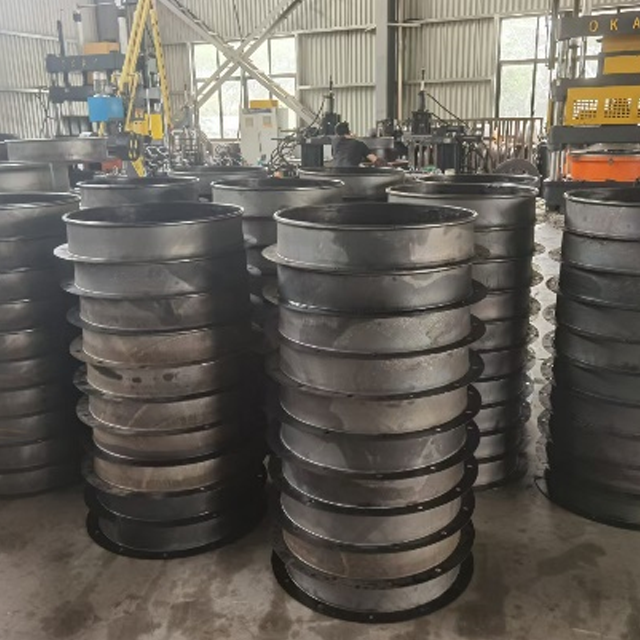
High-torque, high-RPM industrial applications demand extremely rigid mounting frameworks. Flimsy enclosures invite structural failure. You need robust materials to mitigate intense operational vibrations. An EC axial fan with metal housing seamlessly resists flex and bending forces. Standard polymer enclosures often warp under continuous stress. This warping creates microscopic misalignments. Such structural resonance gradually destroys sensitive motor bearings over time. A rigid metal chassis dampens these high-frequency vibrations effectively. It keeps the impeller perfectly aligned, extending the operational lifespan of the entire unit.
Thermal and environmental tolerance further separates metal enclosures from plastic alternatives. Standard industrial plastics degrade rapidly when exposed to high ambient temperatures. They become brittle under prolonged ultraviolet exposure. They also fail when airborne particulates or harsh chemicals settle on their surfaces. Metal panels endure extreme atmospheric conditions easily. They maintain their structural integrity whether operating in a freezing warehouse or near a blazing industrial furnace.
Facility engineers must also evaluate specific corrosion protection standards. Untreated metal rusts quickly in humid environments. You must match the housing treatment directly to your facility's specific atmospheric risks. Consider these common metal treatments when selecting your equipment:
Selecting the optimal unit requires careful aerodynamic performance mapping. You cannot simply look at maximum airflow numbers. Guide your procurement team to evaluate specific fan curves accurately. Focus closely on the relationship between airflow volume and static pressure. Industrial environments often utilize restrictive metal-ducted systems. These ducts create significant airflow resistance. The fan must push adequate volume while overcoming this intense static pressure. Overlooking static pressure causes the fan to stall, reducing ventilation effectiveness drastically.
Smart control integration represents the next critical evaluation dimension. You should map technical features directly to tangible operational outcomes. Modern equipment utilizes built-in communication protocols. These include Modbus RTU networks or simple 0-10V analog inputs. This capability allows precise demand-controlled ventilation. You can link airflow directly to facility temperature sensors or ambient CO2 monitors. When air quality drops, the system speeds up automatically. When the environment stabilizes, the motors slow down. This exact airflow matching eliminates wasteful over-ventilation entirely.
Compliance and safety ratings demand rigorous verification. You must evaluate ingress protection (IP) ratings carefully. These ratings dictate how well the enclosure blocks solid dust and liquid moisture. Ensuring proper certification guarantees compliance with strict industrial insurance policies. Always verify UL (Underwriters Laboratories) or CE markings before finalizing any purchase order.
| IP Rating | Solid Protection Level | Liquid Protection Level | Best Industrial Application |
|---|---|---|---|
| IP44 | Objects larger than 1mm (wires, tools) | Splashing water from any direction | Standard indoor warehousing and clean manufacturing. |
| IP54 | Dust-protected (limited ingress permitted) | Splashing water from any direction | Dry industrial spaces with moderate airborne particulates. |
| IP55 | Dust-protected (limited ingress permitted) | Low-pressure water jets from any direction | Facilities requiring routine hose-down cleaning procedures. |
| IP68 | Completely dust-tight | Continuous immersion in water under pressure | Extreme processing plants or highly corrosive agricultural zones. |
Certain industries push ventilation equipment to its absolute physical limits. Data centers and major telecom hubs require continuous, fail-safe operation. A server room cannot tolerate even a brief cooling interruption. Implementing a rigid metal panel axial fan ensures maximum uptime. The robust chassis prevents warping under 24/7 operational stress. This stability secures critical Power Usage Effectiveness (PUE) metrics. When the fans perform reliably, servers stay online, and data remains secure.
Heavy manufacturing plants and large warehousing facilities face different challenges. These massive open spaces demand extraordinary airflow volumes. You need powerful equipment to dissipate intense machine heat safely. Metal-housed fans push dense air continuously without structural fatigue. They mitigate dangerous welding fumes effectively. They also help facility managers easily meet mandatory OSHA air-exchange standards. Ensuring fresh air circulates properly protects workers from respiratory distress.
Agricultural setups and specialized process cooling environments introduce severe environmental threats. Farms produce highly corrosive ammonia gases. Food processing lines require harsh chemical washdowns daily. Standard commercial equipment rusts or fails quickly here. High-humidity environments test hardware durability relentlessly. A chemically treated metal housing outlasts polymer alternatives by years. It shields the sensitive internal electronics from destructive moisture and corrosive vapors perfectly.
Replacing legacy equipment involves significant physical hurdles. Facility engineers must navigate complex retrofitting challenges carefully. Upgrading from old AC units is rarely a simple drop-in replacement. Physical dimensions vary wildly between manufacturers. Failing to verify these dimensions leads to costly installation delays. Your maintenance team must ensure the new unit fits the existing wall aperture or ductwork perfectly.
Follow this crucial dimensional matching checklist to avoid installation downtime:
Electrical infrastructure adaptation presents another common stumbling block. The wiring topology for modern equipment differs significantly from older technology. Advanced motors require a continuous main power supply. They also need completely separate low-voltage control lines for the communication protocols. Technicians accustomed to traditional motors sometimes wire the high voltage directly into the communication ports. Warn your installation crew against this miswiring. Sending high voltage through the control lines destroys the internal electronics instantly.
Finally, avoid the pervasive over-specification trap. Procurement teams often buy the highest maximum RPM or CFM capacities available. They assume bigger always means better. This approach wastes capital and increases ambient noise unnecessarily. We strongly advise sizing the equipment for the typical 80% operational load. You should not size it solely for worst-case, maximum-capacity scenarios. Running an appropriately sized motor at partial speeds maximizes the acoustic benefits. It also captures the absolute highest energy efficiency possible.
Combining intelligent motor control with rugged structural rigidity delivers unparalleled reliability. Robust metal enclosures prevent vibration-induced wear, ensuring your system runs smoothly for years. Upgrading your facility's ventilation infrastructure yields tangible financial savings and significantly improves workplace safety. The initial capital investment pays for itself quickly through massive reductions in daily energy consumption.
Start your procurement process by conducting a thorough energy audit of your current equipment. Map your physical mounting constraints carefully to ensure a seamless physical retrofit. Define the exact communication protocols your existing Building Management System requires. Planning these steps meticulously prevents frustrating installation delays.
Take action today to optimize your industrial cooling strategy. Download our detailed technical specification sheets to compare performance curves. Request a customized operational savings calculation based on your local utility rates. Consult an experienced application engineer to review your unique facility demands and select the perfect configuration.
A: The payback period usually ranges from 12 to 24 months. This timeline heavily depends on your local utility rates and daily operational hours. The rapid return on investment is primarily driven by the exceptional partial-load efficiency of the newer motors.
A: Yes, absolutely. Most modern units are native to standard communication protocols. They connect easily using Modbus networks, PWM signals, or simple 0-10V analog inputs. You can integrate them seamlessly without needing a separate variable frequency drive.
A: No. An appropriately rigid metal panel actually dampens low-frequency vibrations. Cheaper plastic mounts often flex and rattle under high torque. The sturdy metallic structure prevents this resonance, resulting in a significantly lower overall decibel rating.
A: Outline your specific environmental threats first. Choose IP44 for standard indoor commercial applications. Upgrade to IP54 for dusty industrial spaces. Select IP55 or higher for environments requiring pressurized washdowns or those with heavy, continuous particulate matter.
