


Views: 0 Author: Site Editor Publish Time: 2026-07-29 Origin: Site


Commercial cooling demands continuous, high-volume airflow to maintain stable temperatures. These dynamic environments push mechanical equipment to its absolute limits. Systems operate under strict power consumption ceilings. They also face incredibly harsh environmental conditions daily. Finding components balancing extreme efficiency and immense durability is often difficult. Standard plastic units frequently warp or degrade under intense thermal stress. Upgrading to an EC (Electronically Commutated) axial fan with metal housing bridges this critical gap. It merges high energy efficiency directly into industrial-grade mechanical robustness. This guide examines the precise technical criteria for specifying these specialized units. You will discover how they perform in commercial refrigeration, heavy-duty HVAC, and demanding data center environments. We will explore core evaluation metrics, seamless system integration techniques, and intelligent vendor selection strategies. You can use these insights to rapidly optimize your cooling infrastructure without sacrificing structural integrity.
Facility managers face significant hurdles using older ventilation designs. Legacy AC fans operate inefficiently during partial loads. They rely on outdated induction principles. These motors experience substantial energy loss through magnetic slip. This slip generates excess heat inside the motor core. AC motors also lack native speed control. Adjusting their speed requires complex external hardware. Traditional DC fans offer better efficiency. However, they introduce different engineering obstacles. DC models need bulky external power supplies. Converting facility AC power to DC requires extra panel space. This conversion complicates system layouts and increases failure points.
Electronically commutated technology solves these mechanical dilemmas. EC motors integrate AC to DC conversion directly onboard. They use permanent magnets instead of copper windings on the rotor. The motor electronics handle phase commutation internally. This design eliminates mechanical brushes entirely. You gain the high efficiency of a DC motor. You also keep the simple installation process of an AC unit. EC technology eliminates magnetic slip. The motors run remarkably cool. This lower operating temperature extends internal bearing life significantly. You simply connect standard AC mains power. The onboard electronics handle the rest seamlessly.
Modern environments experience dynamically changing thermal loads. Supermarkets see fluctuating temperatures during restocking hours. Data centers experience massive heat spikes during heavy server usage. When evaluating a commercial cooling fan, precise airflow modulation becomes critical. EC technology provides this exact capability. The fan speeds up automatically when heat loads peak. It slows down smoothly when demand drops. This precise modulation prevents over-cooling. It ensures optimal environmental conditions around the clock. System designers choose EC technology to meet strict modern building regulations. It represents the baseline standard for high-performance thermal management.
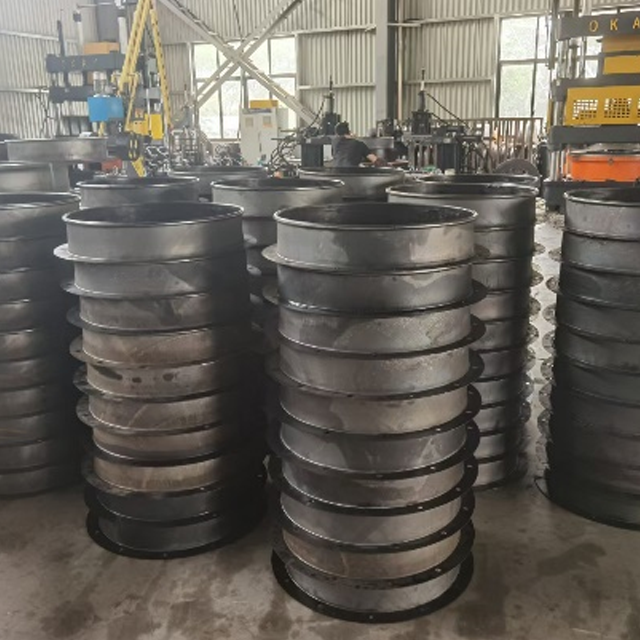
Cooling applications expose equipment to extreme temperature swings. Plastic components often fail under these conditions. Polymers become highly brittle inside deep-freeze cold storage. Conversely, plastics soften and warp in high-heat condenser applications. A EC axial fan with metal housing prevents these failures. Cast aluminum or heavy-duty steel enclosures maintain rigid structural integrity. They hold precise blade-to-housing clearances regardless of temperature. Tight clearances prevent air recirculation around the blade tips. This stability guarantees consistent aerodynamic performance year after year. Metal does not creep or deform over long operational lifespans.
High-speed airflow generates significant turbulence. Rotating fan blades create resonance throughout the mounting chassis. Plastic frames often amplify these resonant frequencies. They transmit vibration directly into the surrounding equipment panels. Metal housings behave very differently. The dense mass of a cast metal frame absorbs mechanical resonance. Heavy enclosures dampen high-frequency harmonics effectively. This mass reduction lowers overall system noise noticeably. Less vibration also protects the sensitive internal motor bearings. Reduced mechanical shaking directly translates to longer, uninterrupted operational lifecycles.
Commercial building codes enforce strict fire safety regulations. Ventilation components must meet severe flammability standards. Plastic composites struggle to pass smoke generation tests. If ignited, polymers release toxic fumes into the ventilation airstream. Metal housings inherently satisfy these strict building codes. Steel and aluminum do not burn. They do not release hazardous smoke during facility fires. Hospitals, airports, and high-rise structures require this level of safety. Specifying metal enclosures eliminates regulatory friction during building inspections. You ensure full compliance seamlessly.
Industrial settings attack equipment constantly. Airborne moisture, chemicals, and sunlight degrade standard components. Metal enclosures withstand these brutal conditions exceptionally well. Manufacturers treat these frames using advanced anti-corrosion techniques. Cathodic epoxy electrocoating (e-coating) provides a resilient protective layer. Powder-coated metal survives prolonged salt spray exposure. It resists chemical washdowns in food processing plants. Metal frames ignore prolonged ultraviolet (UV) light exposure from direct sunlight. Untreated plastics would crack and crumble under similar UV stress. Metal provides unmatched environmental armor.
| Feature Category | Metal Enclosures | Composite/Plastic Enclosures |
|---|---|---|
| Thermal Expansion | Minimal; holds tight blade clearance | High; risks blade rub at extreme temps |
| Vibration Dampening | Excellent; high mass absorbs resonance | Poor; low mass transmits vibration easily |
| UV Resistance | High; immune to solar degradation | Low; becomes brittle without additives |
| Fire Compliance | Non-combustible; zero toxic smoke | Combustible; may require special ratings |
Evaluating fan performance requires examining specific operating points. Many specifiers mistakenly look only at free-air maximums. Free-air data represents performance with zero system resistance. Real commercial systems generate significant static pressure. Filters, grilles, and heat exchangers restrict airflow constantly. You must assess aerodynamic efficiency at the actual operating duty point. Review the fan curve carefully. Look at the cubic feet per minute (CFM) delivered against specific pressure drops. Measure the wattage consumed at that exact point. This specific CFM/Watt ratio reveals the true aerodynamic capability.
Modern facilities rely on Building Management Systems (BMS). A ventilation unit must communicate fluidly with these centralized hubs. Verify native compatibility before procurement. Look for specific digital and analog inputs. Modbus RTU provides robust two-way digital communication. It relays speed, power usage, and fault codes instantly. Analog 0-10V connections offer simple, reliable speed control. Pulse Width Modulation (PWM) inputs allow precise digital stepping. Proper integration allows facility managers to monitor thermal zones globally. They can adjust parameters without leaving the control room.
Environmental sealing dictates operational survival. Assess the specific installation environment carefully. A general indoor HVAC unit might only need an IP54 rating. This rating blocks standard dust and light water splashes. More severe locations demand stronger protection. A EC axial ventilation fan deployed outdoors needs higher ratings. Supermarket condenser arrays face rain, snow, and pressure washing. These applications require IP68 or IP69K ratings. IP69K ensures the motor survives high-pressure, high-temperature water jets. Verify the exact IP rating matches your worst-case environmental scenario.
Noise pollution matters in commercial spaces. Hospitals and office buildings maintain strict acoustic limits. Evaluate sound pressure data at expected operational speeds. Do not just look at maximum RPM noise levels. Fans rarely run at full speed constantly. Examine the acoustic profile at 50% and 75% loads. Look for annoying tonal frequencies. Metal housings help reduce broadband noise significantly. Request detailed acoustic spectrum charts from the manufacturer. Compare these charts against your facility acoustic requirements. Quiet operation improves comfort for occupants and workers alike.
Commercial environments run constantly. Cooling systems rarely shut down. This 24/7 duty cycle tests mechanical endurance severely. EC motors excel in these relentless scenarios. Their internal electronics run much cooler than legacy AC windings. Cooler stator temperatures preserve the bearing grease. Heat normally degrades grease quickly, causing bearing failure. By running cooler, EC units extend maintenance intervals dramatically. Facilities require fewer routine inspections. Maintenance teams spend less time replacing worn components. You achieve higher system uptime with minimal mechanical intervention.
Upgrading legacy systems requires careful mechanical planning. Old AC fans often use unique mounting footprints. You must verify physical dimensions before starting a swap. Measure the bolt-hole patterns precisely. Check the depth clearance inside the existing chassis. EC fans encapsulate electronics in the motor hub. This design might slightly alter the overall depth profile. Some metal housings feature standardized flange designs. These standard flanges mimic legacy units closely. Using drop-in replacements accelerates the upgrade process. It prevents expensive structural modifications to your existing sheet metal cabinets.
Electrical layouts change when moving to EC technology. Legacy setups often rely on external Variable Frequency Drives (VFDs). VFDs control AC motor speed but introduce harmonic distortion. They also require shielded cables to prevent electrical noise. You must physically remove or bypass legacy VFDs. EC fans wire directly to the main power feed. They handle their own commutation internally. You will need to route new low-voltage control wires. These smaller wires carry the 0-10V or Modbus signals. Planning this low-voltage routing ensures a clean, interference-free installation.
Always disconnect and lockout main power before beginning retrofits. Remove any legacy starting capacitors from the circuit. These capacitors are useless for EC motors and pose safety hazards. Map out your new sensor placements carefully. Place temperature probes in optimal airstreams. Connect these probes directly into the new fan control loop. Test the fan at various speed steps manually. Verify the blade rotates freely within the metal housing before sealing the cabinet. Proper mechanical alignment prevents premature failure upon startup.
Vendor claims require rigorous technical validation. Ask manufacturers for comprehensive L10 life expectancy data. The L10 metric calculates the time until 10% of the bearings fail. Do not accept data based purely on optimal laboratory conditions. Real commercial environments run hotter and dirtier. Require life expectancy calculations based on your specific ambient operating temperatures. Reliable vendors gladly provide detailed thermal testing reports. They prove their metal housings maintain structural integrity under load. Rigorous data validation separates premium equipment from unverified hardware.
Off-the-shelf units rarely fit complex proprietary thermal systems perfectly. Assess the manufacturer’s engineering flexibility. Can they customize the mounting brackets? Can they alter housing dimensions slightly to fit tight spaces? Look closely at their firmware customization options. Some applications require customized soft-start profiles. Soft starts prevent massive inrush currents on the electrical grid. Other setups might need specialized anti-condensation heating algorithms built into the motor. A strong vendor acts as an engineering partner. They modify baseline units to solve your specific dimensional and electrical challenges.
Moving from evaluation to execution requires physical testing. Proceed directly to technical engineering consultations. Request detailed computational fluid dynamics (CFD) models. CFD simulations show exactly how the fan interacts with your specific heat exchangers. If simulations look promising, request a physical sample unit. Install this sample into a localized test cabinet. Run it continuously under heavy load. Measure the actual vibration, noise, and airflow. Real-world physical testing validates all theoretical data. It ensures a flawless rollout across your entire commercial facility.
Upgrading mechanical infrastructure requires balancing performance and durability. Combining EC motor efficiency with heavy-duty metal housing sets a definitive standard. This combination provides unmatched thermal stability and acoustic dampening. It ensures strict compliance with commercial fire codes. Facilities achieve precise airflow modulation for dynamic thermal loads. They eliminate the bulky external hardware required by older designs. Metal enclosures survive harsh washdowns, salt spray, and extreme temperatures easily. They prevent the mechanical warping often seen in composite plastics.
Thorough evaluation goes beyond simple specification sheets. System designers must match exact aerodynamic curves to physical static pressure loads. They must confirm native BMS communication protocols and suitable IP ratings. Successfully retrofitting older systems requires careful dimensional matching and electrical planning. Removing legacy VFDs simplifies the electrical topology significantly. Ultimately, rigorous technical spec-matching ensures optimal system longevity. Prioritize verifiable engineering data and robust customization capabilities during vendor selection. Implementing these advanced units guarantees a resilient, highly responsive cooling architecture.
A: EC motors generally outlast traditional AC motors significantly. They eliminate magnetic slip, which drastically reduces internal operating temperatures. Cooler temperatures preserve the bearing grease longer. Most high-quality EC units provide a lifespan exceeding 40,000 to 70,000 hours. The rigid metal housing prevents structural warping, ensuring mechanical stability over this entire extended lifespan.
A: Yes, many manufacturers design them specifically for drop-in replacement. However, you must meticulously verify the mechanical dimensions. Check the bolt-hole patterns on the metal housing flange. Also, measure the internal depth clearance. EC electronics add slight depth to the motor hub, which might require minor cabinet adjustments during installation.
A: Condensation poses a risk, but proper engineering mitigates it entirely. High IP ratings (like IP68) physically seal internal electronics. Manufacturers also use thick stator encapsulation resins to block moisture. Additionally, advanced EC firmware can run micro-currents through the motor during standby. This creates gentle heat, actively preventing condensation buildup inside the metal enclosure.
