


Views: 0 Author: Site Editor Publish Time: 2026-09-06 Origin: Site


Upgrading to or specifying EC (Electronically Commutated) axial fans is a high-stakes engineering decision. Stringent energy regulations and strict acoustic limits continuously drive this crucial choice. Facility uptime requirements leave absolutely zero room for mechanical errors or unplanned downtime. Selecting the wrong model or an unverified partner causes severe system bottlenecks immediately. It inevitably leads to premature motor failure and massive operational disruptions across your facility. A poor selection compromises your entire HVAC infrastructure and delays critical project timelines. This comprehensive guide provides a detailed framework to evaluate technical specifications accurately. You will learn how to vet a reliable EC axial fan manufacturer based on engineering reality rather than basic marketing claims. We outline the exact steps required to assess facility constraints effectively. You will discover how to validate core technical parameters and plan for seamless system integration. Proper evaluation guarantees optimal aerodynamic performance and sustainable long-term reliability.
System impedance (static pressure) and target airflow must dictate your initial model shortlisting, not just motor efficiency.
A credible EC axial fan manufacturer will provide transparent aerodynamic curves, acoustic data, and lifecycle testing evidence.
Evaluating a manufacturer requires looking beyond unit cost to assess supply chain stability, customization depth, and compliance (UL, CE, ErP).
Integration requires accounting for control interfaces (Modbus/0-10V) and specific retrofitting constraints when replacing AC or centrifugal units.
Before reviewing product catalogs, you must establish strict baseline requirements. This foundational step prevents over-specifying equipment. It also stops you from under-sizing critical cooling components. Mapping the performance curve against system impedance is absolutely vital. Target airflow (CFM) alone tells an incomplete story. You must always account for static pressure resistance within the ductwork. HEPA filters, cooling coils, and heavy dampers create significant airflow resistance. Axial fans excel in high-airflow, low-to-medium pressure applications. Centrifugal alternatives handle high-pressure environments much better. However, axial units offer superior straight-line airflow efficiency.
Space restrictions heavily dictate blade geometry. They also influence your final housing choices. Low-profile air handling units (AHUs) leave very little mechanical clearance. High-density data centers require maximum airflow within cramped server aisles. A compact EC Axial Fan optimizes this internal footprint beautifully. It delivers necessary cooling while saving crucial physical space. Acoustic limits represent another major operational constraint. Local regulations in commercial spaces demand strict noise compliance. Hospitals and office buildings require ultra-quiet operation constantly. You must analyze sound power levels across the entire frequency spectrum.
Environmental extremes require a thorough engineering assessment. You must define these specific operating conditions early in the design phase. Assess moisture levels, chemical exposure, and temperature fluctuations carefully. Failure to account for environmental stress leads to rapid component degradation.
Facility Environmental Checklist
Parameter | Common Industrial Standard | Engineering Mitigation Strategy |
|---|---|---|
Moisture & Dust Ingress | IP54 or IP55 | Select fully enclosed motor housings to protect internal electronics. |
Corrosive Gases | ISO 12944 (C3-C5) | Specify epoxy-coated fan blades and specialized conformal coatings for PCBs. |
Extreme Heat | Operating up to 60°C | Upgrade internal thermal protection limits and ensure adequate motor cooling. |
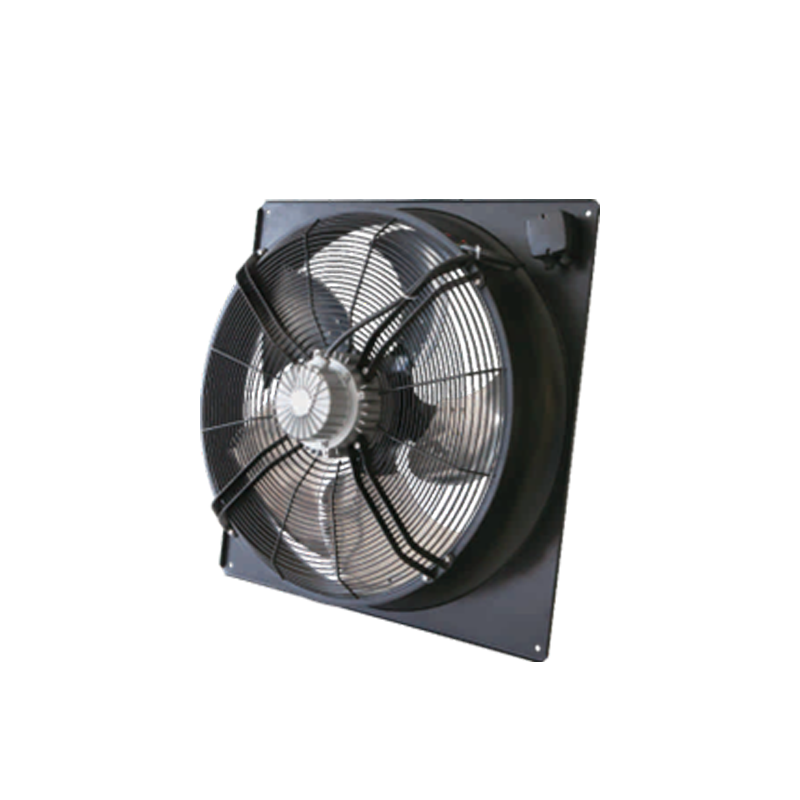
Shortlisting specific models requires a rigorous technical evaluation framework. We must look closely at internal electronics and specific aerodynamic designs. Assessing motor efficiency involves checking active power factor correction and internal thermal protection. The built-in commutation electronics convert incoming AC power to DC voltage. This advanced process allows precise, stepless speed control. You want to ensure internal components withstand continuous operational load without overheating. Robust stator designs and high-quality rare-earth magnets ensure optimal magnetic flux. This directly translates into higher mechanical output and lower heat generation.
Ask your supplier for detailed aerodynamic data immediately. You should request and verify data on precise blade design. Sickle-shaped blades sweep air gradually to reduce harsh turbulence. Modern winglets placed at the blade tips significantly reduce vortex formation. This specific reduction lowers aerodynamic noise and boosts overall airflow efficiency. Bionic blade designs often mimic owl wings to achieve silent operation. Every minor change in blade geometry impacts the final performance curve.
Control integration dictates how well the unit communicates. Determine your specific smart feature requirements carefully. Modern building management systems demand seamless digital handshakes. You must evaluate the necessity of various communication protocols.
0-10V Analog Inputs: Ideal for basic variable speed control based on temperature sensors.
PWM (Pulse Width Modulation): Offers precise digital control for specialized cooling applications.
Modbus RTU: Essential for complex, closed-loop facility management systems requiring bi-directional data flow.
Alarm Relays: Crucial for sending immediate failure notifications to the central control room.
Product evaluation naturally shifts into vendor evaluation during the procurement phase. You must prioritize B2B trust and aggressive risk mitigation. Non-negotiable standards define a truly capable EC axial fan manufacturer. European markets demand strict ErP Directive 2015 compliance for minimum efficiency thresholds. North American applications require UL/CSA listings to satisfy local fire and safety codes. ISO 9001 certification ensures consistent quality management during mass production runs. You should never compromise on these baseline regulatory standards.
Transparency in testing separates industry leaders from basic component assemblers. Look for manufacturers operating certified testing laboratories on their premises. AMCA-certified wind tunnels prove their aerodynamic data remains accurate and reliable. Dedicated acoustic chambers ensure their sound power claims hold up under scrutiny. Reputable suppliers willingly share their raw testing data. They welcome third-party validation and encourage factory audits.
Supply chain disruptions pose a massive risk to project timelines today. You should evaluate their production capacity and internal vertical integration closely. Ask if they manufacture their own stators, rotors, and impellers. In-house production usually guarantees better lead times and superior quality control. Relying heavily on outsourced sub-assemblies often leads to unpredictable delivery delays.
Assess their ongoing engineering and customization support capabilities. Specialized OEM applications frequently require unique mechanical modifications. You might need altered mounting grids to fit existing frameworks. Specific cable lengths or specialized wiring harnesses streamline your assembly line. Custom firmware tweaks optimize the motor for specific RPM ranges. A true manufacturing partner adapts to these precise needs quickly.
Procurement teams often face severe operational skepticism when adopting new equipment. You must address implementation realities directly to build internal consensus. We focus heavily on lifecycle efficiency and verifiable mechanical reliability. EC technology delivers massive energy savings compared to traditional AC fans. Part-load efficiency remains exceptionally high across the entire operating spectrum. According to fan affinity laws, reducing fan speed by twenty percent drops power consumption nearly in half. When facility demand drops, the fans slow down intelligently. This specific capability minimizes mechanical wear and extends the system lifespan significantly.
Upgrading existing HVAC infrastructure introduces several common friction points. Retrofitting requires extremely careful mechanical planning. You must match bolt patterns precisely to avoid expensive custom fabrication. Traditional AC units often use different mounting footprints than modern EC equivalents. Adapter plates frequently become necessary during field installations. Adapting legacy control signals to modern EC interfaces can cause frustrating delays. You should map out these electrical and mechanical integration steps beforehand. Ensure your technical team understands the wiring differences.
Mission-critical environments like data centers demand absolute reliability constantly. You must understand realistic lifecycle expectations for continuous operation. Ask the manufacturer about the L10 bearing life metric explicitly. This value indicates when ten percent of units might experience bearing fatigue. High-quality sealed bearings often exceed 40,000 hours of continuous operation. You must design your critical systems for N+1 redundancy. If one EC Axial Fan fails unexpectedly, the remaining units automatically ramp up. This closed-loop response maintains required airflow and prevents catastrophic overheating.
A standardized vendor selection logic drives successful engineering procurement. Ad-hoc purchasing decisions often lead to mismatched equipment and delayed installations. We break this evaluation process down into three highly actionable steps.
Step 1: The Technical RFQ. Your Request for Quote must demand specific engineering data upfront. Ask for performance curves mapped strictly to your exact duty points. Generic catalog curves often obscure real-world efficiency drops. Request detailed 3D CAD models (STEP or IGES format) to verify mechanical fit instantly. Always require comprehensive acoustic data measured across multiple operating speeds.
Step 2: Sample Validation. You should never procure in bulk without rigorous testing first. Securing a single prototype or small sample run remains critical. It allows your engineers to perform in-situ testing within your actual facility. You can place the sample in the actual AHU and measure real airflow. This practical step uncovers unforeseen resonance frequencies or structural vibrations before mass deployment.
Step 3: Post-Sales SLA. Clearly define your required Service Level Agreement terms. Demand a comprehensive warranty covering the complex onboard electronics. You need guaranteed technical support availability during commissioning phases. Ensure the manufacturer offers reliable spare parts availability for the intended lifespan of the equipment. Ask about their Mean Time To Repair (MTTR) capabilities.
Sourcing the perfect equipment requires balancing high aerodynamic performance with manufacturer reliability. Your final choice impacts facility uptime and overall system efficiency for years. You must strictly prioritize transparent data and verifiable compliance over basic catalog claims. Dig deep into their internal testing methods and quality assurance protocols. Ensure they offer robust engineering support for complex integration challenges. We highly encourage you to reach out directly with your specific duty point requirements. Submit your static pressure and airflow data to a qualified engineering team. Schedule a preliminary technical consultation or request a comprehensive catalog review today to secure your facility's operational future.
A: Standard units usually ship within two to four weeks. Custom modifications involving specialized firmware, unique mounting brackets, or specific conformal coatings extend this timeline. You should typically expect six to ten weeks for highly customized bulk orders, depending entirely on the manufacturer's vertical integration and current production backlog.
A: Always demand independent, third-party certification data. Look for official ErP Directive compliance documents for European applications. You should also request test reports generated from AMCA-certified laboratories. These standardized tests ensure the published aerodynamic performance and electrical consumption metrics match actual real-world operation.
A: Direct drop-ins are possible but require careful verification. You must check the physical dimensions and mounting hole patterns closely. Mechanically, you might need custom adapter plates. Electrically, you must bypass old Variable Frequency Drives (VFDs) because EC fans feature integrated commutation electronics onboard.
A: Most industrial environments require at least an IP54 rating to protect against dust and splashing water. Harsh environments involving heavy moisture, outdoor exposure, or direct washdowns demand IP55 or higher. Always match the ingress protection rating strictly to your specific facility conditions to prevent electronic failure.
