


Views: 0 Author: Site Editor Publish Time: 2026-09-06 Origin: Site


Are you comparing apples to oranges during HVAC upgrades? Many professionals pit mechanical designs against motor technologies. This creates widespread confusion across the engineering industry. You must address this category error directly. One term describes physical airflow mechanics. The other defines electrical motor technology. Facility managers and engineers often search for the centrifugal fan vs EC fan comparison. They typically want to decide between traditional AC-motor units and modern models for new builds. We will clarify this frustrating terminology mismatch. You will evaluate specific performance differences between legacy setups and integrated electronics. Ultimately, this comprehensive guide provides a strict operational framework. Your HVAC system represents a massive capital investment. Making the wrong choice leads to wasted energy and rising maintenance bills. Our analysis cuts through the marketing noise. You will understand exactly what these components do. We will help you make confident, data-driven procurement decisions for your facility.
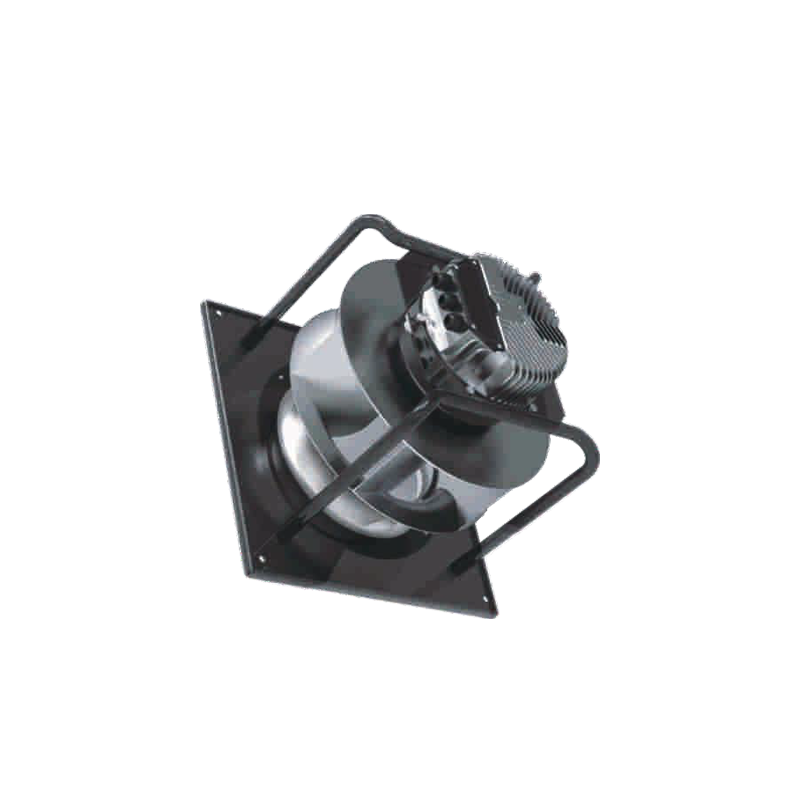
Terminology mismatch: "Centrifugal" refers to the impeller design (how air is moved), while "EC" refers to the motor type. You do not have to choose between them; an EC centrifugal fan combines both technologies.
The real comparison: The actual engineering decision is usually between a traditional AC centrifugal fan (often belt-driven or requiring an external VFD) and a direct-drive EC centrifugal fan.
Efficiency vs. Capital Cost: EC fans offer 30%+ higher energy efficiency and native variable speed control, but require a higher initial capital expenditure (CapEx) compared to standard AC models.
Maintenance realities: EC fans eliminate belts, pulleys, and external variable frequency drives (VFDs), reducing mechanical failure points but introducing integrated electronics that require specific environmental operating conditions.
Industry professionals often misuse basic terminology. You must understand the underlying physics to make informed choices. Let us break down these two distinct concepts.
This term focuses entirely on the aerodynamic principle. It dictates how a system moves air. Air enters the fan axially. The spinning impeller then forces it out radially. This changes the airflow direction by ninety degrees. Manufacturers use forward-curved, backward-curved, or airfoil impellers. Each design serves specific static pressure requirements. Crucially, a centrifugal fan is just a mechanical shell. It needs a power source to spin. You can power it using AC, DC, or EC motors. The mechanical design remains independent of the electrical source.
This term describes an electromechanical principle. EC stands for Electronically Commutated. It represents advanced motor technology. An EC motor is essentially a brushless DC motor. However, it includes onboard electronics. These electronics convert AC power to DC power internally. They also provide integrated speed control. This eliminates external inverters. The motor continuously monitors its own parameters. It optimizes magnetic fields for maximum efficiency. An EC fan simply means a fan powered by this specific motor.
You do not choose between aerodynamics and electronics. You combine them. The modern industry standard is the EC centrifugal fan. It merges high-pressure aerodynamic capabilities with smart motor efficiency. Facility operators rely on them for HVAC and industrial cooling. They deliver superior airflow while slashing energy consumption. This combination dominates modern engineering specifications.
When you evaluate a system upgrade, you must look beyond basic labels. The real debate involves legacy AC configurations versus modern EC solutions. We must analyze three specific performance criteria.
Traditional AC motors waste significant energy. They suffer from steep efficiency drop-offs at partial loads. If you run an AC motor at half speed, its efficiency plummets. It consumes more power than necessary to maintain rotation. Conversely, EC motors maintain a flat, high-efficiency curve. They perform exceptionally well across all speed ranges.
Legacy systems also suffer from physical energy losses. Belt friction drains power before it ever reaches the impeller. External drive losses further reduce system efficiency. A direct-drive system eliminates these parasitic losses entirely. You transfer power directly from the motor to the blades.
Speed Capacity | Standard AC Motor Efficiency | EC Motor Efficiency |
|---|---|---|
100% Load | 85% | 92% |
75% Load | 72% | 90% |
50% Load | 55% | 88% |
25% Load | 35% | 82% |
Adding a Variable Frequency Drive (VFD) to an AC fan causes headaches. The complexity scales quickly in commercial environments. You must route specialized shielded wiring. You must allocate physical space for drive cabinets. VFDs also introduce harmonic distortion back into your electrical grid. This requires expensive filtering equipment.
EC electronics solve this problem beautifully. They feature native 0-10V or PWM control out of the box. They offer seamless Modbus or BACnet integration. Your Building Management System (BMS) connects directly to the motor. You gain instant access to RPM data, energy usage, and fault alarms. This native connectivity streamlines building automation.
Noise pollution plagues older HVAC installations. Traditional AC motors produce a distinct magnetic hum. This hum worsens when you run them on external VFDs at low speeds. It resonates through ductwork into occupied spaces.
Modern commutation eliminates this annoying magnetic noise. The onboard electronics pulse the electromagnets smoothly. Manufacturers also match the motor precisely to the impeller. This optimized aerodynamic matching reduces turbulence. The result is a whisper-quiet operating profile. It greatly benefits commercial offices and hospitals.
Energy savings look great on paper. However, operators must face real-world implementation challenges. Upgrading equipment introduces variables beyond the monthly power bill. Let us explore the operational realities.
We must acknowledge the initial procurement reality. Integrated electronics cost more than basic mechanical parts. CapEx for modern upgrades frequently exceeds legacy replacements by twenty to forty percent. However, standard ROI expectations heavily favor the upgrade.
Most facilities see a payback period of one to three years. Your specific timeline depends on your duty cycle. Facilities running fans continuously recoup costs rapidly. Local energy rates also accelerate the payback period. High electricity prices justify the larger initial investment instantly.
Legacy mechanical setups demand constant human intervention. Belts stretch over time. Bearings require regular greasing schedules. Technicians must precisely align pulleys to prevent uneven wear. These tasks drain your labor resources.
Direct-drive solutions eliminate these mechanical failure points entirely. You never replace a stretched belt again. You never grease a sealed bearing. The labor savings compound annually. Facility teams can redirect their focus toward preventative tasks elsewhere. Uptime increases drastically.
Component Category | Traditional AC Setup | Modern Integrated Solution |
|---|---|---|
Drive Mechanism | Belts, Pulleys, External Shafts | Direct Drive (Motor inside impeller) |
Speed Controller | Wall-mounted VFD Panel | Internal Microprocessor |
Maintenance Needs | High (Monthly belt tensioning) | Low (Periodic visual inspection) |
Failure Points | Multiple mechanical & electrical | Centralized electronic board |
Space constraints dictate many engineering decisions. Older Air Handling Units (AHUs) contain bulky equipment. External motor mounts take up valuable floor space. Drive housings block maintenance access.
Plug arrays offer an incredibly compact alternative. They ditch the massive metal housings entirely. The motor sits directly inside the impeller hub. This design frees up significant physical space. It makes them ideal for constrained AHU retrofits. You can slide a new array through standard commercial doors. You bypass costly demolition work.
Different industries demand different performance metrics. Generic cooling solutions fail in specialized environments. Let us examine how specific sectors deploy these technologies.
Server farms generate massive thermal loads. They require precise, scalable cooling solutions. A failure here causes catastrophic data loss. Facilities rely on N+1 redundancy protocols. They install multiple smaller fans rather than one giant unit.
Integrated plug arrays excel in these environments. Their modularity allows for quick hot-swapping. They also boast incredibly low heat dissipation. The motors run cool. They do not add unnecessary thermal loads back into the cold aisles. This precision keeps telecom infrastructure stable.
Healthcare manufacturing operates under strict particulate compliance. Airborne contamination ruins multimillion-dollar product batches. Legacy systems pose a severe risk here. As rubber belts spin, they shed microscopic dust particles. This black dust pollutes the airstream.
Direct-drive setups eliminate this contamination risk entirely. They contain no rubber belts. They use sealed bearings that prevent grease leakage. They ensure the airstream remains pristine. Pharmaceutical facilities specify them exclusively to maintain ISO cleanroom certifications.
Global energy mandates continue to tighten. Governments aggressively target commercial building emissions. Facilities face increasing pressure to modernize their infrastructure.
ErP Directives: European regulations mandate strict minimum efficiency grades for all ventilation equipment.
ASHRAE Standards: American guidelines push for variable speed capabilities in commercial spaces.
Local Code Enforcement: City municipalities frequently reject baseline AC motors during building permit reviews.
These regulatory frameworks push facilities away from legacy hardware. They force adaptation toward higher efficiency levels.
We must provide balanced guidance. Integrated electronics do not solve every engineering problem. Sometimes, older technology remains the superior choice. You must assess environmental risks carefully before purchasing.
Onboard electronics have strict thermal limitations. Microprocessors fail when exposed to extreme heat. Most integrated motors list an upper thermal limit around 40°C to 60°C. They cannot survive beyond this threshold.
Consider commercial kitchens or industrial furnaces. You must extract incredibly hot exhaust air. A traditional mechanical setup shines here. You place the mechanical impeller in the hot airstream. You mount the dumb AC motor outside the ductwork. It breathes cool ambient air. It survives while electronics would melt.
Chemical processing plants introduce unique hazards. The airstream often contains highly corrosive gases. Acid vapors destroy circuit boards rapidly. Even conformal coatings fail under sustained chemical attacks.
If you process corrosive fumes, avoid integrated electronics in the airstream. A specialized mechanical fan is necessary. You use corrosion-resistant impellers. You separate the drive components using a long shaft. This isolates the expensive electrical parts. It minimizes the risk of catastrophic electronic failure.
Remote industrial sites often suffer from poor power quality. Severe voltage spikes occur frequently. Unmitigated power surges damage sensitive microprocessors. Replacing fried electronic boards costs thousands of dollars.
Robust, standard AC motors handle dirty power much better. They lack sensitive silicon components. A massive voltage spike might trip a breaker, but the copper windings usually survive. In regions with highly unstable electrical grids, "dumb" motors offer better reliability.
You must shift your procurement perspective. Do not view this as a battle between impeller styles. The centrifugal fan vs EC fan debate is fundamentally flawed. It represents a choice between legacy mechanical drives and modern integrated systems. You are choosing between manual maintenance and automated efficiency.
For clean, ambient, variable-demand environments, the integrated setup wins easily. It stands as the definitive choice for long-term operational success. It slashes energy bills and eliminates tedious belt changes. However, extreme heat or corrosive exhaust requires caution. Traditional separated-drive setups remain absolutely necessary for those harsh conditions.
Your next steps are clear. First, audit your current AHU duty cycles. Second, calculate potential retrofit energy savings based on your local utility rates. Finally, consult a manufacturer spec sheet. Check the thermal operating limits before you finalize any purchase order. Armed with this knowledge, you will optimize your HVAC infrastructure confidently.
A: Yes, you can. The retrofit process usually involves removing the old belt-driven blower assembly completely. You then install a compact array of plug fans. This swap frees up internal cabinet space. However, you must update your BMS control wiring to utilize the new digital inputs.
A: No, they do not. The motors feature built-in electronic commutation. They handle their own AC-to-DC conversion internally. They also feature native speed control software. This renders bulky external variable frequency drives entirely obsolete. You save wall space and eliminate complex wiring.
A: Yes, they carry a different risk profile. Maintenance tasks happen far less frequently. However, if the onboard electronics fail, you cannot just swap a cheap generic capacitor. You often have to replace the entire motor and fan assembly. It shifts costs from routine labor to occasional component replacement.
