


Views: 0 Author: Site Editor Publish Time: 2026-07-20 Origin: Site


Procurement teams often prioritize initial sticker prices to keep capital expenditures low. Meanwhile, facility managers focus on lifetime running costs to protect operational budgets. This creates a constant tug-of-war during equipment selection. Traditional Alternating Current (AC) blowers dominated the market for decades. Their cheap upfront costs made them an easy choice for many buyers. However, rising global energy prices are changing the industrial landscape rapidly. Strict efficiency regulations also force a massive shift across commercial sectors. Clinging to outdated technology guarantees bloated utility bills. It also causes facilities to miss vital sustainability targets.
We will move past basic definitions to uncover the financial impact of your choices. You will learn the exact operational differences when comparing an AC vs EC fan. Our analysis focuses on lifetime operational expenses and measurable efficiency gains. By the end, you will know exactly when an upgrade makes sense. We will help you determine when to invest and when to stick with standard options.
Let us acknowledge a transparent reality right away. EC fans cost more upfront than their traditional equivalents. This initial sticker shock often deters budget-conscious buyers. Procurement departments naturally want to minimize immediate capital expenditures (CapEx). However, evaluating hardware based solely on purchase price is dangerous. It ignores the massive operational expenditures (OpEx) waiting beneath the surface. You must look at the complete financial picture to make smart decisions.
Think of lifetime equipment expenses as a massive iceberg. The initial purchase price represents only about 5% of the total financial burden. Routine maintenance and periodic repairs claim another 5%. The remaining 90% comes entirely from daily energy consumption. A cheap motor will continuously drain your operational budget for years. You pay for inefficient equipment every single minute it runs.
We must define what makes an integration truly successful. A proper upgrade goes beyond simply moving air from one room to another. It must reduce your Power Usage Effectiveness (PUE) in sensitive environments. It should help your facility pass strict regional energy compliance standards. Ultimately, a successful installation lowers lifetime utility bills drastically. It achieves this without compromising required airflow or system reliability.
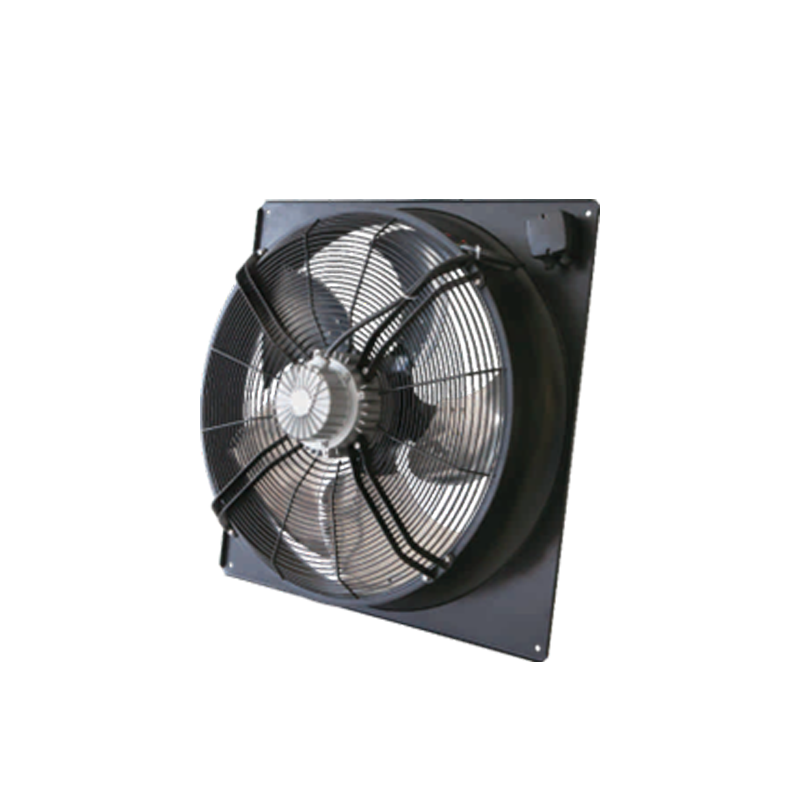
Traditional motors waste a significant amount of electricity during normal operation. They rely on magnetic induction to spin the internal rotor. This analog process inherently causes rotor slip. It also generates excess heat instead of usable mechanical energy. You pay for this wasted energy on every monthly utility bill. The mechanical friction also accelerates wear and tear on internal components.
Electronically Commutated (EC) technology solves this inherent inefficiency beautifully. It integrates Direct Current (DC) motor efficiency into a standard AC power supply. The design uses an advanced brushless mechanism. It also features integrated onboard electronics to precisely control magnetic rotation. This eliminates the magnetic slip found in older models entirely. The electronics ensure the rotor spins exactly as commanded.
This precise control sets a completely new industry benchmark. It establishes the modern low power fan standard across heavy industrial applications. These advanced models produce the exact same Cubic Feet per Minute (CFM). Yet, they draw drastically fewer watts from your electrical grid. They maximize the mechanical output for every single watt consumed.
Less wasted energy naturally means less generated heat. Because these motors operate cooler, their internal bearings experience minimal thermal stress. Bearing lifespan increases dramatically as a direct result. This lowers your replacement frequency and prevents unexpected system downtime. It also reduces the expensive manual labor required for routine facility maintenance.
Many engineers need variable speed capabilities for complex HVAC systems. They typically add a Variable Frequency Drive (VFD) to a standard motor. This creates a complex, bulky, and expensive hardware configuration. It requires multiple separate components working together perfectly.
Compare the installation realities of both approaches. The traditional route requires the motor, an external VFD, line filters, and shielded cables. This takes up valuable control panel space. It also demands extensive wiring labor from skilled electricians. Conversely, a modern alternative offers a single drop-in solution. It includes native 0-10V or PWM control built directly into the housing. You simply connect power and a control signal.
Electrical noise poses another hidden expense for facility managers. External VFDs often introduce harmonic distortion onto your power lines. This electrical noise can damage sensitive surrounding equipment nearby. It also causes premature bearing failure through microscopic electrical arcing. Integrated electronics avoid these severe harmonic issues entirely. You save money by eliminating the need for expensive line filters.
Efficiency curves reveal the ultimate performance difference. Motors rarely run at maximum speed all day long. They often ramp down during off-peak hours to save power.
| Operating Speed | Standard Motor + VFD Efficiency | Electronically Commutated Efficiency |
|---|---|---|
| 100% Load | Moderate (approx. 60-70%) | Excellent (up to 90%) |
| 75% Load | Drops noticeably | Remains consistently high |
| 50% Load | Severe degradation (often below 40%) | Highly efficient (approx. 80-85%) |
| 25% Load | Massive energy waste | Still maintains strong performance |
Different industries experience varying return-on-investment timelines based on usage. Data centers rely heavily on precise thermal management to protect servers. Facilities obsess over their Power Usage Effectiveness (PUE) metrics constantly. Cooling infrastructure draws a massive portion of total facility power. Advanced cooling models match IT loads dynamically. They ramp up only when servers generate excess heat. This precision yields massive financial savings at scale across large server farms.
Continuous exhaust systems also present perfect use cases for modern upgrades. Radon mitigation, agriculture, and commercial ventilation require 24/7 operation. The payback timeline becomes extremely short in these specific environments. Evaluating an AC vs EC fan here is very simple. The daily energy savings often cover the premium price within a single year. Continuous operation multiplies every minor efficiency gain into major dollar savings quickly.
Original Equipment Manufacturers (OEMs) face unique design pressures today. Engineers must build smaller, quieter, and greener machines for their clients. Integrating these advanced components reduces the final product's physical footprint. It lowers the overall energy consumption rating of the finished good. This creates a powerful, marketable selling point for sales teams. Customers increasingly demand energy-efficient equipment, making this a competitive necessity.
Upgrading your air movement systems carries specific engineering challenges. Retrofitting requires careful planning and precise site measurements. You cannot always swap units blindly and expect perfect results. You must match physical dimensions closely to avoid structural modifications. Mounting brackets and bolt patterns frequently differ between technological generations.
Electrical controls also require thoughtful updates during a retrofit. Older setups often use simple on/off contactors or basic relays. Modern units rely on analog or digital signals for speed modulation. You might need to integrate Modbus communications or 0-10V sensors. Facility teams must prepare for this wiring transition before installation begins. Proper control integration maximizes your overall energy savings.
Do not make the mistake of a basic 1:1 horsepower replacement. Advanced designs perform very differently under aerodynamic load. You must evaluate your actual system static pressure accurately. Calculate your exact CFM requirements carefully based on current needs. Oversizing the new unit wastes capital and reduces overall system efficiency.
Finally, evaluate your supply chain partners carefully. Sourcing industrial equipment requires highly reliable vendor partnerships. Check the warranty terms thoroughly before signing purchase orders. Ensure you have ready access to replacement integrated controllers. Stocking critical spare parts prevents catastrophic operational downtime during peak seasons.
Every facility requires a tailored approach to equipment upgrades. You need clear rules to guide your procurement strategy effectively. Use the following framework to finalize your next engineering project.
You must take actionable next steps to move forward. Map out your exact duty cycles first. Calculate your current cost per kilowatt-hour accurately. Then, request a customized operational audit from a trusted supplier. Real data will make your procurement decision clear and justifiable.
The premium price paid for advanced air movement is a genuine investment. It represents a commitment to operational efficiency, not merely a feature upcharge. Facilities recover these initial costs quickly through drastically lower utility bills. They also benefit heavily from reduced maintenance burdens and extended equipment lifespans. Proper system design ensures these benefits compound year after year.
Energy costs will inevitably continue to rise globally. Grid capacities will tighten further in the coming years. This technology has transitioned from a nice-to-have luxury into a competitive necessity. Facilities and OEM designers must adapt quickly to survive these changing market conditions. Falling behind on efficiency metrics actively hurts your market profitability.
Take control of your operational budgets today. Consult with engineering sales professionals immediately to discuss your facility. Ask them to model specific energy savings for your unique airflow requirements. A proactive approach will protect your bottom line for years to come. Modernizing your infrastructure is the safest path to long-term financial stability.
A: Yes, they are highly efficient by design. However, your actual financial savings depend on your duty cycle and whether variable speed is utilized. At a constant 100% speed, the savings remain moderate. At variable speeds, the energy and operational cost savings become massive over time.
A: Physically, you often can. Many drop-in replacements exist on the market today. Electrically, you may need to update your control logic. You must take advantage of the variable speed capabilities, which often requires wiring a 0-10V sensor or upgrading your digital building controls.
A: No, they do not. The electronic commutation and variable speed capabilities are built directly into the motor's onboard electronics. This clever integration completely eliminates the need for an external Variable Frequency Drive, saving you installation space and significantly reducing wiring complexity.
A: They usually last much longer. They feature a brushless design and operate at significantly lower temperatures. These cooler internal conditions mean the bearings often outlast older counterparts. They frequently exceed 40,000 to 80,000 hours of continuous operation depending on your specific ambient conditions.
