


Views: 0 Author: Site Editor Publish Time: 2026-07-11 Origin: Site


Modern agricultural facilities face a relentless central tension today. You must constantly balance escalating energy costs against the strict climate control required for optimal animal welfare. Maintaining maximum yield requires a perfectly tuned biological environment. Traditional ventilation systems fail to meet these dual demands effectively. They typically suffer from exorbitant operational expenditures during partial-load conditions. Furthermore, they generate constant mechanical noise. This acoustic pollution directly induces stress in sensitive livestock like high-yielding dairy cattle and modern broiler poultry. Ultimately, this stress hurts your core production metrics.
Transitioning to advanced motor technologies offers a highly effective, measurable solution. Upgrading your infrastructure delivers precise, energy-efficient climate control. It also brings crucial acoustic engineering improvements. These upgrades directly protect biological performance and operational margins. In this comprehensive guide, we will explore why upgrading makes both financial and biological sense. You will learn how modern airflow systems optimize efficiency. We will show how they reduce animal stress and accelerate your overall return on investment.
Ventilation represents one of the highest continuous electrical loads in commercial farming. In many intensive poultry or swine operations, climate control consumes up to seventy percent of the total energy budget. Facility managers often underestimate the hidden penalties of legacy hardware. Traditional AC motors waste massive amounts of electricity continuously. They generate excess heat and mechanical friction during normal operation. This energy waste multiplies exponentially when systems throttle down during cooler months. You end up paying for power you do not actually use to move air.
Continuous mechanical noise acts as a severe environmental stressor. High-decibel environments actively harm animal welfare on a physiological level. Loud background noises trigger chronic cortisol release in livestock. For dairy cows, loud operational noise disrupts critical resting times. It also negatively impacts natural milk let-down reflexes in the parlor. In poultry houses, constant motor hum increases flock agitation significantly. You will often observe irregular feeding behaviors among stressed birds. Sometimes, it even triggers aggressive interactions within dense flocks. These biological penalties directly reduce your overall operational yield and profitability.
Tightening agricultural emissions and energy consumption standards add another layer of urgency. Regulatory bodies worldwide increasingly demand strict efficiency compliance. Facility managers must rethink their aging infrastructure now. You can no longer rely on outdated, power-hungry equipment. Proactive upgrades protect your farm from future regulatory fines. They also position your operation as a sustainable enterprise.
Understanding the underlying mechanics reveals why legacy systems fail modern standards. Traditional AC technology relies on outdated brush or induction designs. These older motors are highly prone to mechanical wear over time. They also run incredibly inefficiently at lower operating speeds. Conversely, EC (Electronically Commutated) technology utilizes sophisticated brushless designs. They incorporate powerful permanent magnets for synchronous rotation. They integrate smart electronics directly into the motor housing.
The partial-load advantage heavily favors modern solutions. Fan speed and energy use share a strict non-linear relationship. When you reduce fan speed by half, power consumption drops dramatically. A modern EC animal husbandry fan maintains exceptionally high efficiency across all speeds. It performs optimally even when operating at twenty or fifty percent capacity. AC motors experience severe efficiency drop-offs under these exact same conditions. They burn excess energy just to maintain slower rotations.
Reliability and thermal management also improve significantly. EC motors run much cooler than their legacy counterparts. This extended thermal efficiency protects internal components from premature degradation. It also prevents your equipment from adding unwanted ambient heat into the barn. Your climate control systems work less to maintain optimal target temperatures. The cooler operation extends the operational lifespan of the entire unit.
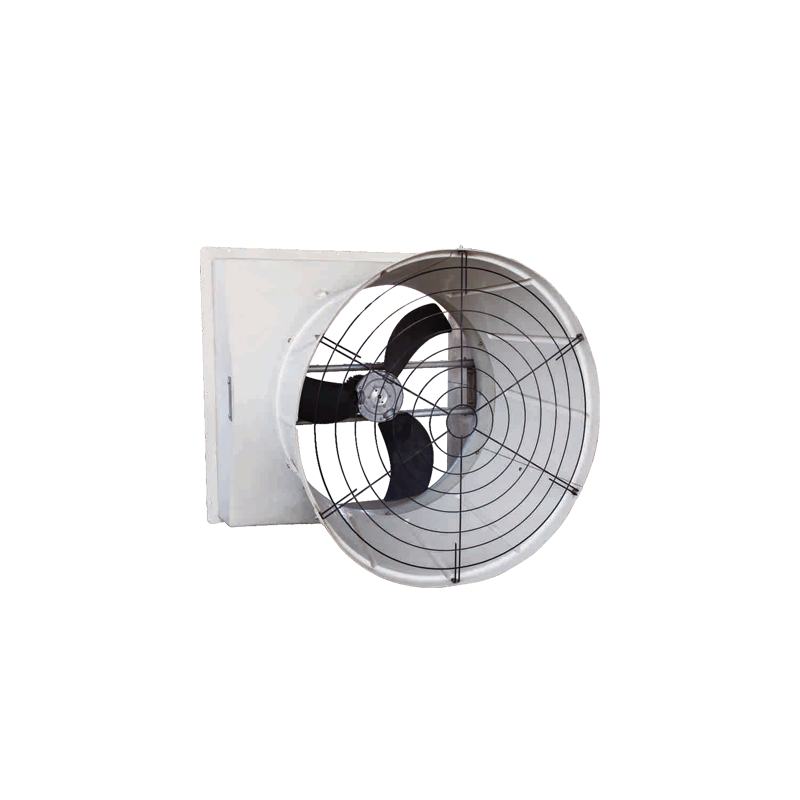
Acoustic engineering directly influences biological performance in modern agriculture. Advanced blade aerodynamics eliminate disruptive air turbulence at the source. Furthermore, precise EC commutation completely removes standard electromagnetic motor hum. This powerful combination results in dramatically lower sound pressure levels inside your facility. Your animals experience a calmer, much more natural acoustic environment. A properly engineered low-noise EC axial fan ensures maximum airflow without the damaging roar of legacy equipment. Maintaining background noise below specific biological thresholds is crucial.
We can map specific mechanical features to direct biological outcomes easily.
You must evaluate equipment using strict data-driven acoustic metrics. Do not just review decibel ratings at absolute maximum capacity. We strongly recommend checking sound output across various partial-load operating speeds. Animals experience these lower speeds for the majority of the year during moderate weather. Understanding the true dynamic acoustic environment ensures better long-term welfare outcomes.
You need strict metrics when comparing different hardware options. Establish CFM (Cubic Feet per Minute) per Watt as your primary baseline standard. This metric accurately measures true energy efficiency across competing brands. A high CFM per Watt rating guarantees optimal air movement per dollar spent. It easily exposes poorly designed motors trying to mask high power consumption. Ensure your selected livestock ventilation fan delivers top-tier performance verified by independent testing laboratories. BESS Lab certification is a highly trusted industry benchmark.
Environmental durability remains absolutely non-negotiable in harsh agricultural settings. Agricultural facilities constantly expose equipment to severe conditions.
Control system integration defines how effectively you manage your climate. Your new hardware must integrate flawlessly into existing environmental controllers. Look specifically for 0-10V analog, PWM, or digital MODBUS connectivity options. These standard protocols enable seamless, automated variable speed control. They allow your central computer to adjust airflow precisely based on real-time sensor data.
Replacing legacy systems requires careful logistical planning and execution. Retrofitting existing barns often allows for convenient one-to-one replacement of older fans. However, you must assess your current electrical infrastructure first. Modern smart motors might require updated wiring to handle digital control signals properly. You also need to verify structural integrity before mounting heavy equipment. Upgraded mounting brackets prevent dangerous vibrational stress on aging barn walls.
Grid compatibility and agricultural subsidies can drastically offset your initial expenses. We advise facility managers to aggressively investigate local energy efficiency rebates. Many regional utility providers offer substantial financial incentives for upgrading to EC technology. These programs specifically target the higher initial capital expenditure associated with premium smart motors.
Here is a straightforward comparison of motor performance characteristics:
| Motor Type | Partial-Load Efficiency | Acoustic Profile | Maintenance Needs |
|---|---|---|---|
| Legacy AC Motor | Poor (high energy waste at low speeds) | High (loud mechanical hum, startup clank) | Frequent (brush wear, belt tensioning) |
| Modern EC Motor | Excellent (optimized power use always) | Low (aerodynamic, quiet operation) | Minimal (sealed brushless design) |
To justify the upgrade, you can utilize a simple ROI framework. Calculate your payback period using this straightforward formula. Add your estimated energy savings, yield retention value, and reduced maintenance costs. Then, subtract your total CAPEX to determine your exact time to ROI. This calculation typically proves highly favorable for commercial operators.
We strongly recommend initiating a controlled pilot phase first. Upgrade a single barn or one specific zone before committing to a full-site rollout. Run this limited deployment for at least one full production cycle. This strategy lets you measure real-world CFM per Watt improvements accurately. You can also directly observe positive changes in animal behavior and health. Gathering empirical data on your own farm builds immense confidence for larger capital investments.
Vendor vetting requires demanding strict proof of performance. You should always request certified performance curves from potential suppliers. Demand verified acoustic data from independent testing laboratories. Ensure warranties explicitly cover harsh agricultural use cases. Standard industrial warranties often void coverage upon exposure to high atmospheric ammonia levels. Partner only with specialized manufacturers who truly understand biological environments.
Focus your procurement entirely on verifiable efficiency gains and biological protections. Prioritize solutions guaranteeing long-term energy savings and immediate livestock welfare improvements. Do not settle for unverified claims or standard commercial equipment adapted poorly for agricultural use.
Upgrading to EC technology is no longer an experimental luxury for commercial farming. It represents a measurable, essential business strategy to remain highly competitive. Modern systems deliver incredibly precise climate control while drastically cutting your monthly utility bills. The complete elimination of mechanical noise directly protects your most valuable asset: your livestock.
Take immediate action by auditing your current energy consumption and acoustic levels. Reach out to your local utility providers to secure available agricultural efficiency rebates. Finally, launch a dedicated pilot testing phase to experience the biological and financial benefits firsthand. The combination of energy efficiency and noise reduction makes this investment highly defensible. It ensures your operation prioritizes long-term sustainability and optimal animal welfare moving forward.
A: The payback period typically ranges from 1.5 to 3 years. This timeline depends heavily on your local electricity rates and total annual usage hours. Securing available agricultural utility rebates can further accelerate your return on investment by offsetting the initial capital expenditure.
A: Yes, most commercial units accept standard 0-10V analog signals or MODBUS RTU protocols. This universal connectivity makes them fully compatible with legacy climate computers. You can easily integrate them without replacing your entire central management system.
A: While the internal motors are completely sealed and brushless, external care is necessary. You must periodically wash down the exterior housing and aerodynamic blades. Regular cleaning maintains optimal airflow efficiency and prevents destructive surface corrosion caused by prolonged ammonia exposure.
A: The affinity laws of fans dictate that reducing speed by 20% cuts energy consumption by nearly 50%. Continuous, low-speed operation is exponentially cheaper than abrupt on/off cycling. It also drastically reduces environmental stress on your sensitive livestock.
