


Views: 0 Author: Site Editor Publish Time: 2026-07-15 Origin: Site


Transitioning to EC centrifugal fans has become standard practice for reducing energy consumption in modern facilities. Upgrading older equipment significantly lowers utility bills. However, simply buying an efficient motor does not guarantee success. Mis-specifying the fan often leads to severe integration friction. It compromises expected returns and creates systemic performance bottlenecks. Evaluating these units goes far beyond checking nameplate efficiency. Buyers must scrutinize aerodynamic matching, control protocol compatibility, and structural durability before finalizing a purchase. The wrong choice can result in excessive noise, poor airflow, or outright safety compliance failures. In this comprehensive guide, we will explore the critical technical parameters you must evaluate. You will learn how to verify operating points, validate building management system integrations, and navigate structural installation risks. By following these steps, you secure a reliable upgrade. It will meet immediate airflow demands and long-term regulatory standards perfectly.
Operating point verification stands as the most crucial procurement step. Avoid oversizing your equipment. Oversized units operate outside their optimal efficiency bands. You must define the exact operating point required for your facility. This process means mapping required cubic feet per minute (CFM) against actual static pressure. Ensure this specific point falls squarely within the peak efficiency window. A well-matched centrifugal fan system guarantees optimal airflow while minimizing power waste. It also prevents aerodynamic stalling.
Let us detail impeller design selection. Manufacturers design different blade profiles for specific tasks. We primarily evaluate two dominant types. Backward-curved impellers work best for high-pressure applications. They handle clean air efficiently. They also feature non-overloading power characteristics. This means the motor will not burn out if static pressure drops suddenly. Forward-curved impellers serve a different purpose entirely. They suit high-volume environments perfectly. They excel where static pressure remains relatively low.
You must also anticipate system effects. Real-world installation conditions consistently degrade catalog performance data. Proximity to dampers alters air velocity profiles drastically. Sharp ductwork elbows create unwanted turbulence. Airflow needs adequate space to distribute evenly across the impeller face. Ignoring these aerodynamic penalties leads to significant problems. You might miss your target airflow entirely during commissioning. Account for these variables early. Add appropriate safety margins to your static pressure calculations to ensure robust performance.
Impeller Design Comparison Chart
| Impeller Type | Ideal Application | Pressure Capability | Airflow Volume |
|---|---|---|---|
| Backward-Curved | Clean rooms, data centers | High | Moderate to High |
| Forward-Curved | General HVAC, packaging | Low to Moderate | Very High |
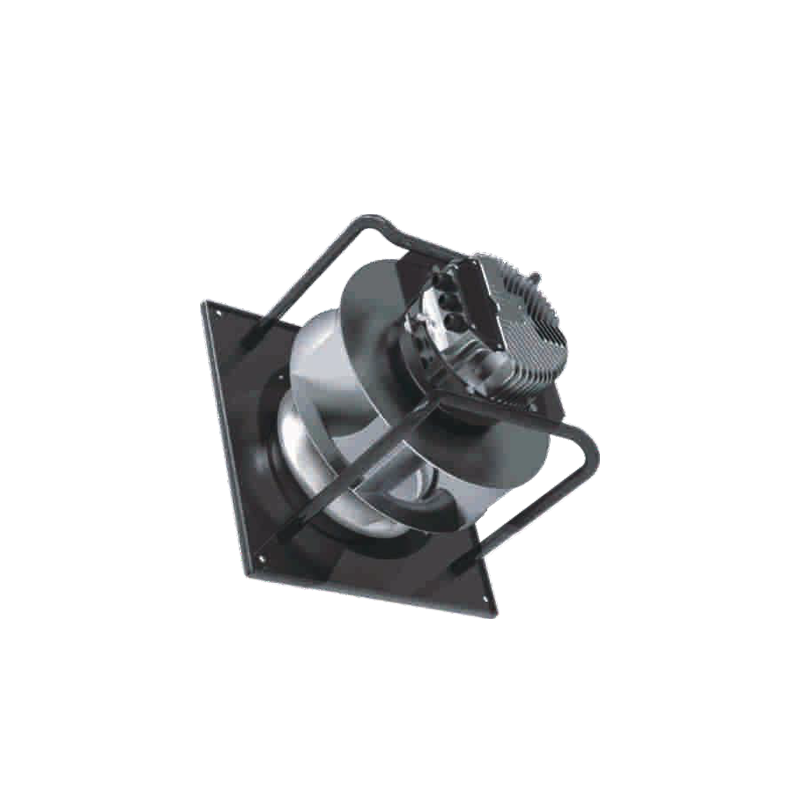
Demand clear documentation on supported communication protocols before issuing a purchase order. Validating control compatibility prevents major commissioning delays. Ensure the unit supports standard industrial protocols seamlessly. Missing protocols cause severe integration friction. Your Building Management System (BMS) needs seamless access to the hardware.
Here are the core protocols you should verify:
Assess the closed-loop control capabilities next. A true high precision EC fan integrates easily with external sensors. It reads pressure, temperature, or CO2 levels continuously. It then uses this feedback for autonomous speed modulation. This real-time adjustment maximizes energy efficiency. It matches airflow directly to the actual environmental demand. It eliminates manual intervention entirely.
Check for redundancy and fault reporting features. Integrated electronics should provide detailed failure codes instantly. Over-voltage conditions need immediate logging. Overheating or blocked rotors must trigger automatic alarms. These error codes should transmit directly to your central dashboard. It allows maintenance teams to act quickly. Technicians can diagnose issues remotely. They avoid opening panels blindly during emergency outages. This predictive capability reduces facility downtime significantly.
Match the Ingress Protection (IP) rating to your exact environment. Standard indoor environments tolerate lower ratings easily. However, industrial spaces require robust environmental sealing. Require IP54 to IP68 for challenging conditions. Exposure to dust demands strict mechanical protection. Airborne particles destroy sensitive electronics quickly. Moisture or washdown conditions require fully sealed housings. Agricultural or chemical exhaust applications demand even higher corrosive resistance.
Request raw acoustic performance data from your supplier. Do not settle for aggregate single-number noise summaries. You need sound power levels across the entire operating range. Evaluating noise only at optimal duty points misleads buyers. Off-peak operation often generates unexpected acoustic frequencies. Low-frequency rumbling travels through building structures easily. Ask for detailed octave band data reports. This diligence prevents post-installation noise complaints. It also helps structural engineers design appropriate acoustic dampening.
Ensure your selected equipment meets strict regulatory standards. The product must meet or exceed ErP (Energy-related Products) 2015/2025 directives. These European standards dictate minimum efficiency grades globally. Verify AMCA certifications for aerodynamic performance. AMCA testing proves the manufacturer's airflow claims empirically. Check relevant UL or CE safety benchmarks. Regulatory compliance prevents costly legal liabilities. It also ensures long-term operational safety. Insurance companies often require these certifications. Failing to verify them creates immense institutional risk.
Retrofitting introduces unique mechanical and electrical challenges. Equipment utilizing integrated electronics often possesses different dimensional footprints. They rarely match legacy alternating current (AC) systems perfectly. You must verify physical clearance before finalizing your purchase.
Follow these crucial steps when evaluating retrofits:
Upgrading to advanced electronics shifts electrical load profiles. Legacy belt-driven equipment utilizes separate external motors. Newer configurations integrate the motor directly inside the impeller hub. This saves depth but changes the mounting plate requirements entirely. Consult your facility engineers early. Verify all infrastructure compatibility beforehand. Avoid extensive structural modifications whenever possible. Changing heavy bulkheads consumes massive labor hours. Careful project planning mitigates these installation risks completely.
Limit your shortlist to vendors offering comprehensive engineering support. Ask suppliers for custom testing data immediately. You need performance curves tailored to your specific application. Generic catalog curves often obscure real-world inefficiencies. Air density changes with altitude and temperature. A unit tested at sea level performs differently in mountainous regions. Demand empirical data matching your exact site conditions.
Evaluate supply chain stability carefully. Understand component sourcing locations deeply. A highly efficient unit becomes useless during mechanical breakdowns. If replacement electronics take sixteen weeks to arrive, your facility suffers immensely. Ask for guaranteed lead times on critical spare parts. Localized warehousing provides massive advantages over overseas shipping. Ask vendors directly about their domestic inventory levels.
Scrutinize the warranty terms thoroughly. Check the warranty for the integrated drive separately. It often differs significantly from the mechanical impeller warranty. Standard mechanical warranties might cover three years. Electronics warranties sometimes expire after just one year. Look for unified, long-term warranties instead. Ensure the vendor provides accessible domestic technical support. Engineering support proves invaluable during commissioning. Troubleshooting complex communication protocols requires direct manufacturer assistance. Demand clear service level agreements before signing any final purchase order.
Evaluating advanced air movement technology requires rigorous technical diligence. Sizing equipment accurately ensures peak aerodynamic performance. Validating onboard controls guarantees seamless facility integration. Demanding proof of environmental compliance protects your long-term investment. Buyers must look past standard efficiency metrics alone. You must map physical, electrical, and structural realities precisely.
Move beyond initial catalog research. Request application-specific performance curves from your shortlisted manufacturers immediately. Ask for detailed 3D CAD models to verify physical clearances. Demand raw acoustic data and protocol documentation. Taking these proactive steps ensures a flawless installation. It secures robust performance and operational reliability for years to come.
A: Yes, but direct drop-in replacements rarely happen without adjustments. You must verify physical dimensions and mounting orientations first. You also need to remove legacy variable frequency drives (VFDs) completely. Finally, you must update the control wiring to accommodate the new motor’s onboard electronics and specific electrical inrush characteristics.
A: It maintains near-peak efficiency at significantly reduced speeds. It utilizes closed-loop feedback to match airflow exactly to real-time demand. Traditional AC motors suffer substantial efficiency drops when throttled. Advanced digital commutation eliminates this waste, saving massive amounts of power during partial-load duty cycles.
A: Request AMCA-certified sound data sheets directly from the manufacturer. Demand raw acoustic reports showing sound power levels across all octave bands. Ensure this data reflects your specific target operating point, not just the peak efficiency baseline. This detailed analysis helps prevent unexpected low-frequency noise issues.
