


Views: 228 Author: Site Editor Publish Time: 2025-10-02 Origin: Site


Have you ever noticed the letters “EC” on a fan and wondered what they mean? This abbreviation may seem technical, but it represents a major shift in fan design. EC stands for electronically commutated, a technology that powers the modern EC Axial Fan. In this article, you’ll discover how it works, why it matters, and the key benefits for HVAC and cooling systems.
EC stands for Electronically Commutated, sometimes also referred to as an “ECM” or “electronically commutated motor.” At its core, an EC fan is powered by a brushless DC motor. Unlike conventional DC motors that require brushes to transfer current, EC motors use electronic circuits to control the flow of electricity.
This means there are fewer moving parts, less wear and tear, and greater reliability. The integrated electronics act as the “commutator,” ensuring that the motor phases are energized in the correct sequence.
The key difference lies in efficiency and control. A standard AC motor runs directly from the grid and usually operates at fixed speeds. To vary its speed, additional devices such as frequency inverters or transformers are required. An EC motor, however, already includes these control capabilities within the motor housing.
This integration makes EC motors both compact and powerful. They consume less energy, generate less heat, and allow for flexible speed adjustment—all without requiring bulky external controllers.
Fans consume a large portion of electricity in cooling and ventilation systems. Because of this, any improvement in fan efficiency has a direct and measurable impact on operating costs. EC technology delivers efficiency gains of up to 90%, compared with 60–70% for traditional AC motors. That difference adds up quickly in environments where fans run continuously.
EC fans are now standard in:
● HVAC air handling units (AHUs)
● Refrigeration condensers in supermarkets or cold storage
● Computer room cooling systems in data centers
● Commercial retrofits where older AC fans are being replaced
Whenever high efficiency, compact design, and quiet operation are important, EC axial fans are usually the preferred choice.
An EC motor may connect to a single-phase 230V AC or a three-phase 400V AC supply. However, the motor itself operates internally on DC. The onboard electronics convert AC into DC, allowing the motor to run more efficiently.
This design combines the convenience of AC (easy grid connection) with the efficiency of DC (precise control and low losses).
The electronics in an EC fan perform several roles:
● Power conversion from AC to DC.
● Commutation, or switching, that energizes motor windings at the correct times.
● Speed control, allowing the fan to run at variable speeds depending on demand.
The result is smoother performance, reduced energy waste, and better integration with modern building automation systems.
Unlike traditional motors, EC motors don’t use brushes or collectors. This means:
● No frictional wear.
● Less maintenance.
● Reduced noise and vibration.
This brushless design is a key reason why EC axial fans last longer and run more quietly than their AC counterparts.
Most EC axial fans are built with a direct-drive configuration. Instead of relying on belts and pulleys to transfer power, the fan impeller mounts directly on the motor shaft. This design is more compact, eliminates mechanical losses, and reduces the number of components that require servicing.
Note: Direct-drive EC fans also avoid alignment issues common in belt-driven systems, which can lead to unexpected downtime in industrial settings.
The headline benefit of EC fans is efficiency. Studies show that EC axial fans can achieve up to 90% efficiency, compared to roughly 65% for many AC fans. Over the course of a year, especially in facilities that run fans continuously, the savings can be dramatic.
Because the motor and electronics are integrated into one unit, EC fans are generally smaller and lighter. This makes them easier to install in confined spaces and well-suited for retrofits.
EC motors provide smoother commutation, which reduces vibration and mechanical noise. When combined with aerodynamic impellers, EC axial fans deliver quieter operation—critical for offices, hospitals, and data centers.
Since there are no brushes, belts, or frequent lubrication points, EC axial fans require very little upkeep. This extends their operational life and reduces downtime.
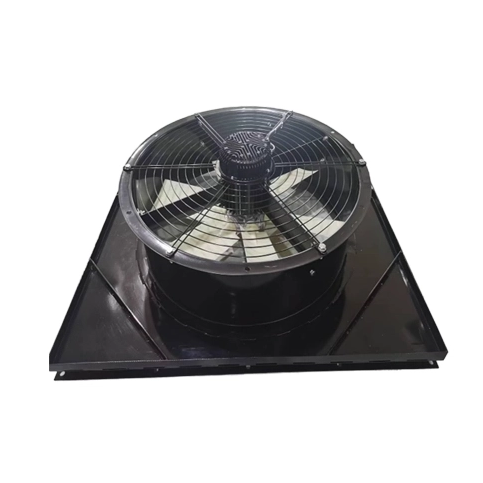
The use of permanent magnets in the rotor reduces electrical losses. Combined with advanced electronics that fine-tune power delivery, the result is maximum efficiency across a wide range of operating speeds.
In HVAC cooling systems, EC fans can hold refrigerant pressure steady instead of allowing it to swing up and down. This eases the workload on compressors, one of the most energy-hungry components in HVAC.
By reducing both energy consumption and maintenance costs, EC axial fans significantly cut operational expenses. These savings often justify the higher initial purchase price within just a few years.
● Supermarkets: EC fans in refrigeration units cut energy bills.
● Data Centers: Stable airflow reduces cooling system strain.
● Commercial Buildings: Variable-speed EC fans optimize indoor comfort while lowering costs.
Tip: When evaluating vendors, ask for case studies or energy reports demonstrating the efficiency gains of EC axial fans in comparable applications.
Traditional AC motors require a variable frequency drive (VFD) to control speed. EC motors already include this capability, reducing cost and complexity.
EC fans can run at any speed between minimum and maximum. This fine-tuned control means airflow can be adjusted precisely to match demand, avoiding unnecessary energy use.
Depending on the application, EC axial fans can be configured to maintain:
● Constant pressure
● Constant volume flow
● Temperature-dependent speed adjustment
Many EC fans include ports for analog or digital communication. Through protocols like Modbus, facility managers can monitor fan performance, adjust settings, or integrate fans into building automation systems.
EC fans can be programmed and addressed before they arrive on site. This reduces installation time and ensures system compatibility.
Because the motor, electronics, and controls are built into one package, installers don’t need to mount separate controllers or wire external drives.
EC fans are compact enough to replace existing AC fans in many HVAC systems. This makes them an attractive option for retrofit projects where improving efficiency is a priority.
In some buildings, fans must operate differently in fire or emergency scenarios. EC fans can be programmed to override normal controls and deliver maximum airflow during these events.
It’s true that EC axial fans typically cost more upfront than AC fans. However, the difference is usually recovered through lower energy bills and reduced maintenance.
By eliminating belts, pulleys, and brushes, EC fans minimize the risk of component failures. This translates to fewer service calls and less downtime.
In many cases, businesses recover the additional investment in 1–3 years. Beyond that, the fan continues to generate savings.
More companies are under pressure to meet sustainability targets and ESG goals. Switching to EC fans supports these initiatives while also delivering cost benefits.
Note: Presenting an EC fan upgrade to stakeholders is easier when framed as both a cost-saving measure and a sustainability initiative.
In AHUs, EC fans ensure steady, efficient airflow while offering precise control over air pressure and volume.
Supermarkets and warehouses rely on EC fans in condensers and evaporators to keep energy costs manageable.
Quiet, efficient, and reliable airflow is essential for preventing overheating in sensitive IT environments. EC axial fans meet these requirements.
Many older buildings replace traditional AC fans with EC fans during upgrades. This is one of the fastest ways to improve efficiency without replacing entire HVAC systems.
So, what does EC mean on a fan? It refers to a brushless DC motor using AC supply with built-in control electronics. This design ensures high efficiency, reliability, and flexibility for modern applications.
The EC Axial Fan highlights this technology with efficiency up to 90%, compact size, quieter performance, and low maintenance. It clearly outperforms traditional AC fans in both cost savings and sustainability.
For businesses, EC fans reduce operating expenses and support long-term reliability. Suzhou Dowell Ventilation Technology Co., Ltd provides advanced EC axial fans designed to deliver energy efficiency, durability, and real value for HVAC and cooling systems.
A: EC stands for electronically commutated, a motor design that combines AC input with DC efficiency for reliable fan performance.
A: An EC Axial Fan offers higher efficiency, quieter operation, compact size, and lower maintenance compared to traditional AC fans.
A: An EC Axial Fan uses integrated electronics and brushless design, achieving up to 90% efficiency and reducing operational costs.
A: Yes, many systems allow easy replacement of AC fans with an EC Axial Fan, helping businesses modernize without major redesigns.
A: An EC Axial Fan may cost more upfront, but long-term savings from reduced energy use and maintenance deliver fast payback.


