


Views: 0 Author: Site Editor Publish Time: 2026-07-12 Origin: Site


Modern poultry farming faces a harsh dilemma today. Energy costs climb higher every single year. Yet, strict climate control remains absolutely critical for flock survival. Legacy AC fans struggle here. They waste massive amounts of electricity daily. They also limit operators to rigid, single-speed functions. Meanwhile, the modern EC animal husbandry fan changes everything. It delivers precise environmental control through intelligent variable speed technology. This shift represents a major leap in farm management.
This guide gives facility managers and agricultural engineers a clear roadmap. We strip away marketing fluff to provide pragmatic frameworks. You will learn exactly how to evaluate these systems. We show you how to shortlist vendors confidently. You can finally implement these advanced fans effectively. Stop guessing about your ventilation upgrades. You can now build a sustainable, highly profitable environment for your poultry operations.
Outdated poultry barn ventilation systems drain facility profits rapidly. Summer heat waves force these older systems into overdrive. They consume massive electricity loads during peak utility billing hours. Legacy AC motors run at full speed constantly. You cannot easily adjust them to match the exact needs of smaller birds. This inflexibility leads to over-ventilation during winter months. You end up wasting expensive heating fuel simply because the fans push too much air out of the building. Furthermore, old AC motors often burn out prematurely under continuous stress. This forces emergency maintenance. You lose money on replacement parts and waste valuable labor hours fixing broken belts and pulleys.
Let us look at the technical reality. An EC (Electronically Commutated) motor operates quite differently. It is essentially a brushless DC motor. It contains a built-in AC/DC converter. You feed it standard AC grid power. The internal electronics then convert this incoming power to highly efficient DC power. This eliminates the magnetic slip and friction losses common in AC induction motors. The motor runs cooler. It lasts longer. It gives you complete control over rotational speed.
The variable speed advantage is absolutely huge. Fan physics follow specific mathematical rules known as affinity laws. Power consumption drops dramatically when you reduce fan speed. If you run an EC fan at 50% speed, you do not use 50% of the energy. You use roughly 12.5% to 15% of the total energy. This non-linear relationship improves your bottom line immediately. You can dial in the exact airflow required for the specific age and size of your flock. This prevents energy waste completely.
What does a successful fan upgrade actually look like? You must define clear success criteria before purchasing any equipment.
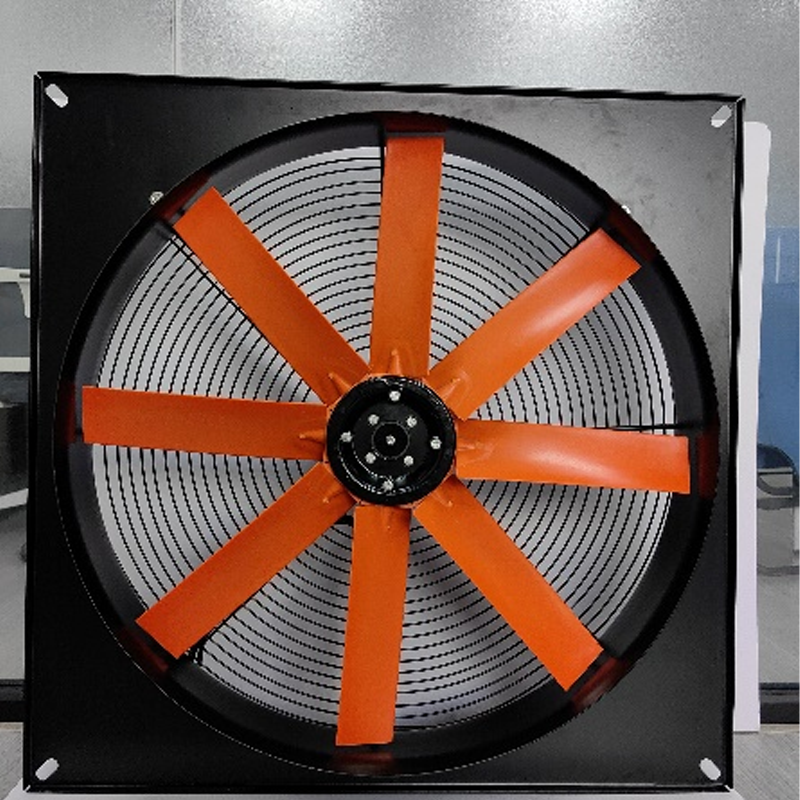
Airflow evaluation requires strict attention to detail. Do not evaluate fans at zero static pressure. This practice is highly misleading. Some manufacturers advertise massive airflow numbers based on free-air testing. Real poultry barns do not operate in a vacuum. Your building creates air resistance. Cooling pads, evaporative baffles, louvers, and light traps all restrict free air movement. This restriction creates static pressure. The fan must work harder to pull air through these obstacles.
You must demand CFM (Cubic Feet per Minute) data at 0.10 to 0.15 inches of water column. This specific range matches standard poultry house pressure. Tunnel ventilation setups often push pressure even higher. If a vendor only provides zero static pressure data, look elsewhere. You need realistic performance numbers to size your barn correctly.
Energy efficiency ratings matter just as much as raw airflow. Agricultural standards rely heavily on the CFM/Watt metric. This number tells you exactly how much air you move per watt of electricity consumed. We establish strict baseline industry standards for acceptable efficiency.
| Performance Metric | Standard AC Fan | Premium EC Fan |
|---|---|---|
| Airflow testing condition | 0.00" - 0.05" SP (often misleading) | 0.10" - 0.15" SP (real-world) |
| CFM/Watt Efficiency (Full Speed) | 15 - 18 CFM/W | 22 - 30+ CFM/W |
| Speed Control Mechanism | None or expensive external VFD | Built-in variable speed controller |
Acoustic stress represents another critical dimension. Farm operators often overlook noise levels (measured in dBA). Traditional fans create high noise pollution inside the barn. The loud hum causes acoustic stress in the flock. High stress levels negatively impact feeding behavior. Birds eat less and grow slower. Reduced stress improves overall welfare and yield. Variable-speed EC fans run significantly quieter, especially during lower demand periods. Your birds stay calm. Your workers also benefit from a safer, quieter environment.
The agricultural environment is incredibly brutal on machinery. High ammonia concentrations eat away at unprotected metals daily. The birds naturally produce ammonia gas through their manure. This gas mixes easily into the humid air. It settles on every exposed surface inside the building. Airborne dust, dander, and feathers clog intake vents quickly. Acidic moisture compounds the damage. Standard commercial fans rust and fail within months under these conditions.
You need strict material selection protocols. Fiberglass reinforced polymers (FRP) perform substantially better than traditional coated metals. They never rust. They resist chemical degradation. When selecting your equipment, evaluate both blade and housing materials carefully. Galvanized steel eventually succumbs to ammonia corrosion. A true corrosion-resistant EC fan stands up to these daily threats. Manufacturers use specialized marine-grade coatings or heavy-duty polymers to protect critical components.
Ingress protection (IP Ratings) dictates how well the motor seals out dust and water. IP55 serves as your absolute minimum baseline. It protects against basic dust accumulation and light water sprays. However, IP66 or IP67 is highly preferred for poultry environments. Between flocks, sanitation crews must clean the barn thoroughly. They use high-pressure hoses. They apply aggressive disinfecting chemicals. The equipment undergoes heavy stress during these washdowns. An IP66/IP67 rated motor survives this routine cleaning without internal water damage.
Electronics protection requires special attention. EC motors house sophisticated printed circuit boards (PCBs) internally. These boards control the variable speed functions. If ammonia gas reaches these delicate circuits, the board will short out. Discuss the necessity of fully potted electronics with your vendor. Potting means the manufacturer encases the entire circuit board in a solid, waterproof epoxy resin. This sealing process prevents PCB corrosion entirely. It guarantees long-term reliability in harsh barns.
Controller compatibility stands as your primary integration risk. Beware of stranded assets. You do not want to buy expensive fans only to discover they cannot communicate properly. Your barn already has a central climate controller. This central brain dictates the overall strategy based on temperature sensors. Your new EC fans must integrate seamlessly here. Ensure the fans accept standard 0-10V analog signals. Many modern systems also use Modbus RTU protocols for digital communication. Verify these inputs before finalizing any purchase order.
Wiring and retrofit realities surprise many first-time buyers. EC technology actually reduces wiring complexity significantly. You do not need external Variable Frequency Drives (VFDs) mounted on the wall. The drive is built directly into the motor housing. You also avoid expensive shielded cables for long wire runs. Traditional VFD setups require heavily shielded cables to prevent electrical noise. EC fans eliminate this specific headache completely.
However, rural electrical grids present unique challenges. Farms often experience poor power quality. Voltage fluctuations happen frequently. Brownouts and voltage spikes can destroy unprotected motors. Identify these grid quality issues early. Ensure the selected fan has built-in active PFC (Power Factor Correction). Active PFC stabilizes the incoming voltage. It protects the internal electronics from sudden grid variations. It ensures steady performance even when the local utility struggles.
You must align the equipment with your specific ventilation strategy. Ensure the selected fans match your intended operational mode.
Acknowledge the higher upfront cost openly. Premium technology demands a higher initial capital expenditure. However, you must look at the operational savings. We provide a straightforward framework for calculating the payback period. Usually, this payback falls between 12 and 24 months. You achieve this rapid return through direct energy savings. Furthermore, many local utility companies offer substantial rebates for installing high-efficiency equipment. You should contact your utility provider early in the planning phase. They often cover a large percentage of the initial purchase price.
Warranty terms reveal vendor transparency. Read the fine print carefully. What exactly does the manufacturer cover? Some warranties exclude electronic components in agricultural environments. This is a massive red flag. You need a warranty covering the motor, the electronics, and the housing specifically for poultry applications. A reliable vendor stands behind their potting process and their IP ratings.
Lack of independent performance testing serves as another red flag. Do not trust in-house marketing brochures blindly. Demand third-party verification. In the United States, BESS Lab data provides the gold standard for agricultural fan testing. If a vendor cannot provide independent test results, you should eliminate them from your shortlist immediately.
Create a strict checklist for procuring vendor quotes. Your next-step actions must be deliberate and organized. When requesting a quote, you must require the following items from every vendor:
Transitioning to EC technology is no longer a luxury. It stands as a fundamental necessity for competitive farming today. The industry demands higher efficiency and tighter environmental control. Legacy AC systems simply cannot keep pace with these modern requirements. By embracing variable speed control, you reduce energy waste significantly. You also improve bird welfare through better climate management and lower acoustic stress.
Take proactive steps today. We encourage you to conduct a comprehensive energy audit of your current facility. Identify your highest consumption areas. Then, request sample unit data from your shortlisted vendors. Run a pilot test in a single barn before committing to a farm-wide rollout. This hands-on approach validates the performance data. It ensures your final decision rests on solid, verifiable evidence.
A: EC fans generally save between 30% to 50% in energy costs compared to standard AC models. These savings peak during minimum ventilation scenarios. When you reduce the speed of an EC fan, its power consumption drops drastically due to affinity laws. AC fans lack this efficient variable speed capability.
A: Yes. Most modern EC fans accept standard 0-10V analog signals or PWM inputs. This makes them highly compatible with legacy climate controllers. You usually do not need to replace your central brain unit. You just wire the new fan's control leads to the existing controller's output terminals.
A: No, they serve different purposes. EC exhaust fans manage air exchange, remove ammonia, and control static pressure by pulling fresh air through the barn. HVLS (High Volume Low Speed) fans manage internal air mixing and destratification. They work together to create an optimal environment.
A: Standard motors fail quickly during washdowns. However, sourcing a specifically rated corrosion-resistant EC fan protects your investment. High IP-rated (IP66/IP67) motors feature fully potted, sealed electronics. They survive aggressive chemical sprays and high-pressure water jets without internal circuit damage.
