


Views: 0 Author: Site Editor Publish Time: 2026-07-18 Origin: Site


In today’s industrial landscape, rising energy costs create immense financial pressure. Stricter environmental regulations also demand immediate action. Facility managers face tough mandates to optimize Power Usage Effectiveness (PUE). They must drastically boost HVAC efficiency across large portfolios. You can no longer rely on outdated legacy motors to meet modern sustainability targets. This pressing reality drives a massive industry shift. We are moving away from traditional AC motors toward intelligent air movement solutions. We must cut through the marketing noise surrounding these upgrades. Our objective is straightforward and highly practical. We will objectively evaluate if upgrading to this newer technology makes sense. Does it offer true financial and operational benefits for specific commercial applications? You will uncover the mechanical differences and compare crucial performance metrics. We will explore the measurable business outcomes of making the switch. Let us dive into the core mechanics of this technology and evaluate its impact.
We must define this technology clearly before comparing its performance. An electronically commutated fan is essentially a highly advanced brushless DC motor. It features an integrated electronic motherboard built directly into the housing. This internal board directly converts incoming alternating current (AC) power into direct current (DC). It gives you the operational convenience of plugging into standard AC mains. Yet, you gain the superior energy efficiency of a DC motor.
We call this the inherent built-in advantage. The onboard electronics independently handle voltage transformation. They also manage precise variable speed control dynamically. Traditional setups force you to install bulky external components for these basic tasks. You bypass all that extra hardware completely. The internal circuitry constantly monitors the motor parameters. It adjusts the power input instantly to match specific cooling demands.
However, we must view this through a strictly skeptical lens. This technology is not magic. It relies on straightforward physics and smart mechanical engineering. An EC fan simply eliminates the inherent mechanical slip losses found in standard AC motors. It also removes the magnetic losses associated with brushed DC motors. Older DC motors use physical carbon brushes for commutation. These physical brushes cause friction, generate excess heat, and eventually wear out. By removing these brushes, the motor runs significantly smoother. It leverages electronic circuits to switch the current direction precisely. This electronic commutation process guarantees optimal torque generation at any speed. You get a streamlined, highly efficient motor package.
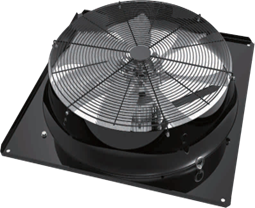
You need a direct, evidence-based comparison. This evaluation helps buyers assess their current infrastructure objectively. We must break down the operational differences between older legacy systems and modern motor upgrades.
Standard AC induction motors suffer from inherent structural inefficiencies. They typically operate at fixed speeds only. You cannot easily adjust their output to match actual room cooling demands. When your facility needs less cooling, the motor still runs at full capacity. They generate high amounts of wasted heat during continuous operation. They also lose considerable power through mechanical slip. Mechanical slip occurs when the internal rotor spins slower than the surrounding magnetic field. This continuous energy waste directly inflates your utility bills. It also puts unnecessary thermal strain on the motor bearings.
Engineers often add Variable Speed Drives (VSDs) to solve the fixed-speed dilemma. This workaround allows facility managers to dial back motor speeds manually or automatically. However, this patch introduces entirely new systemic problems. VSDs require bulky external drive cabinets. They consume valuable floor space in cramped mechanical rooms. You also face potential harmonic distortion in your building's electrical supply. Acoustic noise becomes another major headache. The external VSD often induces a high-pitched motor whine. This unpleasant noise echoes through ductwork and bothers building occupants. Furthermore, VSDs lose significant efficiency when operating below full load.
Here is where an integrated EC fan truly excels. It delivers a continuous, extremely flat efficiency curve. It maintains high efficiency across its entire speed range. You do not suffer the steep efficiency drop-offs seen in typical VSD setups. If you run the motor at half speed, it remains highly efficient. We strongly value its plug-and-play nature. You do not need complex wiring runs between external drives and motors. You completely bypass tedious tuning and calibration processes.
| Performance Metric | Traditional AC Motor | AC Motor + VSD | Electronically Commutated Motor |
|---|---|---|---|
| Speed Flexibility | Strictly Fixed Speed | Variable (Requires External Drive) | Variable (Fully Integrated) |
| Efficiency at Partial Load | Extremely Poor | Moderate to Significant Drop-off | Consistently High (80-90%) |
| Installation Footprint | Small (Motor Only) | Large (Requires Drive Cabinet) | Small (All-in-One Unit) |
| Acoustic Profile | Moderate Mechanical Noise | High (Noticeable Motor Whine) | Ultra-Low Noise Operation |
| Harmonic Distortion Risk | Low | High (Requires Mitigation Filters) | None |
We must move beyond basic energy savings. We need to examine comprehensive business outcomes. Facilities do not upgrade equipment just for the sake of installing new technology. They demand measurable financial returns and improved operational stability.
Energy Cost Reduction: We track average energy reduction percentages closely across industrial upgrades. Facilities often see a 30% to 50% energy drop compared to standard AC setups. This translates directly into measurable operational expenditure (OpEx) drops. You recover capital quickly through these guaranteed monthly utility savings. When cooling systems run around the clock, even small efficiency gains compound massively.
Space and Footprint: Floor space costs money in commercial real estate. Eliminating standalone VSD cabinets saves valuable space instantly. You free up critical square footage in server halls and mechanical rooms. You can repurpose this area for revenue-generating equipment. In a dense server farm, every square foot matters.
Acoustic Profile: Noise pollution is a serious workplace safety issue. Removing VSD-induced motor whine solves major compliance challenges immediately. It greatly improves safety in noise-sensitive environments. Hospitals, schools, and corporate offices demand quiet operation continuously. The smooth electronic commutation process operates silently.
Lifespan and Maintenance: Traditional motors rely on physical parts that inevitably fail. Carbon brushes wear down over time and require replacement. Modern EC fans eliminate these mechanical friction points entirely. They operate at significantly lower temperatures due to higher electrical efficiency. Cooler operation inherently extends bearing life. By reducing internal heat generation, you drastically extend the service life.
Here is a breakdown of the secondary maintenance benefits:
We must map this technology to specific application environments. Certain industries benefit much faster than others. High-stakes environments see the most dramatic operational improvements.
Data centers require absolute precision and unyielding reliability. We focus heavily on CRAC (Computer Room Air Conditioning) and CRAH units. These cooling units run non-stop to protect vital IT infrastructure. Upgrading these systems lowers facility PUE drastically. You can manage high-density server loads dynamically and securely. The cooling system responds instantly to fluctuating heat outputs. If server activity spikes, the cooling ramps up immediately. When network traffic drops, the cooling scales back safely. This ensures optimal thermal management without wasting excess power.
Commercial buildings face increasingly strict energy codes globally. We see massive benefits when retrofitting AHUs (Air Handling Units). Condenser fan retrofits also yield incredible efficiency results. These upgrades ensure compliance with evolving building efficiency standards. ASHRAE guidelines now push for stricter energy conservation measures across the board. Upgrading helps you meet or exceed these modern regulatory benchmarks. You easily avoid future compliance penalties and environmental fines.
We must demonstrate trustworthiness. We achieve this by addressing the barriers to adoption head-on. No technology upgrade is completely flawless. Every facility overhaul carries certain logistical challenges.
Addressing Upfront Costs: We must acknowledge the primary financial hurdle frankly. An advanced unit carries a higher initial purchase price. A comparable standard AC fan costs significantly less upfront. You must frame this as a Capital Expenditure (CapEx) versus Operational Expenditure (OpEx) decision. The long-term utility savings heavily outweigh the initial premium. Facility managers must look past the initial invoice. They need to calculate the ongoing monthly utility savings realistically. Once you model the lifetime energy consumption, the financial choice becomes clear.
BMS Integration: Modern facilities rely heavily on centralized control automation. These advanced units integrate smoothly with Building Management Systems (BMS). They utilize standard communication protocols right out of the box. You can easily connect them using Modbus, 0-10V, or PWM signals. However, you must perform legacy system compatibility checks before installation. Older analog controllers might require intermediate gateways to communicate properly. Always verify the communication protocols of your existing building automation framework.
Downtime Considerations: Swapping fan arrays requires meticulous logistical planning. Moving from large single fans to modern multi-fan walls changes airflow dynamics completely. You must manage facility downtime carefully during the retrofit process. Shutting down a data center cooling system completely is rarely an option. Staged rollouts often work best for critical environments. You replace sections of the cooling array sequentially. This keeps critical operations online while you execute the upgrade securely.
Here is a brief list of common mistakes to avoid during retrofits:
We must view these advanced air movement solutions objectively. They are no longer niche premium products reserved for massive budgets. They represent the baseline standard for modern, scalable, and compliant facility cooling. You gain unmatched operational flexibility and serious mechanical reliability.
Here are your crucial next steps:
Do not let outdated equipment drain your operational budget month after month. Request a customized financial analysis for your specific site. Download our latest technical specification sheets to compare performance data directly. Contact our engineering sales team today to evaluate your unique facility retrofit requirements.
A: Yes, these units are explicitly designed for drop-in retrofits. You can easily integrate them into most legacy systems. Minor mounting or wiring adaptations might be required depending on the specific older unit. Overall, the physical swap is highly standardized and straightforward.
A: You can expect a realistic timeframe of 12 to 36 months. The exact duration heavily depends on your local utility rates. Your specific duty cycles and facility operating profiles also play a major role. High-usage environments see much faster financial returns.
A: No. The fundamental advantage is complete integration. The speed control mechanisms and the AC-to-DC power conversion are built directly into the motor electronics. You completely eliminate the need for bulky external frequency drives and complicated remote wiring setups.
