


Views: 0 Author: Site Editor Publish Time: 2026-08-24 Origin: Site


Rising thermal densities driven by AI and high-performance computing are rapidly changing our operational reality. These extreme heat loads render legacy constant-speed cooling systems completely obsolete. Facilities face a serious business problem today. You must lower Power Usage Effectiveness (PUE) and operational expenditure (OpEx). You must also achieve this without risking thermal events or downtime.
We position the Electronically Commutated (EC) fan not as a novel technology, but as the mandatory baseline standard. It dictates modern facility design. It dominates existing infrastructure or brownfield retrofits. This guide will walk you through the practical evaluation of these units. We cover the core selection criteria and the strict implementation realities for integrating EC technology. You will learn how to modernize your airflow management, reduce energy consumption, and secure facility reliability against rising thermal demands.
Legacy facilities frequently struggle to support modern IT loads. The root cause often traces back to outdated airflow mechanics. Understanding these limitations is critical before upgrading your infrastructure.
Traditional AC centrifugal fans operate at fixed speeds. They require mechanical dampers or Variable Frequency Drives (VFDs) to adjust airflow. Mechanical dampers restrict air physically. This process forces the motor to work harder against artificial resistance. It causes massive energy waste during partial loads. Early VFD retrofits attempted to solve this. However, VFD setups introduce complex external drives and electrical losses. They struggle to optimize power consumption efficiently at lower speeds.
Common Mistake: Many operators install external VFDs on aging AC motors. This creates harmonic distortion issues. It also degrades the motor insulation over time.
Belt-driven AC fans introduce severe mechanical liabilities. Facility technicians must constantly perform belt tensioning. They must monitor bearing lubrication manually. Belts wear down and generate fine rubber dust. This dust circulates through the raised floor. It creates severe contamination risks inside sensitive servers. Eliminating these moving parts removes a heavy maintenance burden. It also protects your IT hardware from particulate damage.
Legacy AC setups are notoriously bulky. Their massive scroll housings consume valuable cabinet space. They also generate high acoustic noise levels. These loud environments complicate rack-level deployments. They easily violate modern occupational noise limits in server rooms. Facilities must protect their personnel. Loud server rooms lead to fatigue and communication errors. Upgrading to modern impellers immediately reduces these acoustic penalties.
Securing project approval requires clear financial and operational metrics. A Data Center EC Fan directly solves the inherent inefficiencies found in legacy equipment.
These units utilize a brushless DC motor design. They incorporate integrated electronics to convert AC power to DC internally. This design eliminates transmission losses entirely. You have no belts or pulleys to rob mechanical power. The motor maintains exceptionally high efficiency across the entire speed range. Traditional motors lose efficiency rapidly when they spin slower. The direct-drive configuration ensures energy inputs convert strictly into useful airflow.
Integrated electronics allow seamless communication. You gain immediate value from 0-10V analog or Modbus RTU integration. Fans speed up or slow down continuously. They base their RPM on real-time server delta-T (temperature differential). This capability maps cooling output exactly to the live IT load. If a server cluster throttles down, the cooling system dials back instantly. You avoid overcooling idle aisles.
Building a payback framework relies on two primary factors. First, calculate energy savings in kilowatt-hours. Second, factor in reduced maintenance labor. Technicians no longer perform belt replacements or greasing. You must acknowledge local utility rates. A facility baseline PUE heavily dictates the exact ROI timeline. High-use facilities often see payback near the 12-month mark. The continuous operational savings free up budgets for future IT scaling.
Reducing your baseline energy draw serves a dual purpose. It cuts utility bills immediately. It also helps facilities meet increasingly strict regional energy efficiency mandates. Corporate sustainability goals demand aggressive reductions in carbon footprints. An upgraded cooling loop contributes heavily toward hitting these ESG targets.
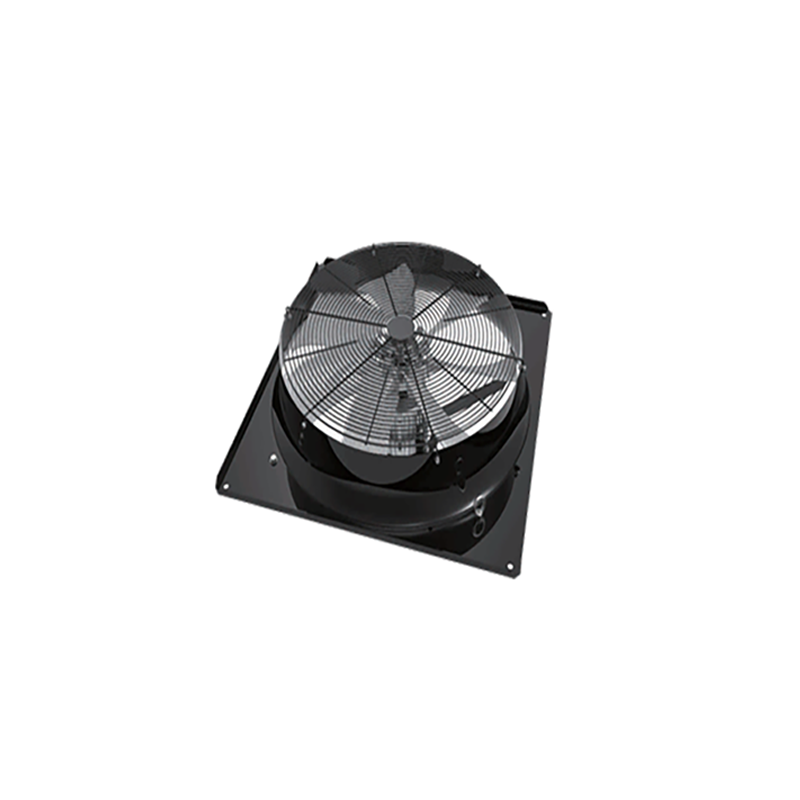
Flexibility makes this technology highly adaptable. You can deploy it across multiple cooling zones. Different facility architectures require different implementation strategies.
Operators frequently target legacy cooling units for initial upgrades. The process involves removing large, single AC blowers. You replace them with backward-curved plug fans. These modular units slide directly into the existing cabinet. They provide immense benefits for under-floor air distribution. High static pressure capabilities push cold air further down raised floors. They ensure distant perforated tiles receive adequate cold air supply.
Modern design shifts away from single massive blowers. Facilities now deploy multiple smaller units in a wall or grid configuration. This approach highlights pure redundancy. If one unit fails, the BMS detects the pressure drop. It signals the remaining units to increase their RPM immediately. They maintain the required static pressure and airflow seamlessly. This delivers N+x redundancy without requiring standby AC units. It protects high-density aisles perfectly.
Comparison Chart: Legacy Fan Setup vs. Modern Fan Array
| Feature | Legacy AC Blower | Modern EC Fan Array |
|---|---|---|
| Redundancy | None (Single point of failure) | N+x (Dynamic load sharing) |
| Maintenance | High (Belts, bearings, greasing) | Low (Direct drive, sealed bearings) |
| Footprint | Large (Requires heavy scroll housing) | Compact (Plug and play modular grid) |
| Airflow Control | Fixed or VFD-dependent | Continuous proportional (0-10V/Modbus) |
High-density architectures demand localized cooling. Smaller form-factor units slot perfectly into close-coupled in-row systems. They pull heat directly from the hot aisle exhaust. Furthermore, micro-EC technology is migrating directly into high-density server chassis. It handles concentrated chip-level heat dynamically. These localized deployments prevent heat spread before it ever reaches the room level.
Procuring equipment demands precise technical matching. Specifying the right EC fan for data center cooling requires careful analysis. You must evaluate pressure, size, control, and reliability.
You must learn how to read fan performance curves. A selected unit must overcome specific system pressure drops. High-density server racks create significant air resistance. MERV-rated filters add drag. Containment aisles require pressure balancing to prevent air leakage. Match the fan curve to your system's operating point. Oversizing leads to inefficiency. Undersizing leads to dangerous hot spots.
Assess the physical constraints of the existing CRAC or CRAH cabinet carefully. Legacy cabinets possess rigid internal framing. Emphasize the utility of compact plug fan designs. They do not require bulky scroll housings. They pull air from the ambient cabinet space and pressurize the floor directly. Always measure door clearances. Technicians must maneuver the new units safely through narrow containment aisles.
Check the fan’s integrated controller immediately. It must support your facility's legacy or modern BMS. Look for native BACnet or Modbus integration. Evaluate the available diagnostic outputs closely. You need real-time RPM monitoring. You need instant fault alarms. This telemetry transforms a dumb cooling loop into a smart, predictive maintenance asset.
Do not base procurement on CapEx alone. Evaluate manufacturers based on MTBF (Mean Time Between Failures) testing data. Investigate the availability of domestic replacement units. Global supply chain disruptions can delay critical spares. Ensure the vendor provides local technical support. Rapid troubleshooting access prevents prolonged downtime during tricky BMS integrations.
Upgrading a live facility carries inherent risks. You must protect server uptime during the entire transition. Careful planning mitigates unexpected thermal spikes and electrical faults.
Address the strict reality of retrofitting a live facility head-on. You rarely get a maintenance window to shut down entire zones. Recommend phased rollouts. Swap units one at a time. Utilize hot-swappable array designs where possible. Pre-program the BMS controls before installation. This preparation maintains cooling continuity and minimizes exposure to thermal runaways.
Best Practice: Always deploy temporary spot coolers in the immediate retrofit zone. They provide an emergency safety net while primary CRACs are offline.
Modern impellers undeniably use less power overall. However, the facility must still verify several electrical realities. Check the phase requirements. Validate all circuit breaker sizing. Direct-drive electronics can introduce slight harmonics if not properly filtered. Verify harmonic distortion mitigation strategies with the vendor. Ensure the existing electrical panels handle the inrush current smoothly upon system reboot.
Simply installing the unit is not enough. You have changed the under-floor pressure dynamics entirely. Post-installation airflow testing is mandatory. Technicians must perform rigorous balancing. Check the velocity at distant perforated tiles. Verify differential pressure across the containment aisles. Proper calibration prevents cold air bypass. It guarantees you actually realize the projected energy savings.
Be transparent during financial planning. The upfront cost of these units acts as a barrier. Acknowledge this reality to procurement teams. Advise them to seek financial offsets aggressively. Secure utility rebate programs proactively. Many local grids offer substantial incentives for energy-efficient motor upgrades. These rebates offset CapEx severely. They accelerate the project payback timeline significantly.
Upgrading to modern cooling infrastructure is a necessary transition. Data centers face relentlessly rising rack densities. Strict ESG efficiency targets are now mandatory. Legacy fixed-speed systems simply cannot adapt to dynamic thermal loads safely.
Decision-makers should start the process with a targeted site audit. Measure the baseline energy consumption on a single legacy CRAC unit. Perform a pilot retrofit using a plug fan array. Calibrate the airflow and integrate the BMS telemetry. Finally, extrapolate the precise ROI data from this pilot. Use this localized data to secure budget approval for a facility-wide rollout.
A: The main difference lies in component integration. Electronically commutated units feature built-in electronics that convert AC to DC power directly. They eliminate external drives and mechanical belts. This design ensures lower harmonic distortion and significantly higher energy efficiency at partial speeds compared to AC motors governed by VFDs.
A: Facilities typically see a payback window between 12 to 36 months. This calculation factors in local energy rates, the continuous 8760 hours of annual operation, and the elimination of mechanical maintenance labor. Securing local utility rebates for efficient motor upgrades often shortens this ROI period further.
A: Yes. Modern units offer standard support for 0-10V analog signals. They also support digital communication protocols like Modbus and BACnet. This allows for plug-and-play telemetry, enabling real-time RPM adjustments, power monitoring, and immediate fault alarms directly through your existing facility dashboard.
A: Yes. Arrays offer superior fault tolerance. They provide N+x redundancy, meaning if one unit fails, others speed up to maintain airflow. Arrays also ensure more uniform under-floor pressure distribution. Finally, their smaller form factor allows facility technicians to perform physical maintenance or replacements much easier.
