


Views: 0 Author: Site Editor Publish Time: 2026-08-24 Origin: Site


For OEMs and data center operators, halted production lines pose massive financial risks. A delayed deployment easily outweighs the unit price of a single cooling component. Electronically commutated (EC) fans carry distinct supply chain vulnerabilities. They blend traditional mechanical elements like engineered plastics, aluminum, and copper. At the same time, they rely heavily on complex electronics. These include sophisticated microcontrollers and printed circuit boards (PCBs). This dual nature exposes your production lines to multiple global market shocks simultaneously.
You must look beyond simple aerodynamic performance when selecting a reliable supply partner. Choosing an EC fan manufacturer requires a rigorous evaluation of operational resilience. You need to scrutinize their underlying supply chain architecture closely. Assess their component redundancy, buffer stock strategies, and overall production scalability. These factors ultimately guarantee your long-term operational stability.
Component Redundancy is Critical: A stable manufacturer multi-sources microprocessors and discrete electronic components to mitigate semiconductor market volatility.
Vertical Integration Controls Lead Times: In-house production of motors, impellers, and drive electronics significantly reduces dependency on tier-2 suppliers.
Transparent Inventory Management: Verified buffer stock policies and proactive End-of-Life (EOL) management prevent sudden production stoppages.
Auditable Traceability: Long-term stability requires batch-level traceability to isolate defects without initiating total-supply quarantines.
Modern industrial applications demand high efficiency. This demand drives the widespread adoption of electronically commutated technology. However, this technology introduces distinct vulnerabilities into your procurement cycle. Understanding these risks helps you build robust procurement strategies.
Basic AC fans rely on simple copper windings and standard magnets. In contrast, EC technology requires sophisticated microchips to manage electronic commutation logic. This convergence directly links heavy industrial manufacturing to the highly volatile semiconductor market. Sudden chip shortages can paralyze entire production floors. Global electronic lead-time fluctuations frequently disrupt delivery schedules. You cannot separate the mechanical fan delivery from its internal silicon supply chain.
Mechanical components face their own severe market pressures. Rotor assemblies depend heavily on rare-earth magnets. Stator windings require high-grade industrial copper. Global supply constraints often trigger wild price swings for these specific elements. Unprotected production lines suffer severe delays when basic commodity availability drops. Manufacturers must secure these core materials long before assembly begins.
Many companies present themselves as direct manufacturers. In reality, they operate merely as assemblers. They package third-party motors, external circuit boards, and standard impellers. This arrangement leaves you completely exposed to their upstream vulnerabilities. If their tier-2 supplier fails, your delivery fails entirely. Identifying a true EC fan manufacturer requires digging deep into their actual fabrication capabilities. You must verify their direct control over raw materials.
Evaluating a vendor requires looking past glossy brochures. You must examine the factory floor directly. Vertical integration determines how well a partner controls their critical manufacturing path.
Drive electronics form the critical brain of any modern unit. You must assess whether the vendor prints and populates their own circuit boards. Facilities equipped for in-house Surface-Mount Technology (SMT) hold a massive advantage. These internal SMT lines allow rapid manufacturing adjustments. If market shortages force a change in chip footprints, in-house engineers can adapt immediately. Outsourced boards face weeks of redesign delays and shipping bottlenecks.
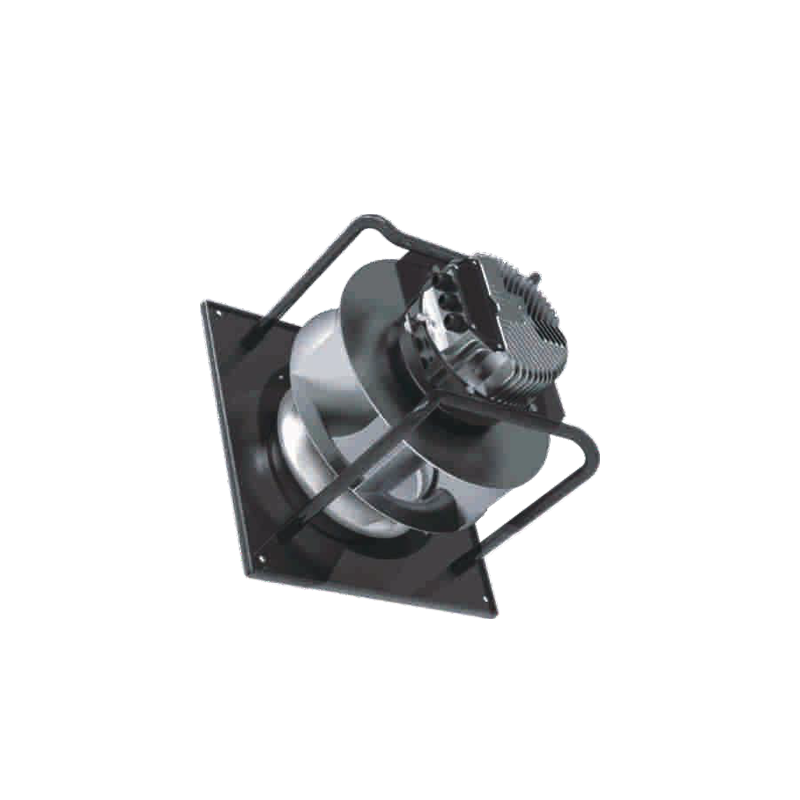
Quality control often drops when multiple independent vendors handle core components. Proper integration requires internal motor winding capabilities. It also requires internal injection molding or metal stamping lines. This proves especially true when procuring an EC centrifugal fan. Centrifugal designs demand precise aerodynamic alignment between the impeller and the motorized hub. In-house fabrication eliminates multi-vendor shipping delays. It also tightens mechanical tolerance controls significantly.
We must maintain transparent expectations regarding production. Absolute vertical integration remains impossible today. No fan maker fabricates raw silicon wafers or mines their own copper ore. The strategic goal involves controlling the critical assembly path. A reliable partner fully controls the PCB layout, the motor winding, and the final mechanical integration.
Procurement stability demands proactive engineering from your suppliers. Your vendor must design flexibility directly into the product architecture itself.
A credible supplier engineers dual-footprint printed circuit boards. This intelligent design accommodates alternative microcontrollers seamlessly. When primary chips become scarce, production seamlessly shifts to secondary options. This flexibility prevents complete product redesigns during a crisis. It also avoids lengthy regulatory re-certification bottlenecks.
Modern electronic manufacturing exposes the severe flaws of strict JIT models. Global supply chains simply lack necessary predictability today. Look for partners who reject zero-inventory models entirely. They should maintain strategic buffer inventories for long-lead-time components. Securing specific integrated circuits and custom bearings requires dedicated warehouse space. Buffer stocks shield your deliveries from sudden global logistics freezes.
Inventory Strategy Comparison in Electronic Manufacturing
Strategy Attribute | Strict Just-In-Time (JIT) | Strategic Buffer Inventory |
|---|---|---|
Capital Tie-Up | Low upfront capital required. | Higher capital locked in warehouse goods. |
Disruption Resilience | Extremely fragile. Delays halt production. | Highly resilient. Absorbs 4-12 week shocks. |
Semiconductor Handling | Fails frequently during chip shortages. | Secures EOL and long-lead ICs proactively. |
Best Use Case | Standardized, localized basic commodities. | Complex, multi-regional electronic assemblies. |
Localized disruptions frequently cause massive global stockouts. You must evaluate the physical locations of your partner’s manufacturing hubs. Forward-thinking companies split their production across primary and secondary facilities. Geographic hedging ensures continuous output even during regional logistics failures. Ask your vendor about their secondary plant locations.
Rapid production scaling often degrades product reliability unexpectedly. You need solid verification methods to ensure consistent performance under heavy pressure.
Verification demands comprehensive functional checks on the factory floor. Scaling up production volume must never compromise baseline quality metrics. Trustworthy facilities mandate 100% automated testing before any pallet ships out.
Key testing phases typically include:
Voltage and Power Profiling: Confirming drive electronics handle specified electrical loads safely.
RPM Verification: Ensuring the motor achieves precise speed control across different PWM operating signals.
Acoustic Profiling: Identifying abnormal noise signatures caused by internal mechanical friction.
Vibration Analysis: Detecting minor rotor imbalances early to prevent premature bearing failure in the field.
Component obsolescence remains an unavoidable reality in electronics. A trustworthy partner issues proactive Product Change Notifications (PCN). They send these formal alerts months before a component officially retires. This advance notice allows OEMs to validate alternative parts safely. You can test drop-in replacements without halting your own assembly lines.
Regulatory bottlenecks frequently delay necessary supply shifts. Alternative components must pre-exist within established global compliance frameworks. Switching a microchip should not void existing UL, CE, or RoHS certifications. Advanced engineering teams pre-certify multiple component combinations internally. This rigorous pre-work maintains continuous regulatory approval during sudden supply shifts.
Theory means little without rigorous auditing. You must stress-test potential partners thoroughly before signing any long-term agreements.
Never accept current lead times at simple face value. Request historical data on their On-Time Delivery (OTD) rates. Ask how they performed during known global shortage periods, like 2021 and 2022. Their past resilience accurately predicts your future supply security.
Drive electronics eventually reach obsolescence inevitably. Ask vendors for their explicit protocols regarding this exact issue. They must outline exactly how they transition away from retiring microcontrollers. Their strategy must show zero disruption to your active supply schedule.
Base your final selections on operational transparency and engineering flexibility. Prioritize partners who encourage direct engineering-to-engineering communication constantly. Demand complete Bill of Materials (BOM) transparency upfront. Additionally, seek vendors willing to negotiate custom safety-stock agreements actively. Favorable arrangements often include formalized Vendor Managed Inventory (VMI) or Kanban systems.
Always initiate a strictly controlled trial order first. Couple this trial order with a thorough physical or virtual facility audit. Focus this audit strictly on their raw-material staging areas. You must also verify their active SMT line capacity personally.
Supply stability represents an engineered feature, not a lucky accident. Achieving this stability requires deep vertical integration and aggressive component multi-sourcing. It also demands rigorous adherence to strict quality compliance standards.
Partnering with a truly resilient manufacturer protects your downstream commitments directly. It safeguards your operational profitability against unpredictable global market shocks. Proper supply chain architecture eliminates the panic of sudden component shortages.
You must take proactive steps today to secure your cooling component pipelines. Start by reviewing your current vendor's component sourcing matrix. Demand clear answers regarding their PCN protocols and custom buffer-stock programs. Ensure they actively protect your continuous manufacturing operations.
A: EC fans require microcontrollers for the commutation logic. Shortages in these specific silicon chips can extend lead times from weeks to months if the manufacturer does not have dual-sourced PCB designs or strategic buffer stock.
A: The core electronic vulnerabilities remain the same, but EC centrifugal fans often require more specialized impellers and heavier motor configurations. A manufacturer with in-house tooling and molding is better equipped to stabilize centrifugal supply lines.
A: Yes. Established manufacturers typically offer Vendor Managed Inventory (VMI) or blanket order agreements with scheduled releases, ensuring components are secured well ahead of your production schedule.
A: Credible manufacturers monitor component lifecycles closely and issue Product Change Notifications (PCNs) 6 to 12 months in advance, providing drop-in replacements that already meet required compliance standards (UL/CE).


