


Views: 0 Author: Site Editor Publish Time: 2026-08-24 Origin: Site


Electronically Commutated (EC) technology is widely recognized for superior energy efficiency across industrial sectors. However, the ultimate success of any deployment relies heavily on how engineers integrate this technology into specific environments. Off-the-shelf fan selection often leads to suboptimal acoustic performance. It can also cause severe integration friction or premature failure in harsh operational environments. You cannot just pick a standard component from a catalog and expect peak performance. Partnering with a specialized EC fan manufacturer bridges the gap between raw motor efficiency and application-specific performance. They ensure strict regulatory compliance, extended system longevity, and a highly predictable return on investment. By working closely with dedicated experts, you transform a simple component purchase into a strategic operational advantage. You will learn how to evaluate vendors properly, align aerodynamic specifications with actual application demands, and navigate complex retrofit scenarios effectively.
A credible EC fan manufacturer provides application-specific aerodynamic and acoustic testing, not just standard catalog specs.
Success in demanding applications (like data centers and industrial cooling) requires evaluating a vendor's custom engineering, control protocol integration (Modbus/0-10V), and supply chain scalability.
Retrofitting traditional AC systems with an EC centrifugal fan or axial fan demands careful assessment of spatial constraints, static pressure changes, and ROI timelines.
Industry compliance (ErP, UL, CE) and rigorous durability testing are non-negotiable criteria for vendor shortlisting.
Many engineers evaluate a manufacturer solely on stated motor efficiency. This remains a deeply flawed procurement strategy. Raw motor efficiency only tells a fraction of the performance story. A motor operating in a controlled laboratory behaves differently than one installed inside a crowded equipment chassis. Aerodynamic losses occur when you ignore real-world system impedance. You must look beyond standard baseline metrics.
Procurement and engineering teams must align on core operational targets before finalizing vendor selection. You need to define success through measurable outcomes.
Operational energy savings vs. initial capital expenditure: Weigh long-term utility cost reductions directly against the upfront component price.
Acoustic footprint reduction: Many facilities operate in strict regulatory zones. You must meet local noise ordinances consistently.
System reliability: Continuous-duty applications demand absolute minimal downtime. Reduced maintenance translates directly to higher facility productivity.
Manufacturers solve distinct friction points for Original Equipment Manufacturers (OEMs). Standard fans rarely fit perfectly into highly customized equipment. Specialized vendors provide custom form factors tailored to exact chassis dimensions. They also offer pre-programmed control logic tailored to specific user interfaces. This bespoke approach creates a dramatically streamlined assembly process on the OEM production floor.
Different industrial sectors demand distinct aerodynamic profiles and environmental protections. A reputable partner understands these diverse operational nuances.
Modern data centers require high redundancy and precise variable load management. They demand seamless network integration across massive server halls. An expert vendor provides precision-controlled fan arrays designed for these environments. They ensure flawless Building Management System (BMS) compatibility. This connectivity allows operators to modulate cooling dynamically based on real-time server thermal loads.
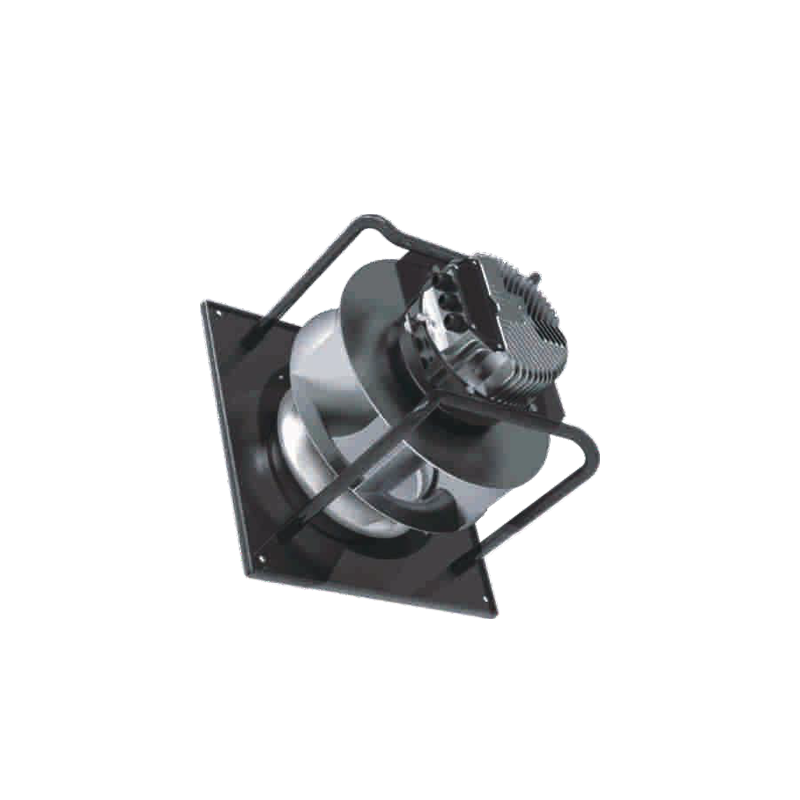
Industrial HVAC systems require high static pressure and immense bulk air movement. Heavy filtration systems, like MERV-rated filters, create significant aerodynamic resistance. A reliable partner supplies a tailored EC centrifugal fan or plug fan solution. They balance the precise impeller geometry with motor capability to optimize airflow across complex filter banks.
Cold storage environments introduce severe moisture challenges. They also require extremely low thermal output from the fan motor itself. Continuous operation is strictly mandatory to prevent inventory loss. Vendors engineer robust IP-rated (Ingress Protection) solutions for these sectors. They apply specialized conformal coatings to protect delicate internal electronics from condensation and rapid freezing cycles.
Application Sector | Primary Challenge | Ideal EC Fan Solution Focus |
|---|---|---|
Data Centers | Variable thermal loads, redundancy | BMS network integration, array setups |
Industrial HVAC (AHUs) | High static pressure, thick filters | Optimized centrifugal impeller design |
Cold Storage | Moisture, continuous duty cycles | IP-rated electronics, conformal coatings |
You must rigorously evaluate specific technical capabilities to ensure a successful long-term partnership. A transactional approach often leads to expensive system failures later.
Look for vendors possessing advanced in-house Computational Fluid Dynamics (CFD) analysis tools. They should also maintain verified acoustic testing chambers. CFD software allows engineers to simulate complex airflow behavior inside your specific equipment housing. This completely eliminates guesswork during the critical design phase. They can pinpoint dead zones and turbulence before manufacturing begins.
Assess their proven ability to scale production reliably. A partner must transition smoothly from small-batch prototyping to high-volume manufacturing. They must accomplish this without suffering any quality degradation. Supply chain resilience ensures you receive parts consistently, even during global material shortages. Ask about their secondary sourcing strategies for rare earth magnets and circuit components.
Global standards heavily regulate modern motor efficiency and electrical safety. You must ensure absolute compliance with ErP 2015 directives if operating in Europe. North American markets demand strict adherence to UL and CSA standards. A trusted partner always provides transparent, verifiable certification documentation upon request. Never accept self-certified claims without independent laboratory verification.
Modern industrial systems require highly advanced digital connectivity. Evaluate their standard communication interfaces thoroughly. They should support traditional PWM and 0-10V analog signals alongside Modbus RTU. Determine their capacity to customize firmware for proprietary OEM controllers. Tailored firmware allows the cooling components to communicate seamlessly with your custom mainboards.
Integrating new digital motor technology often introduces unexpected hurdles. You must anticipate these implementation challenges to maintain project timelines.
Swapping older AC fans for modern EC variants presents highly specific physical challenges. Spatial alignment often causes major headaches for installation teams. You might need to modify existing mounting brackets to accommodate different motor dimensions. Engineers must also update necessary electrical infrastructure. EC models utilize different wiring configurations and demand distinct grounding practices compared to traditional AC motors.
Changing fan speeds in variable-load systems can trigger unexpected structural resonance. A specific RPM might perfectly match the natural frequency of your sheet metal cabinet. This creates highly disruptive noise and severe structural vibration. A competent engineering partner mitigates this through comprehensive vibration analysis. They program the control logic to deliberately skip over these problematic speed ranges.
Custom application development requires a highly realistic project timeline. The process begins with an initial Proof of Concept (PoC). Next comes rigorous field validation and beta testing. Finally, you enter full mass production. A standard custom development cycle easily spans several months. You must factor this necessary prototyping duration into your broader facility rollout schedule.
Moving from technical evaluation to active procurement requires a highly structured, data-driven approach.
A vague RFQ always yields inaccurate quotes and mismatched expectations. You must list mandatory data points clearly.
Target operating points encompassing specific airflow volume and static pressure resistance.
Strict spatial limits, exact chassis dimensions, and preferred mounting orientations.
Expected environmental conditions including temperature ranges, altitude, and moisture levels.
Specific digital control protocol expectations and firmware integration requirements.
We highly recommend requesting physical sample units for actual field testing. Never commit to large-scale procurement before proving the concept in a real-world environment. Test the prototype units under maximum expected thermal loads. Monitor their acoustic output and measure their actual power draw inside your equipment enclosure.
Assess their post-sale technical support capabilities thoroughly. Review their published warranty terms carefully. Ensure replacement components remain readily available across your primary operational geographic regions. A vendor’s true intrinsic value often reveals itself during an unexpected post-installation crisis. Rapid response times minimize costly facility downtime.
A specialized manufacturing partner acts as a strategic engineering extension rather than a simple transactional supplier. They bring invaluable insights to complex aerodynamic challenges. Evaluating vendors rigorously on custom design capabilities and regulatory compliance mitigates long-term operational risks.
Prioritize partners offering extensive in-house acoustic and aerodynamic simulation testing.
Thorough physical prototyping prevents incredibly costly physical redesigns during final production phases.
Communicate strict environmental constraints within your initial RFQ to accelerate initial development.
Select vendors who seamlessly bridge the gap between digital BMS controls and raw air movement.
To guarantee optimal performance in your next industrial project, take decisive action today. Schedule a dedicated engineering consultation with qualified specialists. Request a comprehensive technical capabilities audit from a specialized manufacturer to perfectly align their aerodynamic expertise with your core operational goals.
A: A realistic ROI timeline generally spans one to three years. This timeframe depends heavily on local utility rates and your specific daily duty cycles. Facilities running continuous industrial operations typically see faster returns. Reputable engineering partners provide accurate, application-specific ROI calculators. These tools help you project these utility savings precisely before committing to the facility retrofit.
A: An EC axial fan moves high volumes of air at relatively low pressure. This makes it ideal for exterior condenser cooling or general warehouse ventilation. Conversely, an EC centrifugal fan generates high static pressure with highly directional flow. Engineers typically select centrifugal models for complex Air Handling Units (AHUs) or systems utilizing heavy MERV filtration banks.
A: Yes, they integrate seamlessly into older architectural setups. Reputable manufacturers offer specialized data gateways or standard communication protocols. Utilizing Modbus RTU or BACnet bridges the gap between older analog infrastructures and modern digital controls. This smart integration allows facility managers to optimize variable speed control without completely replacing the existing management framework.
A: We advise an IP54 rating as a reliable standard baseline. This protects against common factory dust and occasional water splashes. However, if your facility involves highly corrosive chemicals or requires frequent high-pressure washdowns, you must specify IP68 ratings. Furthermore, ensure the vendor provides fully encapsulated internal electronics to prevent catastrophic failure in extreme operational conditions.


