


Views: 0 Author: Site Editor Publish Time: 2026-07-15 Origin: Site


Industrial facilities face immense pressure in today's operating landscape. They must optimize energy consumption continuously to meet modern performance standards. Doing so cannot compromise critical air volume, static pressure, or system reliability. Upgrading or designing a new industrial ventilation fan forces engineers into a demanding technical choice. You must weigh legacy AC induction technology against modern electronically commutated (EC) systems. This hardware decision dictates daily operations, automation depth, and overall infrastructure longevity. We will move beyond basic catalog specifications in this technical breakdown. You will explore implementation risks, environmental limitations, and integration requirements of both technologies. Our guide provides the clear engineering context you need. You will confidently select the right ventilation architecture for your specific facility demands.
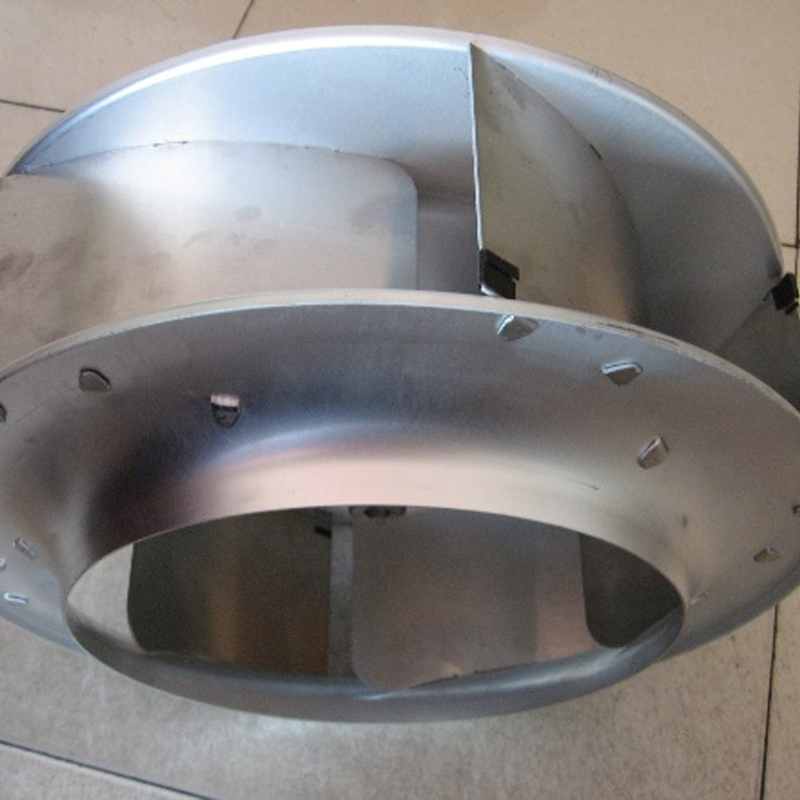
Understanding the fundamental mechanical differences helps you make better procurement decisions. Both systems move air effectively. They accomplish this using vastly different motor topologies.
These units rely on alternating current induction motors. They feature a famously simple internal construction. Speed regulation depends entirely on the mains frequency. Industry has relied on them for decades. They handle brute-force, continuous operation exceptionally well. Engineers trust their ruggedness in harsh environments.
These units utilize brushless DC motors. They draw power directly from a standard AC main supply. Integrated electronics convert the AC input into DC voltage. This allows precise, continuous modulation of the motor speed. Most EC centrifugal fans use an external rotor design. The motor sits directly inside the fan impeller.
Space matters in modern industrial layouts. EC technology offers massive space savings. The external rotor motor design eliminates external drive assemblies. You do not need separate VFD panels on your walls. The entire package sits inside the fan housing. This compactness simplifies installation in tight mechanical rooms.
Energy consumption dominates industrial facility budgets. You must evaluate how these fan systems perform across varying daily loads.
Few ventilation systems run at maximum capacity all day. Most systems modulate based on demand. AC motors operate efficiently at 100% load. However, they lose massive efficiency when dialed back. Motor slip increases drastically. Heat generation wastes valuable power.
EC motors behave differently. They maintain up to 90% efficiency across their entire operating range. The internal electronics optimize the magnetic fields constantly. You save incredible amounts of energy during part-load operations.
Engineers often retrofit AC blowers with VFDs. They want to mimic EC speed control. This introduces a hidden energy penalty. VFDs naturally consume power. You typically lose 3-5% of total power through the drive itself. Furthermore, VFDs introduce harmonic distortion into your electrical grid. This distortion degrades power quality. It causes additional heating in the motor windings.
You must project operational costs over a 10-year lifecycle. Compare these projected energy savings against the initial capital expenditure (CAPEX). EC units carry a notable CAPEX premium. However, their superior part-load efficiency reduces monthly utility bills rapidly. Model your specific kilowatt-hour (kWh) usage carefully. This modeling proves the long-term viability of the investment.
Common Mistake: Relying solely on peak efficiency ratings. Always evaluate motor efficiency at 50% and 80% speeds. This reflects actual field operation.
| Performance Metric | AC Blowers (with VFD) | EC Centrifugal Fans |
|---|---|---|
| Part-Load Efficiency | Drops significantly below 80% speed | Remains above 85-90% at all speeds |
| System Power Loss | 3-5% loss through VFD hardware | Minimal internal conversion loss |
| Harmonic Distortion | High (often requires line filters) | Low (active PFC integrated) |
| Physical Footprint | Large (motor + external VFD panel) | Compact (integrated electronics) |
Modern facilities demand smart infrastructure. Fan systems must communicate seamlessly with facility control software.
Facility managers require deep operational visibility. EC centrifugal fans plug directly into modern Building Management Systems (BMS). They accept standard Modbus RTU protocols. They also respond to simple 0-10V or PWM analog signals. You do not need intermediate hardware. You bypass expensive integration gateways. This native connectivity streamlines commissioning significantly.
Many environments require precise static pressure control. Cleanrooms rely on exact pressure cascades to prevent contamination. Data centers use dynamic exhaust systems to manage variable IT thermal loads. EC technology shines here. The internal controller adjusts RPM instantly to match sensor data. An EC blower fan prevents over-pressurization effortlessly. It eliminates the slow ramp-up lag found in older AC configurations.
Noise pollution impacts worker safety. Standard AC motors generate a distinct "hum" at low speeds. This phenomenon results from magnetostriction caused by VFD switching frequencies. It frustrates personnel in occupied spaces. EC technology operates differently. It delivers a consistently quieter acoustic signature. The continuous DC modulation eliminates harsh electrical whining entirely.
Laboratory specifications rarely tell the whole story. You must account for real-world environmental stressors.
Heat destroys sensitive electronics. The built-in electronic commutators of EC fans have strict ambient temperature thresholds. Most units top out around 60°C (140°F). Exceeding this limit causes premature component failure. AC motors offer superior thermal resilience. You can isolate their stators. Manufacturers build specialized AC blowers to withstand significantly higher heat loads.
Heavy industrial zones suffer from "dirty" power. Voltage spikes happen frequently. AC windings handle these transient surges reliably. Their rugged simplicity acts as a buffer. EC electronics show more vulnerability here. Severe voltage spikes can fry the onboard control module. Facilities with poor grid quality must install robust surge protection devices when using EC equipment.
Maintenance availability dictates system uptime. Different technologies require different service approaches.
| Maintenance Action | AC Systems | EC Systems |
|---|---|---|
| Belt Replacement | Required annually (if belt-driven) | Not applicable (direct drive) |
| Bearing Lubrication | Required every 3-6 months | Not required (sealed for life) |
| Drive Maintenance | VFD cooling fans & filters need cleaning | None (integrated heat sink) |
| Failure Resolution | Rewind motor or replace standard parts | Usually requires complete motor module swap |
Best Practice: Always audit your electrical grid quality before specifying EC equipment. Install active power filters if voltage fluctuations exceed standard limits.
Selecting the right technology requires matching hardware to your specific operational reality. Use this framework to guide your purchasing decisions.
There is no universal "better" option in industrial air movement. You must pursue the right engineering fit. EC technology remains the undisputed choice for variable, efficiency-focused systems. It dominates modern data centers and smart buildings. Meanwhile, AC technology remains a rugged, reliable failsafe for static and harsh environments.
Take actionable steps today to improve your infrastructure. We recommend auditing your current baseline energy usage immediately. Identify fans operating constantly at partial loads. Request a technical datasheet and an energy savings projection for your specific operating parameters. Making data-driven hardware choices guarantees a resilient, highly optimized facility.
A: No. EC fans have integrated speed control electronics. This onboard intelligence makes external VFDs completely obsolete. It also prevents the harmonic electrical noise typically associated with external drives.
A: Yes, but it requires a plug fan or backward-curved fan retrofit approach. You must account for physical dimensional changes inside the AHU. You also need to update the control wiring from traditional contactors to modern analog or digital signals.
A: Upfront, yes. It typically runs 20-40% higher in unit cost. However, when you factor in the cost of a standard AC motor plus a separate VFD panel and complex installation labor, the initial implementation costs often equalize.
A: The onboard electronics are highly sensitive to excessive heat. If your ambient temperatures consistently exceed the manufacturer's maximum rating, the silicon degrades. In these scenarios, a remote-mounted AC motor or specialized cooling is required.
