


Views: 0 Author: Site Editor Publish Time: 2026-01-07 Origin: Site


Choosing the right fan for your system can be a game-changer. Have you ever wondered which fan is more energy-efficient—centrifugal or EC? In this article, we’ll dive into the differences between centrifugal fans and EC fans. You will learn about their mechanisms, energy efficiency, cost-effectiveness, and which one suits your needs best.
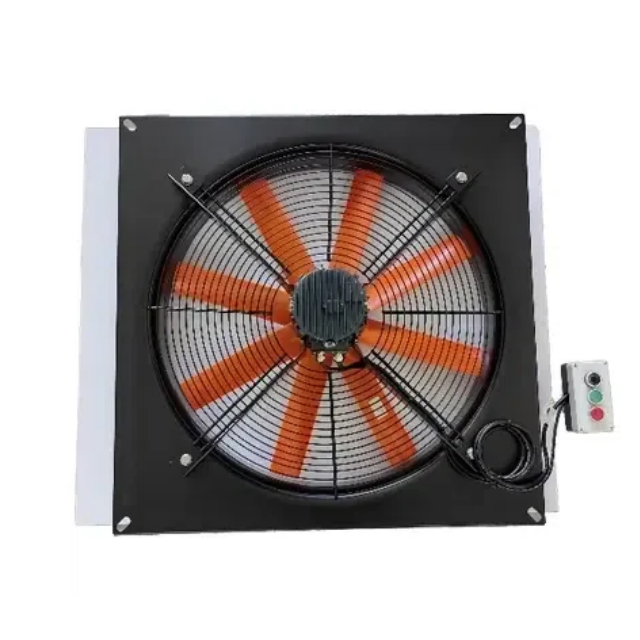
Centrifugal fans are designed to move air by converting the energy from an impeller into centrifugal force. The impeller draws in air and accelerates it outward, forcing it into the system’s discharge. This movement creates high-pressure airflow, making centrifugal fans ideal for applications requiring consistent airflow, such as HVAC and industrial systems.
Centrifugal fans are widely used in applications where high airflow is needed, such as:
● HVAC Systems: They provide consistent airflow in ventilation and air conditioning systems.
● Industrial Settings: Common in manufacturing plants and dust collection systems.
● Ventilation: In places like tunnels and mines, where strong, reliable airflow is necessary.
Centrifugal fans are generally less energy-efficient compared to other fan types, like EC fans, due to their constant-speed operation. Their energy consumption tends to remain high as they don’t adjust airflow based on demand, resulting in wasted energy during low load conditions.
Centrifugal Fan Characteristics | Energy Consumption | Maintenance | Cost |
High airflow efficiency | Relatively high | Requires regular maintenance | Lower initial cost |
Tip: When choosing centrifugal fans, consider the energy efficiency of your entire system to avoid high operational costs.
Electronically Commutated (EC) fans incorporate advanced motor technology that uses integrated electronics to control the fan’s operation. These fans use brushless DC motors that offer precision control over airflow. EC fans are built to be more energy-efficient, adapting their performance based on demand.
The unique advantage of EC fans lies in their electronically controlled motors. These motors are powered by direct current (DC), which allows the fan to adjust its speed and optimize energy consumption. Unlike traditional motors, EC fans do not rely on mechanical brushes, reducing friction and wear.
● Energy Efficiency: EC fans consume less power by adjusting their speed according to the demand.
● Precision Control: These fans can be controlled with greater accuracy, offering smooth adjustments and reducing energy waste.
● Variable Speed: EC fans adjust to variable load conditions, ensuring they operate at the most efficient speed for any given situation.
EC Fan Characteristics | Energy Efficiency | Control Precision | Cost |
Variable speed control | Significantly higher | High | Higher initial investment |
Centrifugal Fans: Air is drawn in through the fan and expelled at right angles, typically creating a high-pressure airflow. The fan’s operation is mechanical, with constant airflow unless manually adjusted.
EC Fans: These fans incorporate electronic controls that adjust the motor speed according to the load requirements. The integration of brushless DC motors allows for more precise control and better performance, particularly in variable speed applications.
● Centrifugal Fans: These fans operate at a fixed speed, which means they often consume more energy than necessary during periods of low demand.
● EC Fans: Their variable-speed operation helps optimize energy usage, resulting in significant energy savings. EC fans adjust their speed based on the system’s needs, ensuring the fan operates efficiently at all times.
Notes: If energy savings and control are priorities, EC fans will likely outperform centrifugal fans in the long term.
Factor | Centrifugal Fans | EC Fans |
Speed Control | Fixed speed | Variable speed |
Adaptability to Load Changes | Less adaptable | Highly adaptable |
Operational Efficiency | Less efficient during low load | More efficient with varying load |
● Centrifugal Fans: While they provide reliable performance, centrifugal fans lack the flexibility to adjust to varying load conditions. Their fixed operation makes them less adaptable.
● EC Fans: These fans excel in adaptability. With their variable-speed capability, they can adjust airflow to meet changing system demands, improving performance in dynamic conditions.
Tip: For systems where load conditions vary frequently, EC fans are a better choice due to their adaptability.
● Centrifugal Fans: Due to their mechanical nature, centrifugal fans require regular maintenance. Moving parts like the motor and bearings often need lubrication or replacement.
● EC Fans: With fewer moving parts, particularly due to their brushless design, EC fans require less maintenance. Their electronic components, however, need periodic checks for proper operation.
Cost Factor | Centrifugal Fans | EC Fans |
Initial Investment | Lower | Higher |
Energy Costs (Long Term) | Higher | Lower |
Maintenance Costs | Moderate | Lower |
● Initial Investment: Centrifugal fans are typically less expensive to purchase than EC fans.
● Long-term Savings: Although EC fans come with a higher initial cost, they offer better energy efficiency and lower operational costs over time, making them more cost-effective in the long run.
Centrifugal fans are known for their simplicity and reliability. With fewer electronic components, they are less prone to failure, making them ideal for environments where reliability is critical. They are often used in heavy-duty industrial applications where high airflow is needed consistently.
Centrifugal fans are typically less expensive than EC fans, making them a go-to option for budget-conscious projects. Additionally, they are widely available and easy to replace, making them a practical choice for many industries.
EC fans offer unmatched energy savings by adjusting their speed to meet varying load conditions. This feature makes them highly cost-effective, particularly in applications with fluctuating airflow requirements. The precision control ensures the fan operates only when necessary, minimizing waste.
By using less energy and offering better efficiency, EC fans contribute to lower carbon footprints. Their compliance with international energy standards makes them an eco-friendly option for those committed to reducing their environmental impact.
EC fans are more adaptable to future technological advancements, making them ideal for integration into smart buildings and IoT-connected systems. Their ability to adjust to new technologies ensures they remain relevant for many years.
Notes: As energy regulations become stricter, EC fans will continue to be a preferred choice due to their adaptability and efficiency.
Centrifugal fans are best suited for applications that require consistent and high-volume airflow, such as:
● HVAC systems: Providing constant ventilation in residential and commercial buildings.
● Industrial systems: Maintaining airflow in heavy-duty operations, such as manufacturing plants and large-scale ventilation.
● Dust collection systems: Effectively moving high volumes of air for industrial dust removal.
EC fans are ideal for systems requiring adjustable airflow based on changing conditions. Some key applications include:
● Smart buildings: EC fans optimize energy usage in buildings with IoT and automated systems.
● HVAC optimization: They offer precision control and significant energy savings, making them perfect for modern HVAC systems that require varying airflow.
● Energy-efficient ventilation: EC fans are perfect for environments that need to minimize energy consumption while maintaining airflow performance.
Centrifugal and EC fans each offer distinct advantages depending on your needs. Centrifugal fans are reliable and cost-effective, making them a solid choice for heavy-duty applications where energy efficiency is not as crucial. On the other hand, EC fans provide superior energy efficiency, adaptability, and lower maintenance, making them ideal for applications with varying load conditions or those seeking long-term energy savings. When choosing between the two, consider your specific application, budget, and long-term goals. EC fans are particularly well-suited for energy-conscious systems, while centrifugal fans are a great fit for consistent, high-volume airflow needs. For expert advice and solutions, trust Dowell to guide you in selecting the right fan for your needs.
A: The main difference is that centrifugal fans use mechanical force to move air, creating high-pressure airflow, while EC fans incorporate electronically commutated motors that adjust speed for energy efficiency. EC fans are more adaptable and energy-efficient compared to centrifugal fans.
A: An EC fan works by using a brushless DC motor and electronic controls to adjust the fan speed based on demand, whereas a centrifugal fan operates at a constant speed with mechanical parts to generate airflow.
A: EC fans are more energy-efficient and adaptable, making them ideal for systems with fluctuating airflow demands. They offer variable speed control and reduced energy consumption compared to centrifugal fans.
A: Yes, EC fans tend to have a higher initial cost due to advanced technology. However, their energy savings and lower maintenance costs often make them a more cost-effective option in the long run.


